A Ten-Day Tour of Six Japanese Cities
I hadn't planned to go to Japan, but because time was limited, Japan was the easiest to arrange. So I did a thorough online search, borrowed ideas, and settled on this trip: June 12 Hakone, June 13/14 Kyoto, June 15 Nara and Wakayama, June 16/17 Osaka, June 18 Kobe, June 19/20/21 Tokyo. Many thanks to all the contributors on Ctrip.
Getting a visa through Ctrip was cheaper (409 CNY), but it required booking flights and hotels through Ctrip. After checking, I found Ctrip's prices were about the same as other websites, so there was no loss. Before the trip, I rented a portable Wi-Fi on Ctrip for 11 days at 146 CNY; several phones could connect simultaneously, which was very convenient, but don't stray too far—signal was lost beyond a few meters. I bought a 7-day Japan Rail (JR) Pass for two people at 2,830 CNY (a small discount). This was a source of much hesitation; I was never sure if the pass was worth it, since our itinerary was quite relaxed, not rushing every day, and we were only traveling in central Japan. As it turned out, the pass didn't provide great savings (actual total ticket cost was 1,600 per person). JR stations are often separate from other railway companies' stations, and for short distances, it was more convenient to change to other trains, and the pass couldn't be used for city transportation. To be safe, I checked each segment's travel options on Google in advance, printed out more than a dozen pages including hotel addresses and attractions to visit. These pages proved invaluable when asking for directions.
Comparing the places we visited, Hakone (Odakyu) offered the most natural scenery. Hakone is not far southwest of Tokyo and is a famous hot spring resort and health retreat in Japan. Going to Japan without soaking in hot springs feels like a wasted trip—even in summer. The ride up the mountain on the cog railway was very scenic. The train zigzagged, the front and rear reversed, and there were several sharp turns, giving a sense of twists and turns and ever-changing views. It was drizzling in the mountains, with misty smoke, and through the rain-soaked, increasingly vibrant flowers and leaves, you could see faint layers of distant mountains in the background. The last part was by cable car, which looked like a tram but went up a steep slope instead of flat ground—I estimate about 30 degrees. Strangely, the cable car only went up, not down; you had to walk down the mountain. Lake Ashi is a landmark of Hakone. According to the introduction, it covers an area of 7 square kilometers, with a maximum depth of 45 meters; the lake water is clear and blue. On a sunny day, boating on the lake, you can see snow-capped Mount Fuji, and the reflection of Fuji in the pale blue lake is described as 'a white fan hanging upside down over the eastern sea' because Mount Fuji's shape resembles an inverted white fan. But today it was overcast; even the nearby mountains were unclear, let alone distant Mount Fuji. The lake water was also gray. There were various small boats for tourists to tour the lake, apparently privately operated, with prices varying by boat type, time, and distance, ranging from 2,000 to 8,000 yen. We took the official large boat, 1,000 yen per person one-way, arriving in about 20 minutes, then took a bus back to Gora Station. There were tourist buses, long-distance buses, and a sightseeing cable car, but due to frequent volcanic activity recently, the cable car was suspended, and Owakudani was also closed.
In order to soak in hot springs, we also took a detour to Wakayama—one of Japan's three major hot spring areas—but found no attractive highlights in this small city. We might not have chosen the right hotel; we didn't feel the aura of a hot spring resort. Similarly, Kobe was not very impressive either: a port city, clean and quiet, nothing more.
Kyoto naturally best embodies Japan's cultural spirit. Kinkaku-ji (Golden Pavilion), Nijo Castle, and Kiyomizu-dera are known as the three major landmarks of Kyoto. My favorite was Nijo Castle, built in 1603, which was the Kyoto residence of Tokugawa Ieyasu. It is surrounded by two moats, very magnificent. The Ninomaru Palace, regarded as a national treasure, has the most luxurious and grand decoration of the Edo period. The 'nightingale floors' in the corridors were alarm systems set by the lord; when many tourists walk on them, they indeed 'squeak'. The garden design is Chinese-style, very reminiscent of Jiangnan gardens.
Kinkaku-ji can only be viewed from the outside; it took less than half an hour to walk around it.
Kiyomizu-dera's pagoda has some distinctive features, but otherwise it's similar to most Japanese temples. I didn't go inside; instead, the mountain path in front of the temple was very lively, with small shops selling food and souvenirs lining both sides for hundreds of meters.
Gion's Hanamikoji Street is famous. The original houses and atmosphere are preserved on both sides, but I felt it was mostly bars and restaurants aimed at tourists, not very authentic.
Another place I liked was Ginkaku-ji (Silver Pavilion). Its garden design was very thoughtful, with a new view at every step, pleasing to the eye.
Arashiyama is a great place for viewing autumn leaves, but it wasn't the season. There were many rickshaws there, looking light and elegant.
Walking in the mountains, the air and scenery were both nice. On the mountain, there was Okochi Sanso Villa, worth a visit. It was built by a movie star in the 1950s-60s, blending into the mountain terrain and borrowing scenery to create a garden—a good retreat.
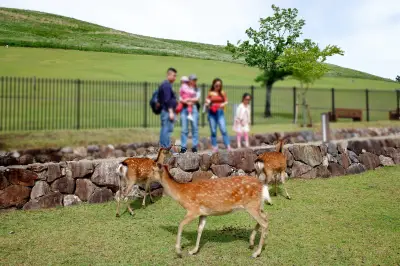
Nara is very old. The eastern part is largely occupied by Nara Park, which is beautifully scenic all year round and home to hundreds of wild sika deer. There were stalls selling deer crackers along the roadside; the deer chased people for food, eating and defecating at the same time, which was smelly, but people were constantly cleaning up. This was the only place in Japan where we saw cleaning staff. Todaiji Temple was built in 728 by Emperor Shomu, a Buddhist believer, and is the head temple of the Kegon sect in Japan. The Great Buddha Hall is the largest wooden ancient building in the world, enshrining a 16-meter-tall statue of Vairocana Buddha, the largest bronze Buddha statue in the world. The current Great Buddha Hall was built in 1709, grand and impressive, worth seeing. Inside the hall, there is a pillar with a hole at the base, about one meter in diameter. An elderly Japanese man was instructing several foreign tourists on how to crawl through the small hole: first you need to be thin, and second, some technique is required. I wonder how it feels to get stuck in the middle. Kasuga Taisha was built in 710, over a thousand years ago, but inside it was not very interesting, just well-preserved. Both sites are listed as World Cultural Heritage.
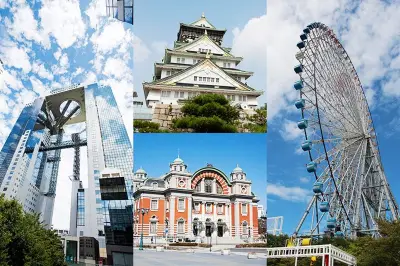
Osaka and Tokyo are somewhat similar, with more high-rise buildings, convenient living and working, and developed transportation, but Osaka feels more down-to-earth and is known as 'Japan's kitchen'. Osaka Castle was built during the Sengoku period, serving as a military watchtower and lookout. There is an observation platform at the top offering a panoramic view of Osaka, and inside, short films about historical stories are shown, all in Japanese, which we couldn't understand. There is a sightseeing boat with a pier next to Osaka Castle; a combination ticket for the boat and castle cost 1,200 yen, cheaper than buying separately. The boat went along the river and returned to the starting point, with two or three stops in between. The boat was simple, with a glass roof and sides, and passengers sat in fixed seats. Surprisingly, the boat lowered its roof when passing under a suspension bridge, likely for better viewing of the bridge.
In Tokyo, we went to Sensoji Temple. The street in front of the temple was lined with food stalls, so crowded that we could barely move. It was also difficult to take a photo with the Kaminarimon Gate. Apparently, the temple is very popular.
According to the introduction, part of the Imperial Palace is open to the public. We went through a lot of trouble to get there, only to be greeted by the Nijubashi Bridge (double bridge) and saw nothing else. I'm not sure if I misunderstood or was misled. Our hotel was next to the Tokyo Metropolitan Government Building. There is an observation hall on the 45th floor, open to the public for free, saving us the cost of going to Tokyo Tower. Inside the building, there is also a very professional tourist information center offering multilingual services, with various brochures freely available.
Speaking of food, Japanese food is quite refined. Common dishes like donburi, noodle soup, and sushi all tasted good. My husband especially loved tempura.
Our first proper meal in Japan was at a sushi restaurant run by an elderly couple in Hakone. The door was very small; taller people had to duck to enter. Inside was also small, with two tables on tatami: one occupied by two German girls, the other by a Malaysian couple. We three sat at the counter, and later a French couple came in, filling the small room. The Malaysian guy was very sociable, chatting with all the guests; after he left, the room became quiet. The old man was busy cooking behind the counter, while the old woman took orders and collected money. The menu was simple, just a few set meals. We ordered two sets, including a bowl of seafood donburi and various sushi. The fish and shrimp weren't very fresh, but overall it was okay. The bill came to 5,600 yen.
Near Shinjuku Station in Tokyo, there was a kaiten-zushi (conveyor belt sushi) restaurant that was very cheap—240 yen per plate. The rice balls were small, topped with a large slice of fish, quite good value. We ate there twice in a row. Another advantage of this place was that the cashier was a Chinese lady. When we first arrived in Tokyo, it was rainy and very cold, so we had dinner at the hotel: pizza and pasta, expensive and not tasty, with poor service. I had planned to go to Tsukiji Market in Tokyo for seafood, but didn't realize it was closed on Sundays, and even on weekdays it was only open from 4:00 a.m. to 2:00 p.m., empty by afternoon. We bought a box of very fresh fish roe for 900 yen at a small shop across from the market as compensation. Kyoto Station had a 'Ramen Koji' (Ramen Alley), designed in the style of machiya (traditional townhouses), gathering famous ramen shops from seven places like Tokyo, Osaka, Sapporo, Kyoto, and Hakata. It was very crowded; we found one that didn't require queuing, but it wasn't particularly tasty. Okonomiyaki (Japanese savory pancake) was rich in flavor, but too salty and sweet, not very healthy. We ate it once near Dotonbori in Osaka.
At Daimaru department store in Osaka, there was a restaurant specializing in unagi (eel) rice, with several grades. The high-end one was over 4,000 yen per serving; the eel was indeed thicker and more tender than usual.
The famous Kani Doraku (crab restaurant) opened at 2:00 p.m. daily, and you had to take a number and wait about an hour to eat. We gave up. In Kyoto, we tried Kyoto cuisine (kyo-ryori) once, which was a relatively formal 'big meal'. Dishes were served one by one, each only a small bite. We ordered the mid-range option, about 4,800 yen. For my husband and son, who have big appetites, it was too little and not satisfying, and eating for an hour and a half was not something tourists like us could afford—so we never dared to try a full-course Japanese meal again.
We had some snacks and desserts. We bought matcha ice cream by the roadside several times; prices varied by location. The cheapest was 300 yen in Kyoto, and the taste was similar everywhere—I personally liked it. We had takoyaki (octopus balls) in Kyoto and Osaka. The one by the Dotonbori River in Osaka seemed famous, with a long queue, but it tasted the same as the one in Kyoto to me.
Yatsuhashi (cinnamon-flavored rice crackers) is a genuine Kyoto specialty. I tried it but didn't like the taste. Some other small pastries were extremely sweet, even I, who loves sweets, found them hard to accept. Ningyo-yaki (doll-shaped cakes) I bought just for fun; they tasted similar to the sponge cakes you find on the streets back home.
I had read about PABLO Cheesecake from others. Since the cake shop was just a few dozen meters from our lodging in Osaka, we queued and bought one—it was indeed very delicious. Kobe's Baumkuchen (layered cake) was okay, a bit over 100 yen for a small slice. Desserts in restaurants were a bit more expensive but more refined.
Regarding transportation, Kyoto relied mainly on city buses. The buses were very user-friendly; they lowered the right side when stopping to make boarding easier. One-day bus passes cost 500 yen, worth it if you ride three times. You could buy tickets or show your pass when getting off. Osaka and Tokyo have extensive rail networks. You needed to buy tickets before entering the station, which was a major challenge throughout the trip. The ticket vending machines only had a few price options, but you didn't know the fare to your destination. Checking the price was only in Japanese, which we couldn't read. So every time we had to find a staff member or fellow passenger to help buy tickets. Therefore, buying a day pass or multi-day pass or a PASMO card was much less hassle. But day passes usually cost around 1,000 yen, while a single ride costs about 200 yen, so if you didn't travel much, they weren't cost-effective. On our second day in Tokyo, we bought a Toei one-day pass (700 yen) to visit a few places, which only covered Toei subway and buses. Between cities, there are many types of trains; JR is one of them. Since we had a 7-day JR Pass, we tried to use JR as much as possible, but some small stations had no JR service, so we had to transfer. Japan's train system is truly complex: on one platform, there could be trains going to different places; sometimes trains go to the same place but have different speeds and prices. You could only board the specific train you bought a ticket for, and you couldn't even board the wrong car because sometimes the front and rear cars of a train go to different destinations. I admired their dispatching skills. A trick was to watch the time; departure and arrival times were very punctual, so boarding and alighting according to the time would prevent mistakes. Fortunately, place names often use Chinese characters, so with a mix of guessing and asking, we never boarded the wrong train. Asking for directions was also a challenge; neither Chinese nor English worked very well. Japanese people's English pronunciation was strange, and with my English level, I sometimes couldn't tell if they were speaking English or Japanese. The best method was to show them the written text; as long as they weren't far-sighted, it usually worked. Paper maps and Google Maps on our phones also helped a lot. Near train stations in Japan are usually the busiest parts of the city, with department stores, supermarkets, restaurant streets, and electronics stores connected to the station, plus multiple companies' routes and city subways, making it difficult to find 'your' platform. There were also many travel options: slow trains cheaper, fast trains more expensive, JR might be the most expensive. In reality, the trains we took sometimes differed from the routes we had checked in advance.
On this trip, we stayed in six cities: the first two were guesthouses (minshuku), the rest were star-rated hotels. Comparatively, guesthouses were more thoughtful, hotels more standardized. The first stop was Gora Tea House Hotel, which was more like a guesthouse despite its name—few rooms, very quiet, beautiful environment. The room was quite large. The advantage of a Japanese-style room is that there is no furniture—just a low table and four legless chairs; once moved aside, the three of us could spread out futons freely. The owner was very kind, working alone except for one helper we saw once. Everything was kept very clean. Breakfast was exquisite: each person got grilled fish, grilled sausage, tofu pudding, and a few side dishes. Rice, drinks, tea, and coffee were self-serve. This was the only accommodation that included breakfast; we skipped breakfast at other places because adding it was too expensive, so we can't compare quality.
The hot spring on the first floor was clean and comfortable, with complete toiletries. You wrote your name on the reservation sheet for the desired time slot, and that period was exclusively yours, each slot one hour. The hot spring was separated by gender. Entering, there was a changing room with a clothes rack on one side, a vanity on the other, and a baby crib. Beyond a glass door was the bathing area. The pool occupied half the area in one corner; the remaining L-shaped area had three shower heads and a faucet for adjusting the pool's temperature and water level. The pool was small, about two meters square. Another glass door led to a courtyard, which could be opened to let in fresh air or closed to keep warmth. Both dry and wet areas were about 7-8 square meters each—quite 'luxurious' for one person. Since the hotel had few guests, enjoying the hot spring exclusively was easy to achieve. The hotel was relatively remote, up on the mountain; to buy things or eat, you had to walk downhill. The next day we planned to go to Lake Ashi, and the owner kindly offered to drive us to the bus stop.
In Kyoto, the owner of Kabuki Ann guesthouse was even more enthusiastic and lovely. He provided various snacks, fruits, and instant noodles in the room, and gave each of us a one-day bus pass per day. We stayed two nights, so he should have given passes for two days, but when he found out we were going out that evening, he chased us to the bus stop and gave each an extra one. Before we left, he gave small gifts like folding fans and coin purses, which warmed our hearts. His apartment was very large; the living room was at least 20-30 square meters, and the two bedrooms inside were about 10-15 square meters each, decorated with great character. There was a gas stove and microwave for boiling water and heating food. The downside was that the bathroom was small, bathing was inconvenient, and the facilities were a bit old. The owner didn't provide breakfast but cooperated with a nearby Western-style cafe; with a note from the owner, you could eat breakfast there for free. Although the location was slightly off the main area, transportation was convenient: bus No. 100 went directly to Kyoto Station, and you could reach many attractions without changing buses; there was also a direct bus to Arashiyama.
Wakayama was mainly for hot springs, but we were disappointed; perhaps we chose the wrong hotel. The biggest advantage of this Domin Hotel Wakayama was its location—less than a 10-minute walk from the train station. The hotel had a hot spring bath. The women's side had two hot water pools, one cold water pool, and a sauna, but because there were many people, it felt cramped. Bathing and soaking were done in front of strangers, which was a bit awkward. The room was small, and the bed was uncomfortable. Hotel Vista Grande Osaka was right next to Dotonbori, very convenient for eating and shopping. The room was also spacious, a standard star-rated hotel, providing free bagged tea and coffee. There was a 7-Eleven just downstairs without going outside, but it was a bit far from the subway station, making it troublesome to drag luggage.
Hotel Okura Kobe is a well-known chain in Japan, claiming five-star. The lobby was impressive, but the room looked a bit old; however, the area and lighting were good, and the window faced the port. The hotel's location was not very convenient, but luckily there was a free shuttle bus running every 20 minutes to and from the train station.
Similarly, Hyatt Regency Tokyo Hotel, with a beautiful lobby, also had a free shuttle bus. It was a 10-minute walk from Shinjuku Station; usually we walked, only taking the shuttle when carrying a lot. The room was over 20 square meters, quite rare in Japan, so the three of us squeezed into one room. Like Hotel Okura, Hyatt did not provide free coffee, and its toiletries were the worst of the entire trip—I had to use my own shower gel and shampoo. I found that the higher-end hotels offered fewer freebies, probably to make guests spend more!
When I mentioned going to Japan, some friends' eyes lit up, telling me to buy lots of things. It seems everyone regards Japan as a shopping paradise. The news even reported that Chinese people bought up all the Japanese toilet seats during the Spring Festival. I was eager and prepared. However, once in Japan, I found that the things to buy were quite limited—perhaps my purchasing power was the issue. Shopping venues in Japan are of several types: shopping streets mainly sell small items, low-end clothing and shoes, drugstores, and food stalls. In Kyoto's Nishiki Market, I saw a small shop specializing in sewing supplies like needles and buttons.
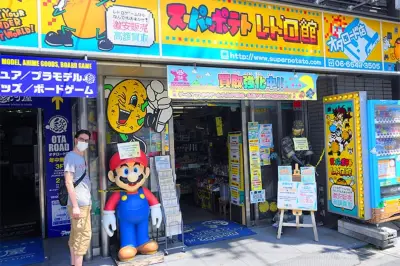
Department stores are similar to department stores back home, selling relatively high-end goods. The ground floor usually has big brands, upper floors sell clothing, the top floor has restaurants, and the basement sells food. Some department stores have a section for daily necessities, from tools to kitchenware, from nail clippers to bicycles. Electronics stores have a wider range than Suning or Gome, including game software, office supplies, and even bath products—my husband even bought a radio there. Camera shops are generally small but well-stocked and often cheaper than in China, usually with Chinese-speaking staff. I didn't see supermarkets like Walmart in Japan. Food is usually bought in the basement of department stores or at convenience stores. I came with a shopping list, mainly for drugstores. Osaka has many drugstores, each occupied by Chinese tourists. Groups of Chinese are taken to drugstores before their flights, leaving with full bags; consequently, items often run out. We couldn't find everything we needed in one store, but each purchase had to reach a certain amount for tax-free, so making up the total became an extra burden. Drugstores offer direct tax exemption, while department stores require paying tax first and then getting a refund, involving an extra queue and a nearly 2% handling fee, effectively reducing the tax saving to a bit over 6%. Department store tax refund also separates clothing, general goods, and food, which we didn't know at first, so we didn't get refunds on general goods and food. Once, we bought clothing in the evening and wanted to combine it with other items for tax refund the next day, but it wasn't allowed. Japanese clothing, in the more formal category, is mostly synthetic fibers; cotton and linen fabrics are mostly in Japanese-style, loose and not very attractive, so I didn't find many clothes I liked. Some sportswear and casual items were relatively cheap, so I bought a few. The largest item I bought this time was a pressure cooker—ironically a German brand—only because the price was good. Also, my son and I each got a pair of glasses. Although they were 'made in China', they were cheaper than in China; the total for both was 19,000 yen.
What impressed me most in Japan was the quality of the people and the comfort of the environment. Japanese people are known for being polite, constantly bowing. Several times we were in shops until closing time, and all the staff stood at the counter, bowing to every passing customer, murmuring something like 'thank you for your patronage'. It made us very uncomfortable, and we rushed out almost fleeing. People queue orderly when taking transportation or shopping; no one rushes. Salespeople are very attentive, constantly looking for items. When trying on shoes, they knelt down to help you put them on, always smiling and speaking softly, especially women who spoke in a high-pitched voice. The owners of the two guesthouses were so polite it made us embarrassed; they never stood up straight when talking to us. The Kyoto owner knelt beside the sofa when giving us introductions. Another aspect of their character is conscientiousness: they wrap purchases very carefully, escort you to the checkout counter, heat up bento boxes for you, pack them separately with utensils, and put ice packs in bags for dairy or chocolate that might melt.
But the downside of this is slowness. Sometimes we were in a hurry, or we didn't need the wrapping at all—it ended up in the trash back at the hotel. On buses, people get up unhurriedly when reaching their stop, one by one taking out change, no one urging or getting impatient. When asking for directions, if a person doesn't know, I would ask someone else, but if they start checking, you can't just walk away, which is frustrating. The cleanliness of Japan is reassuring: no trash on the streets, no smell in restrooms. However, it drove us crazy that there were very few trash cans; we had to carry our waste with us, sometimes all the way back to the hotel. While queuing for the elevator at the Tokyo Metropolitan Government Building, someone dropped a tissue on the floor, and an elderly security guard picked it up and put it in his pocket. Speaking of restrooms, I recall the toilet seats. Public restrooms are mostly equipped with heated, washable toilet seats. With such promotion, how could we Chinese ignore them? Many public facilities are very user-friendly: there are baby chairs mounted on the wall in restrooms, flushing is done automatically or by simply placing your hand near a sensor, and trash cans open when you approach.
During our days there, it rained almost every day. Sometimes we borrowed umbrellas from the hotel, but in big cities, many places can be accessed underground. Stations have elevators and escalators, buses and subways have air conditioning, and hotel air conditioning is very smart. We didn't feel much inconvenience while outside.
A few small observations: I had heard that on Japanese subways and trains, everyone reads quietly. From my observation, there were some people chatting loudly, but not many. And not many were reading books; most were on phones, tablets, or laptops. Many middle school students had crooked teeth, which surprised me, given their high living standards and emphasis on dental care. Japanese people like to use umbrellas and wear hats; shops sell these items in great quantity and they are quite expensive. Not many people wear sunglasses.