Enter via Osaka, Exit via Tokyo: Experience Japan's Purest Cultural Feast! — A Kanto-Kansai-Fuji Mountain Cultural Food and Hot Spring Journey (8-Day Independent Travel)
Foreword: This trip stems from my years-long passion for hot springs. I always dreamed of soaking in a quiet forest hot spring on a winter afternoon with light snow falling; just imagining it already brings infinite beauty and relaxation. This feeling lingered in my heart until this journey. After graduating from school, because we lived far apart, and due to marriage, having children... my best friend and travel buddy from six years of college and graduate school became just a name in my phone. With the great support of my husband, son, and parents, I finally embarked on a trip that felt like returning to our college days—a two-girl journey. From planning the itinerary, choosing the destination, booking flights and hotels, we had a deep默契.
Time: The trip lasted eight days, departing on January 20 and returning on January 27. Because we didn't want to take red-eye flights, we chose Star Alliance connections, which took a day each way. We spent 6 days in Japan: 3 days in Osaka and Kyoto, 1 day at Mount Fuji, and 2 days in Tokyo. Although we crossed Kanto and Kansai, we booked a Japanese night bus to cover the long distance overnight, saving one day's time and hotel costs. So the itinerary was quite sufficient.
Cost: Excluding shopping, the trip cost about 9,000 RMB per person. Of that, pre-booked expenses including round-trip flights,民宿, hotels, night bus, Suica card, visa fees, mobile communication, etc., were about 5,300 RMB. This included one night at the best view Fuji hot spring hotel in Kawaguchiko (Kozantei Ubuya: Premium Japanese Suite) plus meals (private room: kaiseki dinner + Japanese breakfast) for 2,172 RMB (just over 1,000 per person). Other expenses included entrance fees, food, and local transportation. Overall, self-booking was over 1,000 RMB cheaper than the packaged tours available at the same time.
Preparation Before Departure:
- Choice of Departure City: Since we lived far apart, we first considered where to depart. I'm in Qingdao, my bestie is in central China. We consulted classmates who had taken Spring Airlines' 9.9 yuan flights to Japan and considered Zhengzhou, Qingdao, Tianjin, Beijing, Dalian, and Ningbo. The first two were where we lived—Qingdao is close to Japan but inconvenient for my friend. Tianjin and Beijing had classmates and affordable flights. Dalian and Ningbo had 9.9 yuan deals but the domestic flight to those cities was too expensive, so we eliminated them. Finally, we chose Beijing, which added a few hundred yuan for transportation and accommodation, but we got to visit our alma mater, so it felt worthwhile.
- Visa Application: Japanese visas are quite troublesome. My bestie in Henan could apply for simplified procedures in Beijing (just ID and education). Qingdao, under Shandong jurisdiction, had fewer options. I chose China International Travel Service. The receptionist was friendly. Some agencies might require a deposit based on documents, but since I provided a full set (bank statements, deposit proof, income proof, property and vehicle documents, education, social security, etc.), no deposit was required. I got the visa in a week.
- Flight Booking: I already mentioned the departure city and red-eye issue. For Star Alliance booking, I chose Beijing departure, daytime arrival with a layover, because the price was the same as a red-eye flight. The downside is longer travel time, but the layover in Seoul allowed shopping. We didn't want to spend a night at the airport after arriving late, so the daytime layover was ideal. Both flights went through Seoul, with 4-5 hours at the Shilla Airport, enough for duty-free shopping. Asiana Airlines: Beijing 10:50 → Seoul → Osaka 18:55; Tokyo 9:00 → Seoul → Beijing 14:10. Round-trip tickets cost 1,850 RMB including tax.
- Accommodation: To experience a Japanese home, we mostly stayed in民宿. Only in Kawaguchiko did we stay at a hotel for the hot spring and Japanese-style room. We booked via Airbnb. Unlike China, the total price includes cleaning fee (one-time) and service fee (per night). The cleaning fee was even higher than one night's rent. To save, we chose to stay at just one Airbnb in Kanto because it's convenient to go from Osaka to Kyoto or Nara. We picked areas with easy transit: Shinsaibashi in Osaka and near Sensoji in Tokyo. Discount coupons for Airbnb were available. Osaka 3 nights: 1,507 RMB; Kawaguchiko Kozantei Ubuya 1 night: 2,171 RMB; Tokyo 2 nights: 1,307 RMB; total 4,897 RMB, per person 2,493 RMB.
- Special Reservations: Some attractions require advance online booking, such as Kyoto Imperial Palace and Imperial Palace in Tokyo. They need to be booked a month in advance on the official website, with guided tours at designated times. Since we only had one day in Kyoto, the Palace was too far, so we skipped it. Booking site: http://sankan.kunaicho.go.jp/english/index.html (available in Japanese and English). Online tutorial: https://bbs.qyer.com/thread-935063-1.html.
- Night Bus: Considering JR trains and our schedule, we chose the night bus from Osaka to Kawaguchiko. We compared several and picked the reputable Willer Express. We registered on their official website (https://willerexpress.com/cn/) a month in advance and bought tickets with a Visa/Mastercard. The site has simplified Chinese. Occasionally there are discount tickets, but we didn't get any. We paid 542 RMB for a 3-seat row ticket (4-seat row would be about 100 less). On departure day, we went to the designated spot and showed the order on our phone.
- City Transportation Cards: We compared Suica, ICOCA, subway passes, and rail passes. We ended up combining the Osaka One-Day Pass, Tokyo Subway 2-Day Pass, and ICOCA card. Japanese city transport is expensive; if you want to save, plan ahead. ICOCA and Suica are nationwide rechargeable cards. The main difference is that ICOCA can only be refunded in Osaka and Suica in Tokyo, but if you plan to return, it doesn't matter. We bought a card online for 130 RMB with 1,500 yen stored and 500 yen deposit. The passes are available at stations with your passport. Choose according to your itinerary. The Osaka pass includes free entry to many attractions. At Osaka Airport, we bought a one-day pass for 2,300 yen. The Tokyo subway pass cost 1,200 yen at a nearby station after arriving in Tokyo. It's valid for 2 days on all Tokyo Metro lines except a few private lines and the Narita Express. Even so, it's very cost-effective. We intended to take a direct subway to Narita Airport, but we missed it by two minutes—Japanese punctuality! Then we spent an extra 2,300 yen on a direct train and almost missed our flight. In retrospect, waiting for the next express would have been better. Oh well, a bitter memory.
- SIM Card or WiFi: You can buy a SIM card or rent a WiFi device. Rental WiFi uses domestic networks, so Google Maps doesn't work. Google is very useful in Japan. We downloaded many apps; the most useful were Google Maps and restaurant sites. Later in Osaka, we met an aunt who rented WiFi and couldn't use Google Maps—she kept asking me to check routes on WeChat. We bought a 7-day SIM card from SoftBank for 112 RMB with 20 minutes of calls, 5GB 4G data, and unlimited 3G data. It was very convenient. I suggest not streaming videos; 5GB is enough for WeChat, Weibo, and route queries. My bestie used too much data streaming videos and then the 3G was too slow.
- Insurance: Since Japan is safe and we didn't do skiing or high-risk activities, basic insurance sufficed. We bought 8-day overseas travel insurance for 88 RMB.
- Apps: Before departure, we downloaded shopping, food, translation, and transport apps. The most useful were Google Maps, a food website, shopping scanner, Travel Translator, and Japan Transit. Google Maps gave optimal routes and costs. The food site helped find discounts. The shopping scanner showed price differences at various drugstores (even the same chain). Travel Translator was needed for independent travel. Japan Transit was a supplement but less used. Also, many drugstores had Alipay promotions.
- Also, to learn more about Japanese history and culture, I bought a digital audio guide covering 50+ attractions including Disney and Universal Studios, with GPS auto-play. It cost 48 RMB. I personally found it very helpful; I could hear history and culture while sightseeing.
- Daily Items: Coat, sweater, base layer (Japan's winter doesn't require down jackets), power bank, charger (Japanese voltage is 110V, no adapter needed), toiletries, bed sheet (personal habit), slippers, hand warmers...
- We met in Beijing a day early, visited our alma mater (the CUC meat pie we wanted was closed for holiday), and stayed near the school. Taking a taxi to the airport was cheaper than the subway for two. We left 40 minutes for the airport (check-in and customs took 2 hours). Departing at 7 a.m. was wise—there were long queues due to winter break and Chinese New Year. After check-in and security, we took the airport shuttle to the terminal. Beijing Airport duty-free shops had good prices and variety. We recommend leaving enough time to browse and store purchases for pickup on return. Note that there are also duty-free shops after arrival but with fewer choices.
- Both flights were on Asiana Airlines, a star carrier. Overall, the cabin was spacious and meals okay, but the flight experience was rough—I nearly got sick before landing.
- Departed Beijing at 10:50, arrived Seoul 13:45. Next flight at 17:10 to Osaka, arriving 18:55. That gave over 3 hours to explore Shilla Airport duty-free. Be careful of the time difference: iPhones auto-adjust to local time, but watches show Beijing time. Seoul is one hour ahead. Don't miss your next flight.
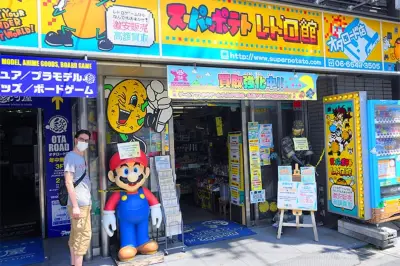
- Arrived Osaka at 18:55, changed to SIM card while queuing for customs, Google Maps worked fine. Saw Mario after exiting.
- At the airport tourist center, we bought the Osaka One-Day Pass (only available to passport holders). Took a photo of it. If you haven't bought a SIM card, they sell them and rent WiFi there, but I'm not sure about multi-day SIMs.
- Since it was late and we had luggage, we headed straight for transport. Japanese transit is really complicated—not like Beijing's ring roads. Here's a Tokyo subway map I found earlier to give you an idea.
- Before coming, I checked routes online, found the boarding point, and swiped our ICOCA cards. Note: Japan's subways are operated by multiple companies, and lines are named, not numbered. Different lines may belong to different operators. Some lines are not covered by the rail pass, but ICOCA covered them. With these two cards, we were fine. Some themed trains were beautiful, but we didn't get to ride one.
- After exiting the subway, we walked a bit to our accommodation, enjoying Osaka's night scenery.
- Passed many izakayas where people were drinking. Japanese are very quiet and polite in public, but once inside an izakaya, they get loud and let off steam—probably due to stress. Also, Japan is incredibly clean: streets and parked cars are spotless. Interestingly, you can't eat on the street or on the subway, and there are no public trash cans. I always wondered if people eat at home before going out. Even near convenience stores, few people eat outside. We bought some snacks from a roadside stall—they were delicious. Forgive my ignorance; it was my only time eating while walking, and luckily it was at night.
- Reached the accommodation. Most residential areas in Osaka consist of small 5-6 story buildings close together. Owning one must mean you're rich. Our民宿 was like that: a mini elevator, mini rooms and bathroom—a perfect example of "small but complete."
- Had a quick wash and went to bed; flying all day was tiring.
- Day 2 (Kyoto): We got up early and left, using Google Maps for the best route. Osaka's morning was quiet and clean—unlike Tokyo's fast pace, it felt silent, and even the subway had few people.
- Subways run on time. If you miss one, the next might not go to your destination or takes longer. There are 9 types of trains: Limited Express, Express, Rapid Express, Semi-Express, Section Express, Local, etc., from fastest to slowest, with different stops. For the train to Kyoto, the express skipped all stations until Kyoto. Each train's type is marked on the front, station sign, and side. Here's a detailed schedule: workdays vs. weekends. Black numbers are hours, after that are minutes. The bottom-left shows the 9 types with colors; the color of the minute indicates the train type. For example, 7:01 on a weekday is a Limited Express. You must check which stations it stops at—never just board any train.
- After a couple of transfers, we arrived at Fushimi Inari Taisha.
- Early morning, few people. Most shops at the entrance were closed. We saw a shop selling buns and bought two.
- At the entrance, we took a photo of the map.
- At Japanese shrines, there's a purification fountain. We washed our hands and rinsed our mouths as per the instructions.
- Entered the main gate of Fushimi Inari. Vibrant colors, majestic—a strong historical feel. Overexposed photo, sorry.
- Torii gates: These are structures that mark the boundary between the sacred and the secular, an entrance to the divine realm. They are simplified versions of Chinese-style arches, with two wooden pillars, a crossbeam, and a tie beam, very minimalist.
- Guardian foxes: Japanese have long believed foxes are messengers between humans and gods, bringing good harvests and weather. They are protectors of farmers. At Inari Shrine, there are two fox statues: one with a jewel in its mouth, the other with a key—unusual for a shrine.
- Unique roof architecture: Shrine building prototypes appeared in the Yayoi period (300 BC – 300 AD).
- Because Inari is the god of business prosperity, many companies and groups pray here. When they succeed, they return to donate a torii as thanks. Over time, thousands of torii gates line the path up the mountain. It takes about 3.5 hours to walk all the way.
- The most impressive feature is the Senbon Torii (thousands of gates), stretching for kilometers up Mount Inari. There are over 10,000 gates, truly breathtaking.
- Short on time, we climbed halfway and turned back. Along the way, we used the audio guide to learn about shrine history.
- At a shop near the entrance, we bought Japanese chestnuts—huge and sweet, like sweet potatoes.
- Kyoto-exclusive cola at a small store.
- Returned to the station and headed to the next stop. Fushimi Inari Station itself has a unique design.
- The previous night, I noticed in the travel booklet from the Osaka pass that Kyoto National Museum was closed on Mondays. Indeed it was closed, so we went across the street to Sanjusangen-do. Small area, but convenient!
- Sanjusangen-do: The main hall is a long rectangular building (60m) with 33 spaces separated by pillars. The garden is small, and no photos are allowed inside—all Buddha statues. We had to change into slippers. Built in 1164, it houses 1001 statues of Kannon, with the seated Thousand-Armed Kannon as a national treasure.
- The Japanese garden is different from Suzhou's elegant style; it's more about refined stability and changing views from any angle.
- Moved on to the next spot. A random shot: blue sky, delicate buildings. Kyoto, this ancient capital, has a careless elegance on the surface.
- Next: Nijo Castle. Imposing walls, wide moats, refined ancient architecture. Nijo Castle, built in 1603, was the power symbol of the Tokugawa shogunate.
- Each attraction in Kyoto has its own character, like a walking history book of modern Japan, presenting traditional Japanese elements for you to explore without ranking by size, only by historical value.
- Nijo Castle is surrounded by stone walls and moats. Inside are Honmaru Palace, Ninomaru Palace, Chinese Gate, Kuroshoin, Shiroshoin, residential quarters, a former keep, and other buildings. Ninomaru and Honmaru are the main structures.
- Passing through the main gate, we headed to Ninomaru Palace, a national treasure. Its Chinese-style decoration exudes a deep Tang Dynasty atmosphere, the most luxurious of the Edo period.
- The interior is spotless; wood and paintings are impeccably maintained. Every detail reflects meticulous craftsmanship and care.
- The walls and sliding doors feature paintings by Kano school artists, mainly Kano Tan'yu and his disciples. Nijo Castle is thus a museum of Kano-style painting. The "Nightingale Floor" corridors squeak lightly when stepped on, warning of intruders. We had to change into slippers again. No photos allowed of these treasures.
- Ninomaru Garden is a strolling-style water garden with curved ponds, clear streams, arranged stones, three islands, and a three-tiered waterfall.
- The central building, Honmaru Palace, originally a five-story keep as grand as Ninomaru, was struck by lightning and burned down in 1750. The current Honmaru Palace was relocated from the former Kyo Imperial Palace.
- Inner gate and moat.
- Outer area was for troops, with wooden rest houses.
- We left Nijo Castle around 2 p.m. and went for lunch. The restaurant was near Kiyomizudera on Ninenzaka. On the way, we walked against the flow of people leaving Kiyomizudera. Many shops along Ninenzaka and Sannenzaka—I couldn't resist going into every one despite being hungry. We saw many people in kimono, mostly Chinese, I think.
- I had pre-booked a Gion unagi restaurant online for 31 RMB. We arrived before 3 p.m. and went straight in without queuing. But I'm not sure if it was because it was off-peak or I was fooled—there was no queue anyway.
- If we had arrived before 3 p.m., we could have watched a maiko performance, but we were 5 minutes late. The owner said no—again, Japanese punctuality.
- The restaurant was small but elegantly decorated. Even with limited space, they had a garden visible from every seat, making dining elegant. We ordered quickly with the English-speaking server: unagi rice, soba, tempura, and matcha (served before or after meal). The food was good, but I find Japanese food generally salty yet not flavorful—lots of soy sauce. This was one of the few decent meals.
- After lunch, we hurried to Kiyomizudera, another important site. Located halfway up Mount Otowa in eastern Kyoto, founded in 778, it's the city's oldest temple, dedicated to Thousand-Armed Kannon. It has been burned down and rebuilt several times. In 1994 it became a UNESCO World Heritage Site. The building is imposing and cleverly constructed without a single nail.
- From below, we could see the vivid, lofty gate. It was 4 p.m., and visitors were leaving. We visited in the sunset, savoring Kyoto's ancient history.
- The temple is on the slopes of Otowa Mountain. From the top, overlooking Kyoto in the evening glow, it felt ethereal.
- The "Kiyomizu Stage" is supported by 139 pillars and juts out over the cliff. It was under renovation, so we could only get a thrilling sense from the side. There's a saying: "Jump off the Kiyomizu Stage," meaning to make a resolute decision. The stage offers a panoramic view of most of Kyoto, and on clear days, even Osaka in the distance.
- The stage is part of the main hall, which enshrines a standing Eleven-Faced Thousand-Armed Kannon. Visitors must remove shoes to step onto the elevated wooden floor. Out of respect, no photos of the Buddha.
- The quiet stage in winter—I wondered how many desperate Japanese had jumped from here.
- The rebuilt three-story pagoda is not open to the public.
- The famous "Otowa Waterfall" splits into three streams, representing longevity, health, and wisdom. Believed to have magical powers, we drank from each.
- After exiting, it was before 7 p.m., and we wanted to browse small shops, but they closed surprisingly early.
- Found a ceramics shop open. The exquisite tea sets and dishes were beautiful; I'd have bought some if not for the risk of breakage.
- A building, either commercial or residential, with classic elegance.
- A traditional craft: woven windmills by local artisans.
- Not ready to end Kyoto, we wandered streets as night fell. Many nearby attractions—we just walked and looked.
- Passed Kennin-ji.
- Finally found a geisha performance venue, but it was closed! A Yayoi Kusama poster was outside.
- Wandering Gion, most establishments looked deep and mysterious. Near the end, we saw a geisha get out of a high-end car and walk with an elderly man. Even with heavy makeup, she was graceful and captivating.
- Exiting Hanamikoji, we stumbled upon Yasaka Shrine, the head shrine of all Yasaka shrines in Japan, and the oldest and most famous in Kansai. Many Japanese couples hold weddings here.
- Found the "beauty water" and scooped some to wash.
- The compound is small, with many buildings for prayer; you can choose what to pray for.
- Exited to find a drugstore with reasonable prices. Bought a batch of items.
- The top item (rice mask) I used later—it's amazing. Hydrating and absorbing. Ota Gastrointestinal Powder for my husband's chronic gastritis—works well.
- Back in Osaka, passed Dotonbori. It was late but bustling with young people.
- Noticed an interesting difference: In Osaka, people stand on the right on escalators; in Tokyo, on the left.
- Back at our tiny民宿, exhaustion hit.
- Overall, the first day was fulfilling. Some places were closed (National Museum, geisha hall), but we saw the main ones. We missed Kinkaku-ji and Arashiyama because they're on different lines. Arashiyama deserves a full day. If time allows, stay an extra day in Kyoto—I prefer this historic capital to bustling Osaka or Tokyo.
- Day 3 (Osaka): Today we used the Osaka One-Day Pass from the airport. The pass comes with a booklet listing free attractions. We used Google Maps to plan routes and order. Besides free entry, most subway lines were free. If a paid route was needed, we used Suica or detoured via free lines.
- Around 7 a.m., Japan was quiet—cleaner than at night.
- First stop: Tsutenkaku. After passing through a downward passage, we took an elevator to the top. Overall air quality in Japan is good, better than Qingdao. Osaka's blue sky made the daytime cityscape pleasant.
- Coming down, there were four floors with sightseeing and play areas. Bought commemorative coins and trinkets.
- Second stop: Museum of Oriental Ceramics. Exhibited Chinese, Korean, and Japanese ceramics and daily items. Took about 1.5 hours.
- Lunch at a random Japanese chain in an underground mall—mediocre.
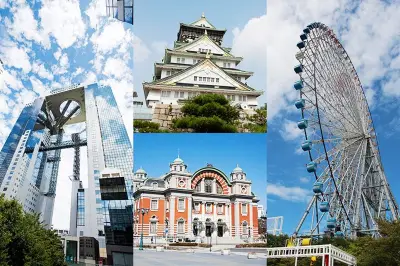
- Third stop: Osaka Castle. This was the highlight of the day. Osaka Castle Park hosts the keep. Original castle built by Toyotomi Hideyoshi, later destroyed in war; rebuilt by Tokugawa Ieyasu. The palace, gardens, and moats are beautiful. The keep was later restored after lightning. From the subway, we could already see the walls and moat—solemn in the winter afternoon.
- The park is large, with outer and inner moats. Expect 3-4 hours to explore.
- This entrance might be to Nishinomaru Garden, a cherry blossom spot. Not the season, but we could see the keep.
- Inner city gate with moats on both sides.
- Inside, two main areas: the keep and a three-story building, perhaps the old city hall, now full of souvenir shops with fine crafts. Bought presents.
- Loved the red daruma fridge magnets.
- Particularly liked the Japanese lacquer boxes for jewelry, but too large to carry.
- Exited to the keep, which was under renovation but still open.
- At the park, there's a time capsule. In 1970, "Time Capsule 1" (60 tons, wrapped in concrete) was buried; eight days later, "Time Capsule 2" was buried. They contain 2,098 items in 29 boxes representing 20th-century civilization. Capsule 1 will be opened in 6970; Capsule 2 was first opened in 2000, then every 100 years. Reminds me of Doraemon's time machine.
- Inside the keep is a small museum with Osaka Castle history and short films about Edo-period daily life and events. Watching films is better than text for understanding history.
- From the keep, we saw the park square and the time capsule.
- After exiting, we strolled to the back park. The setting sun on historical ruins was beautiful. The garden trees looked like rime ice from Northeast China—every step a view, with trees, paths, rocks, and buildings in harmony.
- Originally planned to take a free boat ride with the pass, but it ended at 4 p.m., so we missed it. On to Umeda Sky Building for night views.
- Fourth stop: Umeda. Lively, on par with Shinsaibashi but more business-oriented. Many people around.
- 20-minute walk from the subway. Long lines of Korean students on holiday. We queued around 6 p.m., and soon after us, free entry with the pass was cut off.
- The pass allows free entry before 6 p.m. We queued at 5:50, but actual entry was around 6:30—they counted us as having queued before 6.
- Took the elevator to the top floors. First, an indoor observation deck with 360° views of Osaka at night. Every window was occupied. We squeezed into one.
- The indoor nightscape felt high-tech and stylish.
- A photo with my university friend of six years using the reflective ceiling.
- Then an escalator up to the open-air observation deck. Great experience—though cold and windy, the 360° view was unbeatable. Worth it. Bring warm clothes.
- The night view of Osaka from my phone and camera looked like postcards—so beautiful I couldn't delete any.
- Spent about an hour there. Downstairs, there was an underground food court. We chose a long line at a small okonomiyaki shop. After wandering, we came back to queue. It wasn't too long. Met an Italian gentleman in line; he came on recommendation. The food was delicious, and the owner gave us handwritten notes.
- Counter seats and tables—we lucked out not getting the counter, but still close. Great taste.
- Ordered two types of okonomiyaki—like Chinese iron plate pancakes.
- After dinner, went up to the second floor for a pharmacy—more shopping.
- On the way back, passed Shinsaibashi, tomorrow's destination. Too tired to explore.
- For work, I've been dealing with fire hydrants. Noticed unique fire-fighting water outlets on buildings in Japan.
- Day 3 ended. In my opinion, Osaka's must-sees are Osaka Castle Park and the Umeda Sky Building. Overall, it lacks the unique character of Kyoto's streets and buildings—a big commercial city inevitably sacrifices some history.
- Day 4 (Shinsaibashi & Night Bus): Today was just shopping in Shinsaibashi and eating, plus the night bus to Kawaguchiko. No heavy itinerary—just wander and eat Japanese wagyu. For real Kobe beef, you need to go to Kobe; in Osaka, we settled for local beef. Pre-booked a famous chain restaurant.
- Since we were exhausted from previous days, we slept in. Packed, asked the host to store luggage in a small storage room, and left around 10 a.m. At Shinsaibashi, many shops hadn't opened. We stumbled upon Ichiran Ramen and went in.
- Small storefront, no line since it wasn't mealtime. This was our brunch.
- Ordered via a vending machine, then took the ticket inside.
- The counter was narrow, with partitions between seats that could probably be opened. Each person had a small table with partitions on both sides. The kitchen was directly in front, with a curtain below. There was a sheet to mark preferences; after filling it, press a bell, the curtain opens, hand over ticket and sheet, done.
- Ichiran's ramen looked appetizing. Portions were small—even I, a woman, needed more. You can order extra noodles after finishing. The taste was richer and less greasy than Japanese ramen in China. Choose noodle firmness per taste.
- After eating, we started shopping. Shinsaibashi has many malls and brand stores. You can buy most things you want, except clothes (Chinese aesthetic differs). Visited electronics, cosmetics, toy stores.
- For those who like Tomica cars at home, you can buy models—each store has different ones.
- Many unique shops along the streets.
- As dusk fell, we headed to the pre-booked Matsusaka beef yakiniku restaurant near Hozenji. There are two branches; make sure you go to the right one.
- The area is worth exploring, but our reservation time came, so we hurried to eat.
- Unfortunately, we booked the wrong branch, but the staff was friendly and personally led us to the other one.
- The beautiful figure leading us in front with a small flag.
- Passed a Matsumoto Kiyoshi store; we'd shop after eating. This one was large with a full selection.
- Passed Kani Doraku (crab)—not interested in seafood, so skipped.
- At the restaurant, we got a private room. Ordered small portions of different cuts of Matsusabe beef, plum wine, yuzu sparkling drink, and rice. The food was okay; the sparkling drink was good. The beef was tender but not mind-blowing. Cost about 300 RMB per person, the most expensive meal after Kawaguchiko.
- Different cuts of beef.
- I think this was almond tofu—I loved it, my friend didn't.
- The busiest stores were clearly drugstores, haha.
- After dinner, we retrieved our luggage and headed to the night bus station. Allow plenty of time. We walked a long way from the subway with luggage, struggling with stairs and unclear directions. It was dark with few signs. Eventually asked a security guard—the departure spot was actually on the second or third floor of a building, and we were at the wrong entrance. With less than 20 minutes to departure, we ran frantically. Finally saw an arrow sign after the elevator.
- Outside, our night bus was waiting. It looked like a proper station. Glad we chose this operator—registered email still receives occasional fare updates.
- Departure times for different destinations. Ours was 21:55 to Kawaguchiko, the first stop. It would stop at Umeda around 10:30 or 11 to pick up more passengers.
- Staff carefully tagged each piece of luggage to avoid mix-ups.
- For a good rest, we booked a 3-seat row (more expensive than 4-seat) that reclines to 175 degrees with footrests. Comfortable. Fell asleep quickly after boarding. Safe.
- Thus ended the Kansai journey. Time flew. Some places left unexplored—regrets for next time. Hopefully soon.
- Day 5: Kawaguchiko – Mount Fuji. This was the most memorable day. I've always felt a connection with mountains; each time I see one, the weather and breeze are perfect. This time was no exception. Enjoying nature with a friend or loved one is my ideal journey. I love cultural and natural scenery because they inspire reflection on life's vastness and the greatness of humanity. It makes you realize how small you are in history, broadens your mind, and sets aspirations. Travel can be a catalyst for personal growth, letting go of trivial worries in a relaxed state.
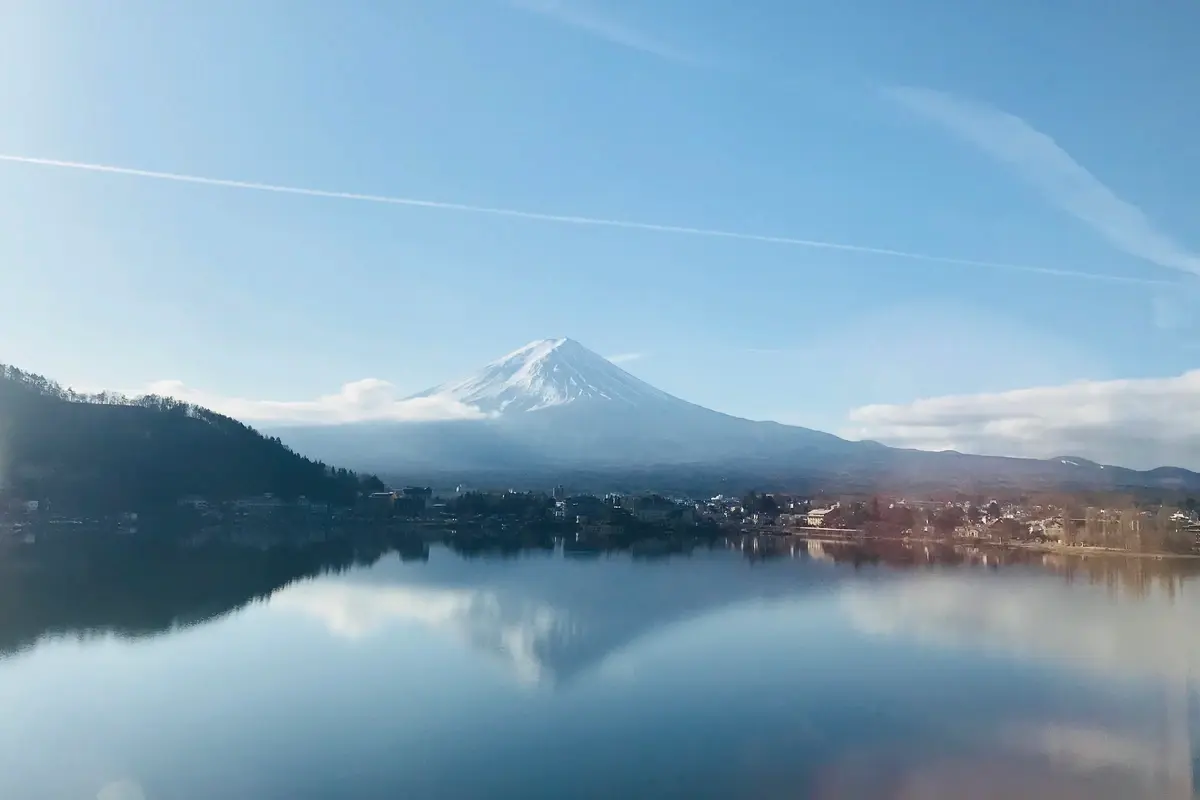
- To fulfill my dream of soaking in a hot spring while viewing Mount Fuji, I chose between Kawaguchiko and Hakone. For me, it's about the mountain—especially seeing Fuji reflected in the lake. A rare sight. Lucky me, I saw it. Thanks to my bestie for letting me choose. Even if Hakone offers views of Fuji on clear days, it can't compare to the foot of the mountain. Mount Fuji's climbing season is fixed (July 1 to August 26). I don't have the deep reverence of the Japanese; just soaking in a hot spring with a full view would satisfy me. I booked the best hotel of the trip: Shuhokaku Kogetsu, with the best Fuji view, including kaiseki dinner and breakfast—perfect since dining options are limited there.
- I thought I wouldn't sleep well on the bus, but I actually slept through the night, waking only twice. Arrived at Kawaguchiko Station around 7 a.m. The morning mountain air was cold but invigorating. Excitedly, we transferred to a bus to the hotel to drop off luggage.
- Because it's near the mountain and lake, Kawaguchiko is much colder than Osaka. Snow covers the area year-round. The station in the morning—everyone's clothing showed how cold it was.
- Got a map of Kawaguchiko from the station; you can choose lakeside attractions or use a bus pass.
- Our luggage was too big to carry on the bus, and we wanted to experience how expensive a taxi is. The distance was less than 5 km. We took the only taxi of the trip. The weather was beautiful; shortly after starting, we saw Mount Fuji. In less than 20 minutes, we arrived. The fare was about 60 RMB—expensive! Note: You can buy a bus pass at the station, but since our goal was just hot springs and not the attractions, we didn't. ICOCA works on buses too.
- Check-in wasn't until 3 p.m., so we stored luggage, used the public restroom to freshen up, and went out. Based on guides, the attractions around Kawaguchiko are ordinary, so we just wandered two spots.
- Hotel lobby with an indoor garden.
- Small indoor garden.
- From the hotel, we could see Mount Fuji straight ahead. Just looking made me happy—like a serene beauty. No reflection in the lake; later I learned it appears only on clear mornings.
- There's a bus stop right outside the hotel, very convenient. But we walked to enjoy the mountain atmosphere.
- All along the road were hotels. The best view is from Shuhokaku, after which the road bends.
- This building seemed to be the only place near Kawaguchiko (except the station) to eat and buy souvenirs. First, find food.
- Fuji bus pass.
- Residential houses. Many elderly people live here—great air, but inconvenient for food.
- Residential area with signs of life, but few people walking.
- A 21st-century real estate agency—I took a photo of house prices for those interested.
- Crystal blue sky, clean streets, sparse pedestrians.
- Coca-Cola can designed for Mount Fuji.
- First attraction: Fuji Viewing Platform. It offers a full view of Fuji. If you don't take the ropeway down, you can see Lake Kawaguchi.
- Inexpensive ticket. Bought a one-way ropeway to enjoy the mountain scenery, then walked down.
- From the ropeway, you can see Lake Kawaguchi.
- At the top: full view of Mount Fuji with the town below. The snow-capped peak was uniquely beautiful.
- Small shop selling snacks and souvenirs. A small observation deck. Picked up a pinecone on the way down and brought it home.
- By the time we descended, it was after 1 p.m. There was a restaurant nearby, but it had stopped serving. We had to settle for convenience store instant noodles.
- After eating, we visited another attraction. Since it was off-season, many places were closed or expensive. After two quick spots, we returned to the hotel for hot springs and dinner.
- Arrived just after 3 p.m., checked in, and enjoyed Japanese-style kneeling service. The matcha and sweets were delicious. The staff asked if it was a special occasion (maybe they'd do something). We were told dinner and breakfast times—if you miss them, no food.
- Checked into our room. Since I forgot to confirm the date after booking, and no rooms were available when I reconfirmed, the agent upgraded us to a one-bedroom suite instead of the regular Japanese room.
- Suite bedroom: a staff member would come later to lay out the futon.
- Room's viewing balcony offered a panoramic view of Mount Fuji.
- Rested a bit, watched and photographed the sunset mountain scenery.
- Then went to the hot spring. The baths are separated by gender; no photos allowed—just took one at the entrance.
- After a quick soak, it was dinner time—the grand kaiseki. The hotel provided a private dining room with a night view of the garden. There were larger rooms for families; we had a smaller one. There was also a main hall.
- Our private room for the evening.
- Night garden view from the room. The hotel was thoughtful—our waitress was a Chinese student, very friendly, explaining each dish.
- Seafood sweets with scallop—a surprising flavor.
- Seafood soup and a cup of warm miso soup. Japanese miso is said to be a longevity soup, but I couldn't get used to the burnt taste.
- Dessert: more seafood and ice cream—can you tell which are seafood?
- After dinner, there was a self-service tea and massage chair area on the second floor.
- Made some floral tea, sat in the lounge with my bestie, gazed at the sparkling Lake Kawaguchi, and contemplated life.
- Returned to the suite—the futon was already laid out. Soft and inviting—a good night's sleep.
- Today was wonderful: clear Fuji view, sunny weather, few people, and a hotel experience that added poetry and longing to the journey. There's more to life than April days—there's this scene and this mountain.
- Despite the expensive hotel and comfortable bed, sleep quality doesn't depend much on environment. I tossed and turned, half awake until dawn. Next day, clear again—Fuji visible in the distance.
- Morning: After a quick wash, we went to breakfast before the time ran out. Same place as dinner. On the second and third floors, there were dining areas. Ours was called "Sharaku-tei," evoking the Edo period.
- Breakfast was nutritious but again, average taste.
- After eating, we went for another soak. To fully enjoy the hotel, we delayed until 9:30 a.m. to pack and check out (required by 10 a.m.). Just then, from the window, we saw the rare reflection of Fuji in the lake—absolutely stunning! Worth every penny.
- After checking out, we saw Mount Fuji in the clouds, like a goddess waving—different from yesterday's clarity but equally enchanting. What incredible luck to have seen three different views of Fuji in one day and night.
- At check-in, we could reserve a free shuttle to the station (half-hourly). We booked the time, boarded on time, and arrived at Kawaguchiko Station. Queued to buy tickets to Tokyo—many buses daily, but they arrive at different areas. Lunch at a convenience store near the station.
- Passed Fuji-Q Highland (closed on January that day).
- After about two hours, arrived at Shinjuku Station. There was a tourist center—asked about the Tokyo subway pass, but they didn't sell it there. They told us where to buy it nearby. So one stayed with luggage, the other went to get the pass. After a 20-minute walk, found a small shop near the station selling the pass. Passport required. We decided on the 48-hour pass (I think there's also 36-hour).
- The pass came with a guidebook in multiple languages. Took it back for study.
- Returned to the tourist center. My bestie suggested trying on free kimono for a photo.
- Headed to the民宿, dropped off luggage. Planned to watch kabuki tonight. Started using the subway pass (valid for 48 hours from first swipe). Since we had less than 48 hours in Tokyo, started now.
- The民宿 was a tiny three-story building. The landlord lived above the second floor; there were two rooms on the first floor. We had one.
- After dropping luggage, we went out. Near Sensoji's market street—though we lived close, we hadn't had time to explore.
- Tonight's destination: Kabuki-za Theatre. I had researched theatres in Osaka and Tokyo. The one in Ginza, built in 1889, is a representative piece of Momoyama-style architecture, over a century old. The building itself is worth seeing. I checked online for times and prices; you can also check at the tourist center. To save money, we only bought the cheapest act. Arrived early, bought tickets, and wandered around.
- Kabuki is a hereditary profession, male-only. Actors have high social status—it's high art, like Chinese opera, once only for the wealthy.
- We entered during intermission. Waiting seats were outside. We queued early. Our "maku-mi" ticket allowed only rear seats. During dinner time, the audience ate quietly; after eating, they took their trash out. No photos or eating after the performance starts. Full-play and act-only tickets likely use different entrances. From the rear, we could only see the actors' movements; many used binoculars for expressions. It's personal how much you appreciate. You can read about the story online beforehand, then enjoy the music, chanting, gestures, and costumes.
- Entrance instructions—read carefully.
- After the show, we strolled around Ginza. Takoyaki was average.
- Bustling streets near Ginza.
- Men waiting outside an izakaya.
- Found a large BicCamera—a comprehensive shopping center (4-5 floors) with electronics, games, bags, Lego, face masks, etc. After purchase, you could use a 92% discount coupon from a review app plus Alipay promotions. Discounts increase with amount spent. Overall, 92% plus tax-free and discounts was good.
- Day 7 (Tokyo final day): Today was a Tokyo one-day tour. Planned route and spots using the pass guidebook. Set off early. Our民宿 in the morning light—small and delicate. The landlord was a woman from Hunan who came to Japan ten years ago, had two boys, very welcoming. I was most impressed when I saw her pick up her older son from kindergarten in the afternoon. He was lying asleep in a seat on the bicycle handlebars, wearing only a thin top and shorts, legs bare. I asked if he'd catch cold. She said he'd be hot. Well...
- First stop: Sensoji. Since we lived behind it, we went against the usual tourist flow. First, the market street—few people, many shops still closed. Reached the back gate of Sensoji. Edo-style architecture: vibrant colors, elegant shapes, intricate carvings. You can draw fortunes and buy omamori (charms). Then exited to the main gate's market, with lots of snacks and souvenir shops. If you love handicrafts and street food, you could spend the whole morning here.
- Snacks in the market (like mochi).
- Love the maneki-neko. After hesitation, decided to buy and carry back.
- The symbols of Sensoji are Kaminarimon (Thunder Gate) and the giant straw sandal on the gate. The audio guide explains the stories.
- A shop sold washi (traditional Japanese paper), listed as UNESCO intangible cultural heritage. Brought some back.
- Rickshaws near Sensoji—can use if tired.
- Lunch at a chain restaurant near Sensoji—one of the few good meals in Japan.
- Second stop: Ueno Park. After exiting the subway, there's a unique building in front of the park.
- The park is large, with museums, science museums, shrines, and sports facilities. Worth exploring.
- Third stop: Tokyo National Museum. Located at the end of the park. Highly recommended. It displays Japanese history from the Jomon and Yayoi periods through the Momoyama and Edo periods—customs, artifacts, cultural development. Follow the chronological order from earliest to modern Japan. It's essentially Japan's history. Takes about 4 hours. No photos inside. Entrance fee: 620 yen (about 40 RMB). The biggest gain is knowledge.
- The museum building's exterior.
- Managed a sneaky photo of a screen painting by the Kano school—a national treasure: "Pine Forest" screen.
- After visiting, it was dark and my phone was nearly dead. Went back to the民宿 to recharge, then went out shopping for souvenirs. Again at BicCamera. Bought Tomica toys (educational and fun). My friend bought some—changed her mind at the cash register, but the kids loved them. We skipped Tokyo Tower since we'd already seen a similar observation deck in Osaka.
- Though the itinerary was short, it was fulfilling. From Sensoji to the Tokyo National Museum—I would definitely visit again. Tokyo, despite lacking the cultural atmosphere and slower pace of Osaka and Kyoto, has its merits. Here you can experience Japan's purest culture—not just a city memory, but a cultural feast.
- Attached a photo of Tokyo's street at 6 a.m., commemorating the bumpy return trip.
- Our flight was at 9 a.m. via Seoul. Pre-checked the route—there was a direct subway to the airport covered by the pass. Left at 6:30 a.m. to catch the 7:10 a.m. express (10-minute ride). But we missed it by one minute because we couldn't get a taxi and arrived at the subway station late, struggling with luggage to find the elevator. The next train was 20 minutes later. We made a bad decision to exit and take another line. My bestie lost her pass. We had to buy a ticket, then spent extra time and money (over 100 RMB) to finally get on a train to the airport. In hindsight, waiting for the next express would have been better. At last we made the flight and returned home.
- When we arrived in Seoul, due to the delayed connection, we could still shop at duty-free. But on re-boarding in Seoul, luggage was checked strictly—overweight items cost extra. After arriving at Beijing Airport in the afternoon, there was an arrival duty-free shop, but with fewer items than the departure one. Our stored items were picked up there.
- This travelogue, delayed by a year, is finally completed relying on photos and strong memory. Some details may be fuzzy, but it provides a reference and a beautiful memory for myself. If I have the chance, my next stop might be Hokkaido, Nagoya, or Shirakawa-go. In short, this is a place I'd like to visit many times.