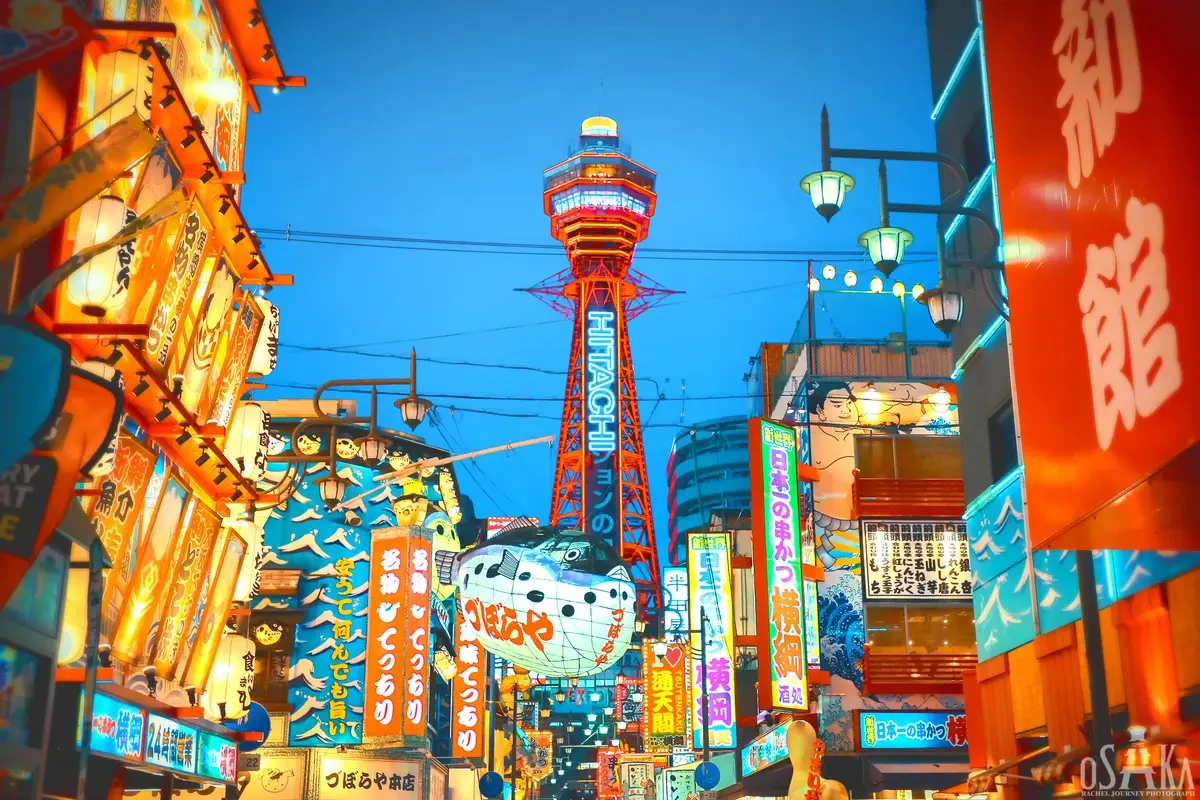
Osaka, the Trip I Owe You – Repaid with 20,000 Steps a Day
Pang Ge: Your first trip to Japan was to Osaka, right?
Me: No, no (embarrassed face). I just flew into Osaka and went straight to Kyoto.
Pang Ge: Why didn’t you explore Osaka?
Me: I didn’t have enough time!
Pang Ge: I saw so many photos online of Shinsaibashi, Dotonbori, Shinsekai… and Universal Studios. Great food, shopping, fun – why skip it? Let’s go to Osaka this time! Stay a few days and do a deep dive.
Me: Okay, I was thinking the same.
And so, this Osaka trip began.
Honestly, Osaka is a hugely popular tourist city in Japan, yet in some ways, it’s also easily overlooked.
Osaka’s bustle is second only to Tokyo. For Japan, it’s a crucial city. For travelers, it’s just as important because it serves as the gateway for most Kansai trips.
Most visitors to Japan have set foot in Osaka, simply because many flights from China to Japan – especially to the Kansai region – land here. But its proximity to the ancient capital Kyoto and charming Nara steals its spotlight. So most travelers make only a brief stop, rushing through. Over time, its travel identity became that of a shopping mecca, with most people coming mainly to buy.
Clearly, on my first visit, I was one of those typical tourists. This time, it’s different! Although Pang Ge’s main reason for wanting to come was his love of shopping, I was more intent on fulfilling the trip I owed.
Last time, due to time constraints, I focused on Kyoto and Nara and missed out on Osaka’s magnetic charm. After I returned, I couldn’t stop thinking about it. I felt I owed Osaka a proper trip – and myself an Osaka experience.
Osaka’s renown as a shopping paradise is so dazzling that everything else gets dimmed. But it actually boasts a wealth of wonderful sights: urban landscapes, historic architecture, theme parks, and a congregation of amazing food – all its highlights.
As a metropolitan hub in Kansai, Osaka’s bustling city center offers deeply satisfying scenery. From towering skyscrapers to design-savvy neighborhoods, a thriving commercial scene, and enchanting night views, these blend with preserved Japanese traditional charm to forge the city’s one-of-a-kind modern Japanese character.
Osaka’s food culture is intense, with countless restaurants, snack joints, and high-end dining, offering something for every palate.
Then there’s Universal Studios Japan, which thrills kids and big kids alike – currently home to Asia’s only Harry Potter theme park.
Since this was a trip I owed, I was determined to treat it seriously. So we decided on an in-depth Osaka exploration. Most people spend one to three days; we planned for five.
Our itinerary packed many spots, but spread over the days, each day wasn’t overly crammed. Yet somehow, once we started walking, we just couldn’t stop. Perhaps with every extra step, we could take in a bit more scenery. Thus we clocked over 20,000 steps daily, even topping 30,000 on some. I figure these daily 20,000 steps express my love for Osaka enough.
Below is our itinerary for reference:
DAY1: Arrive in Osaka → Hearton Hotel Shinsaibashi → Ichiran Ramen → Orange Street
DAY2: Universal Studios Japan → Hozenji Yokocho → Meoto Zenzai → Kushikatsu Daruma → Dotonbori
DAY3: Yoshinoya → Osaka Castle Park (Tenshukaku, Nishinomaru Garden) → Shitennoji → Shinsekai → Tsutenkaku → Yokozuna
DAY4: Umeda Sky Building → Takimikoji → Hep Five Ferris Wheel → Tempozan Ferris Wheel → Santa Maria → Amerika-mura → Kogaryu Honten → Shinsaibashi → Kamukura Ramen
DAY5: Kani Doraku (Dotonbori Main Store) → PABLO Cheese Tart → Depart Osaka
The most anticipated part of our Osaka trip was Universal Studios Japan, because among Asian USJs, only Osaka’s has the Harry Potter area – a total fan frenzy! Actually, it’s also Asia’s first Universal Studios. If you love the Universal theme park series, Osaka is not to be missed.
We had planned to wake up early and arrive before the gates opened. But Pang Ge and I both love sleeping in, so we left a bit late and arrived to find quite a crowd. Still, since it was a weekday, it was much better than a weekend.
Once inside, we rushed to “The Wizarding World of Harry Potter” – the hottest area and the most important to us.
Its popularity is so immense that the park enforces a timed-entry policy. Each guest can only enter once per day with an Express Pass or entry ticket at their designated time. Once inside, there is no time limit, but you cannot re-enter after leaving.
Timed entry tickets are distributed near the Central Park at the entrance to the Wizarding World, but as we passed by, a staff member told us we didn’t need to get one that day. There was no fixed schedule; just queue at the entrance and enter in an orderly fashion.
After about twenty minutes, we stepped into the Wizarding World of Harry Potter. It was already packed with visitors, and Hogwarts Castle came into view.
At this point, you could skip the line, explore the area, or try other attractions. But most chose to stay in line for “Harry Potter and the Forbidden Journey.”
After queuing about another hour and a half, we finally rode it. When the line moved indoors, we got to see highly authentic recreations of the school’s interior.
If you had to pick the most worthwhile ride at USJ, Harry Potter and the Forbidden Journey would definitely be on the list.
Riders sit four abreast in each vehicle, pass through a mist, and enter the magical world. Following Harry Potter, you embark on an adventure swirling around the castle, with Quidditch, Dementors, and friends all appearing. We soared at breakneck speed over the vast expanse of Hogwarts. The Golden Snitch darting by felt almost within reach.
If I had to describe it, I’d call it “riding a roller coaster with VR.” With the VR goggles, the visuals are incredibly real. I’m not sure if the motion is actually a coaster, but the sensation of flying on a broom is very much like a coaster.
After the ride, we went to the lake beside Hogwarts Castle – a great spot for an Instagram-worthy photo.
Then we began strolling through Hogsmeade Village, where you can find numerous faithful recreations of classic scenes from the movies and delightful little details of the magical world.
Within the entire Harry Potter area, there are three distinct quick-service restaurants offering film-inspired food, and eight shops selling official merchandise including wands and robes. There are also three live street performances that pop up from time to time.
From Gryffindor, Slytherin, Hufflepuff, and Ravenclaw, one student from each house forms a quartet to sing famous tunes from the wizarding world.
For the Triwizard Tournament, delegations from Durmstrang and Beauxbatons arrive at Hogwarts, staging energetic duels and elegant performances.
Near the area’s entrance, the Hogwarts Express train sits – a popular photo spot. The conductor even makes periodic appearances to pose with guests.
Butterbeer – almost everyone carries a cup, a must-try! Multiple stalls sell it throughout the area; just queue at any one. Price: 600 yen.
When we entered the Wizarding World, we were so eager to get in line that we skipped the vintage car. On the way out, we took our photo there as promised.
After unlocking the Harry Potter world, we had no other must-dos. So we wandered the park counterclockwise, doing whatever we felt like.
Next to the Wizarding World is Amity Village, themed around the movie “Jaws.” We rode the Jaws ride, cruising on a boat in a peaceful harbor until a giant man-eating shark ambushes us.
The Jurassic Park area is also popular, but the Flying Dinosaur was closed for maintenance that day. Plus, by noon, we wanted a break, so we skipped its rides.
If you still want a Jurassic fix and the Flying Dinosaur is down, try the Jurassic Park River Ride, similar to a splash boat.
We roamed the area, snapped casual photos, bought snacks, and rested by the lagoon.
A turkey leg cost 900 yen (about 60 RMB), roughly the same as at Shanghai Disney.
Minion Park is the second-most popular area after Harry Potter – the world’s largest Minion area.
Here we rode Despicable Me Minion Mayhem. The giant dome screen shows the Minions’ chaotic antics, with hyper-realistic images that totally immerse you, followed by a wildly exciting ride. The story follows the bond between the Minions and Gru’s three daughters – heartwarming and moving, as if you’ve stepped into that mischievous, hilarious world.
Graffiti on buildings and Minion sculptures scattered around fill the area with a cute vibe.
If you’re buying USJ souvenirs, I’d say Minion-themed ones are the most worthwhile.
Minion popcorn buckets are irresistible, with several designs to choose from – they reportedly rotate seasonally. A standard one is 3,200 yen; the one I liked had an extra pair of flashing trendy glasses, so it was 3,480 yen.
The popcorn is banana-flavored (Minions love bananas!). The portion is huge – Pang Ge and I didn't finish it until the next day. Once home, the bucket works as both a decoration and a quirky bag, perfect for other theme parks, spring outings, or autumn trips.
Minion sandwich cookies are also great. I got the ice cream-filled ones, but there are fruit-filled too. With those cute googly eyes, they’re delicious and adorable. 600 yen.
The New York area’s streetscape is excellent – a great spot for photos.
We did both Terminator and The Amazing Adventures of Spider-Man, both decent. Still, I’d recommend Spider-Man if time is tight. Terminator is a 3D film about humans fighting machines to decide their fate.
Spider-Man, voted the world’s No. 1 entertainment attraction for seven consecutive years, takes you on a ride with over 100 special-effect scenes.
Hollywood is the first area you encounter entering USJ, but since we bolted straight to Harry Potter, we circled back last.
The highlight here is Hollywood Dream – a coaster split into forward and backward versions. The backward one, called Backdrop, lifts you 43 meters, facing the sky, so you never know what’s coming.
Space Fantasy – The Ride is also popular; the car spins and accelerates as the story progresses, whizzing past planets and comets. However, it was closed that day – seems like at least one major attraction is down each day.
By that point, after a long day, we were tired, so we skipped more rides. Instead, we strolled Hollywood and then exited.
As dusk fell, the sunset painted Universal Studios in brilliant colors. At the exit, there were cartoon characters waving goodbye – you can snap a photo with your favorite.
Besides these areas, there’s also San Francisco, WaterWorld, and Universal Wonderland, which I haven’t mentioned because we didn’t linger there.
WaterWorld is a classic USJ stunt show re-enacting the film’s action scenes. It’s spectacular, but we’d already seen it at Universal Studios Singapore, so we skipped it.
San Francisco lies between Jurassic Park and Minion Park. I was too eager for the Minions, and after that we headed to New York, so we didn’t backtrack.
Universal Wonderland is mainly kiddie rides. Pang Ge and I, being big kids ourselves, passed.
It’s nearly impossible to do the entire park perfectly in one day. So missing something is no big deal – we’ll be back more than once to USJ, and we can catch what we missed next time.
At night, USJ sometimes has a Hogwarts Castle light show and a nighttime parade, but not daily – it depends on the schedule. We hadn’t planned to watch, so we left around dusk. If you’re interested, allocate more time.
USJ tickets come in several types: a one-day pass costs 7,800 yen for adults, 5,400 yen for children, 7,100 yen for seniors 65+. A two-day pass is 15,400 yen for adults, 10,500 yen for children.
I recommend buying tickets online in advance to avoid wasting time. E-tickets are emailed to you; save the image on your phone and scan at the gate.
Oh, and you can bring food into USJ. Since we overslept and had no time for breakfast, we bought some and stashed it in our bags to eat while queuing. The staff checked our bags, only reminding us not to litter, and let us in with the food.
As for transportation: USJ is on Sakurajima. Take the JR Sakurajima Line to Universal City Station, then walk about five minutes.
Between the subway station and the USJ entrance is the CityWalk shopping street. Generally, after the park, you can wander here – it’s quite lively, and dinner options are great.
But we were set on hitting up trending eateries in Dotonbori, so we didn’t linger.
Osaka Castle Park is essentially the heart of Osaka. Inside, Tenshukaku is a great place to learn about Osaka’s history, while the park’s natural beauty makes it a green oasis in the city.
The park is huge – you could easily spend a whole day here. Many locals come to relax on weekends. For visitors, a full day might be too much; I suggest focusing on Tenshukaku.
Tenshukaku stands in the center of Osaka Castle. It was originally built by Toyotomi Hideyoshi during the Warring States period, later destroyed and rebuilt. We now see the third-generation keep.
The keep is the tallest, most important, and most iconic part of a Japanese castle, functioning as a watchtower and command post, and a symbol of feudal power.
Tenshukaku has eight floors. The eighth is the most popular, offering a 50-meter-high panoramic view of the majestic castle and the city.
We first lined up on the ground floor for the elevator – it only goes up, to the fifth floor. Then we walked to the eighth.
Sweeping views: the expansive castle park, modern high-rises, the Osaka Plain, distant mountains – absolutely splendid.
We circled the observation deck, soaking in the 360-degree scenery, then descended the stairs to explore.
History buffs should take their time; each floor holds fascinating Osaka history. Pang Ge and I, less scholarly, just skimmed.
However, the ground-floor theater is worth a watch. It screens a five-minute program about Toyotomi Hideyoshi and Osaka Castle, with Chinese subtitles.
Tenshukaku itself is a sight to behold. So we headed to Nishinomaru Garden, a prime spot for admiring the keep’s exterior.
The massive moat is 70–90 meters wide, with stone walls rising 20 meters, built from a reputed million boulders – a testament to the castle’s impregnability.
Nishinomaru Garden is also a cherry blossom haven, home to several hundred trees. In spring, it’s swathed in pale pink. We visited in winter, so we missed that, but wandering the grounds and resting on the lawn was still lovely.
Though we didn’t see sakura, we enjoyed the plum grove. The entire park is planted with many trees, offering seasonal beauty year-round.
If you’re observant, you might spot little surprises like this.
Osaka Castle Park is free. Tenshukaku admission: 600 yen; Nishinomaru Garden: 200 yen. We used the Osaka Amazing Pass, which covered both.
At the park, the pass also offers a free Gozabune boat ride, normally 1,500 yen. It circles the inner moat for about 20 minutes with commentary.
We finished sightseeing around noon and went to the boarding point at Gokuraku Bridge, but by then we’d have had to wait over an hour, so we skipped it. If you want to ride, go to the bridge first and exchange your ticket, then see the sights and time your return.
People say Japan’s religious culture resembles China’s, and Shitennoji Temple felt very much like a Chinese temple to us.
Shitennoji was founded by Prince Shotoku, making it Japan’s oldest Buddhist temple, hence the oldest official temple and one of the oldest architectural complexes.
Japanese temples usually have a chozuya at the entrance for purification before worship. You probably know the ritual; plenty of guides online explain the steps.
The establishment of Shitennoji marked a milestone in Japanese Buddhist culture. It signaled the defeat of the conservative Mononobe clan, and from then on, Japan widely embraced advanced continental civilization, laying a solid foundation for the nation’s transition to a centralized state.
At Shitennoji, the Middle Gate houses statues of two guardian kings. In the Kodo Hall are statues of Amida Nyorai and the eleven-faced Kannon, while the five-storied pagoda enshrines a relic of the Buddha.
You can climb the pagoda to pay your respects to the relic, but the stairs are narrow and steep, so you must be careful and remove your shoes.
I’m not deeply versed in Buddhist culture. At first hearing the name “Shitennoji” (Four Heavenly Kings Temple), I thought it honored four deities. Obviously, that’s not the case.
Arranging the Middle Gate, pagoda, Golden Hall, and Lecture Hall in a straight line, surrounded by a corridor, is called the “Shitennoji style” – which actually originated in China.
Shitennoji served not only as a guardian temple for Buddhism and the nation, and a center of politics and diplomacy, but also as a cradle for Japanese culture, art, and industry.
As we explored, we appreciated the architectural refinement. The vermilion corridor, especially, is a fantastic photo backdrop!
Shitennoji tickets: the central garan is 300 yen, the honbo garden is 300 yen. The Amazing Pass gives free entry.
Osaka’s development is inseparable from Osaka Bay. To understand the city’s history, besides Tenshukaku and Shitennoji, a bay visit is essential.
A lovely way to experience the bay is by boat. We chose the Santa Maria, a cruise ship modeled after the one Columbus sailed when he discovered the New World – built at twice the size.
Aboard the Santa Maria, we drank in the grand seascape. Osaka Bay is a large gulf on the southern coast of Honshu Island, elliptical in shape. To the west, Akashi Strait connects to the Seto Inland Sea; to the south, Kitan Strait links to the Pacific via the Kii Channel.
Cruising the bay, you can feel Osaka’s modern development. Since the 1950s and 1960s, industry boomed, with coastal reclamation and heavy industry – steel, shipbuilding, automobiles, petroleum, machinery, electronics – turning Osaka into a major trade port and industrial center.
The Santa Maria departs from the west pier of Tempozan Harbor Village, near the Kaiyukan aquarium. There are daytime 45-minute and twilight 60-minute cruises. We took the daytime one, running from 11:00 to 16:00 hourly. Plan accordingly. Ticket: 1,600 yen, also free with the Amazing Pass.
When we finished, we happened upon a massive school group visiting the aquarium. The Kaiyukan is popular, but we’d recently seen many aquariums, so we passed – saving it for a future trip with our future child.
Osaka boasts many skyscrapers, towers, and Ferris wheels – all great spots to overlook the city’s skyline. In other cities, I might just pick one. But Osaka is different: first, because there are so many, and second, the Amazing Pass includes a bunch, so you don’t pay extra. The more you visit, the more you save. So why not? Let’s check out the Umeda Sky Building first!
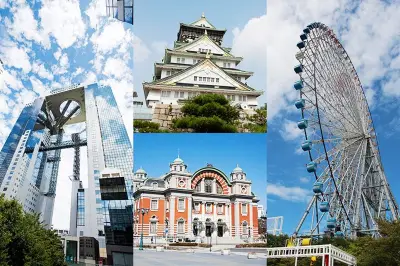
The Umeda Sky Building is a skyscraper in the Shin-Umeda City district of Kita-ku. It’s Japan’s first connected supertall building. Compared to Beijing’s CCTV Headquarters or Suzhou’s “Gate of the Orient,” it might seem a bit modest, but remember, it opened in 1993. Back then, such an outstanding structure was truly admirable.
It’s 173 meters tall, with 40 floors above ground and 2 below. The top 39th and 40th floors form the Floating Garden Observatory. The observatory connects sky and earth through a gigantic atrium about 150 meters high, evoking the solemn atmosphere of a semicircular cathedral.
The building’s semi-reflective glass frequently mirrors the sky, as if lifting the garden, made of large aluminum panels, into the vast heavens.
An elevator takes you to the observatory interior, then you walk upstairs to the top-floor Sky Walk, where you step outdoors and enjoy unrestricted 360-degree views of Osaka.
We gazed at the city of Umeda and beyond, watching the traffic flow and the pulse of life.
Still winter, the outdoor chill made us retreat inside after one circuit. Inside, numerous picture windows act as frames, capturing urban beauty.
There are also many special couple seats and a shrine for love, where romantic memories are made.
Below the observatory is a suspended escalator connecting the two towers. Riding it, suspended high in the air, is quite a thrill.
The Umeda Sky Building’s Floating Garden ticket is 1,500 yen, free with the Amazing Pass. Take the elevator to the 35th floor, then walk up to the 39th to explore.
Tsutenkaku is an observation tower in Shinsekai, designed after the Arc de Triomphe and Eiffel Tower – a landmark of Osaka. Its name simply means “tower reaching the sky.” At 103 meters, it was once the tallest structure in the East.
If you’re a Detective Conan fan, you know it from “The Last Wizard of the Century” (Movie 3).
We now see the second-generation Tsutenkaku. The first was built in 1912. To improve earthquake resistance, seismic rubber was added to its four legs. Along with that work, the original ceiling mural was replicated, and it’s beautifully illuminated at night.
For city views from Tsutenkaku, you have two options: the outdoor “Tenbo Paradise” on the 5th floor (extra 500 yen) or the indoor Golden Observatory (5F) and Light Observatory (4F) – no extra fee. I’d say the indoor views are sufficient. Tower admission: 600 yen, free with the Amazing Pass.
We timed our visit for dusk and were rewarded with a breathtaking sunset. Blue Osaka transformed into orange, then purple, as neon lights began to glow.
Osakans seem to love glowing things. After dark, the 4th-floor Light Observatory turns into something like a disco, with dazzling lights and mirror balls. Here, we felt Osaka’s ever-vibrant spirit.
On the 5th-floor Golden Observatory sits the third-generation Billiken statue. Billiken and the Seven Lucky Gods form Japan’s most auspicious Eight Lucky Gods, helping fulfill wishes for business, studies, or love.
On the 3rd floor, there’s a Glico House showcasing the history of Pocky, plus fun photo spots.
The 2nd floor has a Kinnikuman archival corner – a must for fans, especially male enthusiasts.
The transfer point for the observation elevator is also on the 2nd floor, where you can grab a free paper model of Tsutenkaku.
Tempozan Ferris Wheel sits on Osaka Bay and can be combined with the Santa Maria cruise and Kaiyukan aquarium. Ticket: 800 yen, free with the Amazing Pass.
Once the world’s largest, tallest, and most technologically advanced wheel, it has a diameter of 100 meters and height of 112.5 meters – a huge attraction and the most eye-catching structure in the Tempozan Harbor area.
At its base, there’s a giant Lego giraffe – a photo op for Lego fans.
The wheel has two cabin types: transparent floor and non-transparent floor. Only four clear-floor cabins exist, so the wait is long. Non-transparent ones usually let you board right away. I’d recommend the non-transparent; the limited clear ones aren’t worth the wait.
With 60 gondolas, each holding eight people, we went at an off-peak time and had a whole cabin to ourselves.
One rotation takes about 15 minutes. From up high, we saw the sea, distant mountains, and the entire city, from the Akashi Kaikyo Bridge all the way to Kobe’s Mount Rokko. The Santa Maria showed us the bay from the water; the Ferris wheel gave us a bird’s-eye view.
Hep Five is a shopping complex in the Umeda area. Topping the building is a striking bright red Ferris wheel – a rooftop wheel.
Enter Hep Five, take the elevator to the 7th floor, where the entrance is. Ride price: 600 yen, again free with the Amazing Pass.
Before boarding, staff will take your photo, which you can buy for 500 yen, though few do.
Then enjoy a 15-minute sky journey, rotating 75 meters in diameter.
The gondola passes through the roof and rises 106 meters above the ground, offering unobstructed city views. Stickers on the window point out landmarks.
At the highest point, you can spot the Akashi Strait, but I loved the view of the bustling Hankyu Umeda Station better – the crisscrossing rail lines spoke volumes about the city’s bustle.
Don’t miss the speaker in the gondola, located above the seat back. Plug in your phone (standard round jack; iPhone needs an adapter) and play your own playlist. Adding music to this brief sky trip, with your curated songs, is magical.
After the ride, we browsed Hep Five for a bit. It’s near the Umeda Sky Building, so you can visit both together.
Osaka’s urban vibe is unique. There are skyscraper-filled commercial districts and design-driven neighborhoods, each with a distinct theme. So exploring these themed streets is key to an Osaka trip. They satisfy shopping urges, offer mouthwatering food, and boast fantastic night views. Strolling through them, you truly grasp why Japan is called the Land of Neon.
Shinsaibashi is Osaka’s largest shopping area – let’s start there! It’s packed with boutiques and specialty shops, bustling from morning till night with locals and tourists alike.
Centered around the arcaded Shinsaibashi-suji Shopping Street, you’ll find department stores, century-old shops, and myriad small, affordable stores.
It is said that a shopping district formed here as far back as the Edo period, over 380 years ago. To this day, it remains vibrant, attracting all ages.
Shinsaibashi-suji is its beating heart. This approximately 580-meter-long covered arcade stretches from Nagahori-dori south to Soemon-cho-dori, protected from the elements.
Kimono shops, Western clothing and shoe retailers, jewelers, fashion boutiques, and eateries line the street. Many people love to window-shop and spend their leisure time here. On weekdays, about 60,000 shoppers visit; on weekends and holidays, the number swells to around 120,000.
There are also many secondhand luxury shops, or “recycle shops,” selling pre-owned bags and jewelry. Daikokuya is a well-known one with a large selection.
You might have heard that you can snag an LV bag in Japan’s recycle shops for a thousand RMB – that’s an exaggeration. A thousand gets you a very old model with significant wear. Prices have no fixed rule; they depend on style, rarity, condition, etc.
Many travelers to Japan start or end their trip in Osaka, making it a prime shopping destination.
As everyone knows, Japanese drugstore cosmetics are famous, and many people do their final haul in Osaka. Shinsaibashi is Japan’s renowned shopping and distribution hub, gathering over 80% of domestic cosmetics and skincare brands.
Dotonbori sits at the southern end of Shinsaibashi, so you can explore both together. While Shinsaibashi is mainly for shopping, Dotonbori is all about food.
Dotonbori is both a district and a canal.
In 1612, Yasui Doton, Yasui Doboku, and Ando Toji of Hirano Township used private funds to dig a canal, completed three years later in 1615. Doton’s achievement led Lord Matsudaira Tadaaki to name it Dotonbori.
From the 1960s, numerous theaters emerged in the neighboring area, and Dotonbori evolved into an entertainment district famed for its theaters, commerce, and nightlife.
The must-photograph symbol here is the Glico running man billboard – the standard shot whenever Osaka appears on TV or in movies. The figure of a runner crossing the finish line symbolizes health. It is said to have stood here since 1935, witnessing the neighborhood’s changes. Today’s sixth-generation sign, installed in 2014, uses 143,976 LED chips; the background shifts from half an hour after sunset until midnight.
If you love coated pretzel snacks, you know Glico. This long-established brand, which started with lactic acid bacteria foods, holds a significant place in Japanese hearts. So people come from far and wide to see this running icon.
Yet it’s not just the Glico sign – Dotonbori’s character shines through its billboards. Outdoor ads and neon lights merge; entire building facades are adorned with colorful neon.
The Japanese say “eat till you drop in Osaka,” and in Osaka, “feast in Dotonbori,” because it boasts the richest concentration of food.
Dotonbori encompasses almost all of Osaka’s signature dishes: ramen, takoyaki, teppanyaki, conveyor-belt sushi, fugu cuisine, and more. The most famous are Osaka Ohsho and Kani Doraku, two nationally acclaimed authentic Japanese restaurants you must try. I’ll detail them in the food section later.
Japanese store signs are so fun – they’re all so cute, inducing an instant craving to step inside!
In Dotonbori, there’s also supposedly the world’s second-best melon pan. Pang Ge is obsessed with it. Rumor had it that a little green van sold it from a tiny open-air food court in Shinsaibashi.
We searched for two nights and never found it. Eventually we spotted a melon pan shop in Dotonbori with a long line, so we bought some. Tasted pretty good, but not “cryingly” good, haha. Plain melon pan: 200 yen; with ice cream filling: 400 yen.
After eating, you can browse the Ebisubashi-suji and Sennichimae Doguyasuji shopping arcades, both adjacent to Dotonbori.
Sennichimae is only about 100 meters long but packs over forty specialty kitchenware and restaurant supply shops. From kitchen utensils to tableware, it’s a favorite haunt of professional chefs and restaurant owners. The cute display window trinkets also attract tourists – make great souvenirs.
Ebisubashi-suji grew from the approach to Imamiya Ebisu Shrine. Along with long-established stores, trendy boutiques and a wide array of shops characterize the street.
As neon flashes at night, Dotonbori buzzes. After soaking up the bustle on the streets, why not hop on a sightseeing boat and admire the canal’s nighttime views?
Actually, many boat tours operate in Dotonbori, and most are covered by the Amazing Pass, so no need to buy separate tickets. But those near Dotonbori Bridge tend to be crowded with long waits. Walk along the canal to less central boarding points; those projects usually have no wait.
At night, illuminated signs, neon lights, and reflections on the water interplay, turning the city even more glamorous.
Osaka’s geography is special – it winds through river mouths, earning the nickname “Water City Osaka.” Unlike walking the streets, cruising on the water provides a different angle. Historic buildings and lively neighborhoods intermingle – this is Osaka’s unique scene.
We ended up taking the PIRATES OF OSAKA, boarding at Nihonbashi Pier. The cruise lasts 20 minutes, departing every hour and half-hour.
Once, Osaka was ranked alongside “Edo’s 808 towns” and “Kyoto’s 808 temples” as “Naniwa’s 808 bridges.” Perhaps an exaggeration, but Osaka certainly has many. Now, just along Dotonbori’s 2.7 kilometers, there are sixteen bridges, each uniquely designed.
The PIRATES OF OSAKA cruise passes nine of them, going back and forth. From the water, we admired Ukifune Bridge, Fukezato Bridge, Daikoku Bridge, Shin-Ebisu Bridge, Dotonbori Bridge, Ebisu Bridge, Tazaemon Bridge, Aiai Bridge, and Nihonbashi.
Shinsekai, despite the name “New World,” isn’t new at all; it is actually a slice of old Osaka – the best place to trace the city’s former mercantile spirit.
Besides the Glico sign in Dotonbori, Shinsekai probably appears most in films and shows set in Osaka. This district exudes homemade downtown charm, especially the iconic pairing of blowfish lanterns and Tsutenkaku, featured in many productions.
Shinsekai somehow creates a two-dimensional, anime-like feeling. Everything here is three-dimensional, but stepping inside, we felt as if we’d crossed into a Japanese cartoon.
There are several nostalgic alleyways, like Takoyaki Yokocho in the southeast. Legend says its name came from the “clang, clang” of geishas playing taishogoto instruments. Today it’s officially called Nanyo-dori Shopping Street.
During Osaka’s postwar reconstruction, this alley turned into a beloved local food and shopping street. It retains that original look, packed with izakayas, yakiniku joints, sundry shops, and shogi parlors full of elderly men – super lively.
Many Billiken statues dot Shinsekai. I already mentioned Billiken in the Tsutenkaku section, so I won’t repeat. The largest one stands in front of Yokozuna Kushikatsu shop – go give it a hug!
Hozenji Yokocho is a small alley beside Dotonbori. It’s less than 100 meters long but houses over sixty tiny restaurants, bars, and cafes.
Unlike other streets, Hozenji Yokocho is paved with stone. It oozes old-time Edo atmosphere, making you feel transported centuries back. Who knew such a tranquil spot was hidden next to bustling Dotonbori?
The alley is named after Hozenji Temple, the most important spiritual center for the Dotonbori area. Worshippers pour water over the statue of the deity until it becomes entirely moss-covered.
Hozenji is known for granting wishes in love and business. Its prayers are said to be highly effective, so a steady stream of visitors comes daily. It’s also called Sennichiji because it supposedly held a thousand-day chanting vigil.
There’s no particular restaurant to recommend, except for one dessert shop you should try: Meoto Zenzai, a sweet red bean soup renowned as an Osaka specialty.
Also here is the Kamigata Ukiyoe Museum. Kamigata woodblock prints mostly depict kabuki actors, realistically portraying them without excessive beautification. About fifty prints are on permanent display, the only museum in the world focused on Kamigata ukiyo-e.
Admission is 500 yen, free with the Amazing Pass. But it’s only open during the day; we came at night, so we missed it. If you have time, check it out – just plan accordingly.
Earlier I mentioned Umeda Sky Building. Most visitors head straight to the Floating Garden Observatory and easily overlook Takimikoji, a food alley in the building’s basement.
The observatory let us experience modern technology; Takimikoji took us back to the Showa period.
This alley recreates the 1950s-1960s Osaka ambiance. We saw retro items: old barber shops, vintage cars, tin toys, scarlet post boxes.
Amid this nostalgic Showa-era streetscape, we immersed ourselves in memories. At the same time, you can enjoy popular foods like kushikatsu and okonomiyaki, as well as Western cuisine, izakayas, and cafes.
We visited the sky building in the morning, so we chose to lunch here. With many nearby offices, it gets busy at lunchtime; go early to avoid queues.
For Takimikoji, I recommend Okonomiyakikiji for okonomiyaki – details in the food section. Best to eat first, then wander, so you don’t have to wait for a table and have ample time for photos.
Regarding shopping in Osaka, besides Shinsaibashi, Pang Ge’s second favorite is Orange Street, mainly for streetwear brands. Note that Orange Street isn’t as bustling as Shinsaibashi; shops start closing around 8 p.m.
Orange Street (Tachibana-dori) stretches 800 meters, lined with cafes, boutiques, variety shops, and imported furniture and interior stores – a hip hangout for young people.
A must-visit on Orange Street is Supreme, the only dedicated store in Osaka. In all of Japan, there are only six Supreme shops. You often need to queue due to crowds. If the line is limited, check nearby resale shops – some sell brand-new Supreme items.
For vintage bags, I recommend Pour Mademoiselle. Even just browsing is enjoyable with its retro decor. Chanel lovers especially should visit; they have a very broad Chanel selection.
Orange Street was originally called Tachibana Boulevard. In 1990, a public contest renamed it Orange Street. With its trendy new name, interior shops, cafes, and clothing stores gradually gathered, turning it into a fashionable boulevard.
The Horie district, where Orange Street sits, used to be a furniture area. Because of this legacy, today you’ll find tons of interior design shops showcasing high-design, trendy items from Europe, America, Asia, and beyond.
Amerika-mura (America Village) lies west of Shinsaibashi. It’s the most vibrant neighborhood in southern Osaka, said to spearhead Kansai youth culture. About thirty years ago, many shops selling American imports opened, giving it the name.
Its iconic sights include walls casually painted with bold, unique designs, and a Statue of Liberty replica perched atop a building.
Triangle Park, at the heart of Amerika-mura, often draws youths embracing foreign cultures. It’s been a gathering spot for young Osakans since the 1970s.
The area has shops catering to trendsetters, offbeat fashion, as well as sundry stores, cafes, and art galleries packed tightly together. On weekends, there are often flea markets and performances, filling the district with cocky, youthful energy.
In some ways, Amerika-mura and Orange Street are similar, both targeting the young. But Orange Street leans toward higher-end, trendier international brands, while Amerika-mura is more mass-market, largely sports brands. Being close to Shinsaibashi, Amerika-mura is much more crowded than Orange Street.
Many people sum up Osaka’s food abundance with “eat until you can’t walk.” In this “nation’s kitchen,” you can savor local snacks like okonomiyaki, takoyaki, and kushikatsu, plus rising trendy Western restaurants, dessert shops, and private kitchens.
I’ve already broadly mentioned food in the themed streets section – Dotonbori, Shinsekai, Hozenji Yokocho, Takimikoji are all food havens. Now let’s go restaurant by restaurant.
On this Osaka trip, we hit many iconic, trending eateries. Let’s start with Kani Doraku!
Kani Doraku was founded in 1960, a long-established chain now with dozens of branches nationwide. Its birthplace is Dotonbori, and we visited the main store. The huge crab sign is unmistakable – a dazzling Dotonbori landmark. It’s the No. 1 crab cuisine restaurant in Japan, featuring crab air-freighted daily from Hokkaido, especially king crab.
As a wildly popular Osaka delicacy, online info suggests long waits, so advance booking is advised. To avoid disappointment and wasted time, we reserved a set meal online one day ahead, selecting a noon slot. Arriving a bit early, we got a window seat overlooking the canal.
Many set options exist; we booked one costing 417 yuan per person with seven courses. Overall taste was decent, better than many Japanese restaurants back home. But if you’ve been to Hokkaido, you’ll know it’s even better there.
When we came out, a long queue had formed. But from observation, the wait isn’t terribly long, especially at lunch – maybe half an hour. Dinner might be longer. There’s no need to pay for online booking, which isn’t cheap. Our set-meal-with-reservation wasn’t great value either, as it ended up pricier than ordering directly.
Crab hotpot rice with crabmeat miso soup
Matcha ice cream (they’ll serve it when you’re ready, to prevent melting)
Yokozuna is the iconic food of Shinsekai. Within the small Shinsekai area, there are several branches, seemingly occupying the district’s prime crossroad corners. You’d feel you missed out if you didn’t eat there.
Yokozuna’s exterior is very anime-themed, blending perfectly with Shinsekai’s two-dimensional vibe. Or rather, Shinsekai’s anime feel owes a lot to Yokozuna.
Just pick any of the branches; since they’re clustered together, you won’t have to wait. We went to the main Shinsekai store, which has a huge hand giving a thumbs-up – yes, it’s telling you Yokozuna is the top kushikatsu spot in Osaka.
Kushikatsu is an Osaka-original: bite-sized meat, seafood, or vegetables skewered on bamboo sticks and deep-fried. Depending on the batter and ingredient, you dip in Worcestershire-like sauce, salt, spices, mayonnaise, or satay sauce – delicious.
Yokozuna’s skewers range from 120 yen to 250 yen. Because its other dishes are also great, I’d advise not ordering too many skewers.
Takoyaki and okonomiyaki, 780 yen – this one was really filling.
Beef sukiyaki hotpot, 954 yen per person (minimum two to order).
Yakisoba, 550 yen.
The whole meal came to over 4,000 yen, about 130 yuan per person. We were stuffed, so probably 100 yuan per head is enough. By Japanese standards, it was quite reasonable.
Kushikatsu and deep-fried skewers are essentially the same. Kushikatsu Daruma, founded in 1929, is an old-school kushikatsu shop. Honestly, just for the skewers, I’d say Daruma beats Yokozuna in taste, though I’m not sure why Yokozuna is called number one. But Daruma specializes solely in skewers, whereas Yokozuna has a more varied menu.
Daruma’s trademark is the stern-faced chef – maybe modeled after the founder!
It also has many branches; we hit the Dotonbori shop, which offers canal views.
That location is popular, so expect a wait. Ours was about half an hour, but we lucked into a window seat.
Kushikatsu Daruma is famous for popularizing the rule “no double-dipping” – now widely reported by domestic and foreign media, drawing throngs of international visitors to this popular kushikatsu joint.
What makes it so good? Every detail matters. They use fine breadcrumbs for a crispy-yet-soft coating. The frying oil is aromatic and mellow. Their dipping sauce comes in two varieties, sour and sweet, so you never tire of the taste.
The batter, breadcrumbs, oil, and sauce are all proprietary recipes. With over forty skewer varieties, the ingredients are always fresh.
The “no double-dipping” rule means you can only dip a skewer once before biting. Since the sauce is shared, biting and then re-dipping would contaminate it. If you want more sauce, use a piece of raw cabbage to scoop some and drizzle it over your skewer. For the cabbage, use your hands, not chopsticks, and dip it in sauce. To add salt to cabbage or fried food, place the item on your plate first, then sprinkle salt.
Besides skewers, another must-try here is a famous Osaka specialty: beef tendon and konjac simmered in a delicious miso sauce – outstanding.
Skewers alone can be dry, so I recommend pairing them with plum wine.
For foreign guests, they offer set meals, and most tourists order them. There are three sets: 9 skewers for 1,400 yen, 12 for 1,800 yen, 15 for 2,200 yen. Each set lets you choose one side: miso-simmered beef tendon, kimchi, or edamame – naturally, everyone picks the beef tendon.
The bill came to about 170 yuan total, roughly 90 per person. Alipay accepted.
Ichiran Ramen is a very famous chain in Japan. It’s not originally from Osaka, but with so many outlets here, people often feel they must try it in Osaka.
Founded in 1960 in Fukuoka, it represents classic Hakata-style ramen. It’s open 24 hours, which is very convenient – go anytime. We had it after shopping in Shinsaibashi, when we were tired.
Let me explain the ordering process, since there’s often a long queue. They offer self-service ticket machines (cash only).
After getting your meal ticket, head to the seating area to queue. While waiting, staff will hand you a form to customize: broth richness, noodle firmness, amount of green onion and garlic, whether to add chashu, spiciness, etc.
The seating is unique. In space-crazed Japan, you sit side by side, but privacy partitions separate each spot. For couples, the divider can be removed – though most tourists keep it for the novel experience.
The curtain in front is both the server communication window and the food hatch. Press the call button if you need anything; a staff member will open the curtain. Each counter has a water tap for drinking water. Behind you, hooks provide a place to hang your coat – smart, since the cubicle is snug.
Hakata ramen features thin, firm noodles in a very rich broth. Overall, it’s very good, but Japan has so many fantastic ramen shops that it’s not my personal top pick. Having tried it in Hong Kong before, I wasn’t overly excited this time.
A foodie like Pang Ge, though, always orders the full extras. Since marrying him and eating like this, I’ve indeed gained weight.
A ramen set like this, with extra pork, konbu, and wood ear mushrooms, is 1,490 yen – almost 100 yuan for a bowl, a bit pricey.
The soft-boiled egg is also a signature – it feels incomplete without one.
The egg is 190 yen each (over 10 yuan). Overall, Ichiran runs about 100 yuan per person.
Compared to Ichiran, Kamukura Ramen is much more wallet-friendly. A basic chashu ramen is 680 yen. A set with gyoza, a seasoned boiled egg, and a cola is only 1,410 yen. You can eat well for around 60 yuan per head.
Among foreign tourists, Kamukura isn’t as hyped as Ichiran, and its fame is slightly less. We didn’t plan it; we stumbled upon it while wandering late at night, feeling peckish. I’m not sure how many branches there are; we saw one in an alley near Shinsaibashi-suji, close to Daimaru department store.
Its broth is lighter and includes lots of cabbage, resulting in a salty-sweet, comforting taste – perfect for a late-night snack.
Okonomiyaki, more accurately called “as-you-like-it grilled,” is also dubbed “Japanese pizza” – a popular casual food.
It’s a batter mixed with cabbage, meat, seafood, egg, and other ingredients (usually pork, shrimp, squid) grilled on a hot teppan. After cooking, it looks like a pancake; before eating, you drizzle on special sauce, mayonnaise, bonito flakes, and green laver powder.
We went to Okonomiyakikiji, often shortened to Kiji. It ranks among Osaka’s top three okonomiyaki joints and is No. 1 in the Umeda area. It’s in Takimikoji, B1 of Umeda Sky Building.
We ate there around lunch after visiting the observatory. The place is tiny, seating only a dozen or so. Go at opening or you’ll wait a long time. The walls are plastered with money, photos, business cards, notes, drawings – all left by customers.
Their okonomiyaki’s signature is adding shiso leaves, lending a refreshing note to the robust dish. The texture is crispy outside, juicy and oozing inside, with rich sauce – excellent.
Two okonomiyaki are enough for two people; they’re really filling. Prices were reasonable: our meal cost 1,940 yen, about 60 yuan per person.
I still don’t get why Pang Ge insisted on eating at Yoshinoya in Japan when it’s everywhere back home. His excuse: it originated in Japan, so let’s compare. Fine, having Yoshinoya for breakfast was actually quite nice.
Yoshinoya is a specialist in beef bowls, founded in 1899. Its name comes from the town of Yoshino in Nara, famous for its beef rice. Legend says that in the 12th century, the famous general Minamoto no Yoshitsune’s lover Shizuka taught locals how to make beef rice while hiding in Yoshino. Thus the dish became a local specialty, and Yoshinoya chose the name to claim authenticity.
In Japan, a beef bowl costs around 500 yen, roughly the same price as in China when converted.
Osakans love oshiruko (sweet red bean soup), and the most famous shop is Meoto Zenzai in Hozenji Yokocho. The shop is tiny, only three tables. But you won’t have to queue long, maybe because people eat a bowl quickly.
Meoto Zenzai opened in 1883, steeped in history. It splits one portion of oshiruko into two bowls to symbolize a harmonious married couple, hence the name: Meoto Zenzai (“Married Couple Red Bean Soup”).
Then, in 1940, the literary giant Oda Sakunosuke published a novel titled “Meoto Zenzai,” and a movie adaptation starring the famous actor Morishige Hisaya came out around the same time. Both referenced this shop, and it soared in popularity.
Inside, they display the third-generation fortune doll, a first edition of Oda’s “Meoto Zenzai,” and Morishige Hisaya’s autograph.
The soup comes in two bowls – left for the husband, right for the wife. One person drinks both, experiencing the happiness and fulfillment of togetherness. Another meaning: it’s better to be a couple than single.
Single men and women who drink it are said to encounter excellent marriage matches. Because of this, Meoto Zenzai has long been a good-luck charm for lasting love and marital bliss.
Though it’s two bowls, the total amount equals one serving – each bowl is half. Two half-bowls of red bean soup, a strip of salted kelp, and a cup of tea make one set, costing 800 yen (50 RMB). That’s not cheap – you could get a bowl of ramen for the same money.
And each person must order a full set. No sharing, as splitting one set would mean selling a lonely half-bowl, breaking the auspicious meaning. So we paid 100 yuan just for two bowls of red bean soup. Oh well, for the good omen, we ate it!
Meoto Zenzai uses premium Tamba Dainagon adzuki beans, simmered for about eight hours and then left to rest for a day. This allows the sugar to fully penetrate the beans, yielding a gentle sweetness and keeping the beans whole.
Because the soup is very sweet, they provide a strip of salted kelp to balance the palate – this kelp is carefully selected, natural kelp from southern Hokkaido. But the saltiness was almost unbearable, like eating pure salt! Perhaps it symbolizes that couples must share bitterness and sweetness together.
The accompanying sencha is Uji tea from southern Kyoto, intentionally bitter – probably the same idea, representing shared hardships.
Osaka Ohsho is a Chinese restaurant created by an Osakan. It’s said that Tianjin cuisine was introduced to Japan, leading to this brand. Though it sells Tianjin and Sichuan dishes, its most famous item is gyoza.
Now hailed as Osaka’s King of Gyoza, its pan-fried dumplings have become a national treasure. With over 300 outlets across Japan, the Japanese people consume 1.9 million Osaka Ohsho gyozas daily.
Their gyoza is standardized in size, weight, and shape. The filling uses pork and vegetables directly sourced from contracted farms. Pan-fried to a golden crisp, each bite releases juicy meaty flavor.
That’s what Japanese locals say, but honestly, to us, they weren’t particularly special. Many restaurants back home make better ones, so it’s not worth a special detour.
We spotted one while exploring Dotonbori, bought a portion to take back to the hotel in case we got hungry later. A six-piece serving is 260 yen – fairly priced for Japan.
Juhachiban Takoyaki has been crowned Japan’s No.1 takoyaki multiple times by various travel magazines. The main shop is in Nishinakajima, Osaka; the Dotonbori branch opened in 2004.
Dotonbori is a battleground for takoyaki, with over a dozen shops, yet Juhachiban remains hugely popular. We queued for a long time to get ours. 500 yen for six pieces.
The octopus is delivered fresh daily from the central wholesale market. The batter is a blend of sakura shrimp, ginger, tempura crisps, and milk, giving the takoyaki a dense texture. The outer shell turns crispy thanks to the tempura bits, creating a contrast with the soft interior – quite special.
Kogaryu Takoyaki is in Amerika-mura, perfect to grab while shopping. The shop is small but has over forty years of history. It’s also been recommended by the Michelin guide for two consecutive years, so it’s worth a try.
What sets them apart is the delicious sauce, plus a batter containing octopus, fish powder, kelp, pickled ginger, yam, and five other ingredients. The result: crispy outside, soft inside.
Price is very reasonable: 400 yen for ten pieces – a steal! Usually, a serving is six pieces. The price per piece is on par with other shops.
PABLO is a trendy cheese tart shop, famous for its half-baked cheese cakes and tarts. Opened in 2011, it’s not an old brand, but now a ragingly popular sweet across Japan, ranking among the top three dessert shops.
It has many branches nationwide, but Osaka has the most. We bought from one in Shinsaibashi-suji, where the queue was long. Don’t go too late in the evening, as many items sell out.
We got a classic cheese cake for 900 yen and a matcha tart for 250 yen. The cake serves three to four – a bit much for just the two of us.
The cake has a pastry crust, creamy cheese inside, and fruit compote on top. The cheese flavor is intense, with a smooth, luscious texture.
On this Osaka trip, I only have one hotel: Hearton Hotel Shinsaibashi. We stayed all four nights here. The location is superb – right in Shinsaibashi, Amerika-mura just steps away, and Daimaru department store across the street.
No deposit is required. Check-in after 2 p.m., check-out by noon.
They have several room types. We booked a twin room, slightly pricier than a small double because it’s more spacious. Our suitcases were huge 28-inch ones, so we needed the extra room.
The rate was 480 yuan per night, fluctuating within about 50 yuan. Housekeeping is daily, no extra charge. For eco-friendliness, we later only requested fresh towels and skipped room cleaning.
One tip: Navigation will guide you to exit 7 of Shinsaibashi Station – good for daily comings and goings. But on your first arrival with luggage, use exit 8, which has an elevator, much more convenient with heavy bags.
▼ Osaka major transportation
Many direct flights from China land at Kansai International Airport, Osaka’s main international gateway.
Domestic flights from other Japanese cities mostly land at Itami Airport, which is closer to the city center.
This time, I’d been in Hokkaido first, so I arrived at Itami. The trip ended with a flight back to China, so I departed from Kansai.
▼ Itami Airport to Shinsaibashi
Our hotel was in Shinsaibashi, so I’ll explain that route.
At Osaka Airport, take the Osaka Monorail toward Kadoma-shi, 4 stops to Senri-Chuo, 330 yen.
Then walk about 4 minutes to Senri-Chuo Station (Kita-Osaka Kyuko Line). Take the Kita-Osaka Kyuko Line toward Nakamozu, 11 stops to Shinsaibashi, 420 yen.
Note: The transfer requires exiting and re-entering because it’s a different line. Senri-Chuo is a big hub with many train types and platforms; it’s easy to get confused. Best to ask at the service counter. Tickets must be bought separately. Total travel time: about 50 minutes.
▼ Walk to Namba Station, take the Midosuji Line, 3 stops to Umeda, 200 yen.
Transfer to the JR Yamatoji Rapid Service, 2 stops to Nishikujo, then switch to the JR line, 2 stops to Universal City, 160 yen. Total: about 30 minutes.
▼ Shinsaibashi to Kansai Airport
Walk to Namba Station, take the Nankai Electric Railway express direct to Kansai Airport Station. Travel time: about 1 hour. Fare: 920 yen.
For this Osaka trip, aside from Universal Studios, almost all attraction tickets were covered by the Osaka Amazing Pass.
The pass offers unlimited rides on subways and buses within its validity, covering most of Osaka’s popular spots. So except for airport transfers and the day at USJ, we basically used the pass for free transit.
It includes free entry to over 30 attractions; some facilities offer discounts if not free, and some restaurants and shops as well.
The pass comes in one-day and two-day versions. We got the two-day pass, 193 yuan each. Definitely buy online in advance – it’s incredibly good value.
Note: The subway and bus coverage differs between the one-day and two-day passes; the one-day covers more lines. Check the guidebook, which comes with the card.
Most restaurants accept credit cards, and many shopping spots even take Alipay. But you’ll still need some cash, mainly for street food.
You can exchange yen in advance back home or withdraw in Japan. I exchanged about 2,000 RMB beforehand, roughly 30,000 yen. We had plenty left over. No harm exchanging extra, since you’ll likely revisit Japan.
Bring a small coin purse – Japan has tons of coins.
Staying connected while traveling abroad is crucial for research, translation, navigation, and, of course, social media.
Since I dislike swapping SIM cards, I always use a RoamingMan portable Wi-Fi. It’s fast with long battery life. One device shared between Pang Ge and me was enough; signal and speed were good, and he even streamed videos.
Normally, when not constantly online, the battery lasts a full day.
Order online about a week before departure; delivery takes two to three days. After the trip, mail it back. If your city’s airport has a RoamingMan counter, you can pick up and return there.
Japan is a shopper’s paradise, and Osaka is paradise’s paradise!
Earlier in the themed streets section, I covered where to shop. Now let’s talk about what’s worth buying.
For facial masks: Keana Nadeshiko Rice Mask, PDC Sake Lees Mask, Utena Golden Jelly Mask, Kose Cosmeport Clear Turn 3D Mask, Minon Amino Moist Mask, REVISIS Red R Mask, etc.
Daily necessities: Kanebo Suisai Beauty Clear Powder, Kao MegRhythm Steam Eye Mask, Kao Laurier sanitary pads, etc.
Cosmetics: DHC Lip Cream, Canmake eyeshadows, Kiss Me Heroine Make Mascara, etc.
Medicines: Rohto Lycee eye drops, Sante FX Neo eye drops, Lion Bufferin pain reliever, Hisamitsu Salonpas patches, etc.
Electronics: Philips shavers, Refa microcurrent rollers, FOREO LUNA cleansing devices, Oral-B electric toothbrushes, etc.
Compared to countries/regions where you must claim tax refunds at the airport, Japan’s system is very simple.
At eligible stores, just bring your passport and spend the minimum amount, and you can get the tax back on the spot.
Generally, spend at least 5,000 yen for the 8% consumption tax refund.
For a Japan visa, find a travel agency to handle it. They’ll tell you what materials to prepare.
Start the process about a month before departure: allow two weeks for processing (visa section takes five working days), then another half-month to book flights and hotels and finalize your itinerary.
Travelogue Contents
1. The trip I owe, and the one I owe myself
2. Loving you with 20,000 steps a day
3. |Universal Studios| A celebration for Potterheads
4. The Wizarding World of Harry Potter
5. Amity Village
6. Jurassic Park
7. Minion Park
8. New York
9. Hollywood
10. CityWalk
11. |Historic Sites| Reading the past and present
12. Osaka Castle Park
13. Shitennoji
14. Santa Maria sailboat
15. |High Vantage Points| Overlooking the city skyline
16. Umeda Sky Building
17. Tsutenkaku
18. Tempozan Ferris Wheel
19. Hep Five Ferris Wheel
20. |Themed Streets| Strolling the glitzy neon
21. Shinsaibashi
22. Dotonbori
23. PIRATES OF OSAKA boat cruise on Dotonbori
24. Shinsekai
25. Hozenji Yokocho
26. Takimikoji
27. Orange Street
28. Amerika-mura
29. |Osaka Flavors| Checking off authentic local eats
30. Kani Doraku
31. Yokozuna Kushikatsu
32. Kushikatsu Daruma
33. Ichiran Ramen
34. Kamukura Ramen
35. Kiji Okonomiyaki
36. Yoshinoya
37. Meoto Zenzai
38. Osaka Ohsho
39. Juhachiban Takoyaki
40. Kogaryu Takoyaki
41. PABLO Cheese Tart
42. |Travel Tips| All the practical bits
43. Accommodation
44. Transport
45. Tickets
46. Cash
47. Internet
48. Shopping
49. Tax Refund
50. Visa
Travel info
Hotel index
Travel guide index
Flight index
Website navigation
Tour index
Cruise index
Corporate travel index
Partnerships
Distribution alliances
Affiliate links
Corporate gift card procurement
Insurance agent cooperation
Hotel partnerships
Destination and scenic spot cooperation
More partnership opportunities
About Ctrip
About us
Ctrip highlights
Contact us
Careers
User agreement
Privacy policy
Business license
Security center
Ctrip content center
Intellectual property
Trip.com Group
Algorithm disclosure