Explore Japan! A 13-Day Journey Through Its Streets and Alleys! Classic Itinerary with Superb Planning!
Japan, as a neighboring country, has become a hot travel destination. Direct flights from major cities get you there in just a few hours—convenient and quick. What's more, the language and culture share Chinese characters, making independent travel quite easy, especially for first-time overseas travelers. This Japan trip, including departure and return days, spans 13 days in total. The route covers Osaka – Nara – Kyoto – Kawaguchiko – Tokyo, entering through Osaka and exiting from Tokyo, with no backtracking. Time is spent on fun, not on the road.
To tour downtown Osaka, I recommend buying the “Osaka Amazing Pass” online in advance, available as a 1-day or 2-day pass. Within the validity period, not only can you ride all Osaka subways and buses unlimited times, but you can also visit over 35 attractions for free, including popular spots like Osaka Castle and Tsutenkaku. It’s an incredibly cost-effective and generously designed pass, saving time, effort, and money—highly recommended!!
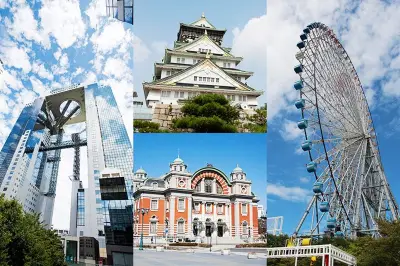
Osaka Castle is one of Osaka’s landmark attractions and a designated Special Historic Site of Japan, an ancient castle steeped in Japanese history. Centered on the castle, the surrounding greenery and some canals form Osaka Castle Park, which is free to enter.
“Tenshu” refers to the highest point of a castle, once used for observation and command, later connoting high status. “Tenshukaku” thus means the tallest building in the castle. Osaka Castle’s Tenshukaku now houses a museum of ancient history and culture, and the top floor offers a great view overlooking Osaka city. The admission fee is 600 yen, free with the Amazing Pass.
Shitennoji Temple is one of Japan’s oldest temple complexes, the first Buddhist temple in Japan, constructed under the supervision of Prince Shotoku. Its main garden, quiet and simple, is a highlight. Relatively off the beaten path, with few tourists, the surroundings are free, but entry to the inner central temple costs 300 yen, free with the Amazing Pass.
Osaka’s tallest landmark, modeled after the Eiffel Tower. You can take an elevator up to the observation deck; admission is 800 yen, free with the Amazing Pass. Beneath Tsutenkaku, there’s a lively shopping street.
Located at Osaka Port, with a diameter of 100 meters, this was once the world’s largest Ferris wheel. A full rotation takes a full 15 minutes, offering a panoramic view of Osaka’s port area. Admission is 800 yen, free with the Amazing Pass.
Take a sightseeing sailboat cruise, also at Osaka Port, right next to the Ferris wheel. Modeled after Columbus’s Santa Maria, the boat departs from the Kaiyukan aquarium and circles Osaka Port in about 45 minutes. Daytime fare is 1600 yen; twilight is 2100 yen. With the Amazing Pass, you can choose one for free.
One of Osaka’s highest observation decks, at 173 meters, it's a rare 360-degree open-air rooftop observatory in Japan. Admission is 1500 yen; free with the Amazing Pass if entered before 6 PM.
The Ferris wheel atop the Hep Five shopping complex, taking 15 minutes per rotation, is an excellent choice for leisurely enjoying the city nightscape. Admission is 600 yen, free with the Amazing Pass.
On this trip, I visited both Universal Studios Japan and Disney, so naturally I couldn’t help comparing them. Disney is more kid-oriented, suitable for children, so the attractions aren’t too thrilling, and with its huge fame, the crowds are massive. Universal Studios, on the other hand, is the opposite: nearly all attractions are super thrilling, better for adults, and the lines are shorter. So if you have to choose one and want both excitement and quick queues, I absolutely recommend Universal Studios!! It's divided into areas like Harry Potter, Minions, Jurassic Park, San Francisco, New York, each with its own theme. And when it comes to roller coasters—the park's highlight—there are several types.
Screaming nonstop!! An insanely thrilling roller coaster, multiplied by n!!! An outdoor coaster with crazy speed and spins, making you feel like you're flying upside down!! The number one most thrilling ride in the park, a permanent attraction, a must-ride!!
A new attraction opened in January 2020, so there wasn’t much info online. After experiencing it myself, I can say it’s absolutely mind-blowingly cool!! It’s an indoor roller coaster, but different from usual ones. The so-called XR is the latest VR technology combined with a coaster: when you put on the VR goggles, you’re completely immersed in the world of Attack on Titan!! Dodging the giants’ pursuit!!
A must-visit for Harry Potter fans!! Also an indoor roller coaster, similar to Attack on Titan, using panoramic screens, physical models, and a coaster to take you flying through the magical world with Harry Potter!!
One of the few water rides in the park. Though not as thrilling as the previous ones, it’s fun and suitable for kids. You board a boat with a guide and head out to sea, encountering a great white shark along the way. Even knowing it’s fake, the guide’s dedicated performance and the detailed model scenes make it feel very real and lively. It’s a lot of fun.
Besides the ones I’ve highlighted, there are n more great attractions!! The key is that the lines move fast—no need to buy Express Passes. You can easily ride a dozen or so in a day, just amazing!! Before the park closes, there’s a nighttime parade with YMCA as the background music, super fun and high-energy!!
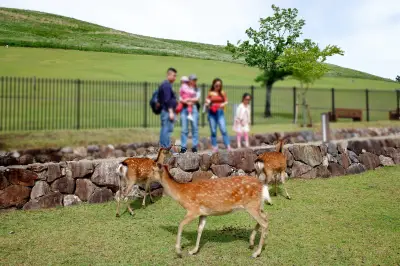
Since you're in Osaka, how can you skip Nara? When people say they're going to Nara, most are heading to Nara Park to see the deer. From Osaka, take the Kintetsu train to Kintetsu Nara Station—about an hour one way. As you exit and walk toward Nara Park, you’ll soon spot a deer sashaying toward you like a catwalk model.
The entire Nara Park is open 24/7 and free of charge. The deer roam freely; some even wander onto the roads, but cars know to yield. Here, you can see the harmonious coexistence of humans and animals in a relaxed and pleasant atmosphere. The air is fresh, making it ideal for an outdoor outing. The deer are gentle and tame, not aggressive toward people, and their antlers have been removed, so there’s no risk of being jabbed—it’s very safe. Along the way, vendors sell deer crackers for a uniform price of 200 yen per pack. Buy some, and the deer will gather around you.
Kasuga Taisha Shrine is very close to Nara Park, you’ll stumble upon it while walking. It’s free to enter, so you can visit along the way.
If, like us, you’re just here for the deer, half a day in Nara is enough. We returned to Osaka at noon and headed to the city’s most famous food hub, Kuromon Market. The market is spacious, clean, and tidy, offering both raw and cooked foods. There’s a huge variety, everything is fresh, and made to order—you can easily fill up on snacks.
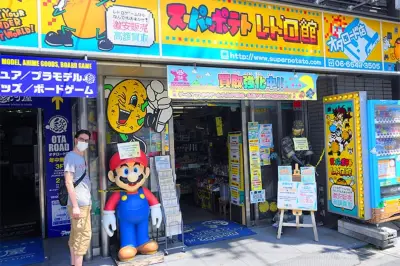
After leaving Kuromon Market, walk a bit and you’ll find Osaka’s anime hub, Nipponbashi. Similar to Tokyo’s Akihabara, it’s a sacred place for otaku, and it’s quite close to the market—anime fans shouldn’t miss it.
Heading north from Namba, the entire stretch—aside from the roadway—is a covered shopping arcade, leading all the way to Dotonbori.
From Dotonbori further north is Shinsaibashi. The whole walking street from Namba is incredibly long and bustling, especially at night when crowds are huge. Whatever you want to buy or eat, you’ll find it here.
Kyoto is one of Japan’s most ancient-feeling cities, embodying deep historical and cultural heritage, and it’s just an hour by train from Osaka, making it a must-visit on any Kansai itinerary.
What many don’t know is that about one-third of Japan’s shrines are Inari shrines, and Fushimi Inari Taisha is the head shrine of all Inari shrines. With a long history, it’s one of Kyoto’s iconic attractions, open 24/7 and free. The “Senbon Torii” (thousands of torii gates) is the most striking feature, an unbeatable spot for kimono photos.
Sannenzaka and Ninenzaka are right next to Kiyomizu-dera Temple; you’ll pass through them on your way to the temple. Anyone visiting Kiyomizu-dera will inevitably stroll here. Today, it’s a charming Kyoto-style commercial street, but it still preserves old machiya townhouses with red-lattice facades and insect-cage windows, very Japanese, and part of a nationally designated Preservation District for Groups of Historic Buildings.
Kiyomizu-dera Temple is not only one of the oldest temples in Kyoto, but also one of the Three Famous Places in Kyoto, and a UNESCO World Heritage Site, renowned worldwide. It’s a prime spot for cherry blossoms in spring and autumn leaves.
Yasaka Shrine, located in Higashiyama Ward, is one of Kansai’s oldest shrines. Situated at a three-way intersection facing a main road, it’s in a bustling area with a superb location.
Hanamikoji Street, near Yasaka Shrine, is Japan’s oldest hanamachi (geisha district), lined with mostly Edo-period townhouses. It’s one of the few places where you can still spot traditional geisha.
After exploring Kyoto, we took a night bus that same evening from Kyoto to Kawaguchiko, wrapping up our Kansai leg and heading to the Kanto region. To get from Kansai to Kanto, you have three options: plane, Shinkansen, or bus. We chose the night bus—though less comfortable, you sleep and arrive, saving both money and time.
Kawaguchiko is the tourism hub of the Fuji Five Lakes, the earliest developed and best equipped. From here, you can gaze at Mount Fuji from a perfect distance, even catching the “Reverse Fuji” reflection. With plenty of facilities and many offbeat spots nearby, you need at least two days and one night to explore. From Osaka or Kyoto, there are direct night buses to Kawaguchiko, taking about eight hours.
Since hotels in Japan typically allow check-in only after 3 PM, we stored our luggage in lockers at Kawaguchiko Station and bought train tickets to Shimoyoshida Station (toward Otsuki). We headed to Arakurayama Sengen Park in Shimoyoshida City. It’s just a few hundred meters’ walk from Shimoyoshida Station to the park’s foothill entrance. The park requires an uphill walk; reportedly there are over 400 steps, plus a longer but gentler ramp, making it wheelchair-friendly.
We returned to Kawaguchiko Station to retrieve our luggage. If your hotel offers pickup, you can ask the staff at the information center to contact them for free, then wait at bus stop 10 for the shuttle. Most hot spring hotels in Kawaguchiko have indoor and outdoor baths where you can soak while gazing at Mount Fuji—absolutely blissful.
Every winter weekend evening for over a month, Kawaguchiko holds fireworks at Oike Park. The best viewing spot is across the lake from the park. Arriving early, we found a line of veteran photographers already set up with their gear. The fireworks are launched one by one, starting at 8 PM and lasting 20 minutes.
Kawaguchiko Tenjoyama Park
The next morning, we soaked in the hot spring once more, then took the hotel’s free shuttle back to Kawaguchiko Station. With a bit of time to spare, we hopped on the Kawaguchiko sightseeing bus to stop #9, “Pleasure Boat & Ropeway Entrance” for Tenjoyama Park. You can walk up and down or take the ropeway; a round-trip ticket is 900 yen, one-way is 500 yen, with combo deals available with the sightseeing boat. We bought tickets from the vending machine, took the ropeway to the top, and enjoyed a panoramic view of the town and Mount Fuji.
From Kawaguchiko, we took a pre-booked highway bus to Tokyo. The journey takes about two hours, so we arrived in the afternoon. After dropping off our luggage at the hotel, we headed to Tokyo Skytree.
Also known as the Sky Tree, completed in 2012, it surpassed Tokyo Tower as Tokyo’s tallest structure at 634 meters. It’s currently the world’s second tallest tower after a structure in Dubai, serving both observation and broadcasting purposes. You can overlook Tokyo, and on clear days, even see Mount Fuji.
Today’s itinerary focuses on Tokyo’s cultural spots, showcasing the city’s rich heritage: Senso-ji Temple, Ueno Park, Tokyo University, Akihabara, and more.
Tokyo’s oldest and most famous temple, packed with visitors—arguably a face of Japan’s temples. A must-visit in Tokyo, free to enter. It features the iconic Kaminarimon Gate, a five-story pagoda, and Nakamise-dori, a shopping street with over 90 shops selling souvenirs and snacks.
Right at the entrance, you’ll see the iconic bronze statue of folk hero Saigo Takamori. The park is huge, beautifully landscaped, and free to enter. Inside, there are paid facilities like a zoo, art museum, museum, and aquarium. During cherry blossom season, the paths are lined with stunning pink blooms.
After crossing Ueno Park, you’ll soon reach Japan’s top university, the University of Tokyo’s Hongo campus—the only campus open to visitors for free. The Western-style buildings exude a quiet, simple, and historic atmosphere, with a strong cultural vibe and serene campus grounds.
Originally a regular electronics district, it somehow evolved into a world-class mecca for anime and otaku culture. A must-visit for anime fans, the streets are packed with figurines and maid cafes. Anime enthusiasts could easily spend a full day and night here and still not have enough.
Reputedly Japan’s most luxurious district, it’s one of the world’s three great shopping centers. Here, you can buy any luxury brand in the world. Ginza is divided into eight blocks, from 1-chome to 8-chome, with 4-chome being the most bustling.
Today is all about shopping, focusing on Tokyo’s major commercial districts like Shibuya, Harajuku, Shinjuku, and more.
A Jodo-sect temple, right at the foot of Tokyo Tower. Here, you can frame Zojo-ji Temple and Tokyo Tower in one shot—a blend of old-world charm and modern outlook.
Tokyo’s most iconic landmark, a broadcasting tower inspired by the Eiffel Tower. Once the tallest in Tokyo, it may now be surpassed by Skytree, but it remains the enduring symbol of Tokyo and Japan in people’s hearts. It has two observation decks at 150 m and 250 m, with varying ticket prices.
The “World’s Busiest Intersection” is in Shibuya—a scramble crossing where the most people cross at once globally. Though each green light is brief, the foot traffic is huge, especially on weekends and holidays. Beyond that, Shibuya is a bustling commercial and shopping hub.
Every time I think of Hachiko’s story, it makes me want to cry—so touching and tear-jerking. The station where Hachiko waited faithfully, day after day, year after year for his professor was Shibuya Station. That’s why a bronze statue of Hachiko was erected here, commemorating this tale of loyalty and love. Now, people from all over the world take photos with Hachiko at Shibuya; surely he’ll never be lonely again.
Omotesando, like Ginza, is lined with high-end brands, but it’s less flashy and ostentatious; instead, it’s an understated, chic luxury favored by the trendy set.
Meiji Jingu Shrine is Japan’s most-visited shrine, said to have very accurate fortunes. It frequently hosts important life ceremonies like naming ceremonies for newborns, coming-of-age ceremonies, graduation celebrations, and traditional weddings.
Harajuku, centered around Takeshita Street, is a pedestrian zone packed with youth-oriented street fashion. It’s full of cool, trendy brands and street culture, with prices geared toward young people, so you can find plenty of stylish bargains.
Shinjuku is Japan’s most famous commercial district, whether for food, shopping, or even nightlife—it’s the country’s top spot for lively entertainment. In Japan, no place deserves the phrases “neon-lit” and “hedonistic” more than Shinjuku.
Kabukicho, Asia’s largest red-light district—you know what I mean. It’s also Japan’s most famous entertainment street, with all sorts of restaurants, bars, and nightclubs, boasting a vibrant nightlife; many places stay open all night.
The Tokyo Metropolitan Government Building has free observation decks with great views of Tokyo’s cityscape, especially the night view.
Hayao Miyazaki’s animations are world-renowned for their excellent artistry and unique storytelling, with each tale instilling a positive spirit that subtly influences everyone who watches.
The Ghibli Museum, Mitaka, is located in Mitaka City, themed around Studio Ghibli’s works. It’s a quick JR ride from Tokyo. Tickets must be purchased online in advance and exchanged at LAWSON convenience stores. It’s incredibly popular, often sold out, so you need to buy a month ahead. Photography is prohibited inside; you can only take photos outside.
The National Art Center, Tokyo, was a filming location for the anime Your Name, so many people come to snap a photo. It doesn’t have a permanent exhibition; instead, it hosts changing themed exhibitions, so ticket prices vary.
The headquarters of the famous TV Asahi, located in Roppongi. The first floor is free to visit and features exhibitions of past shows, like Doraemon.
Roppongi Hills—you’ll know you’re there when you see the giant spider sculpture at the entrance. The whole complex is very upscale. On the 52nd floor, there’s an observation deck with splendid views stretching to Tokyo Tower, Rainbow Bridge, Odaiba, and more.
The observation deck ticket includes entry to the Mori Art Museum, which you can check out while you’re there; each exhibition has a different theme.
The anime I watched most as a child was Doraemon, a source of joy and rich childhood memories for many. Countless kids dreamed of flying through the sky with Doraemon using a bamboo-copter.
Located in Kawasaki City, the Fujiko F. Fujio Museum, essentially a Doraemon museum as it’s filled with Doraemon elements. Tickets must be bought in advance on the official website and exchanged at LAWSON. Photography is restricted inside; only a small part of the interior and the exterior can be photographed.
After returning to Tokyo from the Fujiko F. Fujio Museum, we spent the afternoon in Odaiba. Odaiba is a man-made island built on reclaimed land, bearing the hallmarks of the new era. It has offbeat spots like Odaiba Seaside Park, a Statue of Liberty replica, the Toyota Museum, the Gundam Museum, the Museum of Maritime Science, the National Museum of Emerging Science and Innovation, and more. I highly recommend taking the driverless Yurikamome train to Odaiba. Board at the first station, Shimbashi, and grab a front-row seat for amazing views of the cityscape along the way, especially when crossing Rainbow Bridge—it feels like passing through a time tunnel.
Fuji TV, one of Japan’s famous broadcasters, has free exhibitions inside showcasing the achievements and introductions of many broadcasted programs. The spherical observation deck on the 25th floor offers views of Tokyo Bay and Rainbow Bridge, but requires a separate fee.
The Gundam Museum’s biggest highlight is the 1:1 scale Gundam statue in front of the shopping mall—this time it was the Unicorn Gundam, truly huge and impressive in person, a must-see for fans!! It’s said that at certain sharp hours, there’s even a transformation performance. The museum is on the 7th floor, requires a ticket, and has a comprehensive range of Gundam merchandise.
Oedo Onsen Monogatari, themed after the Edo period, is a leisure complex combining hot springs, dining, entertainment, massages, and accommodation. After entering, change into a yukata and enjoy a one-stop experience of eating, drinking, and playing, then soak in the hot springs—you can stay for hours, perfect for relaxing.
From Odaiba Seaside Park, you can enjoy views of Rainbow Bridge and Tokyo Bay.
Tokyo DisneySea is divided into seven themed ports: Mediterranean Harbor, American Waterfront, Port Discovery, Lost River Delta, Arabian Coast, Mermaid Lagoon, and Mysterious Island. Each has its own theme. The park is huge but well-connected, making it easy to find the attractions you want.
Note that some popular Disney attractions offer FP, or Fast Pass. Each time you get a Fast Pass—whether used or not—you must wait two hours before getting another, and you can only obtain them at the attraction’s dedicated FP machines or via the mobile app. Since lines at Disney can be unbearably long, using FP really speeds things up.
I can’t help but complain—even on a weekday, the queues are still dreadful. In a whole day, you can only manage four or five attractions; the rest of the time is spent waiting. It’s literally three hours of queuing for three minutes of fun, no exaggeration. One time, we started lining up at noon and didn’t finish until almost dark. If you must go, be mentally prepared.
This nearly two-week itinerary covered almost all the major and minor attractions in both Kansai and Kanto. We experienced the neon-lit bustle of a global metropolis, the serene quiet at the foot of Mount Fuji, the depth of traditional Japanese culture, and the cultural richness of the Yamato spirit. From cityscapes and natural scenery to history and cultural spirit, everything felt fresh and made us marvel at how vast the world is, with each country and city holding its own unique charm.
Itinerary Index
1. Day 1: One-Day Osaka Tour
2. Osaka Castle Park
3. Osaka Castle Tenshukaku
4. Shitennoji Temple
5. Tsutenkaku
6. Tempozan Ferris Wheel
7. Santa Maria Cruise
8. Umeda Sky Building
9. Hep Five Ferris Wheel
10. Day 2: Universal Studios Japan
11. The Flying Dinosaur
12. Attack on Titan XR
13. Harry Potter and the Forbidden Journey
14. Jaws
15. Nighttime Parade
16. Day 3: Half-Day Nara Tour
17. Nara Park
18. Kasuga Taisha Shrine
19. Kuromon Market
20. Nipponbashi
21. Dotonbori
22. Shinsaibashi
23. Day 4: One-Day Kyoto Tour
24. Fushimi Inari Taisha
25. Sannenzaka and Ninenzaka
26. Kiyomizu-dera Temple
27. Yasaka Shrine
28. Hanamikoji Street
29. Night Bus
30. Day 5: Kawaguchiko
31. Arakurayama Sengen Park
32. Hot Spring Hotel
33. Kawaguchiko Fireworks Festival
34. Day 6: Tokyo
35. Heading to Tokyo
36. Tokyo Skytree
37. Day 7: Tokyo Culture
38. Senso-ji Temple
39. Ueno Park
40. University of Tokyo
41. Akihabara
42. Ginza
43. Day 8: Cool Tokyo
44. Zojo-ji Temple
45. Tokyo Tower
46. Shibuya
47. Hachiko Statue
48. Omotesando
49. Meiji Jingu Shrine
50. Harajuku
51. Shinjuku
52. Kabukicho Ichibangai
53. Tokyo Metropolitan Government Building Observation Deck
54. Day 9: Ghibli Museum Pilgrimage
55. Mitaka Ghibli Museum
56. National Art Center, Tokyo
57. TV Asahi
58. Roppongi Hills
59. Mori Art Museum
60. Day 10: Goodbye Doraemon
61. Fujiko F. Fujio Museum
62. Yurikamome Line
63. Fuji TV
64. Gundam Museum
65. Oedo Onsen Monogatari
66. Rainbow Bridge
67. Day 11: Tokyo DisneySea
68. Afterword
Travel Info | Hotel Index | Guide Index | Flight Index | Site Navigation | Travel Index | Cruise Index | Corporate Travel Index | Join Us | Distribution Alliance | Friendly Links | Corporate Gift Cards | Purchase Insurance | Agency Cooperation | Hotel Partners | Destination & Scenic Spot Cooperation | More Partnership Opportunities | About Trip.com | About Trip.com | Trip.com Hot Topics | Contact Us | Careers | User Agreement | Privacy Policy | Business License | Security Center | Trip.com Content Center | Intellectual Property | Trip.com Group Algorithm Disclosure