Blundering into Kansai
This travelogue is a cure for my procrastination thanks to my OCD. Thinking that I haven't even sorted out my trip from two years ago, I forced myself to bring my beloved Kansai to everyone this time. Maybe it's because I'm too much of a perfectionist—I wanted to dazzle readers from the very first moment, so I always had ideas but never took action. So this time, I'll keep it down-to-earth, simply sharing what I saw and felt each day, presenting the Kansai I encountered to you all~
In this post, I'll share a few travel tips. If you're lazy but still want to travel independently, you can follow my itinerary. I consider myself a half-expert in DIY travel planning; I usually handle everything from transportation and accommodation to attractions myself~
Here's the rough itinerary:
Day 1: Hangzhou—Kansai Airport (Osaka)—Nara—Kyoto (overnight)
Day 2: Kyoto day trip—Osaka (overnight)
Day 3: Osaka city day trip
Day 4: Universal Studios Japan
Day 5: Kansai Airport (Osaka)—Hangzhou
It's best to buy a Kansai transportation pass in advance, as you need to choose the most convenient and cost-effective pass based on your itinerary. For this trip (two days in Osaka, three days in other Kansai cities), I recommend the Kansai Thru Pass + Osaka Amazing Pass. After comparing multiple options, these are absolutely the most economical. Suica is just a stored-value card; you can use it for segments not covered by the passes. I used cash directly, which was very convenient.
JR Shinkansen tickets must be purchased separately and are not bundled with subways, private railways, or electric railways; they are only needed for intercity travel.
Pass validity periods:
- Based on first/last train times, not 24-hour periods.
- The pass does not need to be used on consecutive days (e.g., the 3-day version can be used on Monday, Wednesday, and Friday separately). This is very friendly. It is activated upon first use on the day, and a code is printed on the back (I originally wanted to attach the official website link, but Ctrip removed it).
Combined with the transportation pass, it's best to choose accommodation near subway, Kintetsu, or electric railway stations. Finding such places in Japan shouldn't be hard, as the transport network is extensive. Many Japanese guesthouses have highly automated check-in systems; you might not see any staff from check-in to check-out. However, there are Chinese instructions—just follow the steps. If you're worried about trouble or language barriers, I recommend choosing a hotel.
In Kyoto, be sure to pick a traditional inn-style accommodation for an immersive experience. Location-wise, choose something near Yasaka Shrine, where the night view is beautiful.
This really goes without saying—with the internet being so developed, you can choose various Japanese cuisines according to your preferences. I usually eat wherever I go, following locals to find the most authentic local flavors.
My trip starts here…
Day One
Japan is one hour ahead of China, so flying from Hangzhou takes about two hours, while the return trip takes three hours. I arrived at Kansai Airport around 11 a.m., then got off the plane and went through customs. To save time, fill out your arrival card on the plane. The staff guided us very well and were extremely polite throughout. Having traveled to many countries and places, this was the first time I encountered such polite customs officers. I think anyone who has been here can relate.
Domestic transportation in Japan is expensive; one stop costs about 10 RMB. Even though I bought an unlimited pass, my five days of bus fares almost rivaled my plane ticket.
I bought the Kansai Thru Pass in advance, allowing me to travel freely throughout the Kansai region. Speaking of transportation, I was confused before departure by the various passes—Baidu, Taobao customer service, etc., all gave different information. Japan's subways, electric railways, private railways, and Shinkansen are so categorically diverse, and there are many card types, making it nearly impossible to have one card cover everything. Later, I'll mention the hiccup caused by the transportation card.
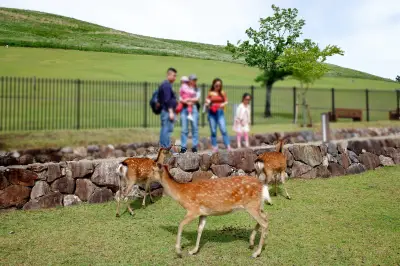
Kansai Airport is huge. Regardless of your destination, you generally need to take the Nankai Electric Railway to a transfer station. I recommend carrying a rail map. To save time, I went directly to Nara in the afternoon to see the deer and stored my luggage at Nara Station, which was very convenient. Exiting the Kintetsu station, the whole city was full of deer—my inner girl was totally charmed. There is a bus from the station to Nara Park; no admission fee, but you can buy a pack of deer crackers (300 yen). The deer love them! Especially if you want photos, without crackers, you basically can't even get close to them.
I held out my palm to trick them over, and they foolishly fell for it. They sniffed my hand for a long time, then turned away without letting me pet them. But after a while, they came back again, so cute and silly! I guess I treated them like dogs, haha.
But the deer's attitude towards me did a 180-degree turn when I held deer crackers. Afraid they'd finish them all at once and abandon me, I hid the crackers in my coat pocket. But the deer have keen noses—they ran over from far away and bit my clothes, refusing to let go. I was so scared I ran around in panic. Out of curiosity, I broke off a tiny piece to taste; it was very bland but had a strong grain aroma. Animals really do have keen senses.
I recommend a great photo spot: Mount Wakakusa. A whole green meadow with many deer begging for crackers. There's a gravel path north of Nara Park; go straight to see Kasuga Taisha, then turn left, pass a large parking lot, and continue inward to find Mount Wakakusa. The entrance fee is cheap, and it's a relatively unknown spot with few people, so the photos are especially beautiful, very forest-like. You can also see a panoramic view of Nara city from the hillside. I went in the evening, and the city under the sunset was quite impressive.
Without crackers, I chased the deer; with crackers, the deer chased me. The deer are adorable—they won't let you pet them, but they bow and nod with big watery eyes to beg for crackers. I couldn't resist their攻势 (assault), and they licked my hand all over. Sitting on the hilltop, watching the deer roam freely on the green grass and the distant Tofuku-ji temple roof—I wished everything could freeze in that moment.
After playing with the deer, I returned to Nara Station, picked up my luggage, and headed to our accommodation in Kyoto. Actually, I had been rushing all day without a proper meal, so I set out to find Kyoto's food and night views.
I'm particularly fascinated by Kyoto's style—low, two-story wooden buildings, and lanterns swaying gently by the Kamo River, as if taking me back to the folk streets of the Tang Dynasty. After eating and drinking, I leisurely strolled to Yasaka Shrine to enjoy the night view, watching the rows of swaying lanterns and the bustling traffic on the opposite street~
Day Two
In Kyoto, kimono is naturally the perfect match for these ancient streets.
Today was kimono day. I booked a kimono rental shop and arrived at 9 a.m. to pick out the clothes. The kimonos hanging there were colorful, like my grandma's floral bedspreads—only kimonos can be so flashy yet not look tacky. After choosing the kimono and matching obi, an auntie helped me dress, and the obi took quite a while. A young lady also did a traditional Japanese updo for me, and with a matching handbag and geta, I was ready to go~
First stop: Fushimi Inari Taisha, home to the thousand torii gates. The Kintetsu Fushimi Inari Taisha Station is quite distinctive; as soon as you exit the platform, you can feel the shrine's atmosphere, with the platform itself built in an ancient style. Follow the crowd forward, and you won't miss the entrance. Japan's above-ground rail system is very developed, so at intersections you often encounter traffic lights for electric trains, especially in Kyoto. At the intersection ahead, the red light flashed, a ding-ding sound rang, the barrier came down, and after a while an electric train rushed by. Once the train passed, the road cleared, and cars and pedestrians continued on. At that moment, countless scenes from Japanese anime came flooding back, vividly depicting the townscape. Both sides of the mountain path were lined with snack stalls selling squid, teppanyaki, and matcha ice cream—we were so tempted we could barely move.
Japan's temples and shrines are quite different in architecture. White walls and vermilion pillars stand out against the blue sky. At the temple entrance, there is a temizuya (water purification pavilion) with a ladle. Before entering the temple, you need to fill the ladle with water and wash both hands to show respect to the deities. Since there were many tourists, they helpfully posted instructions. We followed the local custom and gave it a try.
Torii gates are shrine structures that mark the boundary between the sacred and the secular, representing the entrance to the divine realm. It's several kilometers from the foot to the top of the mountain. If you're short on time, you don't need to walk the entire way; just find a quiet, empty section for some photos. My companion and I caught someone to take a group photo for us, and we ended up meeting a Japanese uncle who loved photography. I've never met a more generous passerby for photos—he taught us poses and took many pictures. We felt bad for taking up his time. Later, we chatted and learned he had been to China many times and loved China. Thumbs up for this friendly Japanese friend!
By the time we reached Sannenzaka and Ninenzaka shopping streets, it was already noon. We ordered Japanese-style fried rice at a quiet little Japanese restaurant, and it tasted great. After a short rest, we slowly walked to Kiyomizu-dera Temple. Kiyomizu-dera, together with Sannenzaka and Ninenzaka, is one of Kyoto's three famous landmarks and is very popular. Since it wasn't late autumn, we didn't see the red maple leaves. Wearing kimono, we were often mistaken for locals and asked for photos—which was a bit helpless. The temple is large, with many visitors and worshippers. I followed the way I saw in anime: ring the bell, then make a wish—I'm not sure if I did it correctly. Inside, there is a black wooden temple, probably the main hall of Kiyomizu-dera, but it was under renovation, so we didn't go in.
I drew a fortune slip at the temple and got "Great Luck"—hoping that after the clouds part, I'll see the moon.
As we came out of Kiyomizu-dera, it started to rain. I encountered a typhoon during the trip, but it only rained for about half an hour—I was very lucky. Usually, on my trips, the weather forecast predicts typhoons and heavy rain, but when I arrive, it clears up. Thank God.
We looked for shelter from the rain on Sannenzaka and Ninenzaka; even the rain couldn't dampen our mood. We seized the opportunity to take photos of the red lattice windows and insect-cage windows in the rain. The streets were lined with Japanese-style snack shops and traditional goods stores, but it was hard to find a shop with seats to take shelter. To avoid the rain, we pretended to shop and entered many handicraft stores. A fan cost over a thousand RMB—we turned around and left immediately. There was a brand with a woman's face (maybe a well-known brand) that is famous in Japan, with shops everywhere selling various figurines—small and cute.
To find the trendy % Arabica coffee shop, we got lost in the rain, completely unable to tell if we were on Ninenzaka or Sannenzaka. Baidu Maps was completely useless in the alleys. We searched for a long, long time, and finally ended up drinking coffee at % Arabica while waiting for the rain to stop.
Kyoto is the closest point on this trip to Uji, known for the most authentic matcha. Along the way, I couldn't resist matcha ice cream, milk tea, and Japanese-style sweets. Not wanting to miss out, I ordered a cup of matcha latte. If you like matcha, you can also buy some Uji matcha powder to take home.
Kiyomizu-dera is on a hill, and Sannenzaka and Ninenzaka are on a slope. Wearing a kimono and geta, climbing the slope made me breathless and tired, so it's best to wear your own shoes and keep the geta in your pocket to put on when taking photos.
Kōdai-ji Temple was found during aimless wandering. Walking through the crisscrossing alleys without navigation would definitely lead to getting lost—but since it's a free trip, let everything be casual. Under the dim yellow lights before nightfall, we stumbled upon Kōdai-ji. Heading north from the temple is a small hill with a wide view. There was no sunset today, but the scenery under the lights was especially beautiful. By then, all the tour groups had left due to their schedules or the heavy rain, leaving us alone in Kyoto to enjoy the gentle night~
Day Three
For today's incredibly packed schedule, I rushed to Osaka last night. I marveled at the maturity of Japan's rail system, especially in big cities like Osaka and Tokyo—basically, any place you want to go, whether attractions, accommodation, or shopping centers, is accessible by train. Here, we switched to the Osaka Amazing Pass because within Osaka city, the subway is more commonly used (look for signs reading "地下铁"). This is where the pass confusion occurred. Although the rail network is interconnected and can take you anywhere, the Kansai Thru Pass only covers electric trains and private railways (mainly above-ground, excluding subways), while the Osaka Amazing Pass only covers subways. Our accommodation was at "十三" station, one stop from Umeda. The transfer point for almost all lines is at major stations like Umeda. At first, my Osaka Amazin Pass wouldn't scan. I asked a staff member, who politely told me that the pass couldn't be used at this station and advised me to buy a single ticket to the next station. Feeling confused but handling it smoothly, I bought a ticket for the Hankyu Line to Umeda—one stop cost 150 yen, cry! After that, I could use the pass smoothly to go everywhere~
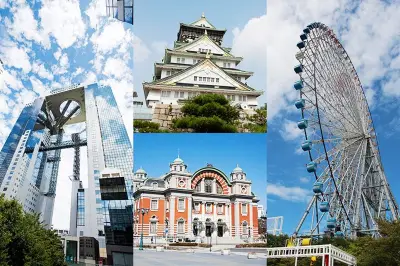
The Osaka Amazing Pass includes over 30 free attractions and many discounted ones, covering almost all the popular spots you'd want to visit. I spent a whole day visiting Osaka Port, Osaka Castle, Tsutenkaku Tower, Dotonbori, Shinsaibashi, the Red Ferris Wheel, Umeda Sky Building, etc. It took from morning until late at night to do it all! I had pre-screened the itinerary, and every attraction was a must-visit classic. It was a super fulfilling day, fueled by delicious food.
Some attractions are only open at specific times, so be sure to check the official website beforehand. Some attractions are close together, so planning your route can save a lot of time.
As an island nation, Japan is frequently "baptized" by typhoons. We were lucky this time—the typhoon blew toward Kyoto after we had already left. But Osaka was still slightly affected; at Osaka Port, the wind was strong, causing the ferris wheel to be closed—the tallest and largest ferris wheel in Osaka. The aquarium is also at Osaka Port. We were caught in a heavy rainstorm, trapped in a shopping mall watching the ferris wheel sway terrifyingly in the wind. We were glad we weren't on it~
I thought Osaka Castle was small, just a green-roofed donjon. In the Edo period, it was a dominant stronghold, built on a hill with a wide moat. From the top floor of the donjon, you could see the entire Osaka city, with markers for iconic buildings in each direction. Later, I realized we had visited almost all of them.
Lunch was at Tsutenkaku. Compared to the previous two spots, this place was bustling and lively. We found a unique little restaurant where the owner was both waiter and chef. The beef was tender and delicious.
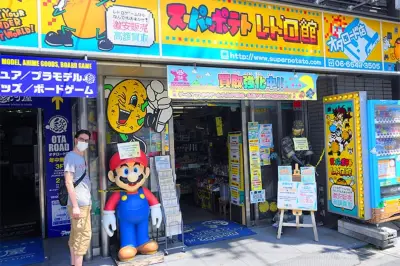
Tsutenkaku was once the tallest tower in Osaka, somewhat resembling the Oriental Pearl Tower. To check off this landmark, we went to the top to see the panoramic view, foolishly queuing for a very long time. The design was considerate for bored queuers—along the way, there were coin-operated game machines and claw machines. Some Japanese students ahead of us kept putting in coins to try to grab toys. Tsutenkaku is a paradise for anime fans, with many classic characters. I saw the cute Hatsune Miku—so happy! Finally, we reached the top and saw the Osaka Port we had just come from, and Osaka Castle to the southwest.
Tsutenkaku is located in the Shinsekai area, which has a lively and nostalgic downtown atmosphere and is also a food heaven! Takoyaki, grilled squid, conveyor belt sushi, and fugu (pufferfish) dishes, all accompanied by cheerful Japanese songs—it was a vibrant scene.
Dotonbori and Shinsaibashi are right next to each other, a true shopping paradise. A woman's instinct kicked in—I dived into cosmetics stores, buying crazily, unable to resist everything new and interesting. I bought a 6 p.m. boat ticket to cruise along Dotonbori. The sunset and colorful neon lights blended together; the ferris wheel lit up, the octopus sign at the takoyaki shop sprayed water, and the Glico running man sign kept running…
Shinsaibashi also has many restaurants, each very lively—I was spoiled for choice. We skipped regular meal times and queued for Ichiran Ramen. It was indeed the best ramen we'd had in two days; the noodles were chewy, and the broth was rich. If you like it, you can buy their packaged ramen to take back home. The matcha tofu was fantastic—highly recommended.
Originally, we foolishly planned to ride all the ferris wheels in Osaka, but after missing the first two, we caught the last ride of the Red Ferris Wheel at Umeda Sky Building. Once again, the ferris wheel proved that I'm truly afraid of heights! As soon as it started moving, I was too scared to move. After just a 90-degree turn, as it slowly went up, I was gripping the railing, refusing to let go, and couldn't even look outside. I glanced at the steel framework and trembled. I barely managed to look at the distant night view to calm down. My companion was laughing at me, saying I'm afraid of heights but kept talking about riding the ferris wheel all day. At the top, the cabin shook a few times in the wind; I was almost in tears. After getting off, my legs were so weak I could barely stand. Next time, really, I will never ride a ferris wheel again.
It was an extremely fulfilling day. We didn't go back until the subway was about to close, but Osaka was still lively. Some office workers were just rushing home from work, diving into izakayas to end their tiring day.
Day Four
Today was all about USJ (Universal Studios Japan).
I didn't receive the e-ticket for entry until late at night. Early in the morning, we transferred several trains to reach the Universal Studios station. We encountered Osaka's morning rush at Umeda—it was really like the subway pushers pushing people in, with faces pressed against the windows, that kind of exaggerated scene.
Universal Studios Japan was absolutely packed. Even on a regular workday, many students and office workers were out playing. Compared to the Universal Studios I went to in Hollywood, it was much more crowded. Every ride required a 1-2 hour wait, and there weren't as many attractions.
The Wizarding World of Harry Potter was extremely crowded—you definitely need to line up before the park opens. After scanning our tickets, my companion and I sprinted, overtaking many people, and still we waited quite a while. To maximize our time for more rides, we really pushed ourselves. From morning till night, we basically rode all the fun attractions. So be sure to grab a map and show schedule at the entrance (many shows are timed), which can save a lot of time.
Despite yesterday's fear of heights, I still gritted my teeth and queued for The Flying Dinosaur. After all, not riding a roller coaster at an amusement park would be a shame. Hearing the constant screams overhead, the crowd below was having a great time. The roller coaster wasn't seated upright but facing downward—it really felt like I was transported to Jurassic Park, being grabbed by a pterosaur and flown around in the air. The water coaster in Jurassic Park was much gentler, but you get soaked at the end—be sure to wear a raincoat.
For lunch, we went to Minion Park and ordered the super cute Minion set meal—it looked very realistic. The whole area was filled with walking Minions. We queued for the 5D movie "Despicable Me"; the immersive experience was fantastic. Even though it was all in Japanese, the scenes made me giggle one moment and scream in fright the next.
The Minion street performance was super adorable, and it was a Halloween special edition. WaterWorld seemed to have only two or three shows a day, with spectacular water fight scenes and explosions. The timing was hard to coordinate; we got stuck at Jaws and ran over but missed it. Fortunately, I had seen it at Hollywood.
At Universal Studios Japan, it was rare to see a Caucasian face. All the NPCs were played by Japanese people, which felt a bit off in many places. We finally spotted Marilyn Monroe and rushed over for a photo, but I ended up disrupting her position, and she pulled me around everywhere.
The Hollywood Dream roller coaster was ridden at night, offering a view of the entire park's lights—exciting and thrilling. There were two options: forward-facing and backward-facing. The queue for backward-facing was very long, so we chose forward-facing to save time. At night, since you can't see how high you are, and there are colorful lights, it wasn't as scary despite the weightlessness. We screamed happily on the roller coaster.
Japan has the most haunted houses—you must try one; they are super scary. We chose Resident Evil, and the realistic scenes plus NPCs jumping out suddenly had us fleeing in panic and screaming nonstop. I especially recommend the nighttime Harry Potter show—don't miss it. The light show was spectacular; the entire castle came alive with scenes from Harry Potter. The only downside was that the Japanese dialogue felt a bit off.
We also visited Hello Kitty Land, Sesame Street, and Snoopy areas. We nearly covered all of USJ, and we didn't leave until the park was about to close, even though my feet were so sore I could barely stand. Because of Halloween, the characters wore special Halloween outfits, and various "monsters" were wandering around—scenes you don't normally see, very fun.
After an hour's subway ride, we returned to our accommodation late at night. Both of us were in so much pain that we couldn't stand, and we sat on the curb without caring about our image. Then, when we saw a drugstore, we suddenly revived like a couple of idiots and dived in for a last round of crazy shopping. What pairs best with late night is, of course, a late-night restaurant! So at 1 a.m., we had our dinner and first glass of plum wine, and then became obsessed with plum wine…
Day Five
Originally, today we planned to visit Sumiyoshi Taisha, since our flight was in the afternoon. But we were so exhausted from the night before—we had been shopping until late and repacking our luggage—that we ended up spending our last day in Japan in a warm bed. We'll have to save that regret for the next trip.
We returned to the Nankai Electric Railway we first took. Today had the best weather of the entire trip—maybe because the typhoon had passed, revealing the usual clear skies.
Every trip always has unexpected beautiful moments and missed regrets. That's why I love free travel but don't plan every little detail. Having surprises and regrets allows me to truly experience the meaning of travel.
Goodbye, Osaka! Goodbye, Kansai!