Blooms in Due Season, See You in Japan Next Year
Author: Mr. Guo, MBA from Shanghai University of Finance and Economics, senior HR professional manager, trainer.
An unprecedented pandemic has made people around the world witness history, as well as the warmth and coldness of human relationships and the unpredictability of life under its lens. Starting from the lockdown of Wuhan on January 23rd, we missed the Chinese New Year that should have been celebrated nationwide, missed the hotpot and barbecue that should have been enjoyed with friends, and missed the spring scenery that should have been a riot of color. As a public service advertisement from CCTV says, after the pandemic, every day is Chinese New Year. And now, hotpot and barbecue are gradually returning to our tables, but when it comes to flowers, if you miss their bloom, you have to wait another year.
In spring, a hundred flowers are fragrant, but the most iconic and classic among them is none other than the cherry blossom. While many people are still longing for the cherry blossoms at Wuhan University, my heart is set on the cherry blossoms in Japan. It's not that I am a fervent admirer of foreign things, believing that cherry blossoms abroad are necessarily more beautiful than those in China. Rather, what I cherish is not just the blossoms themselves, but also the exquisite ambiance that accompanies them.
Speaking of cherry blossoms, they exist in China, Japan, the United States, and Germany. However, in my experience, Japan boasts the richest variety of cherry blossom species. Red, white, pink; single-petaled, double-petaled; upright and drooping—all kinds, in a dazzling array.
The reason why enjoying cherry blossoms is about appreciating the ambiance is that it's not just about the flowers themselves. It's about the harmonious combination of pavilions, towers, mountains, rivers, local customs, and human warmth that together create the mood and artistic conception. In recent years, many Chinese cities have built cherry blossom groves to boost tourism, with rows upon rows of cherry trees lined up neatly to accept the inspection of visitors. When the spring breeze blows, it also brings a rain of petals, just as beautiful. Yet somehow, you feel something is missing. The flowers themselves are innocent. If there is a lack of ambiance, it can only be attributed to those who plant them with haste and superficiality.
Japan is one of the countries I have visited the most. In spring there are cherry blossoms, in autumn there are red leaves, and in winter there are snow and hot springs. The Japanese are truly the best at using and setting off these natural landscapes. Everywhere you go, you feel the thoughtful details and a sense of ritual—exquisite in every way. The Japanese have also perfected the art of cherry blossom viewing. Starting in February each year, they release the first cherry blossom forecast map. As the weather changes, they release second and third versions, listing the expected dates for the blossoms to open and reach full bloom across various regions. With this map, you can plan your viewing itinerary with near certainty.
The first time I went specifically to view cherry blossoms was in Tokyo. But an unexpected cold rain delayed the blooming, and I missed the full bloom. Cherry blossom trees can be found all over Japan, but when it comes to famous spots, Tokyo's best include Ueno Park, the Meguro River cherry blossoms, and Chidorigafuchi. Tokyo is a city where land is extremely expensive, and the cost of living is high. I recommend staying at a hotel near the Meguro River, as it offers convenient transportation, a wide variety of dining options, and reasonable prices. Step outside, and you'll be on the Meguro River, lined with cherry trees. When the streetlights come on at night, a boat ride to admire the cherry blossoms is the most romantic experience.
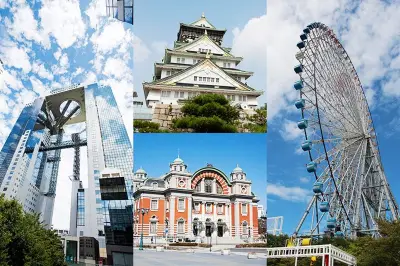
But when it comes to ambiance, I strongly recommend Osaka and Kyoto. They have many temples, gardens, and historical sites. Pairing cherry blossoms with these places creates a perfect match, resulting in breathtaking beauty.
If you have plenty of time, experiencing the Randen (Randen Tram) Cherry Blossom Tunnel is also a great option. It's an ordinary tram, but along a certain section of track, both sides are densely planted with cherry trees. When the tram passes through, it even slows down to let passengers enjoy and photograph the view. However, the best vantage points are not on the tram itself, but by the roadside or on a bridge. So I suggest riding through once to get a feel, then getting off at the next station and walking back to find a high point from which to take the most stunning photos.
Similarly, there is the famous Sagano Scenic Railway in Kyoto, which runs through the mountains. There are many wild cherry trees on the mountains, but they are not systematically planted, nor are they easy to capture in photos. The main attraction is the mountain scenery, so I wouldn't particularly recommend taking that ride.
Also, you must visit the famous Kiyomizu-dera Temple in Kyoto. I suggest going around 3 or 4 in the afternoon when the light is good and the view is clear, perfect for photos. By the time you descend, it will be nearly dark. The nighttime cherry blossom viewing at Kiyomizu-dera is also spectacular.
During cherry blossom season, be sure to try seasonal cherry blossom drinks and desserts—pink, sweet, and delightful. Equally sweet are the Japanese women dressed in magnificent kimonos, whose texture and craftsmanship far exceed those of ordinary rental kimonos worn by tourists.
The earliest cherry blossoms in Japan bloom in Okinawa, and the last ones are in Hokkaido. There is always another place to see them. But ultimately, it comes down to fate and luck, as the weather is unpredictable. An unexpected wind or cold snap could cause the blooming to be earlier or later.
Speaking of which, isn't cherry blossom viewing just like that? Thirty percent is determined by heaven, seventy percent by effort, and the remaining ninety percent relies entirely on luck!