Brave Little Y's Autumn Maple Appreciation and Filial Piety Trip to Kanto and Kansai, Japan
Having been to Japan several times and gained experience with food, clothing, shelter, and transportation, I took my parents and mother-in-law to Japan in autumn 2019 to enjoy the fall foliage. Considering that the cherry blossom season attracts many tourists, I chose Japan's characteristic red maple leaves as the highlight of this trip. This travelogue does not contain detailed guides; it is suitable for traveling with elderly family members. The itinerary is not too tight to avoid tiring the elderly, but it is also suitable for first-time visitors to Japan, covering several major tourist spots since elderly travelers often prefer to check off popular destinations. During these days, we mainly used chartered cars and the JR system to minimize walking and save time for sightseeing. I traveled with three elderly companions, and my husband was very supportive in taking care of the kids at home—he deserves a big thumbs up for handling school drop-offs, cooking, and tutoring.
After checking hotel prices for a long time on Ctrip and consulting the peak period for maple leaves, I decided on a seven-day trip departing on November 10, 2019 and returning to Beijing on the 16th. The itinerary was as follows:
Day 1: Beijing to Tokyo. Visited Senso-ji Temple and Akihabara in the afternoon, explored Tokyo Tower and Ginza shopping district in the evening (later changed due to the Emperor's parade). Stayed at Shinjuku Prince Hotel.
Day 2: Tokyo to Lake Kawaguchi. Stayed at Shuhoukaku Kogetsu, a Japanese-style hot spring hotel. Enjoyed the Fuji Kawaguchiko Autumn Leaves Festival at night.
Day 3: Chartered car to Hakone and Lake Ashi, took a pirate ship. Traveled by Shinkansen to Kyoto, stayed at Kyoto Hachijo Hotel.
Day 4: Chartered car to visit Sanzen-in Temple, Tofuku-ji Temple, and Nijo Castle in Kyoto.
Day 5: Kyoto's Arashiyama and Nara. In the evening, went to Osaka and checked into a guesthouse.
Day 6: Full-day tour in Osaka.
Day 7: Osaka to Beijing.
On the first day, we departed from Beijing and arrived at Tokyo's Haneda Airport at noon. Tokyo has two major airports: Haneda and Narita. Haneda is closer to the city center. We chartered a car, and a lovely young lady picked us up. The planned itinerary was to visit Senso-ji Temple in the afternoon, but the lady told us it was the anniversary of the Emperor's reign, and the Emperor and Empress were going out, causing road closures and traffic restrictions. So we skipped Senso-ji Temple. Since I promised my son I would buy him Ultraman merchandise, my parents and I went shopping in Akihabara. I bought figures for my son, and my parents bought small appliances like thermoses and electric shavers. They were very satisfied. I recommend the Yodobashi camera store right outside the JR Akihabara station—it has a wide variety of goods, and browsing through its many floors can take a lot of time.
In the evening, the driver took us to a ramen restaurant frequented by locals. For our first meal in Japan, I wanted my parents to experience local cuisine. However, I'm not particularly fond of Japanese ramen—it's too salty. I prefer Beijing zhajiang noodles and Lanzhou lamian, haha. After dinner, we strolled through the bustling Ginza district. For people like us who aren't interested in luxury goods, it was a bit of a waste—we just glanced at the bright lights and lively atmosphere.
Our last stop was Tokyo Tower. It was beautiful under the night sky, emitting a dreamy glow. The famous sea-star intersection was quite interesting. Looking down from the glass floor made me feel a bit dizzy.
We checked into Shinjuku Prince Hotel for the night. We chose this hotel because it allowed my parents to see the Shinjuku Kabukicho entertainment district, and also because it was convenient for catching a train to Mount Fuji the next day. The brown building on the left in the photo below is the hotel. The transportation is very convenient—it's located at the east exit of Shinjuku Station, and if traveling independently, you can easily access subways, JR lines, and airport buses. There are also plenty of dining and shopping options nearby.
On the second day, after checking out, we went to Shinjuku Station. At the ticket vending machines, we saw an elderly female attendant who spoke excellent English, but we still had trouble communicating because my English is poor. I said we wanted to go to Mount Fuji, and she guided me to buy JR tickets from Shinjuku to Otsuki Station. However, she couldn't explain how to get to Mount Fuji from there. I was bold enough—I took my parents and mother-in-law onto the train. When we arrived at Otsuki Station, I understood: there was another station ticket office, and we just needed to buy separate tickets to Mount Fuji. On the tracks, we saw a cute little train decorated with Mount Fuji motifs—very interesting.
After exiting the station, we went to the hot spring association office and asked the staff to call the hotel. Soon, the hotel sent a car to pick us up.
The local Japanese-style hotels are all built along Lake Kawaguchi, and most rooms have views of the lake and Mount Fuji. The hotel we stayed at faced Mount Fuji directly. When I came with my best friend in 2017, the hotel only offered a side view of Mount Fuji. So, even though it was expensive, I spent the money to give the three elderly a better experience. Just as we arrived at the hotel, it started pouring rain. My heart sank—I thought it would be such a pity if my parents couldn't see Mount Fuji on this trip. After checking in, my mother-in-law and I went to the hot spring, which was extremely comfortable. When we returned to the room, the rain had stopped and the sky cleared. My heart felt relieved, and my parents were overjoyed, saying we were lucky. In the evening, we had dinner in our room. The hotel room included breakfast and dinner. The dishes were quite distinctive, allowing my parents to have an in-depth experience. Whether they liked the food or not is another matter, but sitting on the floor in a kneeling position really tired my father out—it made me laugh.
After dinner, we strolled along the maple leaf corridor next to the hotel. It's called a corridor, but it's only about 100 meters long. We chose this time well—the maple leaves had all turned red, looking very nice.
The next morning, we took a walk along Lake Kawaguchi. There is a dedicated walking path beside the hotel. Thanks to the heavy rain the previous day, the sky was crystal clear and the air was superb. We could see the reflection of Mount Fuji on the lake's surface—this must be the legendary upside-down Fuji. It was incredibly beautiful, a visual feast. I'm glad we didn't just do a one-day trip to Mount Fuji; otherwise, we would have only encountered yesterday's heavy rain. Considering the changeable weather at Mount Fuji, it's really necessary to stay overnight.
After checking out in the morning, we chartered a car to visit the Hakone and Lake Ashi area. Thanks to the good weather, we could still see the snow-capped peak of Mount Fuji in the distance. The driver helped us buy tickets for the pirate ship. Next time, I'll definitely get VIP cabin tickets, which have a dedicated deck for sightseeing, so we won't have to constantly compete with other tourists for photo spots.
On the boat, I finally saw the torii gate in the water that I had been longing to see. Viewing it from a distance wasn't enough. After disembarking, we visited the Hakone Shrine on the opposite shore. I wanted to take a photo right in front of the torii gate, but there was a long queue of tourists. To avoid delaying the afternoon Shinkansen, I gave up on the photo. We walked among ancient towering trees, breathing freely in the oxygen-rich forest.
I secretly snapped a photo of a pretty young lady—I'll pretend it was me standing there, hehe. In the afternoon, the driver took us to a small town about an hour away—I forget the name. I had seen it in a netizen's travel guide. Departing from the Hakone area to Kyoto via this route saves two to three hours of travel time compared to returning to central Tokyo first. I really can't remember the station name—my apologies. We took the Shinkansen to Kyoto in the Kansai region. We chose the Kyoto Hachijo Hotel, just a short walk from the north exit of Kyoto Station. As always, we prioritized comfort and safety, as well as convenient transportation. The hotel lobby specifically displayed a maple leaf guide, updated daily based on the color change of leaves at various spots. The service was excellent—kudos to them!
On the fourth day, we visited lesser-known spots in Kyoto: Sanzen-in Temple in the northern part and the famous maple-viewing site Tofuku-ji Temple. In the afternoon, we visited Nijo Castle. This time, we didn't take my parents to the popular Kiyomizu-dera Temple or Fushimi Inari Taisha, as those places are always packed with tourists. I personally prefer well-preserved historical sites with a sense of age. Many netizens only focus on shopping in Japan and don't bother learning about local history—I really can't enjoy traveling with people like that, haha. Let me first talk about Sanzen-in Temple. Its charm lies in the small stone Buddha statues scattered around the temple grounds, which are very interesting. I saw a couple buy a cup of tea and sit quietly in the temple, enjoying the serene scenery—it looked so relaxing.
Next, we traveled from north to south along the way to visit Kinkaku-ji (Golden Pavilion). My attachment to this temple comes from a childhood anime, "Ikkyu San," which featured the residence of Shogun Ashikaga Yoshimitsu, known to post-80s Chinese.
It's a small, exquisite courtyard. Then we went to the famous maple-viewing site Tofuku-ji Temple, where you can also view night maples, but we skipped that due to time constraints.
My mom absolutely loves taking photos—it's the charm of Chinese aunties! There's no stopping her; she kept snapping away nonstop. Next, we went to Nijo Castle. Of course, its scale can't compare with our Forbidden City, but its architectural style is worth seeing. The Tang Gate is very characteristic of Japanese architecture, though it's actually a development of China's Tang dynasty style. It's a pity that China's historical heritage hasn't been preserved as well as in other countries.
On the fifth day, we visited the Arashiyama area in Kyoto and Todaiji Temple in Nara. Even with a chartered car, we still walked a lot. Fortunately, my parents' stamina was up to it. In Arashiyama, we took the scenic train, and the views were truly beautiful.
Above are Tenryu-ji Temple and Jojakko-ji Temple, both requiring admission tickets. Paying for entry is definitely worth it because there are fewer people and better photo opportunities, wahaha. Below is the ride on the small train, a wonderful experience with picturesque scenery along the way. We managed to get tickets for the transparent carriage—but honestly, the mountain breeze at this season made it a bit cold.
A staff member on the train took photos and offered to make them into frames for purchase.
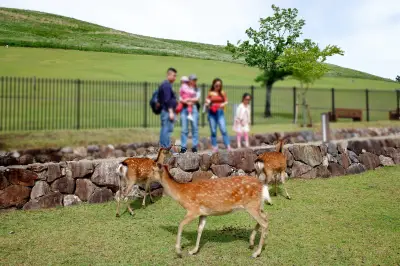
After visiting Arashiyama, we explored Todaiji Temple in Nara and fed the mischievous deer. However, my parents weren't interested in the deer, and they didn't feel like visiting Kasuga Taisha either.
In the evening, the four of us checked into a guesthouse near Nipponbashi in Osaka. It had two bedrooms and a living room, quite spacious. It was right outside Ebisucho subway station, adjacent to the Nipponbashi electronics street and Sunrise supermarket.
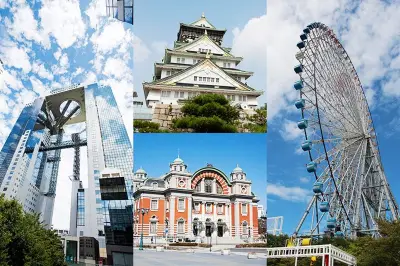
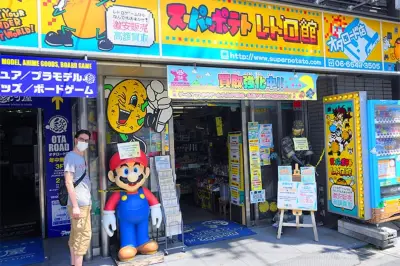
On the sixth day, we visited Osaka Castle. We skipped the crowded Shinsaibashi shopping street since the elderly weren't keen on shopping. In the evening, we strolled around Tsutenkaku Tower. These are all older, historic areas in Osaka. We ate and shopped near Nipponbashi, and I bought Ultraman figures for my son again. If you need to buy clothes, bags, etc., there are shopping malls nearby, all within walking distance. The guesthouse we chose this time was great—I'd like to bring my kids here next time if possible.
A local friend said that early November is still a bit early for viewing maple leaves, as many haven't fully turned red. But given the level we saw this year, we were already very satisfied. The guesthouse was next to Tsutenkaku Tower, so we took a quick look around. It was Osaka's former commercial center, now somewhat aged but still quite distinctive.
On the seventh day, we returned to Beijing. After passing through security at the airport, my parents did some last-minute shopping, buying things like White Lover chocolates to give as gifts. In summary, the most important thing was that the elderly were satisfied with this trip. Fortunately, the weather was clear and the air was good, so the photos turned out beautiful. I hope I can bring my parents again during cherry blossom season. Really, don't let parents join group tours—it feels like they visit everywhere but never truly enjoy any attraction, and the tours usually spend mornings at sights and afternoons shopping. The tour fees are cheap, but they end up buying a bunch of useless things and spending a lot of money in the end.