Late Autumn in Kansai: Keeping a Date with Momiji-gari, Drunk in the Splendor of Autumn Reds in Kyoto, Himeji, Uji, and Nara
This was a long-planned yet utterly unprepared trip to Kansai…
The maples of Kyoto had been on my mind for ages. Early this year, we agreed to go leaf-viewing, but my sister and I only managed to sync our schedules with difficulty.
Speaking of my beautiful sister, I can't help but say a few extra words.
We've been inseparable childhood friends—our bond goes back further than our earliest memories. As infants, we were held in our parents' arms and introduced to each other. As kids, we ran wild all over the neighborhood. In elementary and middle school, we were in the same class, always chatting endlessly and witnessing each other's most embarrassing moments. At noon, we'd reluctantly say goodbye only when an auntie upstairs yelled, "Lunch is ready!" Through high school and college, we went from different classes to different countries. In that era before the internet was widespread, looking forward to each other's letters was a joyful thing.
Though it's a pity we didn't end up in the same city after marriage—she probably dislikes Beijing's smog, and I can't understand Shanghai's soft dialect—our sisterly bond has never faded.
Our last trip together was to Angkor Wat three years ago. In those three years, both of us became "queen mothers"—taking photos with our cameras during the day, and video-calling our little princesses on our phones at night.
Life is simple and beautiful like this. I hope our two little ones will become best friends, grow up happily together, and witness each other's joys and sorrows.
Back to the main topic. Since neither of us was visiting Kyoto for the first time, we didn't plan to go to the usual tourist spots, nor did we make any itinerary. We just discussed which temples we liked in advance.
After arriving in Kyoto, we decided the next day's plans based on the weather and mood. We strolled and took photos at a leisurely pace, sometimes stopping to let three or four groups of tourists pass. Often, by the time we finished visiting a temple, the sky had already darkened.
That was fine too—wandering around aimlessly is the best way to experience an ancient city like Kyoto.
But we didn't catch the maples at their peak—not because we were late, but because Kyoto's maples turned early this year.
After my sister returned to China ahead of me, I continued on my own to Himeji, Uji, and Nara. The maples south of Kyoto were at their best, but despite the beautiful scenery, I missed the leisurely companionship of two.
Indeed, travel is not just about the scenery, but also about who you share it with.
Like spring's "hanami" (cherry blossom viewing), autumn's "momiji-gari" (maple viewing) is a representative nationwide autumn outing in Japan.
Sensitive and delicate Japanese people have always been passionate about lamenting spring and grieving autumn, endlessly inspired by the changing seasons. Naturally, they wouldn't let go of autumn's rich charm embodied by red leaves. Though maples are not unique to Japan, the country has long planted many deciduous trees that change color in autumn. The large temperature differences between autumn days and nights make the leaf colors especially beautiful. To seek this beauty, Japanese people venture into mountains or forests to view autumn leaves, a practice called "momiji-gari." Despite the character "gari" meaning "hunt," it's not about hunting but about visiting—Japanese people liken admiring and playing with maple leaves to hunting. Until around the 16th century, momiji-gari was a pleasure reserved for nobles, but after the 17th century, ordinary citizens began going out to enjoy the autumn leaves, turning it into an autumn carnival for all.
If it's spring's "hanami," every city in Japan has its own unique charm, equally captivating—cherry blossoms are light and ethereal, fitting any background. But for autumn's "momiji-gari," such vibrant, bold colors seem best complemented by temples and shrines. And Kyoto, with its "every three steps a temple, every seven steps a shrine," is the most worthy destination for momiji-gari. As everyone knows, Kyoto, with a history of over 1,200 years, was originally named "Heian-kyo." For a thousand years after its establishment, it was the capital of Japan. It wasn't until the Meiji Restoration moved the capital to Edo—now Tokyo—that the ancient capital's glory was frozen in time. Before the capital was moved to Heian-kyo, Japan's capital was Heijo-kyo, present-day Nara. For a period, the capital was also moved to Naniwa, today's Osaka. So when it comes to ancient architecture—both in number and history—no region in Japan can rival Kansai.
- Timing for Kansai's Autumn Leaves
The viewing period for autumn leaves in Kansai is usually from mid-November to early December, varying with the climate each year. Check the official autumn leaf forecast before you go! Generally, leaves turn red later in colder areas. If the maples in the city have already started to fall, try your luck in the suburbs or mountains—they might be at their prime!
- Cities for Fall Foliage in Kansai
Several cities within an hour's train ride from Kyoto—Osaka, Himeji, Uji, Nara—can be visited as day trips and are all worth exploring.
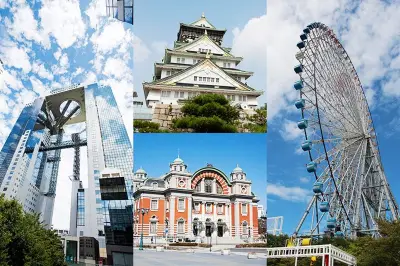
Osaka, as the center of Kansai today, lacks some charm with its skyscrapers. Only Osaka Castle Park in the city center remains beautiful in both spring and autumn. Heading to the suburbs yields better scenery—Minoh Park and Katsuo-ji Temple in Minoh City offer rare beautiful views, though transportation isn't very convenient.
Himeji Castle's white keep had been on my wish list for too long. But honestly, Himeji Castle is planted with cherry trees, not many maples, so it's more suitable for cherry blossom season. The adjacent Koko-en Garden is great for momiji-gari, but it's just a nice Japanese garden, not worth a special trip. As for Engyo-ji Temple on Mount Shosha, though it's one of the filming locations for "The Assassin," the journey is so arduous you'll be daunted!
Uji is actually the best city for autumn leaf viewing. Whether it's Byodo-in Temple (a National Treasure), the Koto-zaka slope outside Kosho-ji Temple, Uji Shrine and Uji Kamigami Shrine, or even the newly built Tale of Genji Museum, they are all brilliantly adorned by the maples. This quiet little town fills you with fondness.
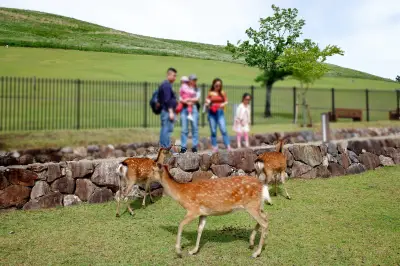
Nara, even more ancient than Kyoto, is absolutely a treasure trove of a city. Neither hanami nor momiji-gari will disappoint you. Every time I visit Nara, I discover something new; every time I leave, I feel there's still more to explore. Besides the free-roaming deer, the various ancient temples exude a natural, rustic charm that transports you back to old Japan.
If time is limited, Kyoto alone is enough for momiji-gari. With its countless temples, vast numbers of maples, and beautiful garden landscapes, you couldn't see them all even if you spent a full week from morning to night. Therefore, this guide focuses mainly on Kyoto's autumn leaves.
- Guide to Autumn Leaves in Kyoto
It is said that Kyoto was originally modeled after Chang'an and Luoyang of the Tang Dynasty. Even today, Kyoto retains a traditional regional division centered around "Raku" (Luo), divided into five areas: Rakusai (West Kyoto), Rakuchu (Central Kyoto), Rakuhoku (North Kyoto), Rakuto (East Kyoto), and Rakunan (South Kyoto). In Japanese, the word for "going to Kyoto" is "jōraku," written with the characters "上洛," which is similar to the Chinese "上京."
Arashiyama: You can skip Arashiyama for cherry blossoms, but for autumn leaves in Kyoto, Arashiyama is a must. Among the rustling bamboo groves, there are not only numerous temple gardens but also the romantic retro Sagano Romantic Train. During the leaf season, riding the train through the mountains to enjoy the sea of red is extremely popular and tickets are hard to come by. Tenryu-ji Temple and Jojakko-ji Temple are famous spots for maple viewing. Daikaku-ji Temple's garden also unexpectedly offers a pleasant stroll. In Arashiyama, you don't need to seek out specific attractions—just wandering around yields beautiful views.
Hōkyō-in Temple: Open to the public only in spring and autumn, Hōkyō-in is famous for its strolling garden with a pond. The historic garden and the exquisite autumn leaves blend perfectly. This is the only temple in Arashiyama where you can view night maples, but you miss the garden's beauty in the darkness, and getting back to the city center can be late.
Daikaku-ji Temple: Located a bit far from Arashiyama—a 20-minute walk—Daikaku-ji is relatively quiet even during the leaf season. You can copy sutras for a peaceful experience. The garden pond has its own charm, but the temple primarily features pine trees, with few maples, so it's not ideal for leaf viewing alone.
Kinkaku-ji & Philosopher's Path: Must-see in Kyoto! If you haven't visited Kinkaku-ji, you can almost say you haven't been to Kyoto. The maples there are average, but the golden pavilion matches better with autumn leaves than with cherry blossoms. The Philosopher's Path, famous for cherry blossoms, was unexpectedly lined with maple trees, and their reflections in the water were a delightful surprise.
Shimogamo-jinja Shrine: Though located in central Kyoto, Shimogamo is not large, but outside the shrine lies a rare large primeval forest called "Tadasu no Mori." Besides maples, there are many deciduous trees that change color in autumn, making it a great place for a fall walk.
Kitano Tenmangu Shrine: Kyoto's Kitano Tenmangu is the head shrine of all Tenmangu in Japan, not to be missed by students praying for academic success. During the leaf season, the Momiji-en garden in the historic "Tsuchi no Oi" area opens to the public. It features 350 maple trees; from the Uguisu-bashi Bridge, you can enjoy their reflections on the pond. At night, there is a special illumination show full of romance.
Kyoto Imperial Palace Park: The former imperial garden is beautiful in both autumn and spring. However, the palace grounds are vast, making for a tiring walk.
Nijo Castle: The number of maples here isn't huge. If it's your first time in Kyoto, it's worth visiting; but if you're solely seeking autumn leaves, you can skip it.
Kifune-jinja Shrine: Starting from the torii gate, follow the lantern-lined path to the shrine. The maples on both sides of the steps are beautiful. From the shrine looking down, you can also enjoy the rainbow-hued autumn scenery in the valley.
Ruriko-in Temple: Known as an "Instagram vs. reality" spot, the stunning "mirror reflection" is created by a reflective mat on a desk. Still, the scenery is indeed beautiful, and it's only open in spring and autumn, but be prepared to wait in long lines.
Sekizan-zen-in Temple: A historic maple-viewing site in Kyoto. The maple trees along the approach are so dense they form a tunnel, impressive to behold. The temple also has winter-blooming cherry blossoms called "kanzakura," a rare combination of sakura and maples together.
Saginomori-jinja Shrine: The long approach from the torii gate to the main hall is lined with maple trees, perfect for a late-autumn stroll. This relatively lesser-known shrine offers rare tranquility.
Genko-an Temple: The round "Window of Enlightenment" and square "Window of Confusion" form the famous "Square and Round Windows." They are breathtaking in any season. As a Zen temple, Genko-an is filled with Zen aesthetics, adding a unique Japanese beauty to the maple viewing.
Hōsen-in Temple: The wide picture-like veranda, with pillars framing the view like a painting. From inside, looking out at the "Engai Teien" (framed garden), the green bamboo and red maples complement each other beautifully, intoxicatingly lovely.
Sanzen-in Temple: Ancient trees, murmuring streams, moss-covered gardens, and layered maples in various shades of red. Maple leaves scatter on the moss carpet of Yuseien Garden, with red, yellow, and green blending into a beautiful landscape painting.
Kiyomizu-dera Temple: Another must-see in Kyoto! Despite the crowds, the autumn leaves are beautiful, especially the Kiyomizu Stage set against a sea of red, truly spectacular.
Eikando Temple: With its arched bridge and flowing water, red leaves reflect in the Hōjō Pond. Eikando is also known as "Momiji no Eikando" (Maple Eikando), showing just how stunning it is! Over 3,000 maple trees ensure a dazzling red display. There is also nighttime illumination, but expect long lines for that too.
Kōdai-ji Temple: Famous for its garden and dry landscape, but most known for its night maples reflected in the pond in a sea of red. The most delightful part is the Hyakki Yako (Night Parade of One Hundred Demons) projection mapping show in the dry landscape garden—absolutely stunning! I watched it three times and still wanted more.
Shōren-in Temple: An elegant temple with exquisite garden design. Fewer people, beautiful scenery—worth a visit. The nighttime illumination is highly recommended; the soft blue light turns the garden into something elegant and mysterious.
Chion-in Temple: Surrounded by autumn maples, the afternoon sun casts dappled shadows on the massive San-mon gate, creating an ancient and interesting scene. Chion-in also has seven mysteries, making it great for exploration. The night maples are beautiful too.
Nanzen-ji Temple: Also famous for its maple garden and a top spot for leaf viewing in Kyoto. Interestingly, Nanzen-ji is free, but many small subtemples within it charge admission. If you don't want to spend money, you can only take pictures of the beautiful gardens from outside the walls.
Tōfuku-ji Temple: The Tsūten-kyō Bridge connecting the main hall with Hōmyō-in and Kaisan-dō is lined with dozens of golden trident maples, known as "Tsūten momiji." It's definitely in the top 3 of Kyoto's maple-viewing spots! Of course, it's packed during the season, but there are also some smaller subtemples charging admission that are beautiful and quiet—worth checking out.
Daigo-ji Temple: It's strange that Daigo-ji is rarely mentioned in maple-viewing guides; perhaps because its cherry blossoms are too famous? Actually, the picture that first captured my heart for Kyoto maples was from Daigo-ji: the reflection of the red Benzaiten Hall in Benzai Pond is simply poetic.
Tō-ji Temple: Small but with the tallest five-storied pagoda in Japan. This elegant wooden structure is very photogenic against cherry blossoms or maples. You can also enjoy night maples here—come see the pagoda under the night sky.
Sennyū-ji Temple: A relatively lesser-known temple, but because many imperial family members are buried here, it's called "Mitera" (Imperial Temple). The deeper Unryū-in subtemple is even less visited. Through its windows, you can see elegant autumn leaves, offering a unique Zen charm.
Fushimi Inari-taisha Shrine: The thousand torii gates are truly stunning and awe-inspiring! But not ideal for maple viewing. If it's your first time in Kyoto, you should go; but if you're there just for autumn leaves, you can skip it.
Feeling dizzy from all these maple-viewing spots? It's simple: if it's your first time in Kyoto, pick the must-see landmarks (Kinkaku-ji, Kiyomizu-dera, Fushimi Inari) and the most popular maple spots (Arashiyama, Tōfuku-ji, Eikando, etc.). You can skip the long-wait places like Ruriko-in and Genko-an. If you've been to Kyoto many times, seek out the less crowded, more tranquil temples. During the maple season, every shrine and temple in Kyoto is beautiful—you won't be disappointed!
To check real-time maple conditions, you can follow a website (please leave a comment for the link). It updates the leaf status and real photos every three days, making it easy to "hunt" the best maples!
I've lost count of how many times I've been to Japan, and even more so, to Osaka. Everything was familiar. The only difference was that this was my first time heading directly from Kansai International Airport to Kyoto. Fortunately, the JR Kansai Airport Express "Haruka" is very convenient—75 minutes to Kyoto Station, one-way fare ¥3,290. Another option is the airport limousine bus, 95 minutes, one-way ¥2,500. I recommend buying a JR West Pass Kansai Area 1-Day Pass for only ¥2,300, which also includes a free Keihan Electric Railway 1-Day Pass and a Kyoto Subway 1-Day Pass—worth it even for just one ride!
This time we stayed at Rinn Nijo Castle, a hotel near Nijo Castle, about a 5-minute walk from Nijojo-Mae Station. It felt like a small family inn with a simple Japanese facade that felt very welcoming. During the maple season, Kyoto hotels are terrifyingly expensive, but we were lucky to get a 17-square-meter double room for ¥799 per night. My sister from Shanghai and I, from Beijing, finally met at this small hotel in Kyoto. Chattering nonstop like we were young again, we stepped out into the cool Kyoto evening to find food.
For our first meal in Kyoto, a sense of ceremony was important! So we chose a kaiseki restaurant by the Kamo River that I had been longing for—the most authentic Kyoto kaiseki. Let's go!
GANKO (がんこ) Takasegawa Nijo-en is my favorite kaiseki restaurant in Kyoto, probably because of the unforgettable serendipity when I first encountered it.
The first time I went to Japan, I was with my parents. The cherry blossom schedule was packed. I remember my dad, after walking all day, said he was tired and hungry, acting like a child. He sat down on the steps of Heian Shrine and grumbled, "I'm not moving! I can't walk anymore! If you don't feed me now, I'm done sightseeing!" So Candy and I quickly searched for nearby restaurants. We found GANKO (がんこ), saw reviews that it was always full, and made a call with a glimmer of hope—and managed to get a reservation! The sunset that day was beautiful, with cherry blossoms and twilight colors. Our family of four trudged toward the restaurant, cheering my dad on—"Just five more minutes!"—and that scene became a warm memory. When we finally sat down on the tatami in the washitsu, looking out at the garden stream, enjoying the exquisite kaiseki, that meal felt especially unforgettable after such a day.
GANKO (がんこ) has several branches in Japan, mostly in Kansai, with a few in Tokyo. It's popular for its high-value Kyoto kaiseki. But the Takasegawa Nijo-en location in the Kyoto Imperial Garden area is the most beautiful—without a doubt. The garden here is full of interest. Built during the Keicho era (1611), it was originally the villa of the wealthy merchant Suminokura Ryoi. Later, it passed through the hands of Yamagata Aritomo (Meiji era), Kawada Koichiro (third Governor of the Bank of Japan), and Abe Ichitaro, finally becoming GANKO's garden-style Japanese restaurant. The building incorporates the essence of Kyoto culture, with traditional garden views, and the Takase River, a branch of the Kamo River, flows through the grounds, creating an elegant atmosphere found nowhere else.
Takasegawa Nijo-en serves orthodox Japanese cuisine. Both lunch and dinner offer affordable set meals for regular tourists as well as high-end kaiseki for business banquets. The restaurant also periodically schedules geisha performances—since the schedule varies, check the official website for specific dates. Reservations are required for maiko performances. Although I've never had the chance to see one, I've encountered geisha after their performances, and their every movement was stunning.
After dinner, it's lovely to take a walk in the garden. Unlike the crowded temple gardens, this one is elegant and quiet. It's filled with maples and also has a 250-year-old red plum tree, plus Japan's largest stone lantern—the Azumaya-fūrō. Even though light rain was falling and the night light wasn't great, I could still feel the story of this centuries-old garden.
Address: 484-6 Higashiazuchō, Nakagyō-ku, Kyoto
Transportation: 4 min walk from Subway "Kyoto Shiyakusho-mae Station," 7 min walk from Keihan "Sanjo Station."
Hours: 11:30-21:30
Average cost: ¥4,000 (you can visit the garden for free without dining; menu prices do not include consumption tax and 10% service charge)
The first day of Kyoto's maple season began with drizzly rain. I was a little disappointed, but I discovered another kind of beauty. The rain-drenched scenery—red leaves, moss, stone lanterns, wooden lattice windows, roof tiles—all had a damp, spiritual quality, more charming than under a clear blue sky.
We rushed to Ruriko-in early in the morning, but even at opening time, there was already a long queue. Perhaps expectations were too high—Ruriko-in was beautiful, but not as beautiful as I'd imagined or as it appears in photos, which is why it's often called a "photo fake" spot.
In the afternoon, the rain continued, so we went to Gion for shopping. We passed a wonderful home decor shop and loved it so much we couldn't bear to leave. We luckily met the shop's owner and designer, along with his adorable Shar-Pei, and were invited to see his normally off-limits studio and new products. Unexpected surprises like this always make travel memorable.
Toward evening, the rain eased a little, so we visited a small, lesser-known temple nearby: Shōden-ei-in. Only the two of us were there, and we moved carefully not to disturb the peace.
At night, we had kaitenzushi (conveyor belt sushi) at Chōjiro Shijō Kiyamachi, a highly-rated restaurant. Besides the regular menu, they have seasonal specials using local ingredients. Each sushi is hand-made by professional chefs right in front of you, keeping the easygoing atmosphere of a kaiten-zushi place while maintaining the craftsmanship of a proper sushi shop. Various delicious sushi, grilled saikyo-yaki, freshly fried tempura, paired with fine Japanese sake… This is the lively everyday atmosphere of the ancient capital.
Yase, north of Kyoto, is a scenic area of mountains and valleys. Since the Heian period, it has been a favorite retreat for aristocrats and warriors. In this tranquil place stands Ruriko-in, a hidden famous temple. Because it's only open to the public for a limited time each spring and autumn, it has become a popular "Instagram spot" — though the high ticket price and long wait times are also notable.
We began our visit early in the morning under a light drizzle. After getting off the train at Yase-Hieizanguchi, we walked along the clear Kōga River, crossed a small bridge, and saw the simple, natural mountain gate. This vast temple, covering nearly 40,000 square meters, includes several buildings renovated and expanded over time by master craftsmen, creating a famous garden that harmonizes with nature. The garden is heavily planted with trees; in spring, tender buds transform into rich greenery, and hundred-year-old Pieris japonica bear lovely white bell-shaped flowers. In autumn, brilliant reds spread layer by layer, making it one of Kyoto's most celebrated maple-viewing spots.
Even though we arrived just when Ruriko-in opened, we still had to wait in the rain for half an hour before entering. The approach path is lined with over a hundred varieties of maple trees, presenting a stunning display of colors before you even enter. After crossing a stone bridge, we saw red carp swimming happily in the pond below. At the end of the bridge is the elegant entrance hall built in traditional tea house style.
The shoin (study hall) is the essence of Ruriko-in's architecture. A huge desk sits in the center of the second floor. The wooden lattice windows cannot contain the fiery autumn colors of the garden, which reflect on the shiny desk surface—this is Ruriko-in's classic view. Personally, I prefer the reflections of the leaves on the polished floor, since everyone photographs the desk. It's better to calm down and copy sutras nearby. If only it were quieter—if I could sit alone at the desk with autumn leaves reflected, listening to the last cicadas, raindrops tapping, and leaves rustling down, that would be the most beautiful way to experience Ruriko-in.
Ruriko-in's garden beauty is often overlooked. I prefer its names over the scenery itself. The main garden, "Ruri-tei" (Lapis Lazuli Garden), is a small space covered entirely in green, with a gentle stream flowing through the moss, drawing a graceful curve—the name "Ruri" (lapis lazuli) perfectly describes its vibrant green transparency. The grand "Garyū-tei" (Crouching Dragon Garden) is a pond garden representing a soaring dragon through water flow and stone arrangements. Standing there, admiring the garden, watching ripples and fish, seeing raindrops on red leaves, my heart naturally calmed.
Although Ruriko-in is often criticized as an "Instagram vs. reality" spot, I don't agree. Its beauty requires quiet appreciation, but it's lost in the noise, burdened by too many expectations. What a pity.
Address: 55 Kami-takano Higashiyama, Sakyō-ku, Kyoto
Transportation: 5 min walk from "Yase-Hieizanguchi Station" on the Eizan Electric Railway from "Demachiyanagi Station"; or 7 min walk from "Yase-ekimae" bus stop via Kyoto Bus from "Kokusaikaikan Station" (bound for Ohara/Koideishi).
Admission: ¥2,000
Gion has almost become synonymous with Kyoto. If you haven't been to Gion, you can almost say you haven't been to Kyoto.
Gion is not a single garden; it's the area between Yasaka Shrine, the Kamo River, and Higashiōji Street. It is Kyoto's most famous geisha district and has been the city's most bustling quarter since ancient times.
Gion's name comes from the Buddhist "Jetavana Vihara." Because Yasaka Shrine enshrines Gozu Tennō, the guardian of this vihara, it was also called "Gion-sha." Over time, the area in front of the shrine became known as "Gion." The festival held at Yasaka Shrine every July is called the "Gion Matsuri."
Gion is famous for being a "hanamachi" (flower town). It is said that the shogunate allowed tea houses to operate here in 1665. In its heyday in the early 19th century, Gion had over 3,000 geisha. Today, many old tea houses, restaurants, and geisha houses remain, and in 1999, the area was designated a national Historic Preservation District. The traditional wooden townhouses are narrow and deep because property tax was based on street frontage—only 5–6 meters wide but over 20 meters deep. The Shirakawa River flows through this quiet district, lined with willows and many high-class restaurants and tea houses, some of which overlook the canal.
Gion is quiet during the day, especially in the rain. The wet stone paths, many restaurants and izakayas not yet open, tea houses and small shops modestly hanging "open" signs—it's fun to wander and discover interesting shops, like finding hidden treasure. Only at night does it truly come alive. Lanterns softly glow, lights flicker behind paper screens, crowds bustle, and neon lights flash—this scene has remained unchanged for over a hundred years.
The most atmospheric area is Hanami-koji Street, which runs north-south through Gion, about 1 km long. Strolling along this oldest flower street in Japan, you can admire the old-style buildings and occasionally see women in kimono hurrying past, or in the evening, you might spot maiko or geisha rushing to work. Even international brands like Leica and Hermès have been drawn to Gion's charm, opening unique experiential stores here.
Transportation: The nearest station is Keihan's "Gion-Shijō Station." The area between the Kamo River (west) and Yasaka Shrine (east) along Shijō Street is Gion.
It's hard to imagine that such a quiet little temple lies hidden deep in bustling Gion. Shōden-ei-in is the merger of Shōden-in and Eiun-an, two temples each with centuries of history. Due to their obscurity, they faced many hardships and were once abandoned, but thanks to the efforts of generations of Zen masters, they were preserved.
The tea house "Joan" was built by Oda Urakusai, the brother of Oda Nobunaga, full of the unique design style of a daimyo tea master, attracting tea enthusiasts. Also worth seeing are the fusuma paintings in the Bodhi sanctuary. Each room's sliding doors are elaborately painted with landscapes of the four seasons—"Listening to Snow" depicting Kyoto's snowscape, "Autumn Air" with maples all over the mountains, and "Lotus and Herons" depicting rustic pleasures. The exquisite painting skills and lofty artistic conception are breathtaking.
Although the temple is small and old, locals still visit. Just sitting on the veranda admiring the maples in the garden, without speaking, even the shutter sound seems harsh—quietly appreciating the simple autumn colors is the highest state of momiji-gari.
Address: 586 Komatsu-chō, Shimo-shijō, Yamatoōji-dōri, Higashiyama-ku, Kyoto
Transportation: 5 min walk east from Exit 1 of Keihan "Gion-Shijō Station"; 7 min walk east from Hankyu "Kawaramachi Station"; or about 5 min walk from bus stops "Higashiyama Yasui" or "Shijō Keihan-mae."
Admission: ¥500
I had planned to head straight to Arashiyama this morning, but I was delayed by Shinsen-en. It happened to be next to my accommodation—an inconspicuous stone torii gate, but inside it was a hidden world.
Shinsen-en, south of Nijō Castle, was originally the forbidden garden of the Heian-kyo Imperial Palace. It's considered one of the largest gardens in central Kyoto and is said to be the city's first garden. Centered on a pond named Shinsen, water occupies two-thirds of the garden. The pond has an island, with East and West Pavilions on either side, and fishing pavilions along the water, connected by winding corridors. Outside, there are streams and forests. In the Heian period, emperors and nobles loved to play here. Legend has it that the folk hero Minamoto no Yoshitsune met his beautiful consort Shizuka Gozen here.
Shinsen-en enshrines the Zennyo Ryūō (Good Woman Dragon King), making it a prayer site for rain. To the left of the shrine is a small red wooden bridge, arching like a rainbow. The garden is not crowded with tourists; only leisurely ducks and well-fed carp in the pond. A nice place for a stroll.
The Arashiyama trip was a must for the maple season, but the Sagano Romantic Train was a bit disappointing. Jōjakkō-ji Temple had a few maples at their prime. Most tourists congregate at the Bamboo Grove and Tenryū-ji; even those who come here only take a quick glance, missing the charming little scenes.
A pleasant surprise was Ōkōchi Sansō Villa. I almost skipped it because of its ordinary name, but it turned out to be a hidden gem. The garden has a charming elegance—a winding path leading to secluded spots, birdsong in the mountain light, absolute tranquility.
In the evening, we went to Kōdai-ji to see the night maples. The fiery leaves in the night were dreamlike, but the Hyakki Yako projection show surpassed everything.
A day filled with beautiful scenery—I only ate two bowls of soba noodles in Arashiyama. After seeing the night maples, I had some late-night snacks at Gyoza no Ōshō. When the scenery is this beautiful, food doesn't matter.
To aristocrats a thousand years ago, the appeal of momiji-gari was that the mention of autumn leaves immediately brought to mind Arashiyama in northern Kyoto. Since ancient times, Arashiyama has been a popular scenic spot.
From the 8th century, nobles built their vacation villas here, enjoying the rice fields, bamboo groves, and colorful leaves. Today, from Togetsu-kyō Bridge, the view of Arashiyama remains as beautiful as ever—mountains covered in colorful layers, waterfalls and valleys adorned with maples. You can visit the former noble villas, now mostly small temples. The Tang poet Bai Juyi once wrote, "Warm wine among the forests, burning red leaves." This poem later spread to Japan, and it is said that nobles imitated him by holding banquets and composing waka while viewing maples. They also took boats on the river to enjoy the leaves; today, visitors can take a boat ride down the Hozu River in Arashiyama to experience the same feeling.
What surpasses the ancients for us is the Sagano Romantic Train, which runs through Arashiyama's stunning natural scenery. This 7.3 km sightseeing railway along the Hozu Valley travels between Sagano and Kameoka. It opened in 1899, with old-fashioned train cars featuring wooden benches—one open car and four enclosed cars. The retro diesel train chugs slowly through some of Kyoto's finest landscapes: cherry blossoms in spring, lush green forests in summer, colorful maples in autumn, and a snowy white world during its brief winter operations.
This romantic train ride takes about 25 minutes. Sometimes the train makes unscheduled stops, allowing you to open windows for photos. You can return on the same train to see the other side, or take a boat down the Hozu River back to Kyoto. At Kameoka Station, there is a shuttle bus to the boat dock; you'll disembark near Togetsu-kyō Bridge to continue your Arashiyama tour. Honestly, I was a bit disappointed with the Sagano Romantic Train—the scenery was as expected, but because the tracks are lined with many trees, it's hard to photograph the beautiful views. However, I realized that this short railway line, built through mountains and rivers before the 20th century, is truly impressive.
While Arashiyama is beautiful in all four seasons, the Sagano Bamboo Grove path remains the star. Located in the Sagano village west of Kyoto, the path is lined with towering bamboo, a breathtaking sight. The path is short but enough to immerse you in bamboo beauty, with dappled light falling on the ground, creating an almost magical atmosphere. Unfortunately, this path is always crowded with tourists from all over the world, which diminishes the sense of tranquility.
You don't need to go to crowded spots; within Arashiyama, beautiful scenes are everywhere. There are ancient temples hidden in the bamboo groves, elegant gardens built to incorporate the Arashiyama landscape, and simple farmhouses with closed wooden doors but courtyards filled with red leaves. The contrast of maples and bamboo is Arashiyama's most beautiful autumn scenery. Persimmons and oranges are ripe on the trees. Walking on thick fallen leaves, rustling, time seems to blur.
Arashiyama a thousand years ago, Arashiyama today—each year's cherry blossoms and falling leaves, beyond the city's noise, this beauty seems eternal.
Sagano Romantic Train
Transportation: Take JR Sagano Line to "Torokko Saga Station" from Kyoto Station, then walk to "Saga-Arashiyama Station."
Operating period: March 1 – December 29, closed Wednesdays. Hours: 9:00-17:00, 8 round trips daily. Seats are limited, especially during cherry blossom and autumn leaf seasons; book in advance.
Ticket: Adult ¥620, Child ¥310
Amid the many temples of Arashiyama, Jōjakkō-ji feels like a reclusive scholar—elegant and refined. Unlike bustling Tenryū-ji, its autumn charm is more relaxed: "Those who wish will come."
Jōjakkō-ji was originally the private villa of the Heian noble Fujiwara no Sadaie, called "Shigure-tei." It became a Buddhist temple of the Nichiren sect at the end of the 16th century. "Jōjakkō" comes from the Buddhist scripture, meaning the pure land where Amitabha Buddha resides—an ideal Buddhist realm. For tourists, the temple is famous for its Tahō-tō pagoda and autumn maples.
Jōjakkō-ji is built on the slope of Ogura-yama. During the viewing season, maples and ginkgo weave a colorful tunnel. From the high Tahō-tō pagoda, you can see mountains, water, pagodas, and a sea of red leaves—the whole Kyoto view.
The temple's main gate is at the foot of the hill, with a plain wooden plaque reading "Jōjakkō-ji." It gently separates the temple's beauty from the outside noise. Beside the gate stands an old, tall maple tree, its leaves gradating from light yellow to crimson, wrapped in autumn charm.
Facing the gate is the Niō-mon gate, built in the 14th century, one of the oldest structures in the temple, with a thick thatched roof covered in moss. Following the approach up the slope, the hillsides are planted with red maples, their branches extending densely, creating a feeling of being wrapped in layers of autumn leaves. The colors are rich—green to gold, orange to deep red. Thick moss carpets the slopes like a rug, weaving a vibrant tapestry. With every step, the scene changes; dappled tree shadows reveal the essence of autumn.
In front of the main hall, the garden exudes a serene beauty. Stone lanterns and maples are perfectly matched, full of Japanese flavor. Jōjakkō-ji has a unique elegance—wooden window grilles, temizuya (water basin), paper lanterns, roof corners—each element creates a picture.
Continuing up the stone path, you reach the Tahō-tō pagoda, built in 1620 and designated an Important Cultural Property. It uses the Momoyama-era architectural style, very ornate. The viewing platform above the pagoda offers a panoramic view of the city. Red leaves, green trees, and moss transform this simple hillside temple into a brilliant spectacle.
During the viewing season, the temple separates the uphill and downhill paths. The downhill path offers equally refreshing scenery, but you can't help looking back, reluctant to leave, afraid of missing something.
Address: 3 Ogura-chō, Sagano Ogura-yama, Ukyō-ku, Kyoto
Transportation: 20 min walk from Randen "Arashiyama Station"; 15 min walk from JR "Torokko Saga Station."
Hours: 9:00-17:00 (last entry 16:30); the route includes some stone steps but gentle slopes. Walking time about 1-2 hours.
Admission: ¥500
Ōkōchi Sansō Villa is a unique place in Arashiyama. It is neither a temple nor built by an ancient noble, but an "ideal garden" created by a film actor over his lifetime.
This beautiful garden hidden in the bamboo grove was the private property of Denjirō Ōkōchi (1898-1962), a famous actor of period dramas in early Showa-era Japan. Charmed by Ogura-yama's scenery, he spent most of his acting earnings, personally participating in material selection and design, pouring his last 30 years into building this garden. He entrusted his deep Buddhist faith and his reflections on the impermanence of life after the Great Kantō Earthquake into this creation. His descendants opened the estate to the public.
Unlike the solemn beauty of temple gardens, Ōkōchi Sansō combines garden beauty with natural scenery, incorporating Arashiyama, Hiei-zan, and Hozu River into the landscape. The garden is filled with various greenery; different shades of green create layering, and each tree is carefully pruned. As seasons change, the plants' colors transform, offering different beauty throughout the year. At the highest point is where Ōkōchi practiced Zen meditation, overlooking Kyoto's scenery—a feeling of being on top of the world. Here, the heart naturally calms; no words needed, just facing yourself and rediscovering the Zen beginner's mind.
Perhaps due to the relatively high admission fee, or because it's not a historic temple, there are few visitors even during leaf season—a rare tranquility. Walking through the villa feels like stepping into a period drama's Edo countryside path—twists and turns, secluded and quiet. A turn reveals a completely different scene. Like a labyrinth with an exit, or a winding path with surprising open space—full of Zen and fun. Every step is a beautiful painting; you feel like you're wandering in a painting. We happened upon a couple in kimono who perfectly blended into the scenery—I felt I was intruding, so I followed them with my camera, snapping pictures of their backs.
After the garden stroll, we went down to the open-air tea house, drank matcha, and ate sweets, feeling like we had retired to the mountains—truly a pleasure.
Address: Tagawa-san-chō , Sagano Ogura-yama, Ukyō-ku, Kyoto
Transportation: 5 min walk from JR "Torokko Saga Station."
Hours: 9:00-17:00
Admission: Adult ¥1,000, Elementary & middle school ¥500 (includes matcha and sweets)
Night maple viewing—only in Japan. Under the lights, maples sway, temple bells toll, a different kind of autumn beauty.
During the leaf season, many temples and shrines in Kyoto open for evening visits. I chose Kōdai-ji because it's convenient to access even late, and because of the impressive "Hyakki Yako" projection mapping show. So we waited in the longest line of this trip—almost an hour from buying tickets to entering.
Kōdai-ji was built in 1605 by Nene (Kōdai-in) in memory of her husband, the valiant warlord Toyotomi Hideyoshi. Nene spent her later years here in Buddhist practice and is buried here. The main hall of Kōdai-ji houses a portrait of Toyotomi Hideyoshi and Nene side by side. The construction of Kōdai-ji was supervised by Tokugawa Ieyasu, Hideyoshi's successor, who hired the most famous architects, painters, and garden designers of the time. As a result, the temple is small but exquisite, with undulating slopes, ponds, maples along the banks, hidden wooden boardwalks, and a bamboo grove. The garden uses karesansui (dry landscape) design to convey the vastness of the ocean.
However, during the nighttime visit, following the lights and admiring the maples, you can't see these features. At the temple entrance, a large character "夢" (dream) is displayed, perfectly setting the tone—perhaps the coming walk will be an unforgettable dream of a garden. Following the lights through the temple, winding through corridors and pavilions, everything is blurred by night. The maples under the lights are red, yellow, and orange, showing a different charm from daytime. The most breathtaking sight is the reflection of colorful trees in the calm waters of the Garyū Pond, like a doubled mirror—colors and light combine into a dreamlike illusion, blurring reality and fantasy.
Unlike other night-visit temples, Kōdai-ji holds unique nighttime illumination events in spring, summer, and autumn. The cherry blossom season (mid-March to mid-May) and the maple season (late October to early December) are no surprise, but there is a special summer night event from August 1 to 18. Japan has a tradition similar to China's "Zhongyuan Festival": in August, various ghosts and monsters appear on the streets. Since 2006, Kōdai-ji has held a "Hyakki Yako Exhibition" based on the Muromachi-period scroll "Hyakki Yako Emaki." Using 3D projection technology, they vividly recreate the night parade of a hundred demons. This light show is also performed during cherry blossom and maple seasons. In the Abbot's dry landscape garden, using the entire garden as a stage, various monsters appear and roam. Though only 3 minutes long, it is stunning. As someone who owns multiple copies of the "Classic of Mountains and Seas" and "Hyakki Yako" picture books, I must have been out of my mind—I watched it three times and still didn't want to leave. It wasn't scary; it felt like a mysterious, dreamlike dream.
Address: 526 Shimokawara-chō, Kōdai-ji, Higashiyama-ku, Kyoto
Transportation: Take bus 206 from Kyoto Station, or bus 207 from Gion-Shijō, get off at "Higashiyama Yasui," walk east 5 minutes.
Hours: 9:00-17:00 (close at 17:30); during special nighttime openings, from sunset to 21:30. The temple does not close, so you can go in the evening to enjoy both daytime and nighttime Kōdai-ji.
Admission: Adult ¥600, Junior/Senior high ¥250
The previous day had been a bit tiring with late exploring, so I planned a more relaxed day today. I decided to visit only Daigo-ji, but I miscalculated.
I thought Daigo-ji would be similar to the temples near Gion, taking only 2-3 hours to explore. But this temple is actually in far southern Kyoto, even further than Fushimi Inari (I used to think Fushimi Inari was far out of Kyoto—I apologize!). A few more stops and you'd be in Uji… It's on the outskirts, so it can be large. I learned that people spend a whole day at Daigo-ji! So, after half a day, we only visited Sanbō-in and Lower Daigo. Considering the 1-hour uphill hike to Upper Daigo, we decisively gave up.
Lucky for us, we encountered our first open-air flea market in Japan! Along the Omotesandō leading to Lower Daigo, local residents were selling second-hand treasures, and some artisans were selling their works, even homemade bread and pour-over coffee. It was full of vivid life, instantly boosting my impression of Daigo-ji. We had lunch at those booths.
We returned to the city around dusk, mainly because we spent too long at the flea market. Since my sister was leaving the next day, we went shopping near Karasuma-Shijō. Shin-kyōgoku Shopping Arcade is always a joy—restaurants, cafes, drugstores, specialty shops, it has everything. In the evening, we had Ichiran ramen in the arcade—a hot bowl of ramen always soothes a weary stomach.
Daigo-ji was my original inspiration for visiting Kyoto in autumn—because I saw a photo of the red Benzaiten Hall reflected in the pond, stunningly beautiful against autumn leaves.
Although Daigo-ji has no place in tourist groups' itineraries, and many visitors have never heard of it, it holds a significant place in Japanese Buddhism. In 1994, it was inscribed as a UNESCO World Heritage Site under the "Historic Monuments of Ancient Kyoto." Founded in 874, it is the head temple of the Daigo sect of Shingon Buddhism. After receiving favor from Emperor Daigo, it was expanded to its present scale. Except for the five-story pagoda, the entire temple was destroyed by war. In 1598, Toyotomi Hideyoshi rebuilt it during a cherry blossom viewing, restoring its former glory.
I always thought Daigo-ji had the most beautiful name among all Kyoto temples. According to the Nirvana Sutra, "Daigo" (ghee) symbolizes the ultimate truth of Buddhism: "Just as from cow's milk comes curd, from curd comes butter, from butter comes ghee, so too ghee is the finest." This is the origin of the temple's name.
Daigo-ji is one of Kyoto's largest temple complexes, occupying the entire Mount Daigo southeast of the city. It is divided into three main areas: Sanbō-in and Lower Daigo at the foot, and Upper Daigo on the mountain. The temple has over 80 buildings, including the oldest five-story pagoda in Kyoto and the Kondō (golden hall) from the Kamakura period, both designated National Treasures.
Although founded for Emperor Daigo, Daigo-ji flourished thanks to Toyotomi Hideyoshi. At his peak, he held a grand cherry blossom viewing here, the "Daigo Hanami," which made the temple famous. Since then, it has been known as a prime cherry blossom spot, attracting many visitors. Even today, on the second Sunday of April, the "Taiko Hanami Gyōretsu" reenacts Hideyoshi's cherry blossom viewing extravaganza.
Entering through the Niō-mon gate of Lower Daigo, you find Sanbō-in to the left and Reihōkan (Treasure Hall) to the right. Sanbō-in is a Momoyama-period shoin (study) style building, the core of Daigo-ji, where the head abbot resides. Most of Sanbō-in's buildings are designated Important Cultural Properties. The Omote-shoin (front study), which overlooks the garden, is modeled after a shinden-zukuri (noble style) building representative of the Momoyama period. The walls and sliding doors in each room feature color paintings by famous Edo-period painters Ishida Yūtei and Kano Sanraku, designated as National Treasures. To protect them, no photos are allowed indoors, and shoes must be removed. The garden of Sanbō-in is a Special Historic Site and Special Place of Scenic Beauty, personally designed by Hideyoshi for his "Daigo Hanami" and retains the Momoyama era's splendor.
The garden design is meaningful: the pond has a turtle and crane island, symbolizing the turtle's quiet and the crane's dynamic movement; in front of the pond, the dry landscape's Kamo san-seki (three stones) represent the Kamo River's various flows—swift current, stagnant water, and splashing foam; by the pond is the tea house "Chinryū-tei" and the famous "Fuji-ishi" stone owned by the ruler.
Especially notable is Sanbō-in's karamon (Chinese-style gate), also called the imperial envoy gate. Because Sanbō-in was served by a prince-abbot, they built this gate to welcome imperial envoys. Originally, the entire gate was lacquered black, with the chrysanthemum and paulownia family crests decorated with gold leaf—a magnificent display of Momoyama style.
The Reihōkan (Treasure Hall) houses over 40,000 items designated as National Treasures and Important Cultural Properties—including sculptures, paintings, crafts, and ancient documents—plus many more unclassified treasures, totaling 100,000 items. Among them, the colored silk paintings of the Five Great Bosatsu and the Monju crossing the sea are National Treasures. It is open only in spring and autumn.
Passing through the Niō-mon gate rebuilt by Toyotomi Hideyori, you enter the Lower Garan (temple complex). The Lower Garan contains the Kondō (National Treasure), as well as other halls such as Seiryū-gū Main Hall, Soshi-dō, Fudō-dō, Daikō-dō, Nyōnin-dō, Benzaiten-dō, etc. But historically, nothing in Daigo-ji compares to the five-story pagoda.
The National Treasure five-story pagoda was built to pray for Emperor Daigo's peaceful afterlife. Construction began in 936 under Emperor Suzaku and completed in 951 under Emperor Murakami. It is the oldest surviving wooden structure in Kyoto. The pagoda is about 38 meters tall, with a finial (sōrin) about 13 meters tall. The proportion gives it a sense of stability. Its interior wall paintings are considered the origin of Japanese esoteric Buddhist painting and are also designated National Treasures.
The most scenic spot in the Lower Garan is the garden around the Daikō-dō pond, called "Rinsen." The Benzaiten Hall here enshrines the goddess Benzaiten, one of the Seven Lucky Gods, known for presiding over music, arts, and knowledge. In late autumn, the fiery red hall and the red bridge reflect together in the water, blending with autumn leaves. Although we arrived a bit late and some leaves had fallen, it was still breathtakingly beautiful. Many cherry trees are planted around Benzaiten Hall, suggesting a different beauty in spring. It is said that after his "Daigo Hanami," Hideyoshi looked forward to the autumn "Daigo Momiji-gari," but unfortunately, he passed away that summer at age 62. Perhaps the maples at Daigo-ji were his gift to later generations.
Sanbō-in and Lower Daigo are easily accessible, so they are always crowded. Upper Daigo, at the top of Mount Daigo, is more remote and harder to reach, requiring a strenuous one-hour uphill hike. As a result, it is tranquil and peaceful, like a hidden paradise. Though I missed it this time, it gives me a reason to return—perhaps during cherry blossom season to see "Hana no Daigo."
Address: 22 Daigo Higashiōji-chō, Fushimi-ku, Kyoto
Transportation: 5 min walk from "Daigo Station" on the Tozai Subway Line; or take the Keihan Bus "Yamashina Express" from JR Kyoto Station to "Daigo Station."
Hours: 9:00-17:00 (March 1 – first Sunday of December); 9:00-16:30 (next day of first Sunday of December – end of February); ticket sales stop 1 hour before closing; each attraction stops entry 30 minutes before closing.
Admission: Combined ticket (Sanbō-in, Reihōkan, Garan) – Spring/Autumn (Mar 20 – May 15, Oct 15 – Dec 10): adult ¥1,500, junior/senior high ¥1,000; Regular period: adult ¥800, junior/senior high ¥600. Upper Daigo climbing fee: adult ¥600 (with pass ¥500), junior/senior high ¥400 (with pass ¥300).
Today, a farewell.
My sister was catching an evening flight back to Shanghai. We had some time in the morning, so we could only stay nearby. We visited Shōren-in, which is quiet and beautiful despite being in Gion during leaf season—perhaps because most people wait for the evening illumination. Shōren-in is small and elegant; it takes only about an hour to walk around, but the scenery is worth it.
After saying goodbye to my sister, I went alone to Tōfuku-ji. It was a random choice—there's a saying in Kyoto: "Sakura at Daigo, maples at Tōfuku"—so I wanted to see why Tōfuku-ji's maples are so highly praised. The saying isn't false; Tōfuku-ji's maples are indeed as dense and brilliant as red clouds. But what left a deeper impression on me were the various dry landscape gardens. However, no matter how beautiful the scenery, sharing it with someone else makes it more meaningful; traveling alone feels a bit lonely.
When I wrote this travel diary, I pulled out Tōfuku-ji's brochure, and two maple leaves fell out. I remembered that when I was bored, I looked down and picked up some beautifully colored, intact leaves and tucked them into the brochure. Now these two leaves have become the warmest memory of this Japan trip. Loneliness led me to find warmth—things always come full circle in interesting ways.
In the evening, I took my luggage to Osaka. For the next few days, I planned to use Osaka as a base to explore other cities in Kansai. The hotel I stayed at this time in Osaka is one I newly discovered. Its name is a bit long: Super Hotel Lohas Honmachi Subwayline Yotsubashi Exit 24. Great value! It's right at Honmachi Station exit, just a few stops from Osaka Station or Dōtonbori. There's a convenience store next door, the hotel is new and clean, and it even has an onsen! Being able to soak in a hot spring every day in Osaka was a perfect bonus!
Among Kyoto's many temples, Shōren-in lives up to its name—elegant and noble, a pleasant, quiet temple.
Shōren-in, together with Sanzen-in and Myōhō-in, is called one of the "three monzeki temples of the Tendai sect." It has deep connections with the imperial family. At the end of the Heian period, Emperor Toba converted to Buddhism under the twelfth abbot of Seirenbō, and sent his seventh son as a disciple. Based on the imperial palace's standard, a temple was built in Kyoto, and Seirenbō was renamed Shōren-in, with the prince becoming abbot. Since then, until the Meiji period, almost all abbots were from the imperial family. During the Edo period, when the imperial palace was destroyed by fire, Shōren-in served as a temporary palace. Therefore, its interior buildings—such as the Shin-den, O-gosho, and Kachō-den—possess an imperial elegance.
What I liked most was Shōren-in's main gate (sanmon). Two giant camphor trees tower over the gate, like two large hands protecting it. Their imposing strength is awe-inspiring. The red leaves beside the gate, against the deep green of the camphor trees, add a playful charm.
Entering Shōren-in, you first visit the Kachō-den. The fusuma sliding doors are painted with red, blue, yellow, and white lotus flowers, connecting the rooms and echoing the garden scenery. These are the "Lotus Trilogy" paintings (60 panels) by Kimura Hideki, titled "Blue Fantasy," "Hymn to Life," and "Pure Land of Bliss." The exquisite skill, bold style, and brilliant colors are impressive.
Compared to the modest main hall, Shōren-in's garden is famous for its beauty. The main garden, said to be the work of Sōami in the Muromachi period, borrows the scenery of Mount Kurita and features the pond Shinji-ike at its center, a strolling pond garden (kaiyū-shiki). On the north side, the Kirishima-no-niwa garden, known for azaleas, was designed by the tea master Kobori Enshū in the Edo period.
Because few tourists stay long, you can enjoy a rare sense of stillness in the autumn garden—no noise, no hurry, just quietly appreciating the gradations of maples, stone basins, and moss in unique light and shadow.
Address: 69-1 Awataguchi Sanjō-bō-chō, Higashiyama-ku, Kyoto
Transportation: 3 min walk from bus stop "Jingū-michi" (city bus); or 5 min walk from "Higashiyama Station" on the Tozai Subway Line.
Hours: 9:00-17:00 (last admission 16:30); spring and autumn evening illuminations.
Admission: Adult ¥500, middle school ¥400, elementary ¥200
Tōfuku-ji is one of the five great Zen temples of Kyoto, not far from Fushimi Inari (famous for its thousand torii gates), but not a major tourist attraction. Only in autumn do crowds come to see the maples—the spectacular view of "flaming Tsūten-kyō Bridge" when leaves are at their peak is unforgettable.
This historic temple began construction in 1236, intending to build a large temple complex in Kyoto akin to Nara's great temples. It took its name by combining one character from Tōdai-ji and Kōfuku-ji. It was completed in 1239 as Kyoto's largest Zen temple. Though damaged by years of war, after several reconstructions, Tōfuku-ji still retains the grand scale of a medieval Zen monastery. Many subtemples and halls survived the wars and fires, standing to this day.
Tōfuku-ji has 25 subtemples. The oldest surviving gate, the San-mon, is one of Japan's National Treasures and the temple's most unique feature. It is built in the style of a large Buddhist gate, two stories high, 22 meters tall, among the largest and oldest Zen temple gates. East of the gate is the Tōsu (toilet) from the Muromachi period (14th century), the only toilet in Japan designated as an Important Cultural Property.
The "flaming Tsūten-kyō Bridge" phenomenon in autumn occurs because a narrow valley between the Buddha Hall and Kaisan-dō is planted with trident maples (imported from China during the Song dynasty). The leaves spread thickly, almost hiding the Senyoku-kan stream below. Three bridges cross the valley: En-getsu-kyō to the east, Tsūten-kyō in the center, and Ga-un-kyō to the west. The best view is from Tsūten-kyō—you feel as if you are in the middle of a blazing sea of fire; it's a truly unforgettable sight.
Leaving aside the maples, Tōfuku-ji's most remarkable feature is its distinctive dry landscape gardens (karesansui), mostly designed by the master Mirei Shigemori.
The hōjō (abbot's quarters) garden is one of the temple's main features. Around the abbot's hall are several gardens: the South Garden, in front of the hōjō, is the most elaborate of the four, composed of four symbolic islands representing celestial realms (Insū, Hōrai, Korō, Hōjō) in a sea of sand with wave patterns, and five moss-covered sacred mountains in the west corner.
Compared to the South Garden's firm style, the West Garden is softer, with moss and azaleas trimmed into checkered patterns, dignified and elegant.
The East Garden uses seven cylindrical stones placed on a moss bed to represent the Big Dipper. The most famous is the North Garden, with moss and stones forming a checkerboard pattern. Unlike most temple gardens that are serene and ethereal, this one has a playful, whimsical feel.
Behind the North Garden is an observation deck offering a beautiful view of Tsūten-kyō and Senyoku-kan valleys.
The hōjō gardens are open year-round for a fee. However, the National Treasure hōjō of Ryūgin-an subtemple is open only on limited days; you need luck to see Japan's oldest surviving abbot's hall.
Ryūgin-an is one of Tōfuku-ji's many subtemples. Its precious old shoin-style and palace-style buildings are everywhere. The National Treasure hōjō was built in the early Muromachi period. But the most remarkable feature is its garden, also designed by Mirei Shigemori in 1964: the South Garden (Mu-no-niwa) is a simple arrangement of white sand with no plants; the East Garden (Fu-ri-no-niwa) is based on the childhood story of the temple's founding priest; the most stunning is the West Garden (Ryū-no-niwa), with a central blue stone representing a dragon's head, surrounding blue stones forming its coiled body, white and black sand as clouds, and a bamboo fence as lightning—a dragon ascending from the sea. The majestic atmosphere surpasses any dry landscape garden I've seen in Japan. I sincerely urge: if Ryūgin-an is open when you visit Tōfuku-ji, don't hesitate to pay the small fee—the visual impact is worth every yen.
Similarly limited in opening, the ticket for Garyū-zan Sū-in (Sōkō-in? Actually "Garyū-zan Sōkō-in"?) seems less worthwhile. It was originally the villa of the Kujō family, "Getsurin-dono," later converted into a temple in 1387 for a Satsuma domain lord. Its old garden is a famous subject for painters. Beautiful maples, green moss, and bright-colored Sarcandra glabra are among its highlights.
Behind the temple, there is a historically significant hill: during the late Edo period, one of the leaders of the Meiji Restoration, Saigō Takamori, once hid in the tea house "Saishin-tei" to plot the overthrow of the shogunate. He fired cannons from the hilltop at pursuing shogunate forces and ultimately fulfilled the Meiji Restoration. The hill bears a memorial stone Saigō wrote: "Eastern Expedition Memorial" for the Satsuma samurai who died, and many graves of loyalists who died for the cause. To be honest, this garden is charming but tiny, and the hill is almost entirely gravestones. Alone in the woods, I was terrified; occasionally I saw elderly people visiting the graves and had to check if they had shadows—this ticket was really "thrilling"…
Address: 778 Honmachi 15-chōme, Higashiyama-ku, Kyoto
Transportation: 10 min walk from JR Nara Line or Keihan Main Line "Tōfuku-ji Station."
Hours: April 1 – Oct 31: 9:00-16:30 (last entry 16:00); Nov 1 – Dec 1: 8:30-16:30 (last entry 16:00); Dec 1 – Mar 31: 9:00-16:00 (last entry 15:30)
Admission: Tsūten-kyō and Kaisan-dō: Adult ¥400, Child ¥300; Hōjō garden: Adult ¥400, Child ¥300
Today, Himeji.
Himeji had been on my mind for a long time, because of its white heron-like castle keep.
Himeji Castle is beautiful from every angle—you never get tired of looking at it. But because it's so famous, the rest of Himeji City seems less interesting, and indeed it is.
Adjacent to Himeji Castle is Kōko-en, a garden built in 1992, essentially created as part of a tourism integration plan. While the garden is attractive, especially during the leaf season, and makes a great photo backdrop with the majestic castle, it lacks historical depth and soul.
Other attractions in Himeji are mostly museums and art galleries—not very interesting. So, I had a sudden idea: since I still had half a day, why not visit Engyō-ji Temple on Mount Shosha, where the film "The Assassin" (The Assassin Nie Yinniang) was shot? After all, it's also a highly recommended spot in Himeji. But I was too naive… First, I took a nearly one-hour bus from Himeji Castle. There were almost no other tourists on the bus; it kept winding through residential areas, making me think I had gotten on the wrong bus. Finally reaching the foot of the mountain, I had to buy a cable car ticket to go up, or else it would be an hour's hike. There were hardly any tourists on the cable car either. I thought after the cable car, I would be at Engyō-ji, but instead, I had to hike up a mountain trail. The longer I climbed, the more I couldn't see the top, and the more frightened I became. After all that time, the sky began to darken. There was not a single tourist on the path. Only bird calls echoed through the forest, and rustling noises from some creature in the bushes. The path was lined with Jizō (Ksitigarbha) statues, which creeped me out. I hurried forward, hoping to see temple buildings or another person for courage. After the most miserable half-hour of my life, I finally saw a wooden temple. Although beautiful, compared to the terror of the journey, it didn't seem that beautiful anymore. When I finished visiting the main hall (Mani-den) and went to the training hall, I saw a young monk closing all the doors and windows one by one. He said to me in Japanese English, "Close! Close!" I nearly cried… And the worst part was that I had to walk back down that creepy mountain path for another half hour! Luckily, I caught the last cable car down and the last bus back to the city. Otherwise, I'd have spent the night in the wild…
In short, it was a very unpleasant experience. Even now, I can still feel the fear, helplessness, and panic I felt walking that mountain path. The journey was too complicated—bus + cable car + hiking, at least 1.5 hours one way. Bus + cable car + admission fee is not cheap. So, unless you are extremely bored, I advise against going here. (If I had seen such a detailed warning when planning, I would never have gone!)
When I got back to my hotel in Osaka, it was almost 9 p.m. I bought chicken legs and meat skewers at the convenience store downstairs, had a huge revenge meal, then soaked in the onsen to calm down, finally feeling better.
Indeed, a girl traveling alone, even in Japan, must choose her destinations carefully!
Himeji Castle is a place I had longed to see. I can't remember where I first saw a photo of it—the elegant shape spreading like white feathers was unforgettable. Love at first sight, even.
Himeji Castle's beauty strikes the heart instantly. With its 600-year history, its pure white plaster walls and gracefully curved eaves resemble a white egret in flight, earning it the nickname "Shirasagi-jō" (White Heron Castle). It is one of Japan's 12 original castles, and together with Kumamoto Castle and Matsumoto Castle, it is one of "Japan's Three Famous Castles." Lucky to escape WWII and natural disasters, it is perfectly preserved, known as "Japan's most famous castle." In December 1993, along with Hōryū-ji in Nara, it became one of Japan's first UNESCO World Heritage Sites. Today, Himeji Castle is not only a symbol of Himeji City but also a filming location for many period dramas and movies, often used as a stand-in for the now-vanished Edo Castle.
Himeji Castle was first built in 1346. Due to its advantageous geographical location as a strategic defense point west of Kyoto, the warlord Toyotomi Hideyoshi built the first fortifications in the 15th century, forming the basis of the current castle. Most of the existing castle buildings were built in the early 17th century, including over 80 structures with highly developed defense systems and ingenious devices, connected by a maze-like network of winding paths. Japan's defense architecture reached its peak during this period. The well-preserved wooden structures and outer defenses demonstrate both aesthetic value and sophisticated strategic skills. Himeji Castle is the finest surviving example of early 17th-century castle architecture. Eight buildings, including the main keep, are designated National Treasures; another 74 are Important Cultural Properties.
Before Himeji Castle, I had already visited many castle keeps in Japan. Many people think they all look the same and lose interest after seeing one, but I have a strange obsession with castle keeps—studying the builder's ingenious layout is fascinating.
Standing atop Mount Himeji, the main keep of Himeji Castle is 32 meters tall. It is a renritsu (connected) style keep, with a spiral arrangement of one large keep and three smaller keeps. The large keep is a seven-story structure (one basement, six above ground) with four stacked gables, supported by two central wooden pillars running through all floors.
The interior is complex, with many pillars and winding, labyrinthine passageways designed to defend against enemies and confuse intruders. Climbing the stairs to the top, the floor area decreases, and decorations become sparse, eventually leaving only signs explaining the castle's key architectural and defensive features. At the top is a small shrine and a viewing platform overlooking Himeji Castle and the surrounding area, letting you imagine the shogun's ambition to unify the country.
The gates still have traces of mechanisms for dropping stones on approaching enemies. Even if enemies successfully entered, they would find themselves trapped in narrow passages. The walls have holes for firing weapons and windows for dropping large stones. The courtyard has a kitchen designed to withstand sieges by providing provisions. It feels like all the strategies from military manuals were applied here.
After exploring the keep, it's worth visiting the Nishi-no-maru (Western Bailey) garden for a great view of the castle. The garden is filled with cherry trees—imagine them in spring against the white castle! In Himeji Castle's history, there was a beautiful woman who lived life on her own terms amidst war: Senhime, granddaughter of Tokugawa Ieyasu. Her love story with a guard's son is touching. Nishi-no-maru is where they spent happy times after marriage. The outer row of turrets, also called "Hyakken Rōka" (Hundred Meter Corridor), is like a back garden. The 240-meter-long corridor has over 20 rooms for Senhime's attendants. Her own rest area is named "Keshō Yagura" (Makeup Turret), a spacious tatami room with colorful bird and flower decorations on the walls. Walking barefoot on the wooden floor in the quiet corridor, soft light creates a historical atmosphere; from the northwest window, you can see Kōko-en, adding elegance to the formidable castle.
Address: 68 Honmachi, Himeji, Hyōgo
Transportation: 60 min from JR Kyoto Station by Shinkansen, 45 min from JR Shin-Osaka Station, then 15 min walk from JR Himeji Station, or 5 min walk from bus stop "Himeji-jō Ōtemon-mae."
Hours: April 27 – Aug 31: 9:00-18:00 (last entry 17:00); Sep 1 – Apr 26: 9:00-17:00 (last entry 16:00); Dec 29-30 closed.
Admission: Adult ¥1,000, combined with Kōko-en ¥1,040; Child (high school and under) ¥300, combined with Kōko-en ¥360.
Kōko-en, on the western residence ruins of Himeji Castle, is a Japanese garden with the castle as its backdrop. Built in 1992 to celebrate Himeji City's 100th anniversary, it takes its name from the nearby school "Kōkōdō" that existed since the Edo period.
The site was once a samurai residence and road. It has been transformed into nine different gardens: O-yashiki-no-niwa, Nae-no-niwa, Cha-no-niwa, Nagare-no-hiraniwa, Natsu-ki-no-niwa, Matsu-no-niwa, Take-no-niwa, Hana-no-niwa, and Tsukiyama-sen-ike-no-niwa—showcasing the beauty of Japan's four seasons. The stunning white heron castle framed by modern garden techniques creates a landscape that feels like stepping into the Edo period.
Autumn is a perfect time for Kōko-en. The garden is breathtaking. Large areas of red maples burn in the midday sun, reflecting on the pond; colorful carp swim among reflections—a dynamic painting. Each garden has its own style and character—pavilions, bridges, streams, rocks, plants—each a larger bonsai, comfortable and refined. Every time you pass through a gate, it's a new discovery—different details, same exquisiteness.
Though it lacks deep history, it offers intoxicating beauty. Away from crowds and noisy tour groups, only the afternoon sun quietly falls on the clear pond; over the walls, along winding paths, you can leisurely stroll, taking time to savor the ancient charm of autumn.
Address: 68 Honmachi, Himeji, Hyōgo
Transportation: Same as Himeji Castle.
Hours: Same as Himeji Castle.
Admission: Adult ¥300, combined with Himeji Castle ¥1,040; Child (high school and under) ¥150, combined ¥360.
At the northern end of Himeji City, on Mount Shosha, lies Engyō-ji Temple, a Tendai temple founded in 966. Known as the "Hiei-zan of the West," it was visited by retired emperors and Emperor Go-Daigo. This remote, historic temple has appeared in many films, including "The Last Samurai" and "The Assassin."
Mount Shosha is a real mountain—forested and steep. You need to take a cable car to reach halfway. Engyō-ji sits on the mountain's front slope, with multiple buildings scattered through the forest.
After the cable car, the path to the temple gate is lined with towering dark green cedar trees, blocking out the sky—a serene, secluded atmosphere. Thirty-three Kannon (Avalokiteśvara) statues line the way, representing the 33 Kannon pilgrimage sites of Kansai—but walking alone on this ancient path felt eerie.
Passing the Niō-mon gate, you walk a long way through the dark, shaded path. Finally, sunlight hits your face. Looking up, the dark, massive Dharma Hall (Mani-den) looms like a mountain, creating a strong visual impact. This wooden stage-style temple is built on the steep slope of Mount Shosha using the "kake-zukuri" technique—fixed to the slope with giant wooden tenons. Though it looks top-heavy and precarious, it produces a huge visual impact, making you look up in awe. Unfortunately, the original Mani-den burned down in a fire in 1921; the current building was reconstructed over ten years following traditional methods. This is also a famous autumn leaf spot in Kansai. Fiery red maples reach the stage, and the large Chinese-style gates are wide open, as if inviting all the autumn beauty inside—a scene full of romantic ancient charm that appears frequently in films.
Continuing five more minutes up the mountain path, you see another cluster of ancient buildings—the "San-no-dō" (Three Halls). Among structures from the mid-Muromachi period, the Daikō-dō (Lecture Hall), Jiki-dō (Dining Hall), and Jōgyō-dō (Constant Practice Hall) form the San-no-dō. The Daikō-dō is where Buddhist teachings are given and meditation practiced, one of the few buildings showing natural wood color; the Jiki-dō is where monks eat and sleep, displaying important temple treasures; and the Jōgyō-dō is the temple's sports hall. But it was late when I arrived; I only saw the young monk slowly closing the temple doors and windows, and I couldn't enter to see the treasures—a pity.
Address: 2968 Shosha, Himeji, Hyōgo
Transportation: 15 min walk from JR Himeji Station to Shinki Bus, about 25 min to "Shosha Ropeway Station"; cable car up, then about 20 min walk to Mani-den.
Hours: 8:30-17:00 (winter), 8:30-18:00 (spring to autumn)
Admission: ¥500, ¥1,000 (including minibus fee)
Today, Uji.
Uji produces tea, and Uji is like tea—you need to savor it slowly, and you'll fall in love with its gentle, tranquil charm, unable to stop.
Maybe because the weather was great, or the sunset was beautiful. Before going to Uji, my impression was just matcha. After visiting Uji, Byōdō-in, The Tale of Genji became keywords too. Even the fragrant Omotesandō, the rushing Uji River, and even the less famous maples at Kōshō-ji are unforgettable! Uji surpassed even Himeji and Nara, becoming the Kansai city I most want to revisit, besides Kyoto.
The surging waters of the Uji River flow endlessly through the millennium.
Heian nobles saw the natural beauty of Uji River as a release for the soul, turning it into a kind of paradise. Writers fascinated by its natural charm made it the stage for love stories. The unique climate also nurtured the distinct Uji tea culture. Uji blends beautiful nature, Yamato traditions, and the fragrance of Uji tea—enduring and rich.
Since ancient times, Uji has held political importance. After the Uji Bridge was built in the mid-7th century, it became a key water route connecting Nara, Kyoto, and Shiga. In the Heian period, it was the villa site of the powerful Fujiwara clan. The Byōdō-in Phoenix Hall was built to manifest the Pure Land Buddhist ideal on earth, making Uji famous worldwide as the setting for "Uji Jūjō" (the final ten chapters of The Tale of Genji). In the Edo period, famous temples like Kōshō-ji and Chinese-style Manpuku-ji were built, playing a role in developing Japanese culture like Zen and tea ceremony.
This scenic riverside town sometimes became a battlefield, at other times a cultural center. Following the footsteps of Japanese history, even today you can feel the atmosphere of each era. Wandering through the many historical sites of Uji, you can cross the cypress-and-bronze-decorated Uji Bridge—one of Japan's three ancient bridges, repeatedly destroyed and rebuilt (the current bridge was built in 1996 in traditional style); enjoy the riverside maple views along the Uji River, including the embankment personally supervised by Toyotomi Hideyoshi (called "Taikoku Tsutsumi"); relax in a boat on the river, and watch cormorant fishing at night. At the elegant Uji Bridge head, there's a statue of Murasaki Shikibu, the legendary female author who wrote The Tale of Genji over a thousand years ago, depicting Heian court life and love affairs—Japan's most important literary work.
Today, Uji is known worldwide as the "hometown of Japanese tea." In the 7th century, Buddhist monks brought green tea from China to Japan. At first, they ground it into powder and drank it to stay awake during long meditation. Later, green tea powder became popular among the aristocracy, eventually becoming a common drink. Due to its unique location, the mist rising from the Uji River fills the valley, protecting tender new tea shoots from frost, keeping them soft and delicate. Thus, Uji became one of Japan's first regions to grow green tea, and Uji tea became synonymous with green tea.
On the first Sunday of October each year, the Uji Tea Festival is held at Kōshō-ji. Monks offer ceremonial tea bowls to statues of Eisai, Myōe, and Sen no Rikyū, praying for the prosperity of tea. Thanks to them, Uji became the home of green tea. By the Uji River stands Tsuen Tea House, Japan's oldest tea shop, founded in 1160, now run by the 24th generation of the family. They serve delicious green tea ice cream and dumplings—a nice place to rest. If you want to try making tea yourself, you can visit Fukujuen Uji Tea Workshop to learn how to process tea and grind matcha to the perfect fineness, with opportunities to taste different brews. Across the river, there's Asahiyaki Pottery Studio, where you can make your own pottery.
But my favorite part of Uji is the fragrant Byōdō-in Omotesandō. This 300-meter approach is Uji's liveliest street, lined with old tea shops dating to the Muromachi period and shops offering exquisite traditional sweets and Uji specialties. Whatever you eat—ice cream, confections, even soba noodles—carries the unique aroma of green tea and roasted tea. Carefully choose Uji green tea as a souvenir, or find a favorite tea bowl to remember the romantic, tea-scented charm of Uji.
When you think of Japanese temples, which one comes to mind? Kinkaku-ji? Kiyomizu-dera? Sensō-ji? But if you've visited Byōdō-in in Uji, you'll find it the most unique of all!
Anyone who has been to Japan knows that Japanese banknotes feature people, while coins feature flowers. The only exception is the 10-yen coin, which has the Phoenix Hall of Byōdō-in on its reverse. And the 10,000-yen note also features the Phoenix Hall's phoenix on its reverse! Even Mount Fuji can't compete with that honor!
Regarding Byōdō-in's religious status: Japan has over 70,000 temples (compared to about 50,000 convenience stores). Among these, 13 sects have temples called "Sōhonzan" or "Daihonzan"—the supreme temples of each sect. So only about a dozen temples in Japan are recognized as "Sōhonzan." Yet Byōdō-in's status surpasses even that—it is one of only two temples that transcend sectarian affiliation (the other is Zenkō-ji in Shinshū). Byōdō-in is Japan's most famous non-sectarian temple, currently jointly managed by Tendai and Jōdo sects but administratively independent.
Whether architecture, gardens, treasures, or overall atmosphere, Byōdō-in is the most beautiful temple in all of Japan, without exception! If you want to know if paradise exists on earth, come to Byōdō-in!
Byōdō-in was originally a villa of the powerful Fujiwara clan. In 1052, the then-regent Fujiwara no Yorimichi converted it into a temple, which has survived to this day. At the time, Buddhist concepts of the decline of the Dharma and Pure Land faith deeply influenced nobles and monks. The wish to be reborn in the Western Pure Land spread widely. The next year, Yorimichi built the Amida-dō (Amida Hall), housing a 6-meter-tall seated Amida Nyorai statue (made by the top Buddhist sculptor of the Heian period), later renamed Phoenix Hall.
Byōdō-in's garden, built in the Heian period, is Japan's oldest Pure Land-style shakkei (borrowed scenery) garden. As a devout Buddhist, Yorimichi designed Byōdō-in as an earthly representation of the Pure Land. He integrated the Buddhist concepts of fragrant oceans, Sumeru mountain, and golden city into the architecture and garden. Centered on Aji-ike Pond, the Phoenix Hall appears to float on the water. It borrows the clear stream of Uji River and the distant view of Asahi-yama, perfectly presenting the Pure Land scenery dreamed of by the upper aristocrats of the time.
Byōdō-in's most beautiful sight is undoubtedly the Phoenix Hall built on an island in the pond. Its magnificent form reflects on the water, like a palace floating on a treasure pond—graceful and elegant. The Phoenix Hall is a masterpiece combining painting, architecture, crafts, and sculpture. Its design retains the flavor of Tang Buddhist temples in Dunhuang murals, brilliant in form and color. The central hall, flanking corridors, layered dougong brackets, sweeping eaves, and phoenix on the ridge—like a phoenix in flight—are considered classic ancient architecture. At each end of the main hall's ridge are gilded bronze phoenix statues, symbols of nobility. Doors and eaves are decorated with various bronze ornaments. Inside, the Amida Buddha statue is enshrined, and the walls are painted with scenes of Shakyamuni's eight principal events, the nine grades of the Pure Land, and celestial musicians. From the east shore looking at the Phoenix Hall across the pond, with the Amida statue visible through windows, the scene is a true Western Paradise.
When first built, Byōdō-in had many buildings on its spacious grounds, but most were destroyed by war. Only the Phoenix Hall, Kannon-dō, and bell tower remain. To protect the artifacts, most items in the garden are replicas. The original temple bell, rooftop phoenix decorations, 26 Bodhisattva statues of Cloud-borne Celestial Musicians, and other treasures are carefully preserved in the newly built museum, Hōshōkan.
The Cloud-borne Celestial Musician Bodhisattva statues are breathtaking art treasures! Originally hung on beams above the main hall, praising Amida's virtues, 26 stand on each side. Each statue has a halo, riding clouds, hands in prayer or mudras, playing instruments, flying gracefully with flowing robes. The carving is extremely delicate, postures exquisite and natural. With their original coloring, they vividly depict the magnificent world inside the Phoenix Hall.
Autumn leaf season is a great time to visit Byōdō-in. The temple grounds have over 200 maple trees. Every photo is a picture. The brilliant reds make the Phoenix Hall even more magnificent—probably even the Western Paradise couldn't match this beauty!
Address: 116 Uji Rengeta, Uji, Kyoto
Transportation: 10 min walk from JR Nara Line or Keihan Uji Line "Uji Station."
Hours: Grounds 8:30-17:00 (last entry 17:15); Phoenix Hall interior 9:30-16:10 (groups every 20 min, max 40); Byōdō-in Museum Hōshōkan 9:00-17:00 (last entry 16:45).
Admission: Adult ¥600, middle/high school ¥400, elementary ¥300
Kōshō-ji is the first place of training for the Sōtō school of Zen. It's not a well-known temple in Kansai, but it is a quiet temple with Tang Dynasty architectural atmosphere. The seven halls of the temple are solemn and full of charm.
Kōshō-ji is famous for its approach path. This long path from the Uji River to the temple gate runs alongside a murmuring stream that sounds like a koto—hence the name "Koto-zaka" (Koto Slope). In autumn, the fiery red and golden ginkgo leaves falling on the ground create a red carpet, making this a famous maple-viewing spot.
Address: 27-1 Uji Yamada, Uji, Kyoto
Transportation: 10 min walk from JR Nara Line or Keihan Uji Line "Uji Station."
Hours: 9:00-17:00 (last entry 16:30)
Admission: Garden free, building interior ¥600, zazen experience ¥500, sutra copying ¥1,000
Uji Kamigami Shrine, built in the late Heian period, is the oldest surviving shrine architecture in Japan and is a UNESCO World Heritage site alongside Byōdō-in.
Before the Meiji period, Uji Kamigami Shrine and the adjacent Uji Shrine were collectively called "Rikyū Kamisha." The shrine's main hall (honden) dates from the same period as Byōdō-in's Phoenix Hall. Three inner sanctuaries stand side by side under a single cypress bark roof. The asymmetrical gabled roof is its most distinctive feature—the curved roof expresses welcome and provides shelter. The central sanctuary enshrines Emperor Ōjin; the left enshrines Uji-no-Wakiiratsuko (his younger son) and the right his elder brother Emperor Nintoku.
There is a story worth telling: According to historical records, Emperor Ōjin favored Uji-no-Wakiiratsuko and made him crown prince. After his father's death, he wanted to yield the throne to his brother, Emperor Nintoku. The brothers' mutual refusal left the throne vacant for three years. Finally, Uji-no-Wakiiratsuko committed suicide in Uji to resolve the issue. Near the shrine once stood Emperor Ōjin's villa, Kirihara no Hikuna no Miya, where Uji-no-Wakiiratsuko spent his last days. Therefore, the shrine was built to honor the prince.
There is a strong connection between Uji Shrine and rabbits. Legend says a rabbit guided Uji-no-Wakiiratsuko, so the rabbit is considered a messenger of the gods. The temizuya (water basin) at Uji Shrine is designed in the shape of a rabbit. The worship hall (haiden) of Uji Kamigami Shrine is also an Important Cultural Property, built in the early Kamakura period in shinden style. The eaves, built with the unique "tatsuki-zukuri" technique, are especially ornate.
Inside the shrine is a spring, one of the seven famous waters of Uji called "Kirihara no Mizu" (or "Kirihara-sui"), still flowing today—the only surviving ancient famous spring.
Probably because nearby Byōdō-in is so famous, this shrine has few visitors. You can walk leisurely, drink the sweet clear water from the spring, and quietly feel Uji's serene character.
Address: 59 Uji Yamada, Uji, Kyoto
Transportation: 10 min walk from JR Nara Line or Keihan Uji Line "Uji Station."
Hours: 9:00-16:30
I first read The Tale of Genji in middle school. I treated it as a tough world classic, confused by the complex relationships, and saddened by the tragic love and confined life of Lady Murasaki. I've forgotten much else.
It is said that Murasaki Shikibu wrote this world-famous novel around the year 1000 in the mid-Heian period. It is the world's first novel, predating Dante's Divine Comedy by over 300 years. Though hailed as Japan's Dream of the Red Chamber, it was written over 700 years earlier. The first 41 chapters focus on Hikaru Genji, describing his courtly love affairs and tragic downfall. The final ten chapters (Uji Jūjō) depict the bittersweet love story between Genji's son and grandson with three princesses, set in Uji—a popular villa area for nobles. The Tale of Genji Museum was established to showcase this connection.
The museum uses modern multimedia and sound effects, with vivid high-definition videos to introduce the Uji Jūjō in an easy-to-understand way, allowing visitors to appreciate Heian culture while deepening their understanding of the tale's charm. The museum holds extensive materials related to The Tale of Genji and a model of the Rokujō-in mansion (representing Genji's glory).
This small museum can be seen in 2 minutes of quick browsing, but careful viewing could take an hour or more. In the video hall, two films ("Ukifune" and "Hashihime") by different directors are shown alternately, each 20 minutes, telling the tragic love stories of Uji Jūjō from different angles. Take a moment to enter the Heian period of The Tale of Genji.
The museum's outer garden also features beautiful autumn leaves, reflected on white walls and glass windows—a unique modern architectural beauty combined with maples.
Address: 45-26 Uji Higashiuchi, Uji, Kyoto
Transportation: 10 min walk from JR Nara Line or Keihan Uji Line "Uji Station."
Hours: 9:00-17:00 (last entry 16:30)
Admission: Adult ¥500, elementary/middle school ¥250
Today, Nara.
Last time, during cherry blossom season, I was chased down the street by deer trying to steal shika senbei (deer crackers), and even bitten on the bottom by a frustrated deer that didn't get any. Despite that, I still love this vibrant ancient capital. But last time, I only briefly visited Tōdai-ji; for a city older than Kyoto, that was far from enough. So, with some time left this trip, I came back to Nara to explore more temples.
Exiting JR Nara Station, I naturally headed to the tourist information center first. An elderly lady with excellent English was working there, so I chatted with her for a while. She told me she had lived abroad for many years and returned to Nara to contribute. That explained why our communication was smooth—otherwise, even fluent Japanese English is hard for me to understand.
Following her recommendation, I first visited Kōfuku-ji, then a very niche Japanese garden—Kishō-en. Afterwards, I passed Tōdai-ji without entering, climbed Wakakusa-yama, saw Nigatsu-dō, and continued along the mountain path to Kasuga-taisha. Seeing it was still early, I made my way to the more distant Tōshōdai-ji Temple, where I saw the treasures left by Jianzhen (Ganjin) the great monk, and also visited the nearly empty Yakushi-ji. I walked a huge loop! Yet I still felt unsatisfied. Nara's ancient capital atmosphere captivates me. Next time, I want to see Wakakusa-yama in spring, Hōryū-ji (one of Japan's first World Heritage sites), and the Heijō Palace ruins (the original prototype of Kyoto). So many wishes—these will be the reasons for my next trip!
By the time I got back to Osaka, it was already dark. Sometimes I'm amazed at my own stamina when traveling—I even went to Kuromon Market for seafood. A foodie's persistence is a scary thing!