Decoding the Kansai Transportation Network, Exploring Ancient Cultural Architecture
Family trip: Total expenses 30,000 RMB (including shopping, excluding luxury goods), carrying a Canon EOS-7D DSLR camera and a Canon 24-105mm f/4L IS lens.
Travel tips: Bring a multi-port charger, as hotel outlets are often insufficient; bring a pen (foreigners need to fill out a landing card); rent a WiFi device (can be picked up at the Youbanban service counter at Pudong Airport).
Essential smartphone apps: Google Maps, TripLingo (or similar translation app), Japan Transit Planner.
Morning: 6:00 AM depart from Shanghai Pudong International Airport on Air China CA921, Pudong Airport (T2) 9:10 AM – Kansai Airport (T1) 12:10 PM.
Noon: After about a 2-hour flight, arriving at Kansai Airport. I’d like to highlight two points: First, Japan has a 1-hour time difference, so all times in the article are local Japanese time. Second, there’s no need to worry about independent travel in Kansai – most airport staff can speak a few words of Chinese, so communication is easy. After smoothly clearing customs, since we plan to take the Sagano Scenic Railway tomorrow (if you want to ride the Sagano Romantic Train to Arashiyama, it’s recommended to book online to avoid queuing at Kameoka Station; choose reserved seats when purchasing), pick up tickets at the counter on the 1st floor of Kansai Airport (with Chinese-speaking service). Then go to the 2nd floor to buy a combo ticket: JR one-way ticket + ICOCA card (discounted combo). Special note: When buying the ICOCA card on-site, you can choose a nice design.
Afternoon: 14:10 depart from the 2nd floor railway entrance on the JR Limited Express (for Kyoto). First, JR trains are less frequent; during peak season, it’s advisable to buy reserved seat tickets, otherwise you might have to stand for 75 minutes on the JR line. Second, if your itinerary starts with Osaka, you must take the Nankai Line, as the JR line does not go directly. Ride 3 stops to Kyoto Station (from start to end), then walk 8 minutes to arrive at the Hotel Keihan Kyoto Grande at 15:40 and check in. Japan’s subway system is very developed, so I chose a hotel close to a subway station for convenience. In Japanese hotel elevators, if you encounter locals, they may greet you with a bow, so when in Rome, do as the Romans do – understanding etiquette is important.
Evening: Near Kyoto Station there is a Don Quijote drugstore, where prices are slightly lower than at other branches. Nearby food recommendation: Ramen Koji (Ramen Alley).
Morning: 8:40 head to Arashiyama to explore the ancient capital (Ukyo-ku, Kyoto, Arashiyama; recommended 1 day). From Kyoto Station (starting station) take the JR Sagano Line Special Rapid (for Sonobe) – watch for signs: platforms E31-33. Ride 8 stops to Umahori Station, then walk 10 minutes to Kameoka Station for the Sagano Sightseeing Train. Note: The JR Sagano Line is also called the Sanin Main Line. At 10:29, board the Sagano Sightseeing Line car No. 4 (the car number varies depending on the reservation time). To Sagano Station – this is the terminus of the train, with connections to many places: north to Daikaku-ji, center to Tenryu-ji, south to Togetsukyo Bridge. If you want to stroll through the Arashiyama Bamboo Grove, it’s recommended to get off at Arashiyama Station.
Noon: Food recommendation: Nakamura-ya Honten (their beef is superb, you must try it).
Afternoon: Visit Tenryu-ji Temple. Built in 1339, the temple has many magnificent buildings and is now a World Cultural Heritage site in the Arashiyama area. Further south is the famous Togetsukyo Bridge, one of the most iconic spots in Arashiyama. However, due to the season, without cherry blossoms or autumn leaves, it looks a bit lonely, with only the Katsura River below guarding its solitude. Crossing the bridge brings you to Arashiyama, known as “Kyoto’s number one scenic spot.” Climb to the top for a distant view of Kyoto Tower and a panoramic view of the city – truly beautiful.
Evening: 18:00 from Saga-Arashiyama Station take the JR Sagano Line Special Rapid or Local (for Kyoto) – 6 stops to Kyoto Station. Stay at Hotel Keihan Kyoto Grande.
Morning: 8:30 head to Fushimi Inari Taisha (68 Fukakusa Yabunouchi-cho, Fushimi-ku, Kyoto). From Kyoto Station take the JR Nara Line Local (for Joyo) – sign: platforms D8-10 – ride 2 stops to Inari Station (recommended 2-3 hours). Fushimi Inari Taisha is one of Japan’s oldest Shinto shrines, most famous for its Senbon Torii (thousands of vermilion gates), which was featured in the film “Memoirs of a Geisha.” Many locals come to worship here. Arriving early is better than by chance – I happened to witness a grand ceremony and was lucky to observe local customs, but photography was prohibited inside.
Noon: Food recommendation: Fox-style udon noodles.
Afternoon: 12:30 head to Shijo Kawaramachi area and Gion district, including the Kamo River and Hanami-koji Street (Hanami-koji-dori, south side of Gion-cho, Higashiyama-ku, Kyoto). From Inari Station take the JR Nara Line Local (for Kyoto) – 1 stop to Tofukuji Station, then transfer to the Keihan Main Line Semi-Express (for Demachiyanagi) – 3 stops to Gion-Shijo Station. The water and soil nurture the people. The Kamo River is a first-class river in Kyoto, a local mother river. In leisure time, many locals bring their children to walk and sit by the river, enjoying a leisurely time. While strolling, I had an interesting encounter: a middle-aged man first took out a note from his pocket and asked me about my address, then when he learned I was from China, he pulled out a small booklet from his pocket. At first I was puzzled! But when he wrote a few lines for me to see, I understood – he wanted to write a letter to his Chinese friend and asked me to help correct it… haha, incredible – I actually helped someone in a foreign country. After about an hour, I headed to Hanami-koji, the most famous old flower district in Japan and a renowned geisha street. With luck, in the early evening you might encounter geishas hurrying to work. I was unlucky. Food recommendation: Sukiyaki (eternal classic: unagi don).
Evening: 18:00 wander to Sannenzaka and Ninenzaka (2-chome, Kiyomizu, Higashiyama-ku, Kyoto). Strolling through the streets and alleys gives a unique feeling. 19:00 from Kiyomizuzaka Station take Kyoto City Bus 206 – 7 stops to Kyoto Station. Stay at Hotel Keihan Kyoto Grande.
Morning: 9:00 check out. Luggage can be stored at Kyoto Station. Head to Nijo Castle (Nijo-jo-cho, Nijo-dori Horikawa Nishiiru, Nakagyo-ku, Kyoto; entrance fee: 600 yen per person). From Kyoto Station take the JR Sagano Line Local (for Sonobe) – 2 stops to Nijo Station, then walk 13 minutes to Nijo Castle (recommended 2 hours). Nijo Castle is a fortress that witnessed the rise and fall of the Tokugawa family and historical changes. It is said that during the Edo period under the Tokugawa shogunate, only two shoguns (Tokugawa Iemitsu and Tokugawa Yoshinobu) ever resided here; no other shogun visited in 230 years. The Ninomaru Palace within the castle consists of the Tozamurai, Shikidai, Ohiroma, Kuroshoin, and Shiroshoin halls. A notable feature of the Ninomaru Palace is the Uguisubari (nightingale floor) – when walked upon, the floorboards produce a chirping sound like a nightingale, caused by the friction of clamps against nails driven into the supporting floor joists. Photography is prohibited inside.
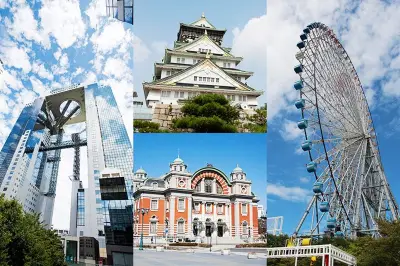
Afternoon: 14:00 from Nijo Station take the JR Sagano Line (for Kyoto) – 2 stops to Kyoto Station. Thus ends our Kyoto trip. 14:45 head to Osaka. From Kyoto Station take the JR Kyoto Line Special Rapid (for Himeji) – sign: platforms A6-7 – ride 3 stops to Osaka Station (note: the train stops at Shin-Osaka Station, which is different from Osaka Station). Walk to Umeda Station and take the Midosuji Line (for Tennoji) – 4 stops to Namba Station, then walk 10 minutes to Hotel Sunroute Osaka Namba to check in. I chose this hotel because it is close to shopping areas like Shinsaibashi, Dotonbori, and Midosuji Avenue, as well as Namba Station, making it convenient for travel. Note: The JR Kyoto Line is also called the Sanyo Main Line.
Evening: Stroll along Midosuji Avenue. Food recommendation: Isomaru Suisan.
Morning: 10:00 head to Shinsaibashi, a 5-minute walk from the hotel, kicking off the shopping spree for the ladies. Food recommendation: Kinryu Ramen.
Afternoon: 15:40 head to Kuromon Ichiba Market (2-4-1 Nipponbashi, Chuo-ku, Osaka). I have to mention that watermelons in Japan are extremely expensive. I ordered a vegetable hot pot with crab legs, costing about 185 RMB, and still didn’t feel full! Japan is not only expensive for fruit, but vegetables are also a luxury.
Evening: Stay at Hotel Sunroute Osaka Namba.
Morning: 10:15 head to LEGOLAND Discovery Center Osaka (3rd floor, Tempozan Market Place, 1-1-10 Kaigandori, Minato-ku, Osaka; ticket price: 2,300 yen per person). From Nipponbashi Station (Osaka) take the Osaka Metro Sakaisuji Line to Sakaisuji-Honmachi Station, then transfer to the Osaka Metro Chuo Line – 6 stops to Osakako Station, then walk 8 minutes to LEGOLAND Discovery Center Osaka. This is the second LEGOLAND in Japan and the twelfth in the world.
Afternoon: 15:00 return to the hotel. From Osakako Station take the Osaka Metro Chuo Line – 6 stops to Sakaisuji-Honmachi Station, transfer to the Osaka Metro Sakaisuji Line – 2 stops to Nipponbashi Station (Osaka).
Evening: Stay at Hotel Sunroute Osaka Namba.
Morning: 10:20 check out. Leave luggage at the hotel front desk, then head to Dotonbori for lunch. Food recommendation: Ichiran Ramen. I strongly recommend: when in Osaka, you must have a steaming bowl of Ichiran Ramen – the taste is completely different from the Hong Kong branch!
Noon: 12:00 walk 14 minutes to Nankai Namba Station and take the Nankai Line Airport Express (for Kansai Airport) – 11 stops to Kansai Airport (railway). Air China CA858, Kansai Airport (T1) 16:25 – Pudong Airport (T2) 17:50.