Popular Overseas Too! Discover the Wonders of Japanese Tea at Uji Kouen, a 155-Year-Old Tea Specialist
● For Japanese tea, this is the place! Uji Kouen
Take a moment to relax surrounded by the aroma of tea… Cafés where you can enjoy carefully brewed, authentic Japanese tea have been on the rise in recent years. This time, in search of “a blissful cup of tea,” I visited the long-established shop Uji Kouen Osaka Shinsaibashi Store, located in the Shinsaibashi-suji Shopping Street in Osaka.
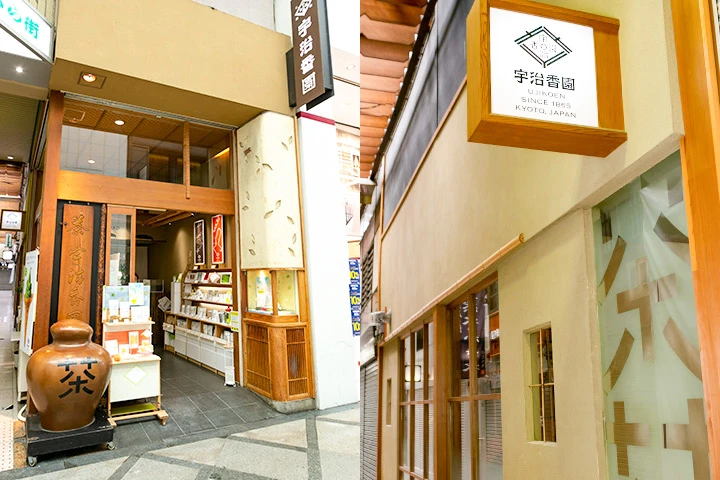
Uji Kouen was founded in the first year of the Keio era (1865) in Yamashiro, Kyoto, the home of Uji tea, originally as a tea wholesaler. With over 150 years of history, this venerable shop’s Japanese tea specialty store and café sits right inside the Shinsaibashi-suji Shopping Street. Incredibly, the specialty store opened way back in 1946! Initially selling only products, it was renovated in 2003 into its current format, which includes a tea-tasting space.
The exterior of Uji Kouen Osaka Shinsaibashi Store
Since the 1990s, canned and bottled green tea drinks became common, making “buy and drink” the norm, so having freshly brewed Japanese tea to sip leisurely was quite rare at the time. The building exudes a sense of history.
● The café is a tranquil oasis in the heart of Shinsaibashi
Stepping inside… the tea-drinking space is so quiet, it’s hard to believe you’re right on a bustling shopping street! The main space, arranged around a counter, makes your heart flutter with anticipation.
This time, store manager Mr. Asai of the Osaka Shinsaibashi Store specially welcomed me. I was told the café was created so that people could savor truly delicious Japanese tea, and the menu is simple, with only tea and sweets. He assured me there are no strict etiquette rules and to just relax and enjoy, which put me at ease.
Uji Kouen Osaka Shinsaibashi Store, Store Manager Mr. Asai
I ordered the epitome of high-grade tea—gyokuro! The hot water for brewing was boiled in an iron pot. It’s said that soft Japanese water tastes great on its own, but using an iron pot or kettle gives it an even mellower flavor. Pouring the hot water from the iron pot and waiting for it to cool to the right temperature was a luxurious moment in itself!
Gyokuro is brewed using a teapot called a hōhin (center in photo). This is a vessel for drinking small quantities of tea. Waiting for two minutes… a sand timer was used to keep perfect time.
The hōhin used for gyokuro and similar teas
Watching the tea being brewed right before my eyes like this was delightful. The tea is poured very carefully, not leaving a single drop behind.
I had heard that gyokuro is highly aromatic, with a scent of aonori seaweed, and a mellow taste, but what was it really like? The moment I took a sip, I understood fully. The aroma filled my senses. The rich, deep fragrance that hits the palate at first slowly spreads and unfolds in the mouth, then the sweetness emerges—the tea’s character gradually changes… I savored the intricate flavors of gyokuro little by little.
Gyokuro and a seasonal wagashi sweet
Then came the second infusion. Steeping time was shorter, just 20 seconds. If you shake the hōhin too carefully, the tea might spill, so the trick is to pour decisively in several quick motions. The connoisseur’s way is to enjoy the refreshing taste of this second brew, which differs from the first!
The café taught me several brewing tips that I want to try at home.
● Start a wonderful life with Japanese tea: selecting the finest leaves
Common tea-selection questions! Q & A
After relaxing with tea at the café, it’s time to pick out leaves to enjoy at home! Uji Kouen carries teas from Kyoto Prefecture as well as various regions across Japan. Let’s continue with guidance from store manager Mr. Asai.
Inside Uji Kouen
Q1: What do you recommend when I’m not sure what to choose?
I recommend Tenkei Sencha. Even those unaccustomed to brewing tea can enjoy a delicious cup. This sencha has a gentle sweetness and mellow body, and is available in tea bags too.
Various types of sencha at Uji Kouen
Q2: Are there teas that are easy to brew and ones that are tricky?
Hōjicha and genmaicha, which brew easily with hot water, are simpler to prepare. In contrast, sencha is a tea that shines when brewed with care. The key to a delicious sencha are: ① the amount of leaves ② the temperature and amount of water ③ the steeping time. Achieving a perfect balance of bitterness, astringency, umami, and sweetness is the unique appeal of sencha. I recommend referring to the brewing instructions on the package and then finding your own personal method. Feel free to ask our staff. Sencha tea bags are also easy for beginners to brew.
Q3: What about seasonal limited teas?
Besides shincha (new tea) sold in early summer when the new buds sprout, we also have “shukko-cha” (autumn matured tea) in autumn. This is tea harvested in the same period as shincha but then aged; originally it was actually matured in storehouses, hence the name. Compared to shincha, which lets you enjoy fresh aroma and flavor, shukko-cha is characterized by a mellow, rounded taste.
Q4: What are flavored teas like?
Uji Kouen offers three flavored teas: cherry blossom, peach, and yuzu citrus. All are based on sencha and accented with dried cherry blossoms, peach flesh, or yuzu peel. These teas pair exceptionally well with Western-style sweets.
Q5: Are tea bag teas good?
The appeal of tea bags is how simple they are to drink. Uji Kouen’s tea bags use the same leaves as loose tea, but they are processed to be finer so they release flavor quickly, resulting in a taste that is every bit as good as leaf tea. I also recommend them to anyone who wants to try a variety, or to those who find loose tea quantities too much to finish.
Uji Kouen’s wide range of tea-bag teas
Q6: Which teas are best for carrying around or for water bottles?
When using hot water, the flavor changes over time, so cold-brewed teas are best. We sell leaves specifically for cold brewing in summer, but basically all teas can be cold-brewed. If you want hot tea while out and about, it’s best to carry hot water and tea bags.
Ideal for summer! The cold-brew tea section
In addition, deep inside the shop, glass cases hold premium gyokuro and sencha, some priced at 10,000 yen per bottle! These are probably meant for experienced tea drinkers who want to take on a challenge.
Luxury gyokuro and sencha leaves
Since I had the opportunity, I decided to try a variety through tea bags, purchasing classic sencha, easy-to-brew hōjicha, genmaicha, delightfully aromatic yuzu green tea, and Japanese-style black tea!
Sencha, genmaicha, and yuzu flavored tea
The stylish white-based packaging is also perfect for gifts. I learned that the packaging won the 2021 iF Design Award, one of the world’s top three design competitions, this spring.
Finally, I asked for tips on brewing the tea bags deliciously and storing the leaves I bought.
How to brew tea-bag tea
① First, lightly dampen the tea bag with hot water. This is said to release the aroma.
② Pour in hot water and wait 30–40 seconds.
③ Move the tea bag up and down 30–40 times. This is the key step for a great brew!
Simple, right? Adjust the water amount and temperature according to the tea. By the way, for cold-brew tea, simply steep the leaves in cold water for one hour. The colder the water, the more sweetness it draws out, they say.
Light, humidity, and odors are tea’s greatest enemies. Storing it in a sealed zipper bag with the air squeezed out is a reliable method. After opening, it should be consumed within a month. If you transfer it to a tea caddy, the aroma tends to escape, so it’s advisable to store only about a week’s worth at a time.
“As the phrase ‘nichijō sahan’ (daily bread, or literally ‘daily tea and rice’) suggests, tea is something to be enjoyed every day. I want people to experience the charm of Japanese tea here and then try it at home.” Mr. Asai’s words, as he continued to share the allure of tea, left a deep impression on me.
I, too, will make an effort to cultivate the luxurious habit of enjoying a blissful cup of tea at home!
▼ For more information, see the comments section below
Travelogue Contents
1. ● A blissful cup of tea at home too! Secrets to deliciousness
Travel Info · Hotel Index · Travel Guide Index · Flight Index · Site Guide · Travel Index · Cruise Index · Corporate Travel Index · Affiliate Cooperation · Distribution Alliance · Friendly Links · Corporate Gift Cards · Insurance Agents · Agent Cooperation · Hotel Affiliates · Destination & Scenic Spot Cooperation · More Affiliate Cooperation
About Ctrip · About Ctrip · Ctrip Highlights · Contact Us · Careers · User Agreement · Privacy Policy · Business License · Security Center · Ctrip Content Center · Intellectual Property · Trip.com Group Algorithm Disclosure