Japan in Cherry Blossom Season
For years I was torn about whether to visit Japan. This year, my work unit organized a group tour, and I finally went.
I had no idea what to expect. Some who had returned said things were cheap, others said food was expensive, but everyone agreed that everything was spotlessly clean and the scenery was beautiful.
Tokyo represents modern Japan and should be the first stop to understand the country. But with limited time, our itinerary was set for Osaka, Kyoto, and Nara—places rich in culture where we could chase the cherry blossoms.
In November, round-trip plane tickets to Japan cost only 2,900 yuan, even cheaper than tickets to popular domestic Chinese tourist cities. The visa process was also extremely simple—perhaps another reason why people like to go.
Narita Airport was not crowded, and the modernity of the restrooms surprised me. The once-trendy electric toilet seats were found in every public place during this trip.
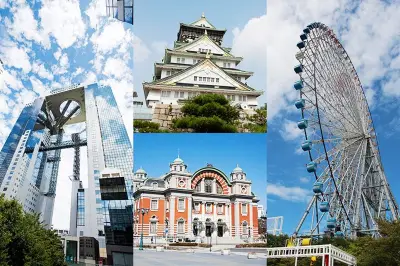
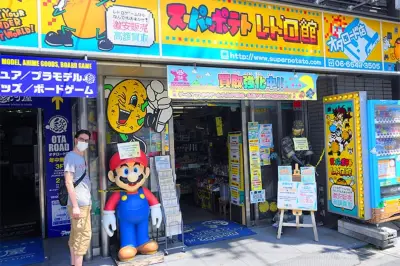
In November, Osaka had just entered autumn. There was no autumn wind outdoors, but air conditioning was on indoors. A thin jacket was just right. Our guide was a Chinese international student who had been in Japan for many years. The driver’s Japanese was average; his whole family had immigrated to Japan. The hotel was opposite Shinsaibashi, making dining and shopping very convenient. There were not many people on the streets. At 10 a.m., the shops on both sides of Shinsaibashi had just opened, with few customers. I bought Meiji milk and yogurt at a convenience store, along with some unknown snacks for breakfast. The products weren’t much different from those in China. By lunchtime, office workers streamed out of buildings to eat at nearby restaurants. I had traditional ramen at a small street-side shop; it tasted better than Ajisen’s. In the evening, the street lights came on, and Shinsaibashi became lively. Outside drugstores, Chinese shop assistants held signs advertising discounts to attract tourists. Inside, most customers were Chinese; there was no need to speak Japanese. Larger stores had long lines for checkout. The popular products were mostly the same: masks, sheet masks, cosmetics, eye drops, medicines, food… I didn’t even know if they were good, but I just followed the crowd, buying as if getting a bargain. With big bags and small parcels, one trip wasn’t enough. Back at the hotel, everyone gathered together, and oh, there were things I hadn’t seen before. So the next day, I’d grab a companion to restock. Every evening was happy and fulfilling. At night, we agreed to meet at the department store in the central area. The products there were a step up in quality, the packaging was larger, and the prices were naturally much higher. In that store, you couldn’t just grab whatever looked nice like at the drugstore. You had to patiently compare prices online, ask experienced friends, or take pictures of products and prices for the person commissioning the purchase to confirm—in short, you couldn’t be impulsive. Since I was here, I had to buy something to feel worthwhile, but what? That was the question. I had already spent some money at the drugstore. I wandered around and decided to buy a fitness watch, supposedly cheap. After a clumsy conversation with the shop assistant, I found out that this watch wouldn’t work well in China, so he didn’t recommend it. So I bought an ordinary Casio—it is the country of origin, after all—but it was even more expensive than in the US, and the selection was limited; it just couldn’t keep up with the times. A suitcase would be useful, too—how else would I store all those small items I’d bought from the drugstore?
After buying all that, I went to the nearby Yoshinoya for dinner. The shop was tiny: just two staff members, with seven seats at a corner counter. People who came in saw how cramped it was and many took their food to go. I ordered a set meal and waited for it to be served. Inside, the chef took pre-portioned soup packets from the shelf with his right hand, while his other hand placed a pot on the stove. He added meat and vegetables, brought it to a boil, then skillfully filled a bowl with rice. The order was done quickly. The flavor was rich. I must have been dazed from all the shopping—the way back, which should have been simple, got me completely turned around. My phone was almost out of battery, and I couldn’t remember which street the hotel was on. Fortunately, I always carry the travel notes I made before the trip, which included the hotel address. I handed it to the elderly taxi driver. He put on reading glasses, typed my address into the electronic map under the dim cabin light, and the car turned around. I couldn’t believe how far I had gone in the wrong direction. Finally, I saw the hotel’s neon sign and breathed a sigh of relief.
Osaka has many gods. In the early morning, I accidentally wandered into a nearby shrine. Japanese people even stop to pray before work—so devout.
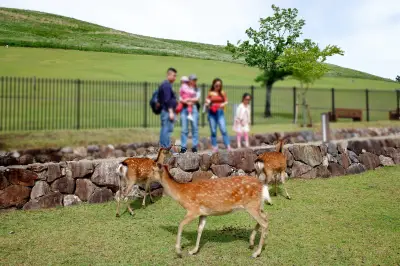
After about two hours by bus, we arrived at famous Nara. A group of deer, sensing the smell of food, trotted over to greet us. You had to buy a ticket to go up Mount Wakakusa, but I don’t know how the deer got up there. On the flat, grassy second slope, they still followed tourists, lured by deer crackers. The highest peak, the third slope, was only a small hill—Nara’s highest point. Tired from the descent, I looked at the lush green slope and thought, why not just slide down? I tore open my plastic bag, used it as a sled, and happily slid down.
At the foot of the mountain was the famous Kasuga Taisha. It is one of many shrines in Japan, dedicated to the tutelary deities of the Fujiwara clan. The pillars and beams are all painted vermilion, and the large, upturned eaves are neatly covered with blackish-brown twigs like thatch, creating a strong visual impact. It happened to be a festival day; Japanese families, dressed in traditional kimono, brought their children, also in formal attire, to participate in the ceremony. Perhaps due to the constraints of the clothing and the atmosphere, there were no unruly children running around—everyone was well-behaved. This added solemnity to the shrine. Leaving the main hall, I preferred the unadorned brown shrines: unpainted wooden buildings with the same thatched roofs, brown logs paired with geometric white walls, similar in style to the Huaqing Pool in Xi’an.
Exiting Kasuga Taisha, there was a museum, but it was closed that day. As I walked around, I suddenly saw a magnificent building—Todai-ji. Its brown logs and geometric white walls looked familiar. Actually, the geometric patterns were created by wooden strips attached to the white walls. From 710 to 794, Nara was Japan’s capital, modeled after Chang’an and Luoyang in Tang Dynasty China, and was called Heijo-kyo. It was the cradle of Japanese politics, culture, art, and crafts. The architecture was very similar, yet with its own characteristics. Fortunately, this ancient capital of Nara has been well preserved, while very few Tang Dynasty buildings remain in China. However, the all-wooden structure did not escape the ravages of fire. Todai-ji has been rebuilt several times in history, but its architectural style has been preserved. Although it is not as magnificent as the Hall of Supreme Harmony in the Forbidden City, it is taller, larger, and older. It is the world’s largest wooden building, and the giant, exquisite Buddha statues inside are rare treasures.
Kyoto, adjacent to Nara, is also an ancient capital and has an even higher concentration of temples. Tofuku-ji, To-ji, Yasaka Shrine, Nijo Castle, Kiyomizu-dera, and others are all located here.
On the third day after arriving in Osaka, the original plan was to take a day trip to Kyoto’s Arashiyama and return to Osaka. But I felt it would be a pity to leave Kyoto without seeing its most iconic buildings. So in the evening, I parted ways with my companion at Arashiyama Station, booked a hotel online near Kiyomizu-dera with convenient transportation, and took the subway directly to Kyoto.
The subway wasn’t crowded. Kids returning from baseball practice were chatting excitedly with their teammates. Midway to Kyoto, I had to transfer, apparently to a different subway company, so I had to buy another ticket. Since it was an unfamiliar route, I felt a bit nervous—it was evening, I didn’t speak the language, and I wasn’t sure if the hotel would be hard to find. Luckily, it was much closer than the map indicated. I had no luggage, just a small bag—very minimalist. I checked in and entered the room by 9 p.m. I hadn’t expected a hotel in Gion, Kyoto, to be so large. The 20-square-meter room even had a foot massager, and to my delight, the bathroom had toner, saving me from the embarrassment of having no skincare products. I snacked for dinner; everything was simple. Lying in bed, I planned the next day’s itinerary. Getting a kimono photo taken was a priority. That day in Arashiyama, I had seen all kinds of women in kimono. I initially thought they were Japanese, but later learned it was another activity for tourists. On Taobao, I found a kimono rental shop in Kyoto that offered a package including makeup, hair styling, and a photographer. I booked a shoot for 10 a.m. the next day. Since there was no bus nearby, at 7:30 a.m. I asked the front desk to mark the location on a map and decided to walk. Kyoto’s streets were not as bustling as Osaka’s; they were quiet, with no tall buildings, gray and dim. At an intersection, I was drawn to a magnificent building. I checked the time—only 8 a.m.—so I deviated from my route and walked toward it. Not having done my homework, I saw a wooden sign that read “Yasaka Shrine” and found the name amusing. Climbing the high steps, I found the wide shrine grounds nearly empty. The red buildings were still striking. The shrine was more like a pavilion, with a roof but no walls, and white lanterns hung all around the eaves. You could see everything without entering; a quick loop sufficed. Soon, I left the complex and followed a path lined with red railings into the quiet distance. Passing a pond and a small bridge, I saw a stone marker for Maruyama Park. Perhaps it wasn’t the most beautiful season; the plants were already mottled but not in full clusters. Strolling through a small gate, I suddenly saw a magnificent dark brown wooden building standing on high steps—Chion-in. It was like a miniature Todai-ji, and it stunned me. Entering through the huge front gate—the largest mountain gate in Japan, 24 meters high and 50 meters wide, also called Sanmon—the three gates symbolize “emptiness,” “formlessness,” and “non-aspiration,” three teachings of Buddhist practice. Seeing familiar Chinese characters on a foreign building made me feel even more affection for it. Passing through the Sanmon, I climbed up to Chion-in. A fragrance drew me into a courtyard, enclosed on three sides, forming a complete complex. Like a siheyuan, with two main halls and side halls set against a small hill. Double-layered roofs with upturned eaves, brown wooden structure, white doors and windows. It had the shadow of Todai-ji and the shape of Kasuga Taisha. It was completely empty, utterly silent, save for the leisurely chirping of birds. At that moment, I marveled at how right my decision to stay an extra day in Kyoto was!
Leaving Chion-in, I wandered through countless nameless streets. The architectural style was consistent: mostly two-story houses with small courtyards. Earth-yellow walls with dark brown wooden fences, fallen leaves scattered on the bluestone paths, quickly swept away. Many small and large shrines were hidden here. Even without entering, the streets themselves were beautiful. Emerging from the alley into the main street was like entering another world: chaotic and noisy outside, peaceful and quiet inside. Who would have thought such ordinary streets hid such a different world?
The map led me past the Ceramic Museum. By then it was already time for my appointment, so I dared not stop and continued across the bridge. But no matter how hard I tried, I couldn’t find the shop marked on the map. I feared I had missed it, walking back and forth several times, searching every shop in the area, but still no luck. Then the worst thing happened: my phone died. How terrifying! Without a phone, I not only couldn’t find the shop, but I also had no way to find my way home. In desperation, I entered an open shop and found a Chinese employee there. I told her the location, but she didn’t know it either. I had no choice but to charge my phone first, then call the photographer. We walked back and forth along the main street several times but found nothing. I was truly grateful for the internet—by sharing my location, I finally found it! What a relief! From then on, things were easy: choose a kimono, get makeup and hair done, then pick out accessories and put on wooden clogs to go out. We shot photos in the crowded Ninenzaka and Sannenzaka areas. Although these are famous scenic spots, they lacked the charm of the streets I had visited in the morning. How important it is to have few people in a scenic area; so many beautiful sights are drowned in the crowds.
Following the crowd up the steps, I entered Kiyomizu-dera, a three-story red-roofed building listed as a UNESCO World Heritage site. It is very famous and is a national treasure of Japan. Long steps are flanked by many shops: mostly food on the left, and mostly gift shops on the right. The delicate ceramics in the windows were tempting. I browsed from shop to shop; although many claimed to be homemade, most sold similar items. The shop assistant happened to be a young Chinese man, so I bought a handmade Kyoto-yaki from his shop. By then it was noon. The restaurants in the tourist area were reasonably priced and tasty. A family-run place warmly served me their specialty set meal. On the way back, I saw a café packed with people. I joined in, bought a coffee, and sat on a bench outside, watching the moving scenery: elderly Japanese liked to go out in kimono, middle-aged people wore fashionable clothes, and the young were casual and free-spirited. I checked the map and walked to the subway station. It was quite far, but I enjoyed the walk, discovering yet another unknown shrine along the way. The subway from Kyoto to Osaka was very convenient and reasonably priced; after two transfers, I was back. This solo excursion was truly precious.
Kyoto’s Arashiyama is a famous maple-viewing area. The small streets were packed with tourists. The shops along the road mostly sold drinks and small souvenirs. The little garden outside Tenryu-ji had a fence that was a sight in itself: each fence section was designed differently, using simple materials but with great care. I ignored the garden’s buildings and flowers and focused only on the unique hedges. In Arashiyama, I had a Japanese sukiyaki hot pot. Japanese food, like its architecture, is exquisite and memorable.