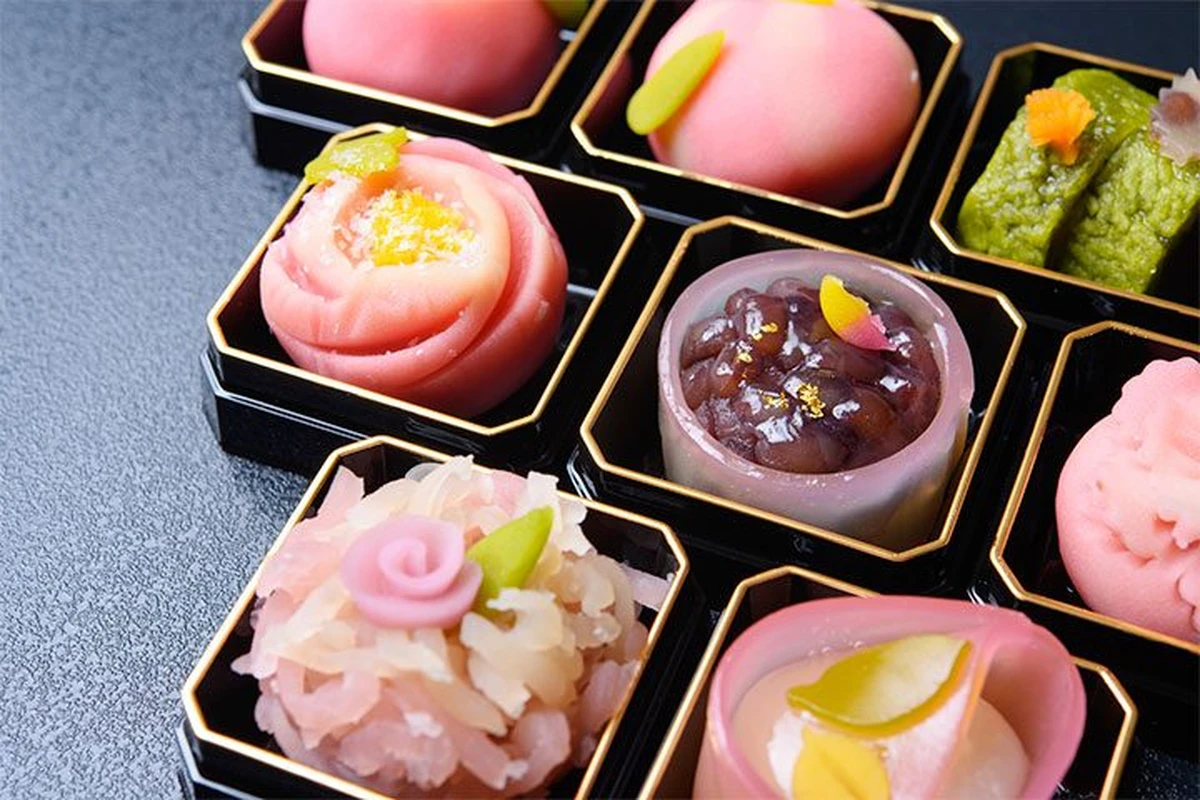
Japanese Traditional Sweets: Wagashi
Daifuku, mochi, dorayaki, and other Japanese sweets are very popular!
I want to talk to you about Japanese traditional sweets called 'wagashi'.
When you think of wagashi, what comes to mind? Daifuku, mochi, dorayaki, monaka... and so on—there are so many varieties that it's hard to count.
Let's take a look at the profound world of wagashi♪
The history of wagashi dates back over 2,000 years to the Jōmon period (the Neolithic period in world history). It is said that people at the time crushed tree nuts, rinsed them to remove astringency, and rolled them into balls—which is the origin of dango (rice dumplings). It's surprising that the prototype of wagashi appeared so early!
In the Asuka and Nara periods (600s–700s), sweets (kashi) and their production methods were introduced from mainland China to Japan. Later, along with the development of tea culture and the addition of unique Japanese methods, the beautifully shaped wagashi we know today were formed.
Then, in the Edo period (1603–1868), original wagashi began to emerge across Japan, and the culture of wagashi developed rapidly. It is said that most of the wagashi we eat today were created during this period! Furthermore, long-established shops that are still open today, such as Akafuku Honten in Ise and Izutsu Yatsuhashi Honpo in Kyoto, were also founded during this time.
Thus, wagashi has been passed down to the modern era and remains a beloved sweet for many people♪
There are many types of wagashi, classified in detail by water content, production method, and usage. Let's take a look at the most common types and history of wagashi in Japan.
Made from glutinous rice and non-glutinous rice flour, these are kneaded into small, round balls. They are characterized by their elasticity and soft, chewy texture. Surprisingly, they were already called 'dango' in the Heian period (794–1185) – truly a wagashi with a long history! Skewered dango such as mitarashi dango (drizzled with a sweet soy sauce glaze) and hanami dango (with cute three-colored balls of green, white, and pink) are popular.
A wagashi made by wrapping sweet bean paste in a mochi skin, forming a white, round shape. It is said that in the Edo period (1603–1868), commoners sprinkled sugar on uzura mochi (pea-filled mochi), which was the origin of daifuku. It then skyrocketed in popularity and spread throughout Japan. Confectioners have since used their imagination, creating various types of daifuku, such as the popular anko (red bean) daifuku and the trendsetting strawberry daifuku, beloved by all ages.
For an article on fruit daifuku, click here >> A Wonderful Combination of Fruit and Bean Paste: Seasonal Delicious Fruit Daifuku!
Wagashi made using mochi (rice cake) is the most diverse category. Examples include kashiwamochi (a flat, round mochi skin filled with sweet bean paste and folded in half, then wrapped in an oak leaf), sakuramochi (wrapped in a cherry blossom leaf), and warabimochi (served with kinako (roasted soybean flour) and kuromitsu (black sugar syrup)). Additionally, there are many local mochi sweets throughout Japan.
A mixture of wheat flour and brown sugar, with filling wrapped in the dough. 'Cha manju' (tea steamed buns) are popular souvenirs from hot spring resorts. 'Jōyō manju' (red and white steamed buns) are famous as gifts for weddings and celebrations. It is said that 'sake manju' (sake-steamed buns), with their fragrant sake flavor, are the origin of Japanese manju. Made with a fermentation process similar to that of Japanese sake, these manju are also popular among foreigners.
A wagashi made by wrapping sweet bean paste in a batter made from wheat flour and water, then baking it in a sea bream-shaped mold. There are multiple theories about the origin of taiyaki, but a strong one is that it evolved from imagawayaki (same method, round shape) in the Meiji period (1868–1912). Taiyaki has a cute appearance, and in 1975 a children's song about taiyaki was released. The song 'Oyoge! Taiyaki-kun' (Swim! Taiyaki-kun), which received a Guinness World Record, sold over 4.5 million copies! Taiyaki is not only popular among Japanese but also widely loved by foreigners as a famous wagashi.
A wagashi made by mixing wheat flour, eggs, and sugar, then baking the batter in an oven, similar to a soft sponge cake. It is said that in the Muromachi period (1336–1573), Portuguese merchants brought a sweet called 'Pao de Lo' (Castella) to Nagasaki, and it was recreated there. This brought an unprecedented production method to Japanese wagashi, and it has been loved for its simple, delicate texture for a long time.
A wagashi made by simmering sweet bean paste with sugar and agar (kanten), then pouring the mixture into molds to set.
It is said that yōkan originally referred to a soup made by boiling mutton in Chinese cuisine. It was introduced to Japan by monks during the Kamakura and Muromachi periods (1185–1573). However, since Buddhism at the time prohibited eating meat, the monks substituted red azuki beans for the mutton, creating the prototype of Japanese yōkan. Mizu yōkan, which has a pudding-like texture with high water content, is also popular.
A wagashi made from white bean paste mixed with a binding agent and kneaded into a dough. It is indispensable for 'omotenashi' (hospitality) occasions. Classified as jōnamagashi (high-grade fresh sweets) served at tea ceremonies, nerikiri is characterized by its beautiful, delicate shapes and elegant flavor, often modeled after seasonal flowers such as plum blossoms and hydrangeas. Nerikiri, which appeared in the late Edo period (1800s), is said to be 'edible art' that condenses the skills of artisans.
* Ingredients and shelf life may vary depending on the product. Please check with the store or refer to the product ingredient label and expiration date.
One of the pleasures of wagashi is experiencing the changing seasons.
In spring, there are sakuramochi and hanami dango; in summer, mizu yōkan; in autumn, ohagi and kurikinton; in winter, yuzu mochi—allowing you to enjoy a variety of wagashi throughout the year.
Additionally, many wagashi designs reflect the seasons. Nerikiri comes in various shapes like cherry blossoms, plum blossoms, and chrysanthemums, embodying beautiful forms and colors according to each season.
Each wagashi embodies tradition, history, and passion. There are many wagashi shops in Japan, ranging from long-established stores to new ones, and you can easily purchase them at department stores, supermarkets, and convenience stores.
When you visit Japan, why not try some wagashi and experience the beauty of the seasons?
Travelogue Directory:1. ● Wagashi Originated Over 2,000 Years Ago!2. ● Types and History of Wagashi3. ● Enjoy Seasonal Wagashi♪Travel InformationHotel IndexGuide IndexAirline Ticket IndexWebsite NavigationTravel IndexCruise IndexCorporate Travel IndexMembership CooperationDistribution AllianceFriendship LinksCorporate Gift Card PurchaseInsurance AgencyAgency CooperationHotel FranchiseDestination and Attraction CooperationMore CooperationAbout CtripAbout CtripCtrip Hot TopicsContact UsCareersUser AgreementPrivacy PolicyBusiness LicenseSecurity CenterCtrip Content CenterIntellectual PropertyTrip.com Group Algorithm Disclosure