Riding Osaka Metro on New Year's Day: Welcoming the New Year with a Fresh Mindset
From the end of the year to the beginning, the night when December 31 turns into January 1 is the most special moment worldwide.
In Japan, when the sun rises on January 1, it is called the first sunrise of the year, and people watch the sunrise and visit shrines. The beginning of the new year is a day of change.
*From December 30 to January 3, Osaka Metro operates on a Saturday, Sunday, and holiday schedule. For details, please check the Osaka Metro official website.
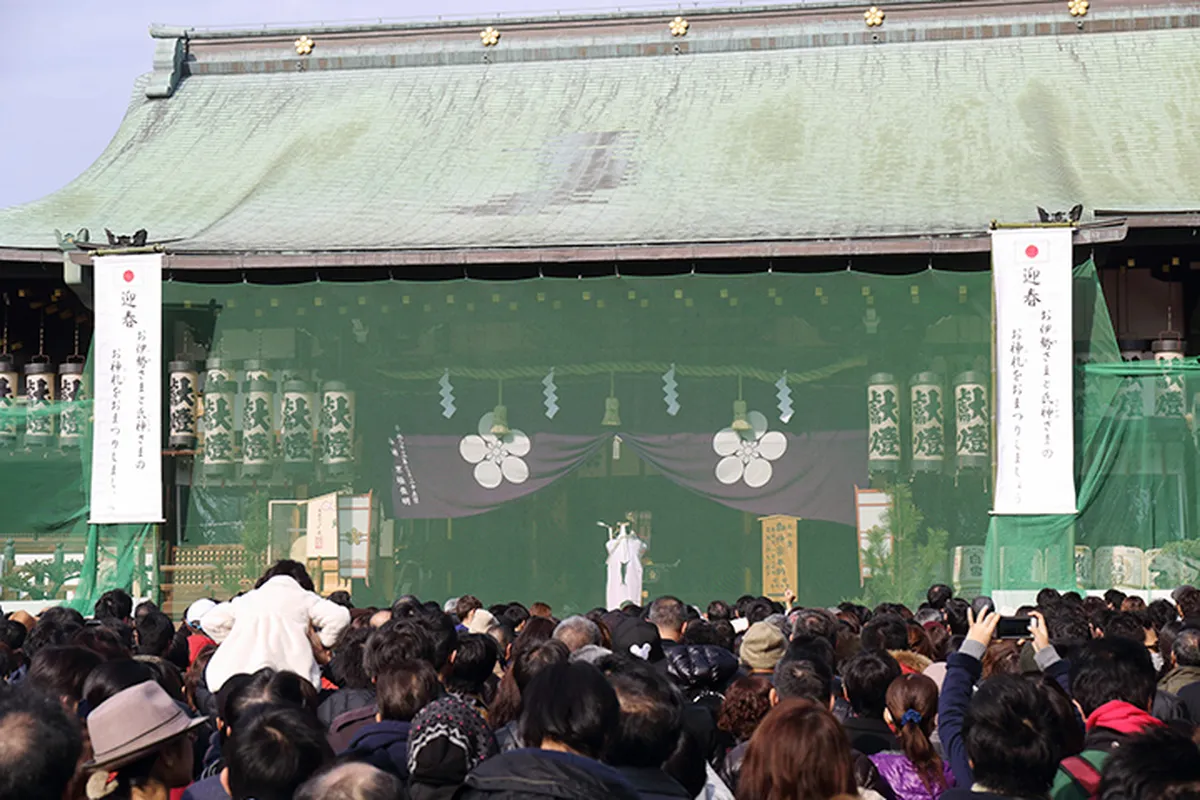
At the start of the new year, people visit shrines to pray for good fortune throughout the year—this is called 'Hatsumōde' (first shrine visit of the new year). It is said that Sumiyoshi Taisha, the shrine with the most visitors in Osaka, receives 2 million people. Hatsumōde is often concentrated on January 1, but there are no strict rules; usually people go by January 3. Depending on the shrine, the dates and specific times for prayers may vary, so it's a good idea to confirm before deciding where to go. Originally, people mostly visited nearby shrines, but recently more people are traveling to distant shrines based on their needs. Think about your goals or wishes for the new year and visit a shrine that suits your needs.
So let's introduce some shrines in Osaka for Hatsumōde!
Located about a 3-minute walk from Higashi-Umeda Station and close to the station on a busy street is 'Tsuyuten Shrine.' This shrine is deeply connected to the story of 'Sonezaki Shinjū' (The Love Suicides at Sonezaki) written by Chikamatsu Monzaemon in the Edo period, a ningyo jōruri (traditional Japanese puppet theater) that depicts the love of a man and woman who sacrifice their lives to defend their love—seen as 'pure love.' It is popular even today among women who see it as a model for romance. Because the heroine is named 'Ohatsu,' this shrine is also called 'Hatsutenjin.'
About a 2-minute walk from Minamimorimachi Station and adjacent to the longest shopping street in Japan, Tenjinbashi-suji Shopping Street, is 'Osaka Tenmangu.' Revered as the god of learning in Osaka, it is affectionately called 'Tenjin of Tenma.' Not only exam-takers visit, but since the deity also protects family safety and wards off misfortune, it is an all-around god, and the omamori (charms) and ema (votive tablets) are diverse. The 'Tenjin Matsuri' held every July 24 and 25 is one of Japan's three major festivals and is very famous.
'Toyokuni Shrine' is a shrine dedicated to 'Toyotomi Hideyoshi,' who built Osaka Castle, located within Osaka Castle Park. Access from Tanimachi Yonchome Station or Morinomiya Station is convenient. Because Toyotomi Hideyoshi rose from a farmer to a ruler of the country, this shrine is suitable for those who want to advance their careers or seek a job change, isn't it? The omamori designed after Hideyoshi's symbol, the 'sennari hyōtan' (thousand gourds), for success and good fortune are cute and popular.
About a 2-minute walk from Kitahama Station and close to the station, 'Sukunahikona Shrine' (pronounced Sukunahikonajinjya) stands on a corner of Doshomachi, a commercial street in Chuo-ku, Osaka, where major pharmaceutical manufacturers gather. It is widely known as the god of health and medicine. Besides praying for humans, you can also pray for the health of your pets, who are like family. It might be nice to do Hatsumōde with your pet!
If you have decided on a destination, remember the worship procedure! Pray sincerely so that the gods may hear your wishes. Offer a monetary offering with gratitude. If there is a bell, ring it after offering. Face front and correct your posture. Bow deeply twice, bending your body about 90 degrees at the hips. Put your palms together, with your right hand slightly closer to you, and clap twice. Return your right hand to its original position, close your eyes gently, and recite your wish in your heart. Bow once more, then repeat the third action (bow deeply twice). It is important to pray sincerely according to this flow. The amount of the offering is not specified. Many people offer 5 yen (for 'en' meaning缘分), 11 yen (for 'good缘分'), or coins with holes like 5 yen or 50 yen, which symbolize 'transparent future and good prospects.'
Travel diary table of contents:
1. Shrines that can be visited from December! Recommended Hatsumōde spots
2. Customs of Hatsumōde
3. Where to go for Hatsumōde?
4. Praying for love and marriage - 'Tsuyuten Shrine'
5. A must-visit shrine for success in exams - 'Osaka Tenmangu'
6. Praying for success and career advancement - 'Toyokuni Shrine'
7. Praying for good health - 'Sukunahikona Shrine'
8. How to worship
Travel information Hotel index Strategy index Ticket index Website navigation Travel index Cruise index Corporate travel index Join cooperation Distribution alliance Friendly links Corporate gift card procurement Insurance agency Agency cooperation Hotel franchise Destination and scenic spot cooperation More cooperation About Ctrip About Ctrip Ctrip hotspots Contact us Career opportunities User agreement Privacy policy Business license Security center Ctrip content center Intellectual property Trip.com Group Algorithm disclosure