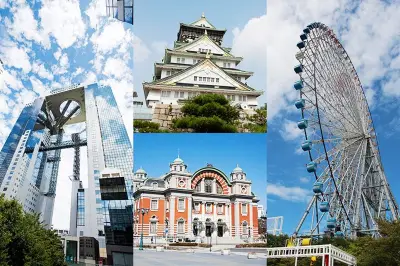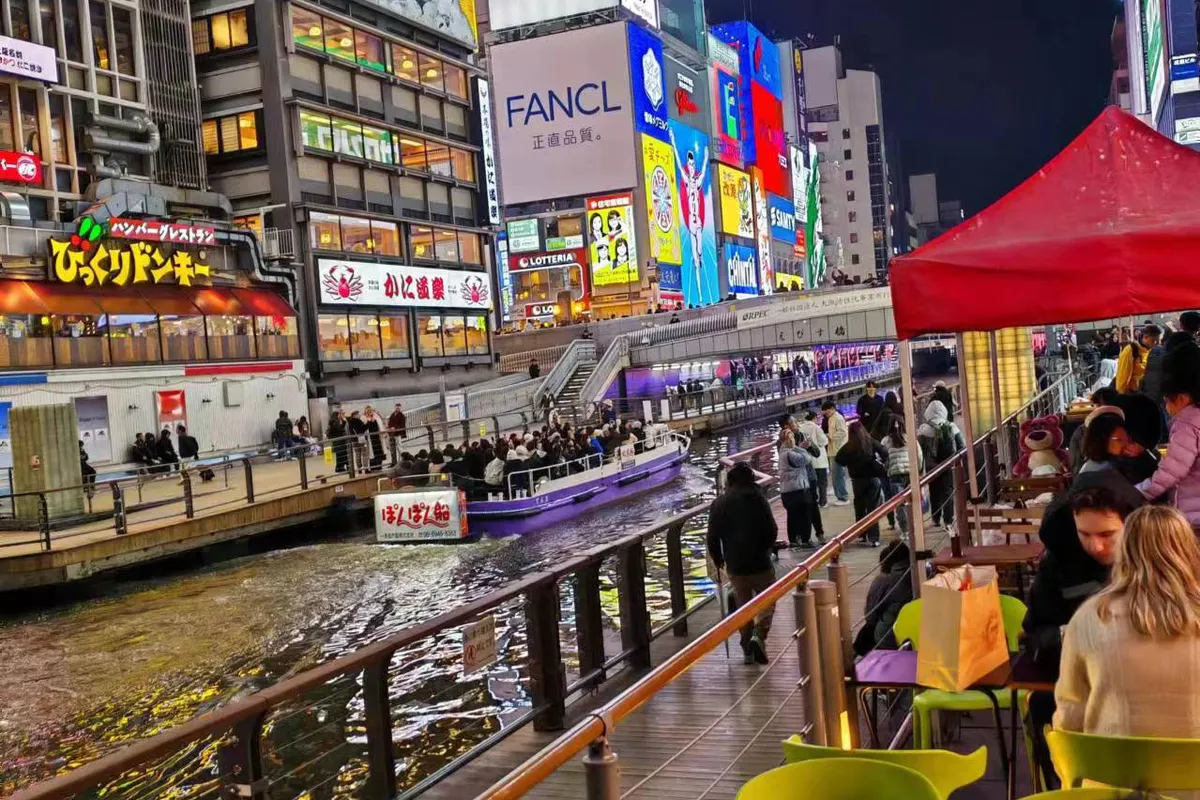
Osaka, Kobe, Kyoto 8-Day In-Depth Tour in March 2024
1. Origin: Flights between China and Japan have finally returned to normal, and prices have dropped significantly. How could we not arrange a trip to Japan? When I checked airfares in late February, Spring Airlines one-way tickets in March were all 500-1000 yuan, and that includes over 400 yuan in taxes. So we made plans immediately. The group consisted of my wife and me, plus my wife's best friend, who had always wanted to visit Japan and was waiting for our call. She is also fluent in Japanese, while our Japanese is limited to the simplest conversations. This time we planned to visit Osaka, Kobe, and Kyoto.
2. Preparation:
(1) Visa: We applied through Taobao in the second half of last year. Since we have Shanghai residency, getting a visa for Japan is basically hassle-free and cheap. We obtained a multiple-entry visa valid for three years – easy to get and convenient to use. Now we can go to Japan anytime as long as airfares are low and we have time; we can also choose the length of stay freely. (2) Internet: For internet access in Japan, portable WiFi is outdated – heavy, needs charging, and must be returned. Using a SIM card for our phones is much more convenient. They are available on Taobao and cost around 10 yuan per day. However, Japan still uses 4G networks, which can't compare with China's 5G speeds. Large videos are not feasible, but daily apps including WeChat video calls work fine. Japan uses 2-pin 110V electricity, so it's best to bring an adapter. Hotels usually have adapters to borrow, but limited quantities; sometimes they run out. Most modern electronics like phones, tablets, and laptops support 100V-230V (wide voltage) and are globally compatible – just check your charger. (3) Airfare: Spring Airlines is definitely the cheapest and flies to many Japanese destinations. You need to book through the Spring Airlines app. The only downside is no free baggage allowance – you have to purchase it according to your needs. Buying at the airport costs twice as much. (4) Accommodation: Book in advance from China. Low season is cheaper, peak season more expensive. Note that Japanese hotel rooms are very small. If that bothers you, look for larger rooms or consider民宿 (minshuku). I've stayed in both. Japan's tourism industry is well-developed and mature, with all kinds of hotels. This time I booked hotels on Ctrip, about 400 yuan per night. Currently, the Japanese government charges 100 yen per person per night as an accommodation tax. (5) Language: It's best to know some Japanese. If not, you can use various translation apps for voice or image translation. Many people from around the world live in Japan's big cities, so English and sometimes Chinese can be used. (6) Navigation: Google Maps works abroad; Baidu Maps is also okay. In Japan, Yahoo Maps is available. (7) Japanese Yen: Exchange some yen in China before you go, as some shops only accept cash. The yen has depreciated significantly; compared to the Chinese yuan, it has dropped even more. If you run out, you can exchange in Japan, but the exchange rate will be less favorable. (8) Transportation: Japan's subway and train systems are very developed. Use them for most trips, occasionally a bus. Taxis cost about five times more than in China. Subways are operated by private companies; transferring between different lines can be a bit tricky—sometimes you need to exit the station. When buying tickets, look up at the map above; if the route is shown, you can usually transfer without exiting. If you make a mistake, each exit has a fare adjustment machine – just adjust the fare and you'll get a refund or pay the difference. There are also IC cards and day passes, but the same issue applies: they may not be interchangeable between different subway companies. Buses have this problem too. Always have cash ready; convenience is not comparable to China.
(1) March 9: Shanghai → Osaka. Arrived at Kansai Airport Terminal 2 in the afternoon, took a shuttle bus to Terminal 1, then the Nankai Line subway, transferred to another subway, and headed to our hotel in Shinsaibashi. After checking in, we found a yakiniku restaurant nearby for dinner. While eating, I noticed an AEON supermarket next door. After dinner we went shopping for groceries. We didn't book breakfast at any hotel because Japanese hotel breakfasts are too simple – bread, coffee, milk, salad are standard; not much else. A supermarket is much better; convenience stores are okay but pricier. If staying in an apartment, you can heat food yourself, which is easier. But we had a way to heat food in the hotel too. Japan has many large supermarket chains; we visited several. Discounts usually start after 7 PM. If you're buying for next morning's breakfast, it's best to shop then, though some items may sell out. Recommended items: baked sweet potatoes, rice balls, sushi, milk, juice, chips, small cakes, ice cream – choose according to your taste. Anyway, all kinds of fish are commonly eaten in Japan. In the evening near Shinsaibashi, we saw the Glico Running Man and felt the bustle and vitality. Osaka has truly become an international city, vibrant again with its unique charm. We need to work harder; during the pandemic years, we stagnated!
(2) March 10: Exploring Osaka. At noon we went to Kuromon Market, a distinctive seafood market that's a must-visit spot. They sell various fresh seafood, fruits, and snacks. You can have them cooked on the spot. We grilled a king crab leg – it was really fresh and delicious. Also bought some other snacks, which served as lunch. In the afternoon we went shopping, strolling to the big department stores near Shinsaibashi. We saw many flagship stores of major brands. Spent money at Uniqlo – it's cheaper than in China. Also bought several pairs of sneakers. Finally visited the New Balance flagship store and got the high-end model sneakers I wanted. After dinner we went to Don Quijote (the 'discount' store). The one in Shinsaibashi was too crowded at night – I don't recommend shopping there. Overall, Don Quijote's price advantage has diminished, but they still have a wide variety and various coupons.
(3) March 11: First went to a soccer equipment store near Umeda to buy a pair of short-stud soccer shoes for my child – both shoes and jerseys are much cheaper than in China. Then went to a bookstore to buy a few Japanese medical books. After that, we took a train to Kobe for hot springs. Upon arrival, the whole town seemed dedicated to hot springs, with many inns offering onsen. We chose Kin-no-Yu, the most popular one. The pool was small, in Japanese style – you soak naked, but wash thoroughly before entering. Japan has many hot springs; I've tried several different ones. The Japanese style is the same: wash first, then soak. The water varies, mostly natural hot springs. People all over the world enjoy bathing in hot springs. Our only mistake was the distance – it took five hours round trip. It was already dark after our bath, and we got back to the hotel very late.
(4) March 12: It rained today. We planned to go to Kyoto. Before leaving, I went to a badminton specialty store in Namba to buy a few rackets. The selection wasn't complete, and larger shoe sizes weren't available. Still, prices were about 20% cheaper than in China. Let me address the question of how much cheaper shopping in Japan is. Mainly, the yen's depreciation plus tax-free shopping for tourists makes many items about 20% cheaper. What items are tax-free? Anything you can bring back to your country qualifies, but each purchase must reach a minimum of 5,500 yen. Additionally, some luxury goods are more than 20% cheaper – around 30-40%. So if you need luxury goods, that's the best deal; the savings can cover your airfare and hotel. On the return flight, half the women were carrying new LV bags – with the distinctive LV logo, it was obvious they'd just bought them in Japan. The more you spend, the more you save.
(5) March 13: In Kyoto, we stayed at a hotel near Kyoto Station. There was a large shopping mall next door with a big AEON supermarket. We continued buying breakfast there daily, and for lunch and dinner we varied our choices. We prefer beef; Japanese beef is truly delicious. Since it was drizzly, we visited indoor venues: the Kyoto Museum and Sanjusangen-do. Kyoto has an incredible number of temples and exhibition halls, large and small, each with its own character. These two are large and adjacent, worth visiting. I really like Kyoto because it preserves many Tang Dynasty-style buildings, temples, cultural relics, characters, and customs. Kyoto is very popular with visitors from around the world, so there are many tourists. Prices are about 10% higher than in Osaka. In the evening we went to Daikoku Drug to buy medicines and cosmetics.
(6) March 14: Today the weather was great, so we planned to visit outdoor attractions and Tang Dynasty-style shopping streets. We went to Kiyomizu-dera and the surrounding streets. The weather was nice, so we took our time, soaking in Kyoto's unique atmosphere. By afternoon we were tired, so we found a hot spring called Ume-yu to soak. It was actually a public bath, but very distinctive – it had a sauna, a carbonated pool, and an electric shock pool. Getting shocked in the electric pool was quite exhilarating. In the evening we returned to the supermarket to buy food and had a shabu-shabu hotpot in our hotel room, enjoying unlimited Wagyu.
(7) March 15: Kyoto → Osaka. Using Baidu Maps, we thought we needed to go from Kyoto Station to Umeda, then transfer twice to reach Rinku Town Station. But with the help of our friend who speaks good Japanese, we found a direct train from Umeda to Rinku Town. It was quite confusing – the front part of this train went directly to Kansai Airport, but the rear didn't, and Rinku Town is one stop before the airport. We came here for the outlet mall. In previous trips, we always came just before leaving, in a rush. This time we deliberately left ample time. We explored half the outlet, bought some clothes. I like sportswear brands like Arrow and Screw; Columbia was also very cheap – I found some bargains that were probably more than half the price in China. Then we went to a large sports specialty store next door and happily found badminton shoes. There were many discounted items across various sports brands – if you find something you like, it can be even cheaper than the outlet. My wife also got a pair of glasses at a very low price. I suspect the materials were all made in China. I wanted to get her a better pair, but there weren't any; she liked them though. By the time we came back, it was really late, and we hadn't had dinner. I saw two large signs that I thought might be supermarkets – the logos looked familiar. Indeed they were supermarkets, one of them a 24-hour hypermarket. We bought dinner and next day's breakfast there.
(8) March 16: Osaka → Shanghai. Our flight was at 5 PM, so we continued shopping in Rinku Town during the day. We split up with our friend – she went to the outlets for clothes and baby items, while we went to the supermarket and drugstore to replenish supplies. Matcha chocolate here was cheaper than in the city. After finishing at the supermarket and drugstore, we went to an electronics store and bought a shaver, earphones, and a few small appliances. Then we went to the Nike store at the outlet to buy two pairs of Jordan shoes for our child. By the time we finished, it was afternoon. We all met up for lunch, then returned to the hotel to pick up luggage and head to the airport. Luckily it was just one stop away. We reached the airport counter almost at 4 PM. The three of us ended up with over 80 kg of luggage. Fortunately, I had purchased 30 kg per person for the return flight.
(9) Total expenses: Accommodation and airfare: 4,000 yuan per person; food and transportation: 2,300 yuan per person. Over 8 days, the average cost per person per day was 800 yuan. The cost of items brought back is not counted because it varies greatly – especially if you buy luxury goods. For domestic travel in China, each person spends between 500 and 1,000 yuan per day. So actually, consumption in Japan is already similar to China. The only difference is that China still has some very cheap food and accommodation that Japan doesn't have.
(10) Summary: The last time I went abroad was to Osaka, just a week before the pandemic broke out. This trip was filled with mixed emotions. Many Chinese people hate or strongly dislike Japan, but I think it's important to go and experience it in person, especially to interact with locals. In all my trips to Japan, every time I asked for help from a Japanese local, I received serious and enthusiastic responses. As for asking fellow Chinese, it's just like in China – some are warm, some are indifferent. Our high-speed rail, 5G, mobile payments, and online shopping are indeed far ahead of the world. However, Osaka has developed very well in recent years, attracting people from all over the world to live and work here. Walking through the streets at night, you feel the vibrant energy, reflecting the prosperity of an international metropolis. Shanghai has its own charm, but it still has a way to go before becoming a true global city. We must firmly continue on the path of opening up, without wavering or regressing.