Cherry Blossom Season: Eight-Day Tour of Osaka, Kyoto, and Nara
Itinerary: 2024.03.29-04.05, eight days,
D1: Hangzhou Xiaoshan International Airport - Kansai Airport - Osaka - Check-in.
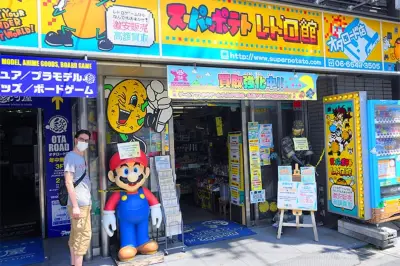
D2: Osaka. Dotonbori, Kuromon Market, Nipponbashi district game stores, Namba Yasaka Shrine.
D3: Kyoto. Fushimi Inari Taisha - Gion Shijo - Hanami-koji - Ninenzaka Sannenzaka - Kiyomizu-dera.
D4: Nara. Nara Park.
D5: Kyoto. Arashiyama.
D6: Osaka. Universal Studios Japan.
D7: Osaka. Osaka Castle Park, Mint Bureau Cherry Blossom Avenue.
D8: Osaka - Kansai Airport - Hangzhou Xiaoshan International Airport.
Flights: Booked over a month in advance, Air China, Hangzhou-Osaka round trip 1500 yuan/person (including checked luggage).
Accommodation: All 7 nights at the Nest Hotel Osaka Shinsaibashi (Small Double Room - Non-smoking - Double Bed - 13 sqm) near Nagahoribashi Station, total 2995 yuan, average a little over 400 per day. Facilities are very complete, with a kettle, small fridge (Haier, China), but the room is small; hotel rooms in Osaka are generally small. Nagahoribashi Station and a 7-11 convenience store are right at the doorstep via the underground street, along with various shops. It's 500-600 meters from Nipponbashi and Shinsaibashi, very convenient. Recommended!
Essential preparations: Visa (omitted); purchase a mobile data SIM (provides internet, can make WeChat calls, cannot call regular mobile/telecom numbers); international credit card (Mastercard, etc.); some Japanese yen cash; you can buy an ICOCA rechargeable transportation card (including 1500 yen credit) in advance to avoid confusion upon arrival at the airport.
Apps: Norikae Annai (Annai means guidance) for checking transit connections between places; must know how to use it. Map app, must know how to use it. Translation app.
Transportation: Common rail transit in Japan includes JR (Japan Railway, national railway), private railways, and subways (metro). These are three different operating systems. Private railways you often see in Osaka and Kyoto: Hankyu, Hanshin, Keihan, Nankai... these are private railways. We may refer to them as trains, electric trains, and subways; they have different stations and lines, but many are close to each other for convenient transfer. Just pay attention to signs and don't blindly wander. If you are comfortable with subways, you should be fine. Japanese trains come in types like Limited Express, Express, Rapid, Local, etc., differing in speed and number of stops. So when you search for different trains, routes may vary. If you miss a train and take the next one at a different time, the two trains may have different stops or routes.
How to get from Kansai Airport to the hotel in the city (Nest Hotel Osaka Shinsaibashi near Nagahoribashi Station). Search and choose the 14:26 departure.
This is a combination of private railway and subway. First, take the Nankai Line (Namba direction) of the private railway and get off at Tengachaya. Find the Nankai Line entrance, tap your card to enter, follow signs to the Nankai Line (Namba direction) platform. The advantage in Japan is that signs have Chinese characters, so you can recognize them. The arrow in a circle next to "Izumisano" in the diagram indicates "no transfer needed," so you don't need to worry. Arrive at Tengachaya at 15:05, get off, follow the crowd, tap out to complete the Nankai section. Find the signs for "Sakaisuji Line" subway, follow the signs, tap into the subway station, go to the platform for "Sakaisuji Line (Kitasenri direction)", check the board to confirm it passes Nagahoribashi, then board and ride to Nagahoribashi. Tap out and exit via B2 gate. Exit into an underground street, go up the stairs (no elevator) at North 3 exit, and the hotel is right there. Total trip about 1 hour.
D1: Hangzhou Xiaoshan International Airport - Kansai Airport - Osaka - Check-in.
Since the flight was at 8 AM, we arrived at the airport around 5 AM. At 5:45 the counter opened for check-in and luggage drop, then border inspection—all self-service with passport scanning and facial recognition, assisted by staff. Hangzhou to Osaka takes only 2 hours. The plane distributes landing cards; filling them out is simple: write the hotel information under "address and phone in Japan", which you should have copied in advance. There is also an online VJW electronic entry registration for Japan, but the process is more complicated; the counter entry inspection at the airport is not complicated, so you can skip it.
It is said that tourism in Japan has recovered to pre-pandemic levels, and cherry blossom season makes Kansai Airport extremely crowded. Follow the "Arrivals" signs, queue for immigration. Many tourists, but orderly. First, someone takes photos and fingerprints, then go to the counter for verification and stamping. After immigration, pick up luggage, follow the "Railway" signs across the pedestrian bridge on the second floor to find the train station. JR and private railways are both on the second floor. It is recommended to take the private railway here.
As described above, take the Nankai Line (Namba direction) of the private railway, tap in at the red "NANKAI" entrance, ride the electric train to Tengachaya, transfer to the subway, reach Nagahoribashi, and find the hotel.
Most Japanese hotels allow check-in from 3 PM, not before; there is no accommodation or flexibility as we might assume. We arrived around 2 PM, left our luggage in the hotel lobby, and went out for a walk.
Turn right from the hotel lobby, within 500 meters is Shinsaibashi-suji Shopping Street, a famous shopping paradise. We saw big-brand athletic shoes and bought a pair for only 300-400 yuan (RMB). Soon it was past 4 PM, so we went back to check in. Check-in was simple; the front desk explained room facilities and rules patiently using Chinese and Japanese instructions. One rule: this hotel actually uses keys to open doors, and each time you go out, you must leave the key at the front desk; when you return, just state your room number and name to retrieve it. This method turned out to be quite good, saving worry about losing the key.
In the evening, we walked through the underground passage in front of the hotel, lined with shops for food and clothing. We went to Shinsaibashi and Dotonbori, took many photos in front of the marathon runner billboard with raised hands. Tourists from all countries jostled and posed for photos. When we returned to the hotel, we bought a large bag of food at the 7-11 downstairs. I have to mention the convenience store: we sampled many food items, enough to fill our stomachs. So every night we would bring back a bag of food, usually about 2000 yen (100 RMB).
D2: Osaka. Dotonbori, Kuromon Market, Nipponbashi district game stores, Namba Yasaka Shrine, Namba shopping district.
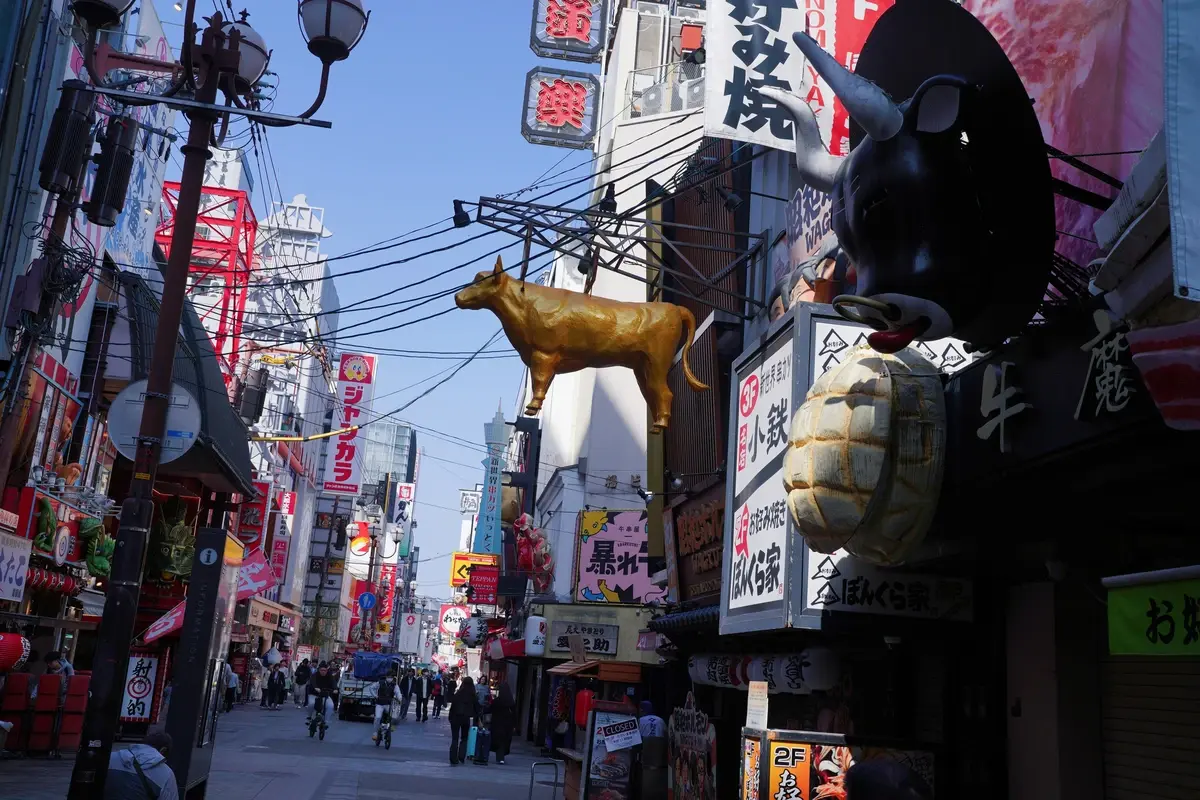
This year the cherry blossoms bloomed late; it was said to have been very cold here a few days ago. Since we arrived, the temperature has risen, and the cherry blossoms should improve these days. So today we first walked around Osaka city, all these attractions are within walking distance. During the day, Dotonbori's extravagant shop signboards are a sight; we walked back and forth several times taking photos and videos.
Osaka is regarded by Japanese as "Japan's Kitchen" because it is the birthplace of many classic Japanese dishes (okonomiyaki, kushikatsu, takoyaki, etc.). Kuromon Market is called "Osaka's Kitchen". The 600-meter-long market has nearly 200 shops and is now a must-visit for overseas tourists.
Inside the shrine, the most eye-catching is the huge lion hall facing the entrance, with a wide golden mouth welcoming worshippers—very striking! Upon closer inspection, the huge lion head's mouth is a stage, eyes are lights, and nose is sound system. During annual festivals, wonderful performances are held on this stage.
D3: Kyoto. Fushimi Inari Taisha - Gion Shijo - Hanami-koji - Ninenzaka Sannenzaka - Kiyomizu-dera.
Take the Sakaisuji Line (Kitasenri direction) from Nagahoribashi Station to Kitahama Station, tap out, follow signs to the private railway Keihan Line (Demachiyanagi direction) to Fushimi Inari Station, exit to find the shrine entrance.
Inari is the god of agriculture and commerce. Worshippers come to pray for good harvests, business prosperity, and traffic safety. It is one of the most popular shrines in Kyoto. The torii gate corridor is great for photos; the entire path is slightly uphill, taking about 40 minutes to walk through completely. With stops for photos, it takes longer.
The most famous feature here is the dense vermilion "Senbon Torii" (thousands of torii gates) behind the main hall, one of Kyoto's most iconic sights. Walking into Senbon Torii, old faded dark red gates and bright vermilion gates interweave densely, looking spectacular and magnificent under sunlight, visually stunning.
The front of the torii gates has no inscription, but from the back you can see the names of contributors from business associations, companies, and individuals, along with the construction year. Since the Edo period, people making wishes would donate to erect a torii gate within the shrine grounds to express respect to the deities and pray for business and career prosperity. The spectacular Senbon Torii is countless.
In the shrine, you can also see various fox stone statues, as foxes are considered messengers of Inari. Fox-faced ema (votive plaques) are a feature here.
After visiting the shrine, continue on the Keihan Line (Demachiyanagi direction) from Fushimi Inari Station to Gion Shijo. Hanami-koji intersects with Shijo Street and extends to Kennin-ji Temple; it is a popular street in Gion. You will see refined and unique tea houses and restaurants, many of which are high-end kaiseki cuisine establishments. Walk along Hanami-koji, Ninenzaka, Sannenzaka, and Kiyomizu-dera.
D4: Nara. Nara Park.
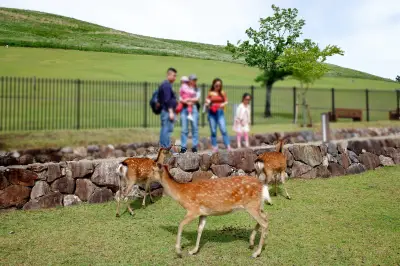
Walk to Nipponbashi, take the private railway Kintetsu Nara Line. Exit and you are at Nara Park. Nara Park is located on the east side of Nara city, at the foot of Mount Kasuga. The park boasts beautiful scenery year-round, with hundreds of wild sika deer on the open meadows. The park also contains famous historical sites such as Todai-ji Temple and Kasuga Taisha Shrine.
D5: Kyoto. Arashiyama.
Arashiyama is a scenic natural area on the western outskirts of Kyoto, including both sides of Togetsukyo Bridge and the Sagano area. It is famous for cherry blossoms and autumn leaves, and the beautiful Sagano Bamboo Forest also exudes Kyoto's unique charm. Additionally, many well-known temples and shrines are scattered around Arashiyama. First go to Kyoto, then take the JR Sagano Line to Arashiyama. The sightseeing train tickets are sold opposite Arashiyama Station; you can buy tickets for a later departure, explore first, then ride the train. We chose a round trip; after getting off, we returned to Osaka. While transferring at Shin-Osaka Station, we discovered that its underground street is a large duty-free market.
The Sagano Romantic Train runs along the Hozugawa River between Torokko Saga Station and Torokko Kameoka Station; it is a very famous sightseeing route.
In the evening, we returned to Nipponbashi and went to Kuromon Market again, buying half-price seafood and various foods from the supermarket.
D6: Osaka. Universal Studios Japan.
Located in Osaka, Universal Studios Japan (USJ) is one of the five Universal Studios theme parks worldwide, opened in 2001. It is a classic and joyful world in the hearts of many visitors. It is similar in design to Universal Studios in Orlando, Florida, with popular areas such as Jurassic Park, Hollywood, and Water World. Over 60 fun attractions keep you busy for a whole day. Although the park is in the city, you need to transfer three times by subway and JR; check using the Norikae Annai app. Most people visiting the park want to go to Super Nintendo World; you have to queue early in the morning to enter, otherwise, you may need to draw a ticket. We lined up at 7:00 AM.
It rained that day, and it was cold. We left around 4 PM. In the evening, we shopped some more.
D7: Osaka. Osaka Castle Park, Mint Bureau Cherry Blossom Avenue.
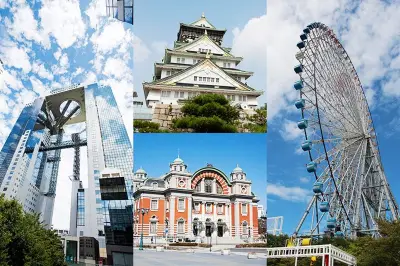
Two major cherry blossom viewing spots in Osaka city: Osaka Castle Park and the Mint Bureau Cherry Blossom Avenue. Osaka Castle Park is surrounded by various vegetation with many trees. The Nishinomaru Garden is filled with cherry blossoms, and in spring you can also enjoy night cherry blossoms. The massive stone walls are a symbol of the impregnable Tokugawa Osaka Castle. The Osaka Castle keep (Tenshukaku) in the park is very famous; from the top floor you can enjoy a panoramic view of the city. Exit at Morinomiya Station.
Near the Mint Museum, there is a "Sakura no Tōrinuke" (Cherry Blossom Passage), a famous cherry blossom viewing spot in Osaka. During the cherry blossom season, countless tourists come here. You can see rare varieties like "aka sashibō" (red spiked ball) and "yōrō-zakura" that are not seen elsewhere. You can also enjoy night cherry blossom viewing. Exit at Tenmabashi Station.
D8: Osaka - Kansai Airport - Hangzhou Xiaoshan International Airport.
Although the flight was at 12:15, we left the hotel a little after 7 AM and used various transport to "return the same way" back to Hangzhou.