9-Day Tour of Nagoya, Kyoto, Nara, and Osaka in 2015
Today I just learned something: travel notes written on Ctrip will become visible only to yourself five years after publication, and others won't be able to see them. So I'm copying and reposting this travel note.
-------------------------------------------------------------------------------------------------------------------------------
Every winter and summer vacation, I take my family on a trip—first to relax, and second as a reward for my son's academic performance. Previously, we only did domestic self-guided tours, including Hong Kong and Macau. Although I've been to the US once, it was a group tour, and I had never done a real overseas self-guided tour. So this time, I decided to visit our neighbor Japan. I did a lot of research online, booked flights and hotels, applied for visas, looked up attraction introductions, and used Google Maps to search for transportation routes (mobile WiFi and Google Maps are essential tools for self-guided tours). By the way, it's best to book flights and hotels two months in advance, or prices will rise and room types may be unavailable.
On the morning of August 7, we took Spring Airlines from Pudong T2 terminal. The round-trip tickets for three people cost nearly 5,000 RMB, with a luggage allowance of 15 kg per person—we almost exceeded it on the return.
The journey went smoothly. When we got out of the airport, we wanted to take the JR to the city but got confused about which train and platform to board. Seeing everyone rushing onto a train, we followed along.
Later, after multiple rides, I figured out that you should first use Google Maps to determine the route, then at the station, confirm the platform, check the train's final destination direction, and then verify how many stops to get off. Both subways and JR have automatic ticketing, with a special button for two adults and one child (child half price). Buses are more expensive than subways and JR, starting at 230 yen. If you visit few attractions per day, it's not recommended to buy multi-day passes. The reserved Jinmei Nagoya Station Hotel was right across from Nagoya Station, making travel, shopping, and dining very convenient.
As soon as we settled our luggage, my wife was eager to go shopping at drugstores. The area around the hotel was full of these shops (not suitable for children).
The next morning, we went to Nagoya Castle. I couldn't figure out whether it was built by Tokugawa Ieyasu or Toyotomi Hideyoshi. I couldn't read Japanese, and the Chinese introduction was just a general overview, but we still spent the whole morning there. The castle was destroyed in WWII; the main building was renovated a few years ago, and many auxiliary buildings are still under renovation.
Japan's cultural relic restoration techniques are superb. The artisans inherit their skills through generations, and large conglomerates sponsor the restoration projects, so the work is top-notch.
Shanghai had just ended its heatwave, but we faced high temperatures again in Japan. A simple bowl of noodles in the castle area cost about 900 yen. We grabbed a quick bite, exited the main gate, and took a tourist bus to the Toyota Commemorative Museum of Industry and Technology. I learned from my research that Toyota started as a textile machinery company. The old factory in Nagoya is well-preserved, with half being a textile museum and half an automobile museum. Almost all demonstration equipment in the museum is operational, and I understood for the first time how cotton becomes cloth step by step. Children could even sit in a replica of Toyota's first AA car. If you really explore this museum, a whole day wouldn't be enough.
There's also a dedicated automobile museum in the suburbs of Nagoya, but I'll have to visit another time. We returned to the hotel, picked up our luggage, and took the Shinkansen to Kyoto. The ticket cost over 6,000 yen per person for just a 30-minute ride—truly expensive.
In Kyoto, we stayed at the Kyoto Tower Hotel Annex, also near the station. Our first meal was barbecue.
Across the hotel was a supermarket. Look at the price of wagyu—it's really cheap.
The next morning, we found a small shop near the hotel for breakfast, where even ordering was self-service.
We set off for Kiyomizu-dera, built with a large amount of zelkova wood on a cliffside—a World Heritage Site.
If you plan to take a lot of buses for attractions in Kyoto, I recommend buying a one-day pass for 500 yen. After leaving Kiyomizu-dera, we went to the Kyoto National Museum. On the way, we found a restaurant for lunch. We couldn't understand or read anything, but body language is universal.
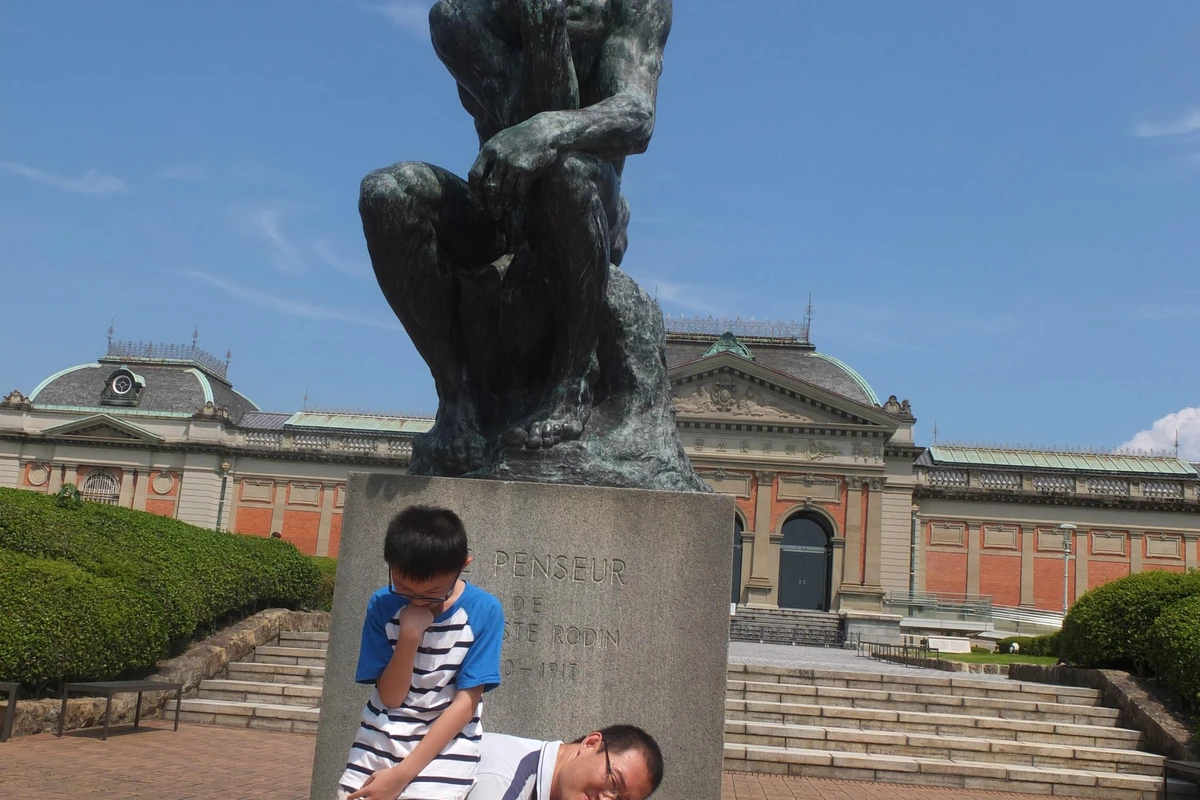
The Kyoto National Museum has an old building and a new one. The old building is temporarily closed, and the exhibits are mostly Buddhist scriptures—many, of course, were "taken" from China. Photography is not allowed inside.
Kyoto Tower at night.
For dinner, we bought bento boxes, sushi, and salad from the supermarket across the street—such a large amount for only 2,000 yen.
The next day, we visited Kinkaku-ji and Nijo Castle, both World Heritage Sites.
It was extremely hot during our stay in Japan. After the morning tour, we returned to the hotel, picked up our luggage, and headed to Nara. There was an Isetan department store at the station, where I saw Japanese elementary school backpacks. The most expensive ones cost nearly 100,000 yen, but they are handmade, functional, guaranteed for six years, and any issues can be repaired.
I originally wanted to stay near Nara Station, but I was too late—the hotels were fully booked. I could only reserve a single room at the Toyoko Inn near Shin-Omiya Station. When we arrived, I found the hotel was quite good, with new facilities. Although it was a single room, the bed was huge, and it only cost about 300 RMB per night. The ancient city of Nara is exquisite, with few pedestrians and a very tranquil atmosphere. Wherever I go, my favorite places to visit are museums and local large supermarkets. We had dinner there.
Kids tend to be forgetful. My son left his newly bought sun hat at a bus stop in Kyoto. He also didn't hold his camera properly—he was playing with it like a 'song-swinging' stick and dropped it, breaking it. So we bought a new sun hat.
We took the JR to Yakushi-ji and Toshodai-ji. But we accidentally boarded a women-only car and were politely asked to leave by the conductor.
Yakushi-ji was built by the emperor to pray for his sick mother's recovery. Toshodai-ji was built after the Chinese monk Jianzhen (Ganjin) traveled east to Japan, and it houses Buddhist relics and a seated statue of Jianzhen.
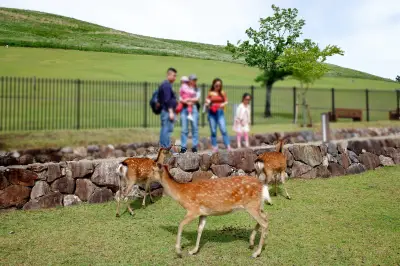
Leaving Toshodai-ji, we took the JR again to Nara Park, where there are countless deer (very aggressive; if you don't give them enough food, they bite).
We continued forward, intending to visit Kasuga Taisha, but the weather was too hot and the distance was far. When we reached the entrance, they asked for 500 yen admission, so we gave up.
Nara National Museum had the priciest entrance fee of our Japan trip—1,500 yen. It mainly houses Buddhist sculptures, and photography is prohibited.
A month before departure, I booked a Michelin three-star kaiseki meal at Nara and Yamamura on Taobao. The cheapest set, including tax and service charge, cost 9,000 yen, but it was the cheapest three-star in Japan—starting at 20,000 yen in Tokyo and Osaka. Three-star indeed deserves its reputation, and it was worth the price. Not to mention the taste, even the menu was handwritten. At the end, the head chef inscribed a souvenir and personally saw us out.
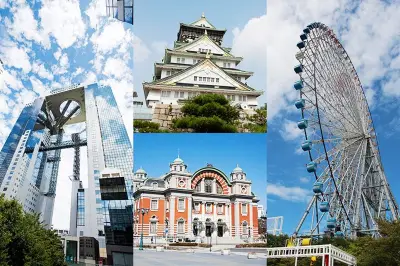
After a good meal, we headed to Osaka. In Osaka, we stayed at the Nest Hotel Shinsaibashi. Although it was near Shinsaibashi and the subway was right downstairs, the hotel was extremely run-down with aging facilities. The room smelled strongly of roasted lamb. Three nights cost nearly 3,000 RMB, making it the worst value of our Japan trip. Since we had been visiting temples and castles for several days, I decisively abandoned the planned Osaka Castle visit and went to the Osaka Science Museum instead. It was really great, showcasing the latest technology and educating children to protect the environment and save energy. In the afternoon, we went to Hankyu Umeda department store to accompany my wife shopping.
On the last day, we went to Universal Studios Japan. Compared to Universal Studios Hollywood, apart from lacking a filming studio, the other attractions were similar. I recommend first grabbing timed entry tickets for Jaws, WaterWorld, and Harry Potter, then play counterclockwise. Of course, if you're willing to spend, you can buy express passes. The longest wait was for Spider-Man—almost two hours—but it was worth it. The water splashing event at 1 p.m. was also a highlight, starting with water guns and eventually using buckets. Everyone had a great time.
Early on the final day, we rushed to Kansai Airport. The 9 a.m. Spring Airlines flight departed on time and landed in Shanghai at 10:30 a.m. Setting aside national sentiments, Japan is a nice country with a rigorous work ethic and beautiful environment. Next time, I plan a trip to Tokyo. Stay tuned for the next travel note.