Into the Mountains – 2020 Qingdao Laoshan Travel & Accommodation Guide
Ever since the internet age began, photos of mountains and rivers have been everywhere on our computers and phones. Just watching others’ vlogs and travel logs, we feel as if we’d already seen everything. When friends invited me to travel, I would always decline: “Why bother going out? I already have countless landscapes in my heart.” But after the pandemic broke out this year, the mask I had to wear every day not only separated me from the outside world, it also locked up my soul. I had been stifled for far too long. So when a friend asked me to go hiking this time, the image immediately sprang to mind: standing on a mountaintop among green woods, pulling off my mask, and breathing in deep gulps of fresh air. My heart surged with excitement. I changed into light clothes, booked a flight and hotel, and headed to Qingdao with my friend – I was going to climb Laoshan!
After landing, our group went straight to check in at the Orange Crystal Qingdao Haier Road Convention Center Hotel (No. 52 Miaoling Road, Laoshan District). We asked the front desk about the current situation at Laoshan, and the friendly lady patiently explained that Laoshan Scenic Area now enforces flow control on tour routes and areas. Tickets must be booked online with real-name registration, reserving a specific time slot before you go. Visitors can book on the official “Laoshan Scenic Area” website, through the “Yuexing Laoshan” or “Laoshan Scenic Area” WeChat official accounts, or via the “One Phone Tour Laoshan” mini program on WeChat, and sign a health declaration online. Then present your original ID card for ticket inspection and entry. Opening hours: 7:00–17:30, last entry at 15:30 daily. Visitors should apply for a Shandong electronic health pass code in advance through the “Love Shandong” app, the “Health Shandong” WeChat service account, or Alipay’s “Shandong Electronic Health Pass,” and must show it before passing any temperature check point. Personal protective measures (mask mandatory throughout the visit) and temperature screening are also required. Scan the QR code below for one-click ticket purchase. (QR code omitted)
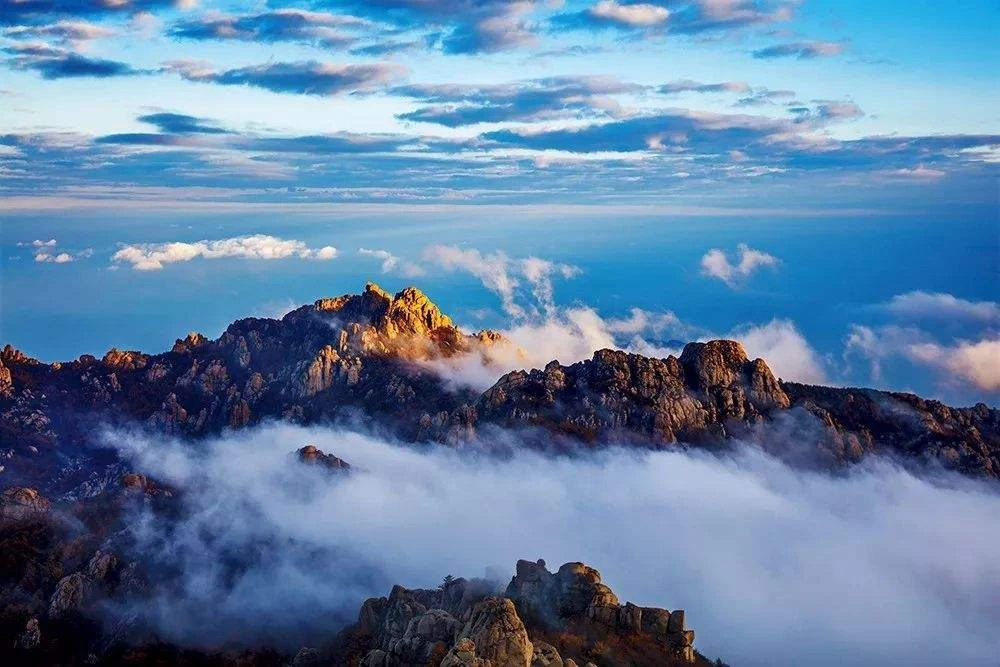
Before coming to Qingdao, I researched Laoshan online. I’d heard it called the immortal mountain on the sea, but only after digging deeper did I realize there’s much more. Laoshan’s majestic peaks stand proudly along thousands of miles of coastline, earning the title “wonder of mountains and sea.” It’s also famous for its long religious heritage. Grandmasters who founded major schools in Taoist history, like Wang Chongyang, Qiu Chuji, and Zhang Sanfeng, all have deep ties to Laoshan, giving it the reputation of an “abode of immortals, mansion of spirits.” Li Bai’s classic line, “I once feasted on purple clouds at Laoshan by the Eastern Sea,” is known to all; Pu Songling’s “The Taoist Priest of Laoshan” draped the mountain in an air of mystery. The main peak, Jufeng (Giant Peak), is the only mountain over a thousand meters high along China’s vast continental coastline, so Laoshan is also called a “famous coastal mountain.” History, culture, religion, mountains, sea, forests, springs, and waterfalls – all perfectly blended – make Laoshan a celebrated scenic destination.
The next day, after a hearty buffet breakfast at the hotel, we took a taxi to the Dahedong Ticket Office. From there, park buses shuttle visitors back and forth. At present, only the Jufeng, Huayan, Yangkou, Taiqing, and Jiushui sections of Laoshan are open normally. We chose the Yangkou route, with a ticket price of 85 yuan per person. The main sights on this route:
Yangkou Bay is a crescent-shaped bay. The golden beach here is flat and fine, with a gentle slope, small waves, and calm waters – praised as “golden sands and blue waves,” it’s one of Qingdao’s best natural sea bathing spots.
The famous Taiping Palace is the sanctuary of “Huagai Zhenren.” This quietly elegant Taoist temple was originally built in the first year of the Jianlong era of the Northern Song Dynasty (960 AD). It was funded by Emperor Zhao Kuangyin, the founding emperor of Song, after he bestowed the title “Huagai Zhenren” on the Laoshan Taoist Liu Ruozhuo. Throughout history, Taiping Palace has been renovated many times, but materials have consistently followed Song-dynasty architectural style, using the black cylindrical and flat tiles common before the Ming dynasty, largely preserving the original ancient, refined ambience. The main hall in the central courtyard is the Mazu Hall, dedicated to the sea-protecting goddess Tianhou Mazu; the east side hall is the Wealth God Hall, dedicated to Guan Yu, the Saintly Emperor; the west side hall is the Wenchang Hall, dedicated to Wenchang Dijun, the god of scholarly success and official rank. In the western courtyard, there’s a huge boulder resembling a sleeping dragon, called the “Sleeping Dragon Stone.” A spring flows from it, named “Dragon’s Saliva,” with sweet and clear water acclaimed as “divine water and immortal nectar” – one of Laoshan’s famous springs.
The Chinese pursuit of longevity runs deep. On Longevity Peak, dozens of renowned calligraphers from ancient and modern times have carved the character “寿” (longevity) in various scripts – clerical, seal, running, cursive, and regular – creating a magnificent Hundred Longevity Chart.
Mitian Cave and Tianyuan
Climbing up from the cable car station, you’ll reach Laoshan’s second most wondrous cave – Mitian Cave (Cave of Seeking Heaven). The three strong characters “觅天洞” above the entrance were inscribed by the celebrated contemporary sculptor Liu Kaiqu. The cave has three marvels: first, its delicate and artistically pleasing form; second, the constant upward progress it demands, rich in life philosophy; third, its winding variety, where each step reveals a new view.
Tianyuan (Heavenly Garden) is the central point of the whole scenic area. Tianyuan means the garden of heaven. After an arduous climb, visitors feel as if they have finally found heaven, seen heaven, and reached the celestial realm. Standing on this immense stone slab covering 2,000 square meters, you can touch the boundless sky, soak in the mighty breezes, take in the beautiful views, and revel in nature’s magic.
By this time, it was early summer. The gentle, cool mountain breeze and the thin, solution-like sunlight embracing me from all sides in the mountains, the sky and clouds left so pure that only azure and pale cyan remained, all made life’s beauty palpable. We followed the mountain path all the way to Taiping Palace. Pushing aside the lush green, a solemn ancient temple appeared before us. The curling incense smoke drifted skyward, and suddenly a clear bell rang out. In that instant, a sense of bleak antiquity washed over me, and I felt inexplicably melancholy. No matter how much I write, I can’t capture a ten-thousandth of what my eyes saw. How can human words describe nature’s uncanny craftsmanship? How can a camera lens ever contain the sound of wind, the rhythm of water, the singing of birds, and the fragrance of flowers? No amount of text or video compares to experiencing it first-hand.
Mountain mist enveloped us, the wind roared like waves, and we descended the trail as if riding the breeze. The mountain wind tousled our hair into a carefree style; we looked at each other and burst out laughing. That day, I was utterly exhausted yet brimming with energy, completely befuddled yet profoundly thoughtful. We returned to the hotel and, still in high spirits, agreed to have seafood and drinks in the evening. To our delight, the hotel had its own Chinese restaurant. The seafood dishes and Qingdao beer were all wonderfully authentic, and hotel guests got a 10% discount. There was a fried shrimp dish that was especially fragrant – we gobbled it up the moment it arrived and immediately ordered another plate.
Let me also recommend the hotel where we stayed: Orange Crystal Qingdao Haier Road Convention Center Hotel (No. 52 Miaoling Road, Laoshan District). The hotel is right next to Shilaoren Beach, adjacent to the Qingdao International Convention Center, Qingdao International Beer Festival Square, and Qingdao Guoxin Sports Center. Large shopping plazas like Golden Lion Plaza and Liqun Jinding Plaza are just steps away. The hotel’s design theme is “Qinyu Shanhai” (Zither Island, Mountain and Sea), inspired by the verse “Laoshan’s clouds may not match your cloud sea, but you lack the sea clouds of Laoshan” – a perfect echo of our trip.
Our room type was “Jiangnan,” designed with the feel of a traditional Chinese bedroom from the Jiangnan region, combined with modern materials and colors to create a distinctive “southern charm.” The room was full of Jiangnan flavor yet retained a modern simplicity; the old and new blended beautifully, full of design.
When we checked out the next day, the front desk staff proactively asked about our stay experience and gave us an exquisite souvenir gift. Their service truly touched our hearts. The smooth conclusion of this trip owes much to the hotel’s travel advice and comfortable rooms. The holiday over, I can face life again full of energy. This journey has given me so much; I will definitely return to Qingdao and to this hotel.