Unsure Which Route to Take on Mount Lao? Let Me Break Them Down One by One
Recently, people keep asking me how to explore Mount Lao and how to choose a route. What are the differences between these routes? Many have heard that Mount Lao has multiple routes and end up completely confused when it’s time to pick one. So here’s a handy guide to Mount Lao for your reference. Mount Lao is the only mountain on China’s coastline that rises above 1,000 meters, earning it the title of the “foremost mountain on the sea.” The eastern side is steep with cliffs hugging the ocean, while the western side is gentler with rolling hills. The whole scenic area covers 446 square kilometers. With its blend of mountain and sea scenery and its deep Taoist cultural roots, Mount Lao draws huge numbers of visitors. But because the mountain is so large, you really need to get a clear picture of the main touring routes before you decide which one to take.
As illustrated, Mount Lao is divided into these areas. Liuqing Scenic Area – not really a standalone sightseeing area; there are only a few spots here and you can enter freely. Taiqing Scenic Area – part of the South Route. This is where the Taoist Taiqing Palace is located. Qipanshi Scenic Area – also on the South Route – home to the Buddhist Huayan Temple. Yangkou Scenic Area – on the South Route as well. Here, mountain and sea views blend perfectly. Beijiushui Scenic Area – on the North Route. Famous for its Nine Waters and Eighteen Pools with babbling streams all around. Jufeng Scenic Area – the Central Route. The highest point, truly magnificent! Traditionally there are three main routes: the South Route, the Central Route, and the North Route. If you’re thinking of tackling them all, drop by the Mount Lao Scenic Area Management Center on Meiling Road near Shilaoren to apply for an annual pass. An individual annual pass is usually 220 yuan, and a family annual pass is 360 yuan. Online ticket bookings have to be mailed to your home, but if you go to the management center, you can pick up your pass right there. If you want to explore all these routes, getting an annual pass is really good value.
1. South Route – The Classic Touring Route
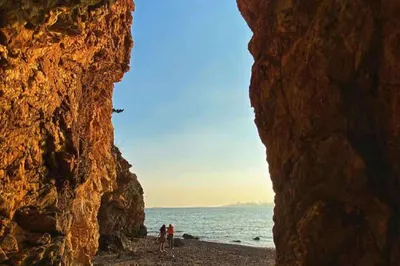
From Liuqing Scenic Area to Taiqing, Qipanshi, and on to Yangkou, the South Route is the most conventional choice. It’s got mountains, the sea, temples, and Taoist shrines. The main highlights are Huayan Temple and Taiqing Palace, plus ocean views from Yangkou. There’s plenty to do and see. For friends visiting from out of town, I usually recommend the first route, going from Liuqing to Yangkou. This is the only way to fully feel that blend of sea and sky, of mountains soaring beside the waves – something no other route can match.
Yangkou Scenic Area ticket prices: low season 100 yuan (60 yuan entry + 40 yuan shuttle bus); peak season 130 yuan (90 yuan entry + 40 yuan shuttle bus).
Transport: Take bus 104 or 304 from downtown Qingdao. Bus 304 can be caught near the railway station or city hall; bus 104 near city hall. Get off at Dahedong Service Center (this is the same ticket center used for the Central Route). Route pros: The South Route is well-rounded, with mountains, the ocean, temples, and Taoist sites – a rich mix of attractions. You can buy your ticket at Dahedong Service Center, and from most central parts of the city the bus ride is within 1.5 hours, making it fairly convenient. Route cons: 1. You can’t reach the highest peak. While the South Route has a variety of sights, there’s no way to climb the 1,132-meter summit of Jufeng. 2. Traffic is an issue in both peak and off-peak seasons. If you drive yourself during peak times, traffic jams are almost guaranteed; during the low season, internal shuttle wait times can be long. 3. In the peak months (July and August), expect long queues for the Yangkou cable car and Mitian Cave.
2. North Route (Beijiushui Scenic Area) – A Flatter, More Relaxed Option
Beijiushui has relatively gentle terrain, making it ideal for elderly visitors, kids, or anyone who prefers an easier hike. The best season to visit is summer, when the trees are at their lushest and the air is rich with oxygen. The springs are full and the streams bubble along endlessly, the water wonderfully cool. The whole area feels incredibly comfortable, with cool breezes drifting through – a delightful experience.
Tickets: low season 70 yuan (40 yuan entry + 30 yuan shuttle bus); peak season 95 yuan (65 yuan entry + 30 yuan shuttle bus).
Transport: Take Metro Line 11 directly to Beijiushui Station. City buses 365 and 619 also go there (365 from Taidong Lijin Road; 619 from the East Bus Station); alight at Wolongcun. Route pros: 1. The paths are relatively flat with only gentle slopes, perfect for those with less hiking stamina. 2. When water levels are high during the rainy season, you’ll find streams crisscrossing the landscape and waterfalls plunging down. If it’s not too crowded, you can even dip your feet in the water, which is great fun. In the height of summer, the breeze through the valley makes it wonderfully cool and refreshing. Route cons: 1. Beijiushui’s beauty depends on water. Usually, flow is good only after the rains arrive in July and August; other times it can be hit or miss. I’d suggest checking the water levels before you go. 2. No sea views. Remember, part of Mount Lao’s fame is that it’s a “mountain on the sea.” If you can’t even see the ocean, it feels like something’s missing. Beijiushui lies in a valley on the north side of the main peak, completely cut off from the sea by the mountains, so you won’t catch a single glimpse of the water.
3. Central Route (Jufeng Scenic Area) – The Route That Takes You to the Top
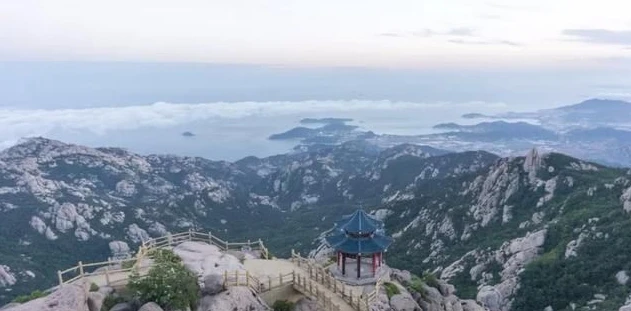
Jufeng is the summit of Mount Lao, and this is the route for those who love a good climb. The ascent takes about three hours and is pretty physically demanding. From the top you can see both the city and the sea, and on a clear morning or evening you might even witness a sea of clouds. The views up there are wide open and breathtaking – prepare to be awed.
Tickets: low season 90 yuan (50 yuan entry + 40 yuan shuttle bus); peak season 120 yuan (80 yuan entry + 40 yuan shuttle bus).
Transport: From downtown Qingdao, catch bus 104 or 304. Bus 304 can be picked up around the railway station or city hall; bus 104 near city hall. Get off at Dahedong Service Center (the same ticket center used for the South Route). Route pros: 1. Standing on top of Mount Lao means you’re at the highest point on China’s coastline. At its core, the goal of any climb is to reach the summit. Whether the hike is tough or the scenery along the way is memorable, it all becomes just a backdrop to the satisfaction of making it to the top and taking in the panoramic view. 2. The mountain-sea scenery here is vast and magnificent. With a coastline stretching over 800 kilometers, Mount Lao has plenty of ocean-view spots: Yangkou, Taiqing, and Jufeng are the three main ones. From Lingqi Peak, when you face the sea, the blue water stretches out in the distance, clearly set against mountain silhouettes of all shapes and sizes, yet the whole scene feels like a single, grand composition. The view is incredibly expansive, and the sheer beauty can move you deeply. This is a completely different kind of beauty from the delicate elegance of Taiqing or Yangkou – it’s a majestic beauty that doesn’t need any flowery words to describe. That is Jufeng. The route’s only downside: Jufeng is a fully separate route with its own ticket, which means that while you can soak in Mount Lao’s incredible blue-sea-and-sky scenery, you won’t find any Taoist temples to visit. Although the trail does include Taoist elements like the so-called Taoist “Eight Trigrams Gates,” you simply can’t dive deeply into the cultural richness that makes Mount Lao a famous Taoist mountain.