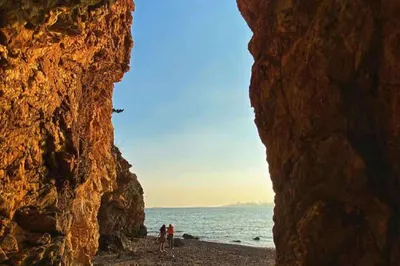
See the Sea in Qingdao, Savor Springs in Jinan – A Cool Summer Escape!
Choosing a summer vacation spot each year mixes chance with a little inevitability. Qingdao had captivated my heart for years: blue waves, white sails, green trees, red roofs, hearty men clacking clams and sipping Qingdao beer, beachgoers in face-kinis enjoying the summer... After checking off much of China, Qingdao couldn't stay just a dream. So, I booked flights on Ctrip and flew straight there.
Dates: July 23–26, 2020, four days.
Travel companions: Xiao He & me + Xiao Wu & her mom.
Itinerary: Qingdao on the 23rd–24th, Jinan on the 25th–26th.
Transport: flew from Changsha to Qingdao, then Jinan to Changsha, with a bullet train from Qingdao to Jinan in between.
Cost: 2,200 yuan per person.
Like Xiamen, Qingdao is an artsy, budget-friendly city where fashion meets simplicity, and romance is steeped in history. Known as the 'Switzerland of the East,' it covers 11,000 km², surrounded by water on three sides and mountains on the other. I had already sketched its cityscape in my mind. Unusually, I didn't plan this trip. I just skimmed Aerial China 3 – Shandong episode before packing my bags and setting off.
Day 1: Changsha Huanghua Airport → Qingdao Liuting Airport, checked into hotel. Afternoon visit to May Fourth Square.
Xiao He & Xiao Wu.
Nicknamed 'paparazzi mamas,' Wu Mom and I served as the two students' travel managers and photographers for the next four days.
Our flight was due to depart Changsha around 10 a.m. and arrive in Qingdao after noon. Delayed half an hour by air traffic, we landed after 1 p.m. Such hiccups are common on the road, so we didn't fuss. When you choose distant places, you accept any surprises and know how to adapt and roll with them.
After landing, while waiting for luggage, I booked Dinglan Hotel Apartments next to Mixc at May Fourth Square on Ctrip. Our host gave us a warm welcome. We rested briefly and then began freewheeling our way through Qingdao in the afternoon.
Luck was on our side. A local taxi driver said the day before, Qingdao was hit by gales and torrential rain, with towering waves, and all coastal areas were closed. Even until we arrived, it had been drizzling nonstop, but in the afternoon, the sky cleared. The moment we stepped out, Qingdao greeted us with a bright smile!
'Friendly Shandong' is no empty boast; we felt it deeply in both Qingdao and Jinan. A kind local pointed the way, and after a 10-minute walk, we reached Qingdao's Insta-famous spot – May Fourth Square.
May Fourth Square sits across from the Qingdao Municipal Government and is named after the great anti-imperialist, patriotic May Fourth Movement of 1919. Its iconic sculpture 'Wind of May' spirals upward like a fiery-red wind, embodying the movement's anti-imperialist, anti-feudal spirit and national strength. It combines a seaside park, fountain square, Olympic venue, and government offices, making it a landmark of Qingdao's coastal culture, politics, and economy.
Mud and sand washed ashore by the previous day's storm still clung to the bank, but it didn't mar Qingdao's beauty one bit. Near the square, the Olympic Sailing Center's myriad national flags fluttered in the wind, warmly showcasing Qingdao's charm to the world. This was where the 2008 Beijing Olympic sailing events and the 29th Paralympic sailing competitions took place.
Since there was still daylight, we decided to grab dinner first and save the night view for the next day. We found a long-established local eatery, ordered affordable seafood and fresh Tsingtao beer, and tasted Qingdao's flavors in the cool twilight.
Day 2: Badaguan, Second Bathing Beach, Zhanqiao Pier, speedboat ride, Olympic Sailing Center night light show.
No sleeping in – we rose early to visit Badaguan. Its main roads are named after eight famous passes in China, hence the name 'Badaguan' (Eight Passes). It also boasts a concentration of villas in diverse architectural styles: Russian, English, French, German, Spanish, and over 20 other countries, earning it the nickname 'Expo of World Architecture.'
Along the crisscrossing tree-lined avenues, we visited Huashi Tower, Princess Tower, and Butterfly Tower.
Huashi Tower is a European castle-like building blending multiple Western architectural styles. It sits on a cape at the southern tip of Badaguan, backed by the area and facing Second Bathing Beach, with unique scenery and a lovely setting. It features Greek, Roman, and Gothic elements. Before liberation, Chiang Kai-shek once lived here. Admission is 5 yuan.
Photo-loving girls absolutely adore the ivy-covered walls of Huashi Tower!
After Huashi Tower, we strolled under the canopy of green shade, with Qingdao at a pleasant 26°C. We bought some local specialty ice cream bars called 'Niuxiaozha' from a snack shop, making Qingdao's summer sweet and fragrant.
Qingdao's artiness and romance are everywhere. Passing through a lush grove of tall dawn redwoods, we chanced upon a live performance by a group of musicians.
In Badaguan, every little path, flower-adorned stone wall, ginkgo tree, sycamore, or low wall corner makes a great photo spot.
On a summer afternoon with sea breezes, beside a tree-lined road alive with birdsong and blossoms, we looked up to see a fairy-tale castle appear – that's Princess Tower.
Princess Tower is on Juyongguan Road and is a Danish-style building. Legend has it that in the 1920s, a Danish prince visited Qingdao, passed through Badaguan, and found the setting by the sea so idyllic for a vacation retreat that he ordered the Danish consul in Qingdao to buy the land and build this Danish-style residence.
Xiao He joked, 'What a wonderful spot – if only I had a house here!' Paparazzi Mama smiled without answering; such a beautiful place, visiting is enough for us!
Along the Andersen Fairy Tale Promenade, there are many colorful fairy-tale reliefs everyone knows – little ones would absolutely love them!
Near the Badaguan Hotel stands the famous Butterfly Tower. It was a key location for the 1935 film After the Peach Blossom, the first movie set in Qingdao. People named it after the film's star, Hu Die (Butterfly), a legendary Chinese actress. Today, this 82-year-old villa has been reopened to the public, showcasing Qingdao's century of cinema memories.
(The peerless silver-screen queen – Ms. Hu Die, image from the web)
After admiring Badaguan's varied architecture and refreshing scenery, we arrived at the famous Second Bathing Beach right by the sea. Stepping on soft, fine sand, with the sea breeze, skirts fluttering, we felt serene and embraced Qingdao's blue sea and sky.
I snapped a shot of the beach's signature swimwear: the face-kini. In 2004, Qingdao local Zhang Shifan designed the mask based on a diving hood. This nylon headgear blocks UV rays and jellyfish stings. The term 'face-kini' later became a craze, and related photos even made Time magazine's '30 Most Surprising Photos of 2012.'
(Face-kini, web image)
Tired from the sea, we hailed a cab, and on the driver's recommendation passed the Tsingtao Beer Museum and Beer Street, ending up at Guangming Restaurant, which has been running for 30 years, for lunch. Braised pig trotters, nine-twist intestines, and prawns with cabbage are all famous Shandong dishes.
The Qingdao Aquarium is a favorite among students; it satisfied their curiosity and joy in getting close to marine life.
While the kids were in the aquarium, Wu Mom and I sat by the sea, chatting and enjoying the breeze. People kept approaching us to tout speedboat and cruise rides. Since we were in a coastal city, how could we skip a speedboat? After Wu Mom haggled, we got the originally 1,380-yuan Qingdao west coast tour for 900 yuan. The four of us boarded a boat and became sisters riding the waves!
From the speedboat, we took in Xiao Qingdao Island, Zhanqiao Pier, the Naval Museum, and other sights, experiencing Qingdao from the sea in a whole new way. As far as the eye could see, sea and sky stretched boundlessly, dotted with clouds. On the deep, vast waters, waves surged, and even giant ships seemed tiny, drifting with the current. Leaning on the railing and gazing into the distance, the sea cradled the coastal architecture – sometimes gentle, sometimes stern. Circling the pier, you came riding the waves, admiring the scenery on the blue waters, while people on the pier watched you. In each other's eyes, everyone became part of the view.
The sea is vast, the mountains distant – who knows where my hometown lies! We returned to shore at dusk, spirits still high, hearts still drifting with the waves. After a short rest, we took some lovely photos with the sea.
By day, Qingdao is romantic and artsy with green trees, red roofs, blue sea, and sky. At night, when the lights come on, it becomes a dazzling, starry spectacle of colors.
Early in the evening, May Fourth Square and the Olympic Sailing Center were already bustling with people strolling in groups, enjoying the sunset over the bay. At 8 p.m., the shoreline skyscrapers lit up, and this all-embracing city showcased Qingdao's history, culture, and development through a series of light shows.
A lighthouse ever shining over an ice-free port; its beacon now welcomes seafarers. This warm light has guided countless voyagers – how many sailors has it lit the way home for and kindled hope of return!
Day 3: A day trip to Daming Lake.
'Lotus on four sides, willows on three; a city of mountain views, half a lake.' Jinan's renowned springs gather here to form Daming Lake.
To outsiders, many remember Daming Lake from a classic TV drama line: 'Do you still recall Xia Yuhe by Daming Lake back then?' But for locals, Daming Lake is as iconic as Baotu Spring. With graceful willows trailing greenery, shimmering blue waves, and lotus flowers like brocade, skiffs race across the water while painted boats drift leisurely, and pavilions and terraces peek through the scenery. As the Qing-era Licheng County Annals record: 'The lake stretches vast, and the hills seem to link afar. In summer you can scoop up lotus waves; in spring, mists rise. Boating here is like drifting in a fragrant land, with flutes and drums adding distant music – truly a unique beauty north of the Yangtze.'
Historically, figures like Tie Xuan, Zeng Gong, Xin Qiji, Du Fu, and Li Qingzhao all have ties to Daming Lake. 'I often remember the pavilion by the creek at sunset, so drunk I forgot the way home. Sated with pleasure, I rowed back late, blundering deep among lotus blooms. Scrambling to get through, scrambling through, I startled a flock of gulls and herons.' That poetess must have lost herself in this shimmering water and light, right?
'Lotus leaves and silk skirts are cut from one green hue, lotus blooms part on both sides of her face.' To me, at Daming Lake, the rainbow bridge arching over the creek, the fragrance of lotus everywhere, the willows trailing along the banks – these vast, sky-hiding lotus leaves and graceful weeping willows outshine even the sunlit lotus blooms.
At dusk, the mountains darkened, the sunset dyed the sky, and Daming Lake glittered with wavelets, the slanting sun reflecting back with boundless radiance.
Accommodation in Jinan is very cheap. Characterful guesthouses and apartments are everywhere, and you can stay for just two or three hundred yuan. That day we booked a well-priced Daming Lake view guesthouse on Ctrip; from the balcony we could see the lake, and just crossing the street led right into the scenic area – so convenient.
Day 4: Baotu Spring and Furong Street in Jinan.
Originally, we'd planned to climb Mount Tai, but heavy rain hit Jinan early in the morning. Checking the weather, Tai'an was also experiencing heavy rain. The taxi driver suggested we change our plans and visit Baotu Spring. After canceling the train tickets, we spent the rainy morning visiting Jinan's top spring.
Lao She wrote in 'Baotu Spring': 'The spring is wonderful! Forever so pure, forever so lively, forever so vivid, gushing, gushing, gushing – never tired, never retreating. Only nature has such power! Without this spring, Jinan would surely lose half its beauty.'
Baotu Spring's water is clear, lively, and jade-green. The three main outlets in the central area keep gushing water upwards. These spring waters connect to Daming Lake in the city, eventually flowing into the Yellow River and out to sea. Locals say that around September and October, when the water volume is greatest, it churns and splashes white foam, while in drier times, the spring calms and rests a bit. 'Has Baotu Spring baotu-ed today?' is a common visitor's hope; only seeing the three jets of water puts their hearts at ease.
Jinan's other cultural icon is Li Qingzhao. Most people can hum a few lines of 'Like a Dream: Last Night the Rain was Fine, the Wind Fierce.' Back in middle school, class president Yao often recited 'Spring in Wuling' by my ear: 'The wind stops, fragrant dust, fallen flowers; at dusk I'm too weary to comb my hair. Things remain but he is gone, all is over; before words, tears first flow.' Later, in the class literary corridor, Hui's essay used the lines 'Seeking, searching, cold, lonely, miserable, wretched; just when it's warming and then cold again, it's hardest to rest.' Older, I'd sing with classmate Xiaowanzi: 'Red lotus withers, jade-like mat feels autumn's chill... When the wild geese return, moonlight fills the western chamber.' When tipsy, I'd even socially parody: 'Vomit, vomit, startling countless mandarin ducks.' Li Qingzhao's lyrics accompany everyone through student days – that forced melancholy, coldness, solitude, and self-drama. Actually, her early style was bold and unconstrained: 'Be a hero among the living, a hero among the dead.' It's only after much life experience that such unassuageable sorrow arises. I ask the world: how many, after half a lifetime away, return still young at heart?!
The rain kept falling, giving cool Jinan an extra moisture and gloss. Leaving Baotu Spring, we hopped on an old man's electric three-wheeler and ducked through alleys to nearby Furong Street.
Like Changsha's Taiping Street, Furong Street is a food and tourist street created by the local government, lined with all sorts of drinks, local specialties, and arty boutiques. But it lacks Taiping Street's charm and crowds. Personally, I didn't find it all that interesting. The food looked appetizing but tasted mediocre, and the souvenir shops were as ordinary as in any tourist city. If not for the rain, we would have chosen Qianfo Mountain Park instead. Here are some photos to check it off our list!
Time for a wrap-up! A short four-day trip – though not as exhilarating or profound as my past travels along the Qinghai-Tibet route or in Xinjiang – still left us with lots of joy. As always, I love coastal cities: the sea breeze brushing my shoulders, the whispering pine waves; all rivers returning to the sea, the vast expanse; and especially the hearty pleasure of seafood with beer, and the fresh, artsy vibe seeping through a modern city!
Finally, a set of aerial photos overlooking the Jiaozhou Bay Bridge and the under-construction Jiaodong Airport, waving goodbye to Qingdao and Jinan!