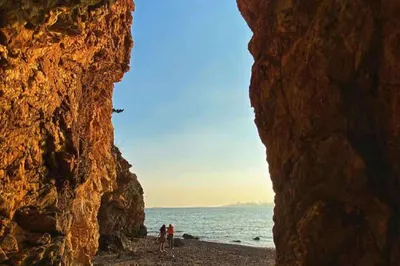
Shandong: Three Cities in Three Days on a Self-Drive Journey to Discover Diverse Beauty
“Sunlight scatters over the cliffs and ravines, autumn hues mingle in soft radiance.” When Shandong is mentioned, most people’s first reaction is to think of Mount Tai. After all, as Du Fu wrote: “I will climb to the utmost peak, to see all other mountains in a single gaze.” His words left an enduring mark, drawing countless literati and scholars over the ages to leave behind immortal verses.
Without a doubt, Mount Tai truly possesses a majestic grandeur that swallows mountains and rivers, and it is well worth a visit. Yet on this self-drive trip through Shandong, I chose to bypass the crowded Mount Tai and instead drive to three cities, spending three days uncovering the province’s lesser-known beauty.
Here, there is the refreshingly elegant Dongyi Town, the deep green Forest Park, the time-honored Zhanqiao Pier, the ancient and serene Dongchu Island… and many more unexpected surprises waiting to be discovered. If, like me, you are curious about this warm-hearted place, then let’s set off together on this carefree journey.
1. Dongyi Town
When I was a child reading “Watching the Waterfall at Mount Lu”, I often joked that the “Sunlight” in the poem was so powerful it could “make purple mist rise”. It was not until I grew up that I discovered there really is a city called Rizhao on the Yellow Sea coast of Shandong, named because it is “the first place illuminated by the rising sun”. The first stop on my Shandong self-drive trip was Rizhao – a city that already sounds warm and inviting. What delighted me even more is that this is not only one of the earliest cities in Asia, but also home to China’s closest seaside tourist town to the ocean – Dongyi Town.
Dongyi Town was originally a traditional little fishing village, where generations made their living from the sea. Later, after careful planning, it was transformed into a coastal tourism town blending folk culture and leisure sightseeing. The town retains the authentic island atmosphere of the fishing village while integrating a wealth of local characteristic folk culture, emerging fresh and renewed as a tourist town suitable for all ages.
At first sight of Dongyi Town, I was immediately drawn in by its rich and lively atmosphere. As tourism has developed, countless towns have sprung up, but it is rare to find one that holds on to its original heart and preserves its simple folk customs. Dongyi Town was a refreshing surprise – as a visitor from far away, I felt a long-missed sense of being welcomed. The warm local accent made me feel instantly at home.
The town’s layout is orderly. The Fishing Culture Experience Island mainly consists of a visitor centre, themed hotels and fishermen’s experiential shops. The Folk Culture Experience Island is an absolute must-visit area, with a dazzling array of food streets and shops. It also houses four exhibition halls focusing on Dongyi culture, fishing culture, pottery culture and liquor culture, exuding a rich cultural atmosphere. Wandering through, you can both soak up the influence of traditional culture and indulge in a culinary feast – a top choice for food lovers.
Strolling along the streets, the seaweed-thatched cottages caught my eye, like adorable old fellows dressed in straw rain capes – so charming they made me smile. If you’re a seafood enthusiast, this place will definitely make you want to linger. Oysters, scallops, lobsters and all kinds of seafood are widely available, excellent in quality and reasonably priced, enough to send you home completely satisfied.
As I wandered the town, I was often captivated by clever and thoughtful design touches, yet nothing felt overdone. The town’s inherent warmth was brought out just right. Here, no one forces stories or manufactured nostalgia on you. In a society that excels at tugging heartstrings with narratives, this art of “not tugging” is a rare and refreshing charm.
2. Rizhao Forest Park
Some people compare the southern sea to a southern girl – fresh and reserved. Then the northern sea is like a northern girl, displaying her beauty openly and without reservation. Before coming to the north, I had always been most fond of the southern sea, hazy and gracefully understated. But the moment I saw the northern sea, I instantly “transferred my affections”. So there is a kind of beauty that needs no gradual build-up of emotion to strike straight at the heart.
After experiencing the old-world simplicity of Dongyi Town, I arrived at Rizhao Forest Park. I thought I would be moved by the vast swathes of emerald forest, but to my utter surprise, it was the sea here that I fell madly in love with. Rizhao Forest Park is located at the north end of Beiyan Road, Rizhao, covering an area as large as 1,200 mu, facing the Yellow Sea – a genuine natural oxygen bar.
Entering Rizhao Forest Park felt like stepping into an air-conditioned room: the temperature dropped sharply, and cool breezes gently caressed my face, almost lulling me to sleep. What an unexpected delight to encounter a 24-degree temperature in the scorching August heat, beyond the reach of any air conditioner. It made me wonder if autumn had indeed arrived early.
Stepping into the park, I instinctively started taking deep breaths. After being so used to concrete and steel high-rises, occasionally connecting intimately with nature brought an instant surge of happiness, and I felt life was truly worthwhile. With a forest coverage rate as high as 75%, my pupils seemed filled with nothing but deep green, a strangely comforting sensation spreading from my eyes to my brain, killing any desire to glance at my phone.
It’s said that the environment shapes the people, and the same goes for trees. Compared with trees in the south, those in the north may not be especially thick-trunked, but they soar straight into the sky, standing upright like soldiers guarding their homeland – a sight that inspired genuine awe. Wandering through the woods, quaint little cottages peeked out from the greenery, and occasionally I spotted a deer quietly foraging, so gentle and lovely.
Before I knew it, I arrived at the seashore. The sea looked like a giant vat of dye, an intense blue so profound and unapologetic. All other colours were neutralised by this striking, bright blue, and its beauty left me momentarily speechless. At that moment, I felt like the nine-year-old boy chasing a kite, running wildly across the fine, sand. The beach was bustling with families building sandcastles, friends chatting and laughing, young people sitting silently alone… I think at that moment they were just like me, completely immersed in that stunning shade of blue.
Hidden inside the park is also a lake brimming with poetic charm. It was a pity that the lotuses had already withered, leaving only a full pond of overlapping lotus leaves. In the centre of the lake stood an ancient-style islet with a pavilion, a blend of red and white exuding an exotic flavour. If you get tired, you can hop on a stylish forest train and ride freely along the paths. There’s no need to fix a destination; just follow your whims, get off at a spot that catches your eye, and encounter an unknown slice of travel time.
3. Rizhao Heshan Scenic Area
In Heshan Town of Rizhao City, there stands such a great mountain, seeming to thrust from the ground and pierce the clouds, towering majestically like a natural screen – simply breathtaking. It is called Heshan. As a travel blogger who has visited over two hundred cities across China, I’ve seen countless landscapes, yet no mountain has ever shaken me from inside out the way Heshan does.
Xu Xiake once said, “After climbing Huangshan, there are no other mountains to see.” In my eyes, the imposing presence of Heshan seems even more remarkable. Its name means “source of many rivers”, and it rises to 628 metres above sea level, standing at the head of the eastern peaks in Rizhao with an air of supreme majesty. The moment I saw Heshan, I couldn’t resist sending up my drone. Such magnificent scenery simply cannot be captured by an ordinary camera; a single frame barely does justice to its grandeur. Amidst the mountains blanketed in green, a winding, snaking ribbon of a path peeks in and out, like a long dragon coiling through the valley – tantalising but just out of reach.
Looking closely, two huge red characters stood out sharply on the cliff face inscribed into the mountainside. The character “Ri” (sun) measures about 20 metres long and 17.5 metres wide, while “Zhao” (shine) is about 25 metres in each dimension. It is said to be the largest cliff inscription of Chinese characters in the world, and has become an unmissable beautiful landmark of Heshan. Climbing up along the rugged trail, the mountain seemed less lush than before, revealing some bare rock. It was then that I truly understood the essence of the poetic line: “The grass, seen from afar, looks green; but up close, there is none.”
At Qifeng Ridge of Heshan, a poignant love legend is passed down. The story goes that a woman gave her life to save her husband here, and the image of a phoenix resting on the mountain ridge is still fondly recounted, adding a touch of romance to the otherwise rugged and simple Heshan. Climbing the stone steps, I passed grotesque rocks and perilous cliffs – some like knife blades, others like a sleeping dragon – an endless parade of wonders. Further up, you may come across a small temple built of mountain stones. It is said to be where the mountain god resides, inspiring a sense of reverence.
Following the trail eastward for over a hundred metres, a delicate stone pavilion comes into view. Weathered by wind and rain, its body is mottled with varying shades, giving it a distinctive charm. Reaching the summit, swirling mists created an ethereal feeling, as if I were about to transcend this world. Leaning on the railing and gazing far, endless scenery unfolds before the eyes — a moment of standing atop the highest peak, with all other mountains seeming small, stirring up a thousand emotions.
4. Rizhao 24 Paintings · Fuyun Cloud Top Wild Luxury Guesthouse
“How in this world can there be a way that satisfies both, to betray neither Buddha nor you?” This comes from the illusory world in Tsangyang Gyatso’s mind, filled with countless helpless sighs, still talked about to this day. At the foot of Heshan in Rizhao, there is such a hotel full of poetry and charm. The first time I heard its name, I was captivated – it carries both the carefree spirit of wandering hermits and the romance of Tsangyang Gyatso. That is Rizhao 24 Paintings · Fuyun Cloud Top Wild Luxury Guesthouse.
As times evolve, boutique B&Bs have become a major trend, deeply loved by travel enthusiasts. I had already heard of Fuyun Cloud Top Wild Luxury Guesthouse before coming to Rizhao, and this trip finally gave me a chance to explore it in person. What surprised me most was that, apart from a strong rustic flavour, there were countless delightful surprises.
Green trees providing shade, windows bright and clean – that was my first impression of Fuyun. Walking along the path, several vividly coloured houses peeked through the foliage, lush green plants climbing over the courtyards – those were the guesthouses. For a moment I felt as though I had been transported into the reality show Back to Field; I was no longer a curious traveller but more like a friend coming from afar to keep a romantic appointment.
Drawing closer, my eyes fell on a cluster of yellow cottages arranged at pleasing angles, accented with generous touches of grey-blue that added an air of sophistication. An unfamiliar yet comforting sense of peace and quiet welled up inside me – perhaps this is what travel is all about. The guesthouse leans against Heshan, fronted by a green lawn and surrounded by abundant verdant trees, offering a delightful sense of “dwelling in seclusion among the hills” and a feeling that time stands sweet and still.
Wandering along the grass, I stumbled upon many unexpected surprises. Among the green groves, a few playful and cute statues caught my eye. On closer look, there was a children’s playground hidden here, its brightly coloured sign half covered by greenery. Stumps of varying heights danced before my eyes, and all sorts of recreational facilities were available, making it an ideal place for a family outing.
Here, you can experience an outdoor barbecue party or enjoy a camping van cinema under the stars. If you are, like me, a foodie, then you can’t possibly resist the barbecue. Prawns, lamb skewers – basically, “feast your eyes and your stomach” – along with all kinds of witty slogans, constantly remind you to seize the moment and enjoy. Of course, great food alone isn’t enough to reach the peak of life. The mountain music plaza here flashes with neon lights; melodious tunes drift along with the breeze from the hills, and an immense sense of joy fills the heart. Compared to the trendy little bars in bustling cities, this natural open-air music restaurant feels much more down-to-earth, making it hard to pull yourself away.
Amidst the green hills and a cold moon, in the rural quiet, Fuyun Cloud Top Wild Luxury Guesthouse is like a secluded paradise, untouched by worldly affairs, quietly guarding its own piece of tranquil elegance.
1. Qingdao Zhanqiao Pier
Looking back at the late Qing history, every humiliation seems like yesterday. Those painful unequal treaties constantly remind us to stay vigilant in times of peace. Qingdao, as a coastal city in China, has always played an indispensable military role. This made it a coveted target for foreign powers during the Qing Dynasty, and it was once forcibly occupied by German troops. Qingdao Zhanqiao Pier is powerful evidence of the German military’s misdeeds.
As the only “munitions supply line” at sea during the late Qing period, the pier’s strategic importance is self-evident. The German occupation dealt a fatal blow to China’s military. Thankfully, the Chinese people have persevered, transforming the nation from deep suffering into the world’s second-largest economy, steadily earning international recognition. Yet as Chinese, while enjoying today’s peaceful and comfortable life, we must also remember history and understand how hard-won this happiness is.
Today, Qingdao Zhanqiao Pier no longer serves its crucial historical function, but the marks of the past remain ever fresh and will never fade with a change in status. Located at the southern end of Zhongshan Road in Qingdao, it bustles with visitors and has become one of the main attractions of Qingdao seashore scenic area. Every day, crowds of tourists flock here to take in the stunning coastal views while revisiting history and recalling those turbulent years frozen in books.
At first sight, I was drawn in by the pier’s vigorous and magnificent aura. It reaches out from the shore into the winding depths of Qingdao Bay, with a total length of 440 metres and a width of 8 metres. At the far end stands an exquisite classical octagonal pavilion – Huilan Pavilion – which has become an eye-catching landmark of the pier. Walking slowly along the pier, with charming scenery on both sides, waves surged beneath it with great momentum. The pier’s surface, battered by the waves, shows varying shades of colour, and a deep sense of historical gravity washed over me.
Lampposts line the pier in orderly intervals, yellow and white, full of elegance. As I walked, occasional sea breezes blew, the moist air kissing my cheeks and lifting my spirits considerably. Looking out to sea, fishing boats dotted the water, large and small ships scattered like stars, injecting life into the previously quiet bay and vividly demonstrating Qingdao’s vitality.
Before I knew it, I had arrived at Huilan Pavilion. Its golden tiles glittered under the sun, the upturned eaves beautifully streamlined, like a giant golden umbrella standing proudly with dignity, adding an artistic touch to the pier. Climbing the steps, you discover a whole new world. Leaning on the railing and looking far, the blue waves surge, and thrilling jet skis slice through the water like swift swords, rushing toward you in a way that makes you hesitate to approach.
When the drone captured a bird’s-eye view of the pier, I was even more moved by its deep and refined beauty. The sea was like an emerald green jade, cool and captivating, and at that moment the pier was like a silver-white crack, splitting this exceptional green into two. Cruise ships glided swiftly around, contrasting stillness with motion, creating a picture of serene blue sky and sea.
2. Tasting Qingdao Beer and Eating Qingdao Prawns
A visit to Qingdao is incomplete without hearty eating and drinking. When it comes to Qingdao Beer, it’s a household name, prompting many friends to conclude that Qingdao locals must be heavy drinkers. Yes, indeed. Not only can Qingdao people drink, they are also fantastic at eating. The Chinese have always believed that “food is the paramount necessity of the people,” and Qingdao is no exception. As a city whose culinary reputation is sometimes overshadowed by tourism, it offers countless varieties of seafood prepared in all sorts of ways. On this trip to Qingdao, I wandered into a random eatery, and to my great surprise, this seemingly modest little restaurant held the most authentic local flavours.
Since I was dining alone, I didn’t order many dishes. Still, I underestimated the portion sizes of Shandong cuisine and ended up completely stuffed. The Kung Pao Chicken was excellent – unlike southern versions, Qingdao’s uses fewer Sichuan peppercorns and dried chillies, opting instead for spring onion segments. The oil-blanched aroma was perfectly extracted, blending seamlessly with the tender crispiness of the chicken – an unbeatable rice companion.
The seafood platter was the absolute star of the meal, with a wide variety: prawns, mantis shrimp, clams, abalone and more. Paired with Qingdao draft beer, it instantly elevated the experience to a peak of bliss. At that moment, I was completely healed by the food.
Different from southern seafood, the fishy taste here was thoroughly removed, but not through heavy use of chillies. Instead, a secret house-made sauce was used, preserving the original freshness of the seafood while thoroughly eliminating any gaminess. The rich broth made my mouth water.
The Dry Pot Chicken was comparatively ordinary in flavour, with a chewy texture. Served with wood ear mushrooms, green peppers and celery as side dishes, it was refreshing and cut through the richness, pairing perfectly with rice.
3. Qingdao Laoshan Yangkou Scenic Area
“Though Mount Tai is said to be high, it cannot match the Laoshan by the East Sea.” Laoshan, as the highest peak on China’s coastline, is honoured as the “Number One Mountain on the Sea” and is also a renowned Daoist mountain. Its present contours have been gradually shaped through years of erosion and the vast changes of time. To fully appreciate the exquisite beauty of Laoshan, I came to the Yangkou Scenic Area, located in the northeastern part of the Laoshan Scenic Area, where peaks rise steeply and beautiful bay views stretch before your eyes.
Riding the cable car upwards felt like soaring on clouds. Lush trees lined both sides, and an endless carpet of green spread beneath my feet, evoking an unexpected sense of holiness. As we ascended, a giant rock carving shaped like a peach came into view. The mottled stone surface bore the two characters “Xian Tao” (Immortal Peach), written in bold and vigorous calligraphy. The red lettering against the yellowed background evoked a strong sense of history. Pine trees stood upright on either side of the carving, embodying the power of life.
The scenery along the way was non-stop and dazzling. Just after encountering the “Immortal Peach” carving, a cliff wall covered in countless renditions of the character “Shou” (Longevity) greeted me. As far as my eyes could see, my pupils were filled with an endless array of “Shou” characters, instantly filling me with respect. The scenic area is strewn with grotesque rocks, deep valleys and ravines, plus numerous traces left by historical figures, each worth exploring. Here, you will ultimately be awed by the extraordinary workmanship of nature; this beauty, untouched by artifice, is breathtaking.
Yet what attracted me most in the scenic area was not the peculiar peaks and strange rocks, but this gentle, expansive stretch of quality beach. As the cable car slowly descended, the blue sea and sky merged into one, the windless water as smooth as a mirror, seeming unable to bear even the slightest tease. At the horizon, the sea was an especially deep blue, as if about to swallow the sky. Amid the green mountain forests, clusters of colourful houses peaked out, breaking the original monotone scene and instantly injecting it with the liveliness of everyday life, making the whole picture dynamic and vivid.
A long stretch of beach circled the coastline like a pure white ribbon inlaid in the blue waves. Distant islets appeared hazily, standing alone in the midst of the sea like elegant maidens, enchanting but out of reach. The buildings in the area have a distinctive style, a mix of brown and white, with pointed church spires soaring upwards, giving one the illusion of having travelled to Rome – both fashionable and retro, utterly captivating.
Looking down at Laoshan from above, it resembles a castle on the sea. Bare rock is dotted with patches of green vegetation, displaying a raw, original beauty. Deep in the mountain forest hides a Taiping Palace, with countless halls and temples, every brick and tile whispering stories of love and hate from the late Southern Song Dynasty. On the north side of Taiping Palace stands a natural cave called Bailong Cave (White Dragon Cave). Inside, the air is heavy with the scent of literature; twenty seven-character quatrains are carved into the cliff face, said to be original works by Qiu Chuji, which have attracted countless scholars and artists over the ages.
Visiting Yangkou in Laoshan, seeking traces of ancient fairy mountains, the instant of the cable car’s passage etches this exquisite scroll into memory.
D3: Weihai Rongcheng
1. Rongcheng Dongchu Island
Some people are enamoured with the white walls and grey bricks of the south, while others prefer the soaring towers and tiled roofs of the north. On this trip to Shandong, however, I fell in love with the seaweed-thatched cottages on Rongcheng Dongchu Island. Known as a living specimen of ecological dwellings, they have endured through history, exuding a unique charm that captivates visitors.
Dongchu Island is located in Rongcheng City, an original ecological fishing village with beautiful natural surroundings, rich folk culture and abundant marine resources – a rare little island of tranquillity. Founded during the Wanli period of the Ming Dynasty, it boasts a long history. Walking on the island, you can see ancient historical relics everywhere, leaving the soul deeply refreshed.
Northern islands differ from those in the south. Here, you won’t find damp streets, but rather a timeless rusticity radiating from within. Upon arriving at Dongchu Island, what struck me first were the ancient seaweed-thatched houses standing row upon row. Heavy layers of seaweed gave the houses a charmingly naive appearance, and the mottled walls were gradually peeling and fading, revealing their most primitive look without reserve. Occasionally I saw a particularly quaint seaweed-thatched house, framed by green trees, with the words “Tang Xiang” standing out and an eye-catching seaweed motif below – a testament to the craftsmen’s ingenuity.
The houses on the island varied in height and showed no traces of contrived planning, preserving the authenticity of the seaweed-house style to the greatest extent. Currently there are 650 such houses, making it one of the best-preserved seaweed-house villages in the Jiaodong area. It holds immense historical and cultural value. From the structure and arrangement of the seaweed thatch to the overall construction of the houses, one can distil the artistic aesthetics of an era and the local customs and culture. Unlike modern houses, these seaweed cottages are “warm in winter and cool in summer” and can “last a hundred years without decay”, showcasing remarkable ancient architectural art and serving as a precious resource seldom seen elsewhere.
Every ancient village has an old street that condenses the memories of an era, and Dongchu Island is no exception. But unlike other ancient streets bursting with commercial hustle, the old street here is quiet and understated. There are no overwhelming shops or dizzying souvenirs – just an unevenly paved lane and two rows of seaweed houses facing each other. Strolling along the old street brought the joy of a long-awaited reunion, like meeting an old friend unseen for years, filling me with a deep sense of well-being.
There is also a village memorial hall on the island, its simple entrance partially hidden, waiting for the attentive visitor. This building also houses the Dongchu Island Yuying Primary School, with vivid slogans on both sides that leave a lasting impression. Inside the memorial hall, old scenes unfold, pulling you back into the last century, with countless fragments of memory surging in your mind, helping you rediscover the beauty of the past.
Looking down on Dongchu Island from above, the ancient seaweed houses collide with modern tiled-roof buildings, exuding a strong flavour of local life. What tugs at the heart most is the shimmering sea, resembling a splash-ink painting where water and sky merge into one, rendered freely in a beauty that makes one lose oneself.
It is often said that love and good food should not be let down. If you come to Dongchu Island only to marvel at the unique seaweed houses, you will certainly miss out. The island offers an endless array of culinary delights that are equally enchanting. A trip here is incomplete without a sumptuous seafood feast. The seafood platter here was astonishing, piled high layer upon layer – such a generous portion was truly touching. At that moment, I felt the sincerity of Shandong people.
The sea urchin was a pleasant surprise, prepared in a novel way that delighted the palate. My favourite, however, was the springy and plump spiral shell meat – chewy with a natural sweetness, absolutely top-grade. In addition, there were dishes like oil-braised crayfish and fragrant fried fish slices, none of which disappointed. The value for money was superb.
2. Sanggou Bay Marine Ranch
In Weihai, there is a place hailed as a “land of carefree purity”, where sea and sky are one colour. Even a dusty traveller from afar can experience the authentic customs of a fishing family here. This is Sanggou Bay Marine Ranch, located in Rongcheng City, Weihai, combining sightseeing with fisherman experiences and a must-visit spot for tourists.
The moment I saw Sanggou Bay Marine Ranch, I was captivated by the warm and unpretentious fisherman atmosphere. Under the blue sky and white clouds, a marble stone tablet stood quietly, with varying grain patterns. Inscribed were the words “Sanggou Bay Hongtai National Marine Ranch”, the red lettering especially vivid. The two sides of the sign were decorated with playful and charming motifs, adding a bright touch that made my eyes light up.
Behind the stone tablet is a simple, elegant themed pavilion. A splash of bright blue breaks the monotony of the walls, and an adorable pufferfish mascot looks so cute you can’t help but smile. Yes – this is the Sanggou Bay Pufferfish Theme Pavilion. As Sanggou Bay’s star attraction, the pufferfish draws countless curious tourists, and I was no exception.
Stepping into the pufferfish pavilion, the brown-and-white decor was full of elegance. Glass cases displayed pufferfish artworks in all sorts of whimsical shapes, perfectly capturing the quirky charm of these creatures.
But more meaningful than visiting the pavilion was experiencing sea fishing firsthand. Donning a life jacket and carrying the gear, at that moment I felt like a true fishing pro, my joy written all over my face.
When I successfully hooked a pufferfish, my elation was beyond words. The poor little thing, unwilling to be caught, gradually revealed its true nature and puffed itself into a round, chubby ball. Although I had long heard about this “special ability” of pufferfish, seeing it with my own eyes still filled me with unprecedented excitement. It’s hard to imagine how such a small body could swell to five times its size – the wonders of nature are truly incredible. Unfortunately, the little fellow’s way of showing displeasure was simply too cute, making me reluctant to let go, almost wanting to take it home.
Besides pufferfish, we also harvested many other marine products – a dazzling array of treasures: clams with sapphire-blue inner shells, colourful starfish that looked so beautiful they could be works of art, making them perfect companions for photos. During the boat ride, we encountered seagulls spreading their wings and soaring, showing off their lethal beaks with great flair.
If you prefer quiet, you can also find a secluded bay, gazing far at the rugged reefs and near at the gentle lapping of low waves. Far from the worldly din of traffic, only the rumbling sound of the pleasure boat cutting across the water remains. At that moment, I seemed to transform into a seabird, soaring freely, drifting wherever I pleased, taking in the vast expanse where sea and sky become one.