A Breezy Island City: The Poetry and Distant Dreams You Seek
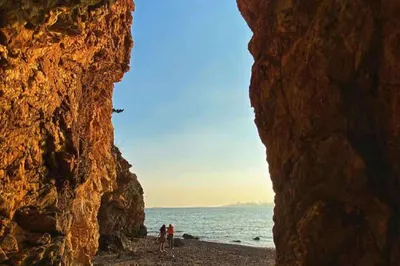
I still remember my first business trip to Qingdao, when the 40.6-kilometer Qingdao Coastal Walking Path was where I left the most footprints. Early morning, dusk, late at night — I absolutely adored strolling here. The surging waves at Zhanqiao Pier, the white lighthouse on Little Qingdao Isle, the deep groves of black pines in Lu Xun Park, the wide sandy beaches of the bathing shores, and the unique architecture lining the coast form a beautiful blend of nature and culture, creating a distinctive seaside scenic gallery. Feeling the wind, listening to the waves, gazing at the sea, watching people — with Qingdao’s breeze on my face, it felt wonderful. Back then, I actually knew very little about Qingdao. On my second visit, I went to Mount Lao, the Underwater World, the Olympic Sailing Center, and the Christian Church, just a cursory tour at best.
This is my third time in Qingdao, and I’m here for a science-study research trip. I spent two days on the go, checking out some of the city’s trendy spots, and got to know the island city on a deeper level. I’ve put together a simple travel guide to share with you.
Day 1: Haier World Home Appliance Museum & Rainbow Staircase – Qingdao Guest House – Signal Hill Park
Day 2: Hisense Science Exploration Center – St. Michael’s Cathedral – Qingdao Study – Qingdao Posts and Telecommunications Museum – Palace Museum Cultural Creativity Center
Haier World Home Appliance Museum & Rainbow Staircase
As the island city’s first immersive home appliance museum, its new landmark, the Iceberg Corner, integrates elements such as the Rainbow Staircase, Rainbow Slide, Love Nest, Sky Mirror, and Love Balloons to appeal to everyone — from young people seeking Instagrammable spots and romantic confessions, to families looking for leisure, entertainment, and parent-child education. It combines specialty crafts, food night markets, hands-on workshops, and light markets into a one-stop destination for residents and tourists alike, making it the island city’s most distinctive cultural and leisure complex. Here lies the poetry and distant dreams you seek.
Full of energy and fashion, romance and cool vibes, this newly popular spot can fill your entire summer with beauty and revelry.
It has been a Qingdao Instagram sensation for some time and also recently served as a location for the Chinese variety show “Keep Running.”
The Haier World Home Appliance Museum is located at “Iceberg Corner,” No. 52 Donghai East Road, Laoshan District. Themed around the world's home appliances, it’s an immersive museum blending retro charm with modern technology.
Currently, three floors of Iceberg Corner are open to the public. The first and second floors house the museum and exhibition areas; the B1 floor contains a food court and the Iceberg Corner multi-purpose hall.
The museum recreates everyday life scenes from different eras connected with home appliances. Through AR interactive experiences and shadow-animation theater, visitors can take a time-travel journey through the history of household appliances.
Using the latest sound, light, and electrical technologies, the museum traces the development of home appliances, breaking away from conventional museum visiting patterns. Integrating exhibition display, popular science education, and theatrical performances, it lets visitors look back at the past and glimpse the future via immersive interactive experiences.
In the children’s interactive zone, young visitors can explore electricity and appliance-related knowledge, history, science, and experiments.
In the Smart Home exhibition area, simply voice a command and smart appliances that “understand” speech will activate corresponding functions. The “Demand Treasure” interactive experience zone, themed “Customizing the Future,” is divided into “Customized for You” and “You Customize.” Based on visitors’ preferences and needs, the smart home system quickly creates and matches a personalized future smart home solution.
Man · Alley: With a “retro” concept, it creates a night-market economy, adding even more liveliness to the city’s street life. It builds a new kind of nightlife for young people, where they can share their favorite lifestyle goods.
Man · Box: Featuring a trunk market, car trunks become stalls — one car, one shop — forming a vibrant scene within the roaming market.
This is a midsummer spree, moving together with artisans, mingling with good food. While young, don’t fear the energy. The Iceberg Corner night market lights up and opens for you every evening. Night market hours: 19:00–21:30.
From one person to two, to a family — what’s the distance between them? Perhaps the Love Rooftop has the answer! A romantic encounter, a heartfelt confession, falling in love, the fruit of love — 521 plus 99 steps. This whole journey, I love you, from start to finish. Every place I pass is filled with the look of love! In the days to come, we’ll grow old together…
Be prepared at the entrance to the Love Rooftop for wave after wave of breathtaking views!
Don’t glance back, just keep climbing up!
You are in the nest, in my heart!
The sailboat corner in the Love Rooftop courtyard holds our yearning for the sea.
Address: “Iceberg Corner,” No. 52 Donghai East Road, Laoshan District, Qingdao
Admission: From RMB 59
Transportation: Take Metro Line 2 to Haiyou Road Station and walk about 934 meters, or take bus No. 225 to Haiyou Road Donghai East Road stop and walk about 468 meters.
Opening hours: 08:30–17:30 (July 1 – October 31)
Note: During the pandemic, search for the official WeChat account “Iceberg Corner” for reservation registration. From the date scenic spots officially resume operation until December 31, 2020, medical workers and active military personnel nationwide can present valid ID at ticket offices for free admission.
Qingdao Guest House (Former German Governor’s Residence Museum)
The Qingdao Former German Governor’s Residence Museum (Guest House), built from July 1905 and completed in July 1907, was designed by the renowned German architect Curt Rothkegel. With a floor area of 4,083 square meters, its interior decorations are exceptionally magnificent and intricate, with every detail meticulously crafted. The Guest House is famous in Qingdao and even nationwide. It successively served as the official residence of the German governor, the commander of the Japanese garrison in Qingdao, and the Kuomintang mayor of Qingdao. In 1934, it was officially named “Guest House.”
Its architectural form and color scheme are exceptionally distinctive: the yellow walls are irregularly inlaid with granite decorations, while the predominantly red roof is interspersed with blue and green sections, making the exterior rich in color. Inside this building, you can sense the rigor of German design, while the plush carpet, crystal lamps, crystal mirrors, ivory piano, and more let you feel the luxury of a European palace.
Going upstairs, stained glass windows line the corridor. Sunlight reflects in, caressing the mottled banisters. For an instant, it seems like time has turned back to that distant era. The radios of those years, the simple antique wooden armchairs, through the French windows or balconies, you can enjoy the scenery outside without stepping out.
Years have passed, and this exquisite architecture has shed its early luster and restlessness. These little houses, which once welcomed luxury carriages and witnessed worldly prosperity, now bear a touch of age, serene and lonely amid ancient trees and the sound of waves, with the tranquil grace of one who has experienced too much to be moved by lesser things.
If you travel to Qingdao, be sure to visit the Guest House, listen carefully to the interpretations, and learn the stories behind this building. It will help you understand the island city much better.
Address: No. 11 Jiangxi Road, Shinan District, Qingdao
Transportation: Take Metro Line 3 to People's Assembly Hall Station and walk about 869 meters, or take bus No. 231 to Qingdao University Affiliated Hospital Jiangsu Road stop and walk about 469 meters.
Opening hours: 08:30–17:30 (August 1 – October 31; last entry at 16:30; closed Mondays)
Note: During the pandemic, search for the WeChat official account “Qingdao Former German Governor’s Residence Museum” for reservation registration.
After coming out of the Guest House, you can conveniently climb Signal Hill. It is the highest point in downtown Qingdao, and when the weather is clear, you can overlook the entire island city — it’s an excellent viewing platform.
Looking down, countless red roofs are concealed among green trees. In the distance, you can see the high-rises of the new city. Imagine if Qingdao also limited building heights, like some cities do — it would be a sea of small, exquisite red roofs. What a sight that would be. Waves crashing on the shore, seabirds flying past, and the misty union of water and sky in the distance…
Address: No. 17 Qidong Road, Shinan District, Qingdao
Admission: Free; to climb the revolving viewing tower, a fee of RMB 10 is required.
Transportation: Take Metro Line 3 to People's Assembly Hall Station and walk 1.2 km, or take bus No. 220 to Signal Hill Park stop and walk 302 meters.
Opening hours: 08:00–17:00
Note: During the pandemic, search for the WeChat official account “Qingdao Tourism Service Platform” for reservation registration.
Hisense Science Exploration Center
In Qingdao, there’s a place where children forget everything else once they enter, and accompanying parents become fully absorbed as well — this is the Hisense Science Exploration Center, absolutely the top choice for family trips in Qingdao, bar none!
The Hisense Science Exploration Center was built by the Hisense Group. It is a comprehensive and interactive science exploration and popularization base, themed around “science and nature exploration.”
Inside, there are the Science Enlightenment Hall, Science Discovery Hall, Nature Exploration Hall, World Consumer Electronics Museum, Hisense History and Culture Hall, Display World, and the 25Plus Café (City Living Room), cleverly arranged into a unique layout of “five halls, one living room, and one world.”
The center’s five venues feature over 200 carefully selected interactive science exhibits, closely aligned with primary and secondary school curricula. It is the country’s first science museum segmented by age, knowledge area, and thematic zone, truly using technology to spark children’s curiosity.
This center is ideally suited for children aged 3 to 8 and for primary, middle, and high school students. Every visitor learns a great deal of scientific knowledge through their interactions with the exhibits. It’s also a prime venue for parent-child interaction, study tours, and extracurricular classes. Truly excellent — I highly recommend it!
It houses over 500 exhibits and displays, with more than 200 of them being interactive experiences, letting children gain scientific knowledge while having fun — edutainment at its best.
“Success stems from curiosity” is the ethos of the Hisense Science Exploration Center. It plans to sow the seeds of curiosity in children and accompany those seeds as they grow. Let curiosity take children to faraway places.
“Once here, you won't want to leave; once gone, you’ll want to come back.” — A single exploration here, and you’ll fall in love with science.
On the first floor of the center, there is the 25+ City Living Room, offering Chinese and Western casual dining — very convenient.
Address: No. 11 Jiangxi Road, Shinan District, Qingdao
Admission: Adult ticket RMB 168, student ticket RMB 138
Transportation: Take Metro Line 2 to Zhiquan Road Station and walk 483 meters, or take bus No. 25 to Yan’an San Road Zhiquan Road stop and walk 302 meters.
Opening hours: 09:30–17:30 (ticket sales and entry stop at 16:30; closed Mondays)
St. Michael's Cathedral
Architecture is frozen music.
Qingdao’s architecture is renowned nationwide, and the city’s churches are highlights in that composition.
When I was very young, I once dreamed that one day I would hold my wedding in a church. At the end of the red carpet would stand my handsome prince charming and the white-bearded priest; the beautiful me, in a pure white wedding dress, holding a bouquet and my father’s arm, would slowly walk into the church to the sound of the “Wedding March.” Behind me, two adorable flower children, gently lifting my veil; along the aisle, friends and family all around, their blessed eyes upon us…
The faithful sang beautiful hymns to the accompaniment of a piano. Turning my head, everywhere were flowers and the angelic smiles of the flower children. That walk was so long, so long, as if strolling through the heavens. That sweetness and contentment can only be understood through personal experience. Listening more closely, a faint touch of sorrow was mixed in the singing, profoundly moving; it quietly seeped into my heart through everyday life. For an instant, I disappeared; my unconscious soul drifted in a sky of immeasurable emotion.
I truly love the varied windows of the church: the frosted glass and simple bars, the delicate flowers and sturdy iron lattice — so harmoniously put together. Be they square or semicircular, all exude a captivating grace.
During the pandemic, the interior of the cathedral was not open; one could only walk around outside.
In the small square in front of the cathedral, many young people were taking wedding photos, and a few stalls selling handicrafts had been set up. Now this spot has also become a Qingdao social-media hotspot.
Address: No. 15 Zhejiang Road, Shinan District, Qingdao
Admission: RMB 10
Transportation: Take Metro Line 3 to Qingdao Station and walk 953 meters, or take bus No. 231 to Stomatological Hospital stop and walk 365 meters.
Opening hours: 06:00–17:00 (currently, due to the pandemic, the interior remains closed; only the exterior can be viewed)
I had originally planned to visit the St. Michael's Cathedral, but it was closed. After watching many newlyweds having their photos taken at the entrance, I stumbled into the Qingdao Study right opposite the church.
That an ordinary villa became a commemorative landmark for a city's history is indeed fortuitous. What is profoundly meaningful is that a dwelling built by early settlers, now so fondly remembered, and a distant emotional attachment of an ordinary family, eventually turned into a warmth-infused homecoming, becoming an indispensable memory point for the city…
Based on the historical appearance of the former Anna Villa in Qingdao, the Qingdao Study has created a brand-new “experiential, open urban public reading space,” blending tradition with contemporary, conceptual art, experience, sharing, and many other elements to forge an excellent spiritual and humanistic hub.
Pick a book you like, send a postcard from the island to yourself or to that special someone; or write down the whispers of your heart on a message note, waiting for that serendipitous person…
In your leisure time, come to this villa, read a book, hold a cup of coffee — it’s also a way of savoring the island city.
Address: No. 26 Zhejiang Road, Shinan District, Qingdao
Admission: Free
Transportation: Take a bus to Guangxi Road Zhejiang Road stop, then walk 501 meters.
Opening hours: 09:30–18:00
Qingdao Posts and Telecommunications Museum
The Qingdao Posts and Telecommunications Museum is located at No. 5 Anhui Road, Shinan District, at the intersection of Anhui Road and Guangxi Road. It occupies the former site of the Kiaochow German Empire Post Office. This building was first constructed in 1901 and is the earliest surviving post and telecommunications building in Qingdao.
The museum covers about 2,500 square meters, with an exhibition area of approximately 1,400 square meters. Three floors are open to the public: the first floor consists of a reception hall, an antique telephone wall, the “Kiaochow 1901” slow-post service, and a souvenir shop. The first floor can be visited for free.
The second floor serves as the main exhibition hall, requiring a ticket costing 25 yuan.
The fourth floor is the Tower 1901 Hall — the only century-old wooden tower open to the public in Qingdao. The Twin-Tower Gothic structure of the Tower 1901 Hall showcases the building techniques of 120 years ago and is an important window into architectural art, as well as a witness to modern and contemporary history.
Address: No. 5 Anhui Road, Qingdao
Admission: First floor free; second-floor museum requires a 25 yuan ticket.
Transportation: Take Metro Line 3 to Qingdao Station and walk 665 meters, or take bus No. 25 to Guangxi Road Zhejiang Road stop and walk 53 meters.
Opening hours: 09:30–18:00 (closed for one hour at noon: 12:00–13:00)
Qingdao Palace Museum Cultural Creativity Center
On the shore of Qingdao’s Zhanqiao Pier, the “Palace on the Sea” has been transformed into the Palace Museum Cultural Creativity Center, staging a beautiful encounter between the Forbidden City and the ocean. Looking around, you see the Zhanqiao Pier with its delicate pavilions and reefs, and the little Qingdao Isle that hums like a zither in the waves — the scenery is so beautiful that it makes you stop in your tracks.
The Qingdao Palace Museum Cultural Creativity Center is a large-scale culture and experience space jointly created by Qingdao Hainuo Investment Development Co., Ltd., together with two major cultural IPs: the Palace Museum and Phoenix Satellite TV, using an innovative model of “Culture + Creativity + Technology.”
The center has a building area of 11,600 square meters. The first floor is the Palace Museum Qingdao Cultural Creativity Hall, comprising a preface hall, a Palace Museum books and creative products area, the HaiCuo Café, a restaurant, and a multi-purpose hall among other experience zones.
The Palace Museum’s cultural creativity products make their first appearance in the island city. On antique-style display cabinets, items such as Palace Museum books, souvenirs, commemorative pieces, and artifact-themed items are neatly arranged, conveying the historical information and cultural sentiments contained in the Palace Museum’s cultural heritage.
The second floor houses the “Along the River During the Qingming Festival 3.0 Digital Theme Hall,” a fully digital exhibition blending traditional culture with modern technology. “Step into the painting in the morning, dream back a thousand years by day.” In the digital theme hall, visitors can not only admire the color and charm of the millennium-old masterpiece, but also experience vivid Song-dynasty street life through interactive scenes such as the Bianjing ancient alley, the Sun Yang Old Inn, and the dome theater.
Address: Intersection of Xilingxia Road and Xilingxia Second Road, Shinan District, Qingdao
Admission: First floor free; second-floor exhibition hall, 80 yuan.
Transportation: Take Metro Line 3 to Qingdao Station and walk 894 meters, or take bus No. 312 to Guizhou Road Chaocheng Road stop and walk 260 meters.
Opening hours: 09:00–17:30 (currently, due to the pandemic, the interior cannot be entered; only the exterior can be appreciated)
Qingdao is a beautiful coastal city, as well as an island city rich in cultural and historical heritage. Its beauty unfolds through the cycle of four seasons, and its charm wafts amid the blue skies and clear waves. I look forward to meeting it again!
Goodbye, Qingdao, this breezy island city...