A Romantic Journey to Shandong in the Snowy Season
Weihai's islands, Zaozhuang's waters, Tai'an's mountains, Qufu's sacredness, Qingdao's sea, Jinan's springs... Every city in Shandong has its own unique beauty, and Shandong's charm goes far beyond scenery—it lies in its long history and culture. Friends always told me that Shandong has a special beauty in winter; the reputation of "Friendly Shandong" and the warmth of its people sparked my curiosity about a winter trip. Although it turned out this journey began with the heaviest snow Shandong had seen in years, the unexpected snow added extra fun and breathtaking views. So, just how beautiful is Shandong in winter? Follow my footsteps and explore these cities whose very names bring warmth to the heart.
The Joyful Finest Spring under Heaven
The Majestic Tai'an and Mount Tai
The Sacred Confucius Temple in Qufu, a Shrine of Confucian Culture
The Visual Feast of Confucian Charm at Nishan Sacred Land in Qufu
The Finest Scenery under Heaven: Taierzhuang Ancient City in Zaozhuang
Qingdao: A Place of Red Tiles, Yellow Walls, Blue Sea and Clear Sky
Visit Weihai After the Snow Clears
Savor Lu Cuisine, One of China's Eight Great Culinary Traditions
As the saying goes, "Each place has its own way of nurturing its inhabitants." The splendid mountains and waters have raised the famously hospitable people of Shandong, while the thousand-mile coastline has painted countless natural scenic portraits. Here you'll find the majestic Mount Tai, the tinkling and dancing springs of the Finest Spring under Heaven, the mild winter days described by writer Lao She, red-tiled yellow-walled houses against blue seas and skies, time-honored brands renowned far and wide, and boundless culinary delights...
Day 1: Shanghai → Weihai → Tianmu Hot Spring → Weihai Tianmu Hot Spring Resort
Day 2: Weihai Tianmu Hot Spring Resort → Yandunjiao Swan Lake → Weihai Tianmu Hot Spring Resort
Day 3: Weihai Tianmu Hot Spring Resort → Qingdao → St. Michael's Cathedral → Qingdao Beer Museum → Taipingjiao & Badaguan → Mercure Qingdao Zhanqiao Hotel
Day 4: Mercure Qingdao Zhanqiao Hotel → Zhanqiao Pier → Signal Hill Park → Badaguan (Huashi Villa, Princess Villa, etc.) → Zaozhuang → Taierzhuang Ancient City → Taierzhuang Mansion
Day 5: Taierzhuang Mansion → Qufu → Nishan Sacred Land → Confucius Temple - Qufu Three Confucian Sites → Ji Hotel Qufu Sankong Scenic Area
Day 6: Ji Hotel Qufu Sankong Scenic Area → Qufu Three Confucian Sites → Tianwai Village, Tai'an → Mount Tai Scenic Area → Jinan → Flimmer Hotel Henglong Plaza
Day 7: Flimmer Hotel Henglong Plaza → Liberation Pavilion → Baishi Spring → Heihu Spring → Quancheng Square → Baotu Spring → Daming Lake → Jinan West Railway Station → Shanghai
★ All scenic spots in Shandong are open normally, unaffected by season or the pandemic.
★ Must-visit highlights include Rongcheng's Yandunjiao Swan Lake, Qingdao Beer Museum, Zaozhuang's Taierzhuang Ancient City, Qufu's Nishan Sacred Land, Tai'an's Mount Tai, Jinan's Baotu Spring, and Daming Lake, among others.
★ Attractions in Shandong are quite spread out; self-driving or chartering a car is recommended. Except in Qingdao and Jinan, parking is easy at other spots.
★ The local diet is mainly wheat-based, including noodles, dumplings, and steamed buns, with generous portions. Order accordingly to avoid waste.
★ Temperatures vary greatly between cities; pack sufficient clothing, especially if hiking.
Flights: Daily flights to and from Weihai or Jinan. If ticket prices are good, flying is a smart choice.
Trains: Whether heading to Weihai or Jinan, it's convenient to arrive first at Jinan High-speed Railway Station. Suggestion: If starting from Weihai, consider flying—it's fast and prices are comparable to high-speed rail. If starting from Jinan, high-speed rail is better with more schedules and similar costs. Travel between cities within Shandong by high-speed train is also easy, but local attractions are scattered, so renting a car and driving is still preferable. Car rental counters are available at all airports and train stations, making pick-up and drop-off very convenient.
Shandong cuisine is one of China's four great culinary traditions. With a long history and flavors that are fresh, salty, crisp, and tender, it's renowned worldwide. Techniques like "quick-frying, stir-frying, braising, and flat-frying" are especially distinctive. Savor Lu cuisine and get to know the warm, forthright people of Shandong. Every place has its signature dishes; authentic local snacks can be found in markets and temple fairs. "Pancake rolled with scallions" is a classic Shandong way of eating. Drinking, dipping sauce, munching scallions, and chewing pancakes—this matches the bold and earthy character of Shandong folks.
In Shandong, "No fish, no feast; no liquor, no banquet." Historical figures like Wang Xizhi, Li Qingzhao, Xin Qiji, and those who sojourned here—Li Bai, Du Fu, Su Shi—all drew inspiration from wine. Shandong people are hospitable and generous; they may not have the highest alcohol tolerance or be the fastest or heaviest drinkers, but their drinking rules, stubbornness, and "toasting rituals" will stay with you for a lifetime.
An unexpected heavy snow brought both surprise and delight!
Trips taken on a whim often mean plans change; yet that's where travel's meaning and surprises come from.
First Stop: Weihai
Liugong Island, Huaxia City, Chengshantou, Xixiakou... These pride-worthy spots of Weihai—how many have you visited? Almost every traveler dreams of meeting the sea. And when it comes to coastal cities, if you haven't been to Weihai, you haven't seen every corner of the world. But if your impression of Weihai stops at the sea, let me say: Weihai has a thousand faces, and you've only glimpsed a fraction.
Weihai Tianmu Hot Spring Resort
Address: Zhangjiachanzhen, Wendeng District, Weihai
Hot Spring Price: 138 CNY per person per session
Whether in a group or traveling solo, meeting up with friends from all corners is always exciting. So our first gathering spot was the renowned Tianmu Hot Spring in Weihai. As we stepped off the plane, the chill and the snow-covered landscape took us by surprise—we encountered the longed-for snowy scenery on day one. For those of us who grew up in the south, even ankle-deep snow was enough to make us dance with joy. But little did we know this was just a preview; the following days brought blizzards so fierce even locals found them rare. While we loved the snow, navigating in a snowstorm was another story entirely.
The drive from the airport to the hot spring hotel took about 30 minutes over 30 km. After checking in, while waiting for our companions, we headed straight to the outdoor pools.
This five-star resort, built by the Zhuhai Tianmu Group in Zhangjiachan Town, Wendeng, enjoys a prime location. It attracts not only domestic tourists but also visitors from Japan, South Korea, and Russia—though during the pandemic, overseas guests are rare, but locals still flock here. The indoor and outdoor hot spring area, nestled among hills and waters, promotes "bathing in forest hot springs, staying in waterfront rooms, eating green food, and breathing fresh air," earning a strong reputation in Weihai and all of Shandong.
The resort boasts a large indoor pool and an outdoor area with 66 themed baths, including fish therapy, Chinese herbal, beauty-enhancing, SPA, global-style, Four Beauties, and Tai Chi Eight Trigrams baths. Just walking around takes over an hour; trying all is a challenge. As a national chain, Tianmu's service is systematic and heartwarming even in freezing weather. Staff greet you proactively, help replace cold, wet towels, and offer tea. Though some outdoor pools were closed for safety, the ambience and main pools were delightful; on a clear day, they rival Japanese baths.
The second floor has a lounge and SPA area. The guest rooms, scattered across the hillside, range from standard to upscale, with views of the lake or snow—a pleasant surprise. Another reason to stay: each guest gets free access to the hot springs twice daily, a perk few resorts offer. The value alone covers the room rate. The breakfast also exceeded expectations, with steamed buns, stir-fries, and snacks beyond typical noodles—great overall value.
Tips:
1. Upon check-in, you receive a ticket for two hot spring entries; use anytime during opening hours.
2. Walk directly from your room to the baths; change into robes beforehand.
3. Ample parking near the lobby.
4. No nearby restaurants or shops, but the hotel has a Korean restaurant and a small supermarket.
Baolongxuan Private Kitchen
The hotel offers local Korean cuisine. Later, after everyone gathered, we learned a local friend had booked a mysterious private kitchen. Curiosity piqued, we ventured out into the snow. The meal was stunning and incredibly worthwhile. This restaurant is hard to find on most food apps—proof of the owner's free spirit. Reservations are required, and the menu depends entirely on the day's ingredients; you set a budget and leave the rest to fate. The result exceeded all expectations. Tucked under a viaduct in Wendeng's city center, it's easy to miss without GPS—truly the essence of "private."
The restaurant sits in a courtyard; its façade hints at something special. The owner runs it more as a gathering place for friends than a business. The décor is lively, a mix of East and West, with a fridge full of soft drinks from various countries—Russian and Thai sodas were so cute we couldn't resist, swapping our planned Qingdao beer for them. When the signature dishes arrived in large bowls, we were floored—generous portions and variety that felt almost too good to be true. "Friendly Shandong" echoed in my mind, stirring excitement. Compared to a previous sashimi feast in Weihai, these dishes were more refined and artfully presented, even featuring a giant starfish—something I've only dared to eye but not taste. A brave friend tried it and said it resembled dry crab roe; for the real experience, you'll have to sample it yourself. In Weihai, oysters are a must; each plump, fresh one was sheer satisfaction. After the feast, we returned to Tianmu for a second soak, blissfully forgetting the snowstorm outside. Bird's nest delivered to our rooms topped off the night, doubling our good impression of the hotel.
Rongcheng Yandunjiao Swan Lake
The next morning, heavy snow closed Xixiakou and Liugong Island, so we headed to Yandunjiao Swan Lake, not far from Wendeng city center. A recently popular Instagrammable spot, local friends highly recommended it. Embracing the "don't miss out" spirit, we cautiously set off. The snow-blanketed town under blue skies looked dreamlike—a scene I'd only seen in Japan or Northeast China before. After parking, we didn't spot the swan lake at first, but following the sound of swans toward the sea, we arrived just as staff were feeding them. Hundreds of swans that migrated from Siberia gathered before us—a stunning sight. Legend says this was once an ordinary bay; a few lost swans stopped here, kind locals fed them, and word spread among the swans, drawing more each year. It's a heartwarming, down-to-earth tale.
As wintering swans increased, they boosted the local economy in Yandunjiao town. Many coastal homes have become guesthouses and restaurants, attracting photographers and travelers. This is truly a spot nurtured by human care. Compared to swans in parks, here you can get much closer; the birds are wild, splashy, and full of playful tussles. Their snowy whiteness glowed golden in the sun, incredibly pure. The coastal weather shifts rapidly—blizzards one moment, sunshine the next—but overall, it was a trip well worth it. After swan-watching, dine at a local farmhouse or return to town. The area isn't overly commercialized; prices are fair.
Tips:
1. No direct shuttle; drive or hire a car.
2. Free entry; feeding takes place each morning—visit then, as swans fly off after high tide in the afternoon.
3. Guesthouses and restaurants available; pre-book for possible transfers.
4. Chilly and windy by the sea; bundle up.
5. Park behind the town or along the roadside—free.
Myeongdong Korean Cuisine
For dinner, we chose a Korean restaurant in town to make up for missing Korean food on day one. Wendeng is affordable; with group deals, we ate our fill for under 100 CNY per person. The ingredients were real and hearty—no wonder locals are less fazed by the cold; the food is so warming.
After the snow, the weather turned spectacular. At sunrise, the moon faded, and as highways reopened, we eagerly set off for our next stop—Qingdao.
Second Stop: Qingdao
Qingdao is synonymous with romance, elegance, and history. From the landmark St. Michael's Cathedral and Zhanqiao Pier to the emblematic Qingdao Beer, and Badaguan's collection of international architecture, you can't help but fall for this city. Lunch was at a seafood buffet near the pier, featuring local flavors. With sights to see, we ate quickly; beauty and feasts rarely coincide... Which tempts you more?
St. Michael's Cathedral (Qingdao Catholic Church)
Address: High Ground, North End of Zhejiang Road, Shinan District, Qingdao
Tickets: 10 CNY
Every visit to Qingdao starts at the cathedral, a favorite for tourists and couples. As the city's largest Gothic building and China's only consecrated cathedral, it's a masterpiece of Christian architecture. Even on the coldest day, crowds come to see it. Built on a hillside, it's one of the few churches in the country that freely allows photos—so welcoming. The interior features Italian Renaissance design with a spacious hall seating a thousand, adorned with exaggerated rib vaults and stained-glass windows. When sunlight streams through, it creates an ethereal, mysterious aura. The 10 CNY ticket lets you roam and snap photos, reflecting Qingdao's inclusive spirit. Major festivals like Easter and Christmas see grand celebrations; yet many visitors are simply captivated by the majestic architecture itself.
Tips:
1. Weekday mass at 6 a.m.; Sunday mass 8-9 a.m. with organ music only during Sunday mass.
2. No restrictions on photography or phone use inside.
Qingdao Beer Museum
Address: 56 Dengzhou Road, Shibei District, Qingdao
Tickets: 60 CNY
Amusingly, more women than men visit the museum, contrary to my expectations, because they can sample limited Qingdao unfiltered beer—far more aromatic than regular draft. Shandong women have a knack for drinking; don’t challenge them unless you’re ready. The free-entry A hall showcases Qingdao Beer's history and honors with high-tech displays. The B hall, requiring a ticket, lets you taste the real unfiltered brew and shows the brewing process, ending with a view of the actual bottling line. The explanations may get technical, but no one stays calm facing that beer—it's so pure compared to ordinary draft that you haven't truly tasted Qingdao beer until you've been here. The production line isn't just for show; it's real, giving you an immersive feel. And the museum complex includes a souvenir shop, a bar, and a food court—fitting for such an iconic brand. The museum's interactivity and tech exceeded my expectations.
Tips:
1. Buy tickets online in advance; same-day entry without reservation.
2. Each ticket includes a free cup of unfiltered beer and a draft; due to lower visitor numbers during the pandemic, there’s no strict limit—winter visitors can really indulge!
3. Visit takes 1-2 hours.
4. Limited parking; try the restaurant across the street if needed.
As dusk fell, we could have gone to Zhanqiao Pier for sunset or Badaguan for architecture, depending on our mood. That night, we stayed at the newly opened Mercure Qingdao Zhanqiao Hotel, very European in style and close to the pier with free parking. We asked the staff for nearby dining and found Baifu Kitchen just ahead on the left—a down-to-earth spot. After a long day, we treated our grumbling stomachs. The owner warmly warned us not to over-order; one dish per person was enough. Every dish was spot on, not as refined as the private kitchen but affordable and hearty, with a homier feel than the seafood buffet.
Unexpected Gems at Zhanqiao and Badaguan
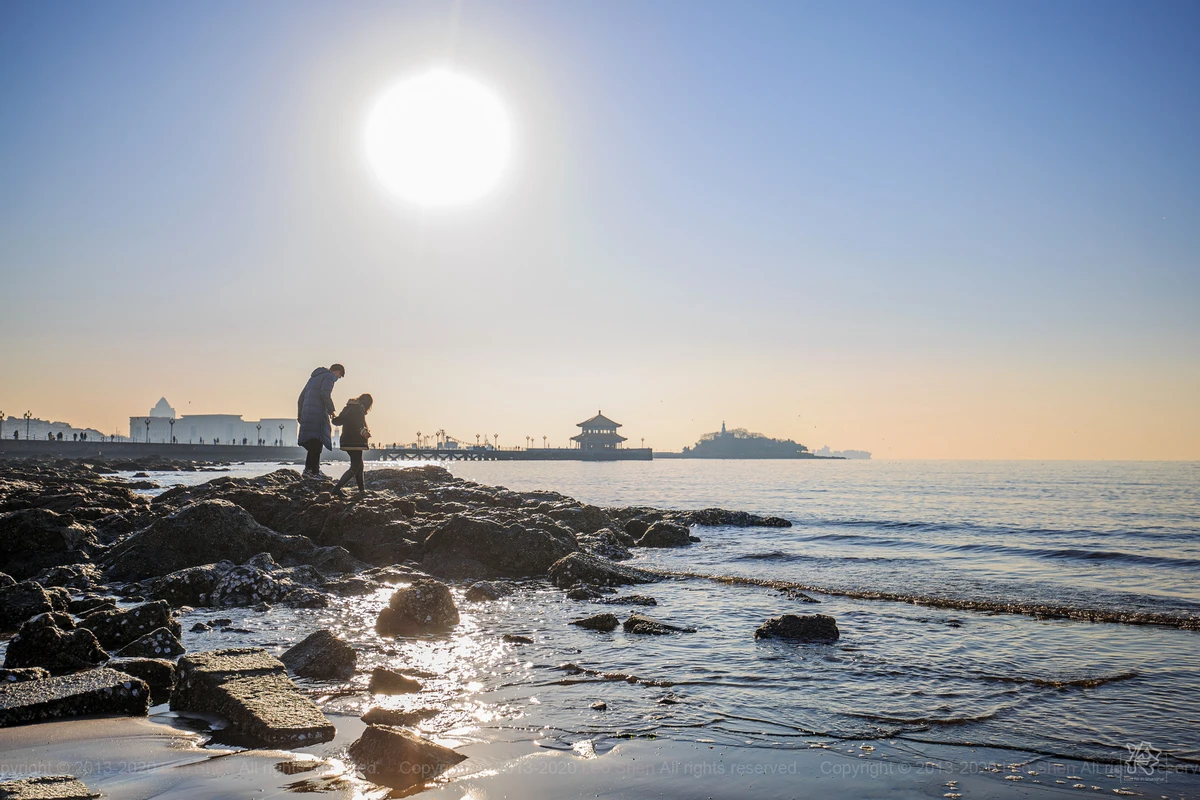
The next morning, we rose early to see the sights we'd missed—Zhanqiao Pier and Badaguan. It was a better choice: fewer tourists but loads of seagulls at the pier. Feeding them became a highlight. Locals might be used to it, but the sheer number of gulls captivated us, stretching our planned hour. A couple by the sea caught my eye; following them, I felt Qingdao's winter romance. Want to feel that flutter? Nearby, you can buy small snacks or bring sliced bread to feed the pigeons, though these clever birds won't fall for empty hands. Time flew as we fed and photographed them; we left reluctantly. We then decided to visit Signal Hill Park, a classic viewpoint. Finding parking was tricky due to one-way streets, but we managed. The climb was easy and pleasant, though note: the park was free until December 31 but charges an entry fee from January 1. The observation tower offers the best city panorama—perfect for sunrise or sunset.
Badaguan Memories
We stopped at a few landmark sites in Badaguan. Most attractions open at 10 a.m. and close at 4:30 p.m., so early or late arrivals miss out. Known as the "World Architecture Exposition," Badaguan features Russian, British, French, German, American, Danish, Greek, Spanish, Swiss, and Japanese styles, among others. A must-see is Huashi Villa, with a humble 8.5 CNY ticket. Its scale, elegance, and fame make it Badaguan's top spot. This iconic villa (18 Huanghai Road) blends European castle style with Greek, Roman, and Gothic touches, built from granite and pebbles—thus the name. Many legends surround it, and it’s a fact that numerous state leaders have stayed here, though stories vary. The mysterious, quaint building has drawn film crews. Overlooking Qingdao's No. 2 Bathing Beach, it offers unobstructed sea views—how enviable! On Juyongguan Road, Princess Villa is another famous building, said to have housed Danish Prince Joseph and Princess Margaret in the 1920s-30s. The garden features statues of Andersen and his fairy-tale characters: The Little Mermaid, Ugly Duckling, the Emperor, Princess and the Pea. This sprawling villa was prepared for a Danish princess's summer retreat, but she never actually visited; the name stuck nonetheless.
Tips:
1. Signal Hill Park is walkable from Zhanqiao Pier.
2. Pigeon feed costs 1-2 CNY per pack; sliced bread is handy.
3. Badaguan is an area, not a single site; Huashi Villa and other buildings require individual tickets—a combo ticket saves money.
Third Stop: Zaozhuang
When "Friendly Shandong" comes to mind, Zaozhuang often follows, inevitably tied to Taierzhuang Ancient City, lauded as the "finest scene under heaven." Racing against time, we left Qingdao for Zaozhuang, eager to catch the famous night view. We needn't have worried; the lights stay on until 11 p.m., so unless you're rushing to a show, evening arrival is fine.
Address: East Section of Huaxing Road, Taierzhuang District, Zaozhuang
Tickets: 160 CNY; minors under 18 free (with ID); children under 1.2m free.
Taierzhuang Ancient City is China's largest, a national 5A scenic spot dubbed "the most beautiful water town." It's a "living ancient canal" and the only remaining heritage village of the Beijing-Hangzhou Grand Canal. Emperor Qianlong visited and bestowed the title "the First Village under Heaven," inscribed on the city gate. When lanterns lit up, thousands of lights sparkled, creating a festive, fiery scene. We arrived on New Year's Eve, enjoying cultural performances and iron-sparkling shows that added joyful, peaceful vibes. Bars along the canal glowed neon, enchanting amidst ancient elegance and modern romance. The diverse ethnic architecture made us realize we'd need days to cover it all; hence, the ticket allows re-entry for three days—a huge convenience.
We stayed at Taierzhuang Mansion, the top hotel inside. While it seemed convenient, dragging luggage over cobblestones proved otherwise, but for night and morning views, staying inside is best. The main street is full of restaurants; we opted for local snacks—various pancakes and buns, a true Shandong experience, making up for missed street food. Evening boat rides cost 60 CNY per person one-way, 100 CNY round trip. Sitting in a black-awning boat, you feel transported to a Jiangnan water town. Rising early, we explored more of the city and realized we'd only seen a fraction the night before. Under the early winter sun, Taierzhuang revealed quiet, exquisite beauty—a different charm without ice and snow, yet the serene, snow-dusted scenes felt uniquely peaceful. The city's architecture spans eight styles: northern courtyards, Huizhou, water-town, Minnan, European, religious, Lingnan, and Lunan folk. Must-see spots include Zhizun Bridge (rebuilt on old foundations, offering views of many bridges), the Qing-era Canjiangshu Pavilion (once a general's residence, now a memorial to reconstruction), and the ancient mosque.
Recommended route: West Gate → Taiwan Street → Jiandao Street → Boat-shaped Street → Yuehe Street → Dingzi Street → Shunhe Street → Chedalu Road → East section of Dayamen Street → East Gate → Hou Street → Antique Street → Jiandao Street → Mid and West sections of Dayamen Street → West Gate.
Tips:
1. Ticket allows multiple entries for three days; annual pass is 200 CNY.
2. Abundant accommodation and dining inside.
3. Mostly stone paths; pack light to avoid dragging luggage.
4. Festive performances on holidays; check official announcements.
5. Large parking lot at the entrance, 10 CNY per car, unlimited time.
Fourth Stop: Qufu
Qufu is a slow-paced cultural city; while modern life rushes by, this oriental sacred city keeps its own rhythm. Every brick in its quiet alleys exudes the thick, sturdy shadow of an ancient town—a place that slows you down.
Address: No. 9 Shengxiang Road, Nishan Town, Qufu
Tickets: 120 CNY
"Nishan Sacred Land" is a place you'll want to revisit, where Confucian spirit soaks in and inspires awe. Not far from Zaozhuang, the scenic area's scale surprised us far beyond expectations. Despite hearing it shares management and style with Lingshan, we found it vast enough that walking the entire site takes considerable time. Covering over 2,000 mu, it blends mountains and waters, perfectly embodying "One Mountain, One Water, One Sage." The core building, Daxue Hall, dazzles inside with carved beams and painted rafters; the halls of Ren, Yi, Li, Zhi, Xin overflow with Confucian elegance, vividly displaying millennia of culture.
A special Hanfu experience: for 99 CNY, you get 2 hours of costume rental and entry ticket—quite a bargain! Dressed in your favorite Hanfu, you'll blend perfectly with every backdrop. The exclusive "Golden Sound and Jade Vibration" show uses cutting-edge technology to portray Confucius's brilliant life, as stunning as the cultural treasures he left. This hour-long performance combines poetry, music, dance, and modern stage mechanics, holograms, and large-scale installations, illustrating the sage's life stages and rituals through the seasons—a deeply moving depiction of the journey from mortal to saint. Photos can't capture its grandeur; don't miss it if you visit. After the show, explore outdoor sights: the 72-meter-tall Confucius statue (equivalent to a 24-story building) portray him as approachable, venerable, a teacher, elder, and sage. If time allows, visit Nishan Confucian Temple, Nishan Academy, and Guanchuan Pavilion.
Tips:
1. Payable shuttle carts within the scenic area.
2. Shoe covers required inside Daxue Hall; wearing Hanfu cloth shoes allows direct entry.
3. Photography allowed everywhere.
4. "Golden Sound and Jade Vibration" has fixed showtimes; front row best for viewing, back rows for photography.
5. Professional guides available.
Leaving Nishan near dusk, we checked into Ji Hotel Qufu Sankong Scenic Area, close to the Three Confucian Sites, with easy dining and parking. Dinner was at Jiuroumen near the tourist center—a uniquely styled restaurant. Stepping away from seafood, we returned to Shandong's wheat-based roots with noodles and braised bones, an authentic Lu cuisine flavor. Fried ice cream (with real ice cream) was especially delightful and genuine. Great value.
Address: Banbi Street, Qufu City (near Shendao Road)
Tickets: 80 CNY for one site, 140 CNY combo for all three.
The hometown of Confucius, known as "Oriental Holy City" and "Eastern Jerusalem," Qufu's Confucius Temple, Mansion, and Forest—collectively the Three Confucian Sites—are places of pilgrimage for admirers of Confucian culture. The Confucius Temple, the most representative complex, showcases his achievements through progressive architecture. Existing structures, mostly from Ming and Qing dynasties, are grand and majestic, hailed by architect Liang Sicheng as "a unique example in world architectural history," ranking among China's three great ancient building complexes alongside the Forbidden City and Chengde Mountain Resort.
The Lingxing Gate is the temple entrance. Legend says Lingxing is the star of literature, so naming it implies the nation's talent; ancient emperors first worshipped this star before heaven, and Confucius received similar reverence. The temple houses numerous steles and stone tablets, especially the largest collection of Han steles in the country, second only to Xi'an's Stele Forest. Walking along the central axis, you reach Dacheng Hall, the main hall and heart of the temple. Originally called Wenxuanwang Hall, it was renamed by Emperor Huizong in 1103 after Mencius's phrase "Confucius epitomizes all achievements." It's the tallest structure and one of China's three great halls. Ten deep-relief dragon columns stand in the front corridor, each unique, with clouds, rocks, and waves, lively and elegant. The intricate roof design is jokingly said to be the origin of the Chinese term "gouxin doujiao" (intricate plotting). The plaque "Wanshi Shibiao" (Exemplar for All Ages) has a story: Emperor Kangxi, after dismounting and walking to the hall, performed the three-kneel-nine-kowtow ritual, presenting an edict: "His ultimate virtue is as vast as heaven and earth, beyond description." He inscribed the four characters to illuminate Confucian teachings for posterity, interpreting it as "The way of the sage runs parallel with sun and moon, moves with heaven and earth, a model for all emperors through eternity."
Exiting the temple, walk left about 100 meters to the Confucius Mansion, just a wall apart, requiring another ticket. The mansion is the largest family estate in feudal China, a classic blend of government office and private residence—dubbed "the First Family under Heaven." Facing the entrance is a delicate, unique screen gate built in 1503, freestanding and not connected to walls, used to shield the main hall—rare in ancient architecture. The mansion, smaller than the temple, is mostly courtyards. One memorable spot is Gelaodeng, linked to the phrase "cold bench"—a red wooden bench where the disgraced minister Yan Song is said to have sat. Exiting through the back garden, you'll find a mural supposedly painted by a maid; from any angle, the path in the painting always faces the viewer—an astonishing effect regardless of the artist. Between the three sites, you can take a horse-drawn carriage, a unique Qufu transport; negotiate the price by the cart or per person.