Just an Hour and a Half from Qingdao: Experience a Unique 2-Day, 1-Night Trip to Laixi
When it comes to Laixi, many people may not be familiar with it. It is a county-level city in Shandong Province, under the administration of Qingdao. Despite covering just over 1,500 square kilometers, this place boasts abundant tourism resources. And it’s quite close to downtown Qingdao—just an hour and a half by car. Take advantage of the weekend and embark on a two-day, one-night Laixi getaway with your family, escaping the hustle and bustle of the big city and embracing a different way of life.
Our itinerary:
Day 1: Shanhou Renjia Ecological Park (picking + lunch + pottery) – Laiyi Culture and Ritual Music Museum (visit + music appreciation) – Haobang Hotel (check-in + dinner)
Day 2: Chanzhi Village (visit + lunch) – Jiuding Manor (wine tasting + learning)
The first stop on our trip was the famous Shanhou Renjia Ecological Park in Laixi. Spanning over 2,000 mu, this ecological park has everything from food and drink to fun and entertainment. Our favorite was the four-season agricultural picking greenhouse. Normally, we buy fruits and vegetables at markets or supermarkets, but picking them right there in the greenhouse—whether for adults or kids—is pure joy. All the produce at Shanhou Renjia Ecological Park is green and pollution-free; you can pick them straight from the vine and eat them right away.
At this time of year, the greenhouse is filled with tomatoes in a wide variety—red, green, purple, and many you wouldn’t find in a market. Besides tomatoes, there are tasty strawberries, not huge but each one sweet and juicy. In the picking garden, you can indulge as much as you like, as long as your stomach can handle it. Of course, you can take home what you’ve picked, just pay by weight.
From the picking garden, we headed straight to the park’s farmhouse-style restaurant. The dining area is spacious and impressive, with a specialty in black pork. The black pork bone is a must-order at every table. Put on the gloves, grab a bone, and start gnawing—no dipping sauce needed, just the natural flavor of the black pork. The black pork belly, barbecue, cracklings, and buns are all fatty without being greasy, more fragrant with every bite. Alongside the meats, you should also try some vegetables like carrots and cucumbers, all grown in the park itself. The standout is the chives—Shanhou’s chives are quite famous, grown in red soil with high potassium content. Even a simple stir-fry tastes wonderful.
There’s also a handicraft workshop in the park where you can learn a variety of things, such as painting kites, potting succulents, making leaf-printed fabric bags, woodworking planes, photo frames, and more. After lunch, we opted for the intangible cultural heritage pottery experience. Professional pottery instructors guide you. We learned two skills: how to glaze a fired pottery piece and how to shape clay into the vessel we wanted. The instructor was very patient and gave attentive guidance, so there’s no need to worry about doing it wrong. The finished pottery will be left to dry and fired, then shipped to your home in about 10 days—very convenient.
Leaving the ecological park, we went straight to the Laiyi Culture and Ritual Music Museum in Laixi city center. During the Xia and Shang dynasties, Laixi was inhabited by the Laiyi people, and after the Zhou dynasty, it belonged to the State of Lai. In their labor, the ancient Lai people danced on the earth and sang to the rhythm of stones, gradually forming a distinctive regional music known as “Lai Music.” So if you’re interested in history and music, the Laiyi Culture and Ritual Music Museum is well worth a visit. It houses many ancient musical instruments, such as pottery drums, sheep-horn-shaped pottery horns, chunyu bells, sheng, ruan, yu, and more, all with relevant introductions. While we were there, we happened to catch a live performance by the Laiyi Ancient Music Society. The music produced with these ancient instruments was simply awe-inspiring.
In the evening, we checked in at the Haobang Hotel in Laixi city center. Although the price is a bit higher than other hotels, comfort during travel is paramount. The rooms were spotlessly clean and well-appointed. There was also a smart speaker “Xiaodu” in the room, great for listening to music or stories while resting. In front of the hotel is the Instagram-famous Rainbow Bridge, and behind it is Moon Lake Park—both perfect for an evening stroll.
After a tiring day, we chose to dine right at the hotel. The restaurant on the second floor of Area A serves mainly Cantonese cuisine, with a touch of Shandong cuisine. The chef is said to be a native of Chaoshan, so the Cantonese dishes are very authentic. Signature items like glass pigeon, fresh loquat double-boiled with pigeon, honey-glazed char siu pastry, and Chaozhou water chestnut cake are all excellent.
The first stop on Day 2 was Chanzhi Village, located in Shuiji Subdistrict, Laixi. Legend has it the village got its name because it abounds with lanzhi grass. Founded in the first year of the Yongle era of the Ming dynasty, the village has over 600 years of history. On April 20, 2021, Chanzhi Village was named one of the first batch of scenic villages in Shandong Province by the Shandong Provincial Department of Culture and Tourism.
There are many spots to check out in the village, such as the Jinshi Mansion, the Folk Customs Museum, the thousand-year-old dragon locust tree, an old-style private school, the Wang Family Ancestral Hall, and more. You can also try your hand at making Chanzhi’s signature intangible cultural heritage snack—Qiqiao Cake. You can pack up the finished cakes and take them home; they make a wonderful souvenir crafted by your own hands.
Chanzhi Village also boasts another culinary highlight: reservoir fish. Thanks to its proximity to Laixi Lake, the largest reservoir on the Jiaodong Peninsula, the fish here are tender and flavorful. For lunch, we ate at “Chanzhi Fisherman’s” right in Chanzhi Village. One reservoir fish weighs seven or eight jin, and there are many ways to prepare it. A two-way preparation is highly recommended: the fish head is cooked in a duo of peppers, with green chili on one side and red chopped chili on the other, accompanied by noodles made from selenium-enriched wheat, which soak up the sauce wonderfully. The tail is braised in soy sauce. Besides the reservoir fish, the restaurant’s specialty mountain greens are also worth trying.
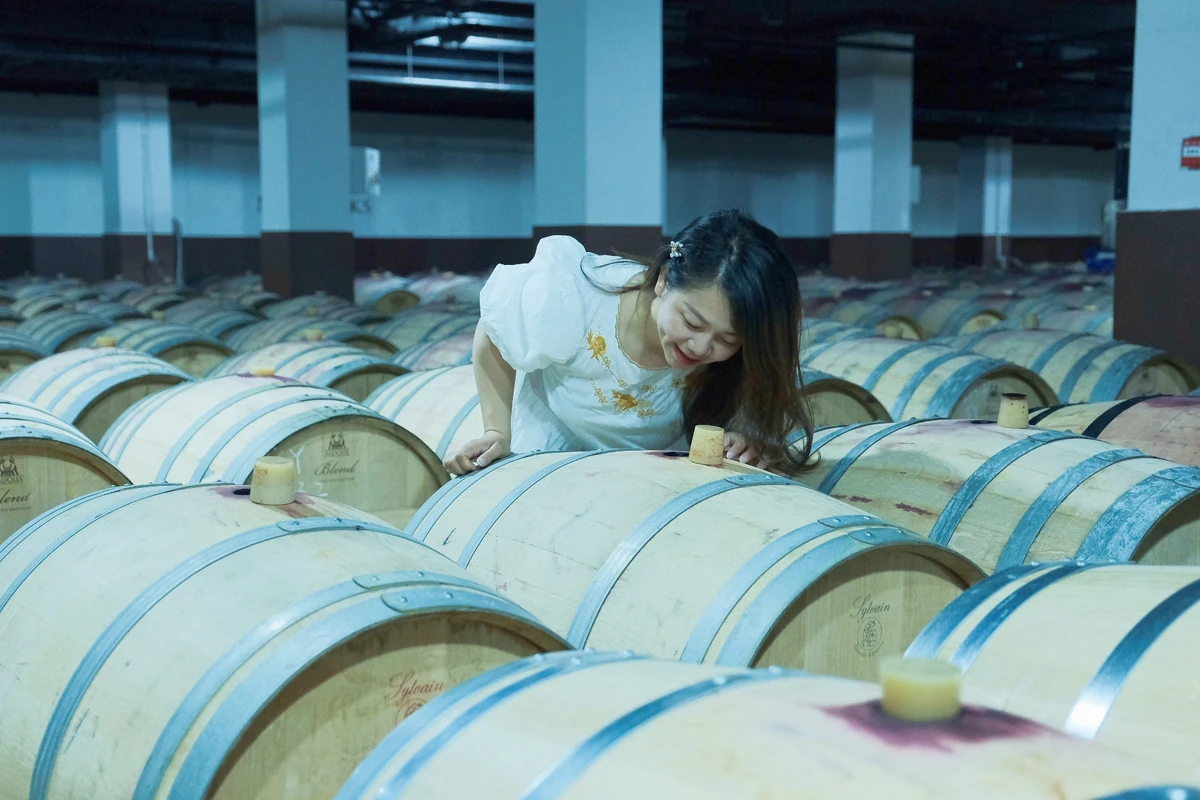
In the afternoon, we visited Jiuding Manor, a winery covering over two thousand mu. Here you can see vast stretches of grapevines—Cabernet Sauvignon, Chardonnay, Merlot, and more, all imported from France. The endless rows are quite a sight. From afar, the manor looks like a little European-style town, planted with vibrant roses in vivid colors—perfect for photos wherever you stop. Actually, touring the winery is fascinating. You can learn the entire winemaking process and even visit the wine cellar. Whether red or white, the only way to appreciate the wine’s richness is to taste it.
This two-day, one-night trip to Laixi took us mostly to spots far from the city, where we could savor the culinary delights and scenic beauty of a green, eco-friendly village; relish the sublime pleasure of ancient music; and immerse ourselves in wine culture. Such a Laixi journey is well worth your visit.