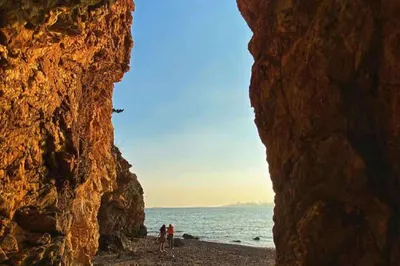
The Ever-Changing Light and Shadow Through the Seasons, the Beauty of the Six Senses Everlasting (A Stay at Qingdao Hanbi Tower Hotel)
I think, if in our busy lives we set aside a little time for ourselves, to listen to our inner voice, to seek our own peace, each of us will slowly find direction and answers in life.
You are a beautiful slant in the moonlight,
Reflecting the profile deep in my heart,
Along the dazzling line of sight where the sun rises,
I want to reach the islands where you come and go.
If the classic images of Qingdao—red tiles, green trees, blue sea, and clear sky—have long grown tiresome, why not retreat to the shore of Huangdao?
As an emerging coastal resort destination in northern China, a profound history and youthful vitality converge and surge along the winding coastline of Qingdao's West Coast. Push open the door, and boundless beauty leaps out. You can see the enchanting elegance of Langyatai, the breathtaking charm of Tangdao Bay, the contemporary waves of the Oriental Movie Metropolis, and the bustling warmth of the Coastal Avenue. Here, the fabric of everyday life and the bones of the city blend seamlessly. With a cup of tea and a plate of fresh seafood, you'll come to appreciate the grace of the West Coast.
Fortunate to spend two or three days at Qingdao Hanbi Tower Hotel, though I haven't seen it all, I've glimpsed a corner of it. The West Coast has its scenic beauty, its comfortable dwellings, and its accessible roads. Nestled among luxuriant trees and bamboo, in front of the hotel stand three welcoming pines, rooted in a mirror-like pond. Under the bright moon and clear breeze, the pines resonate with life.
Location & Transportation: The hotel is at 277 Jiulongshan Road, Huangdao District, Qingdao, 67 km by car from Qingdao Jiaodong International Airport and 12 km from Qingdao Railway Station. It hugs the island-ring road, leaning against hills and overlooking the sea, where clouds and waves dance together. Passing through the Jiaozhou Bay Tunnel, you can easily and quickly travel to and from Qingdao's main urban area.
Design Style: If you merely drive by, you might be stunned by the hotel's overall structure—it resembles a giant cluster of shipping containers moored on the sea, or a hotel seemingly grown out of nature itself. It's difficult to define it by the conventional appearance of an international chain five-star resort.
Qingdao Hanbi Tower Hotel was designed by renowned international architect Kerry Hill. Since the Sun Moon Lake Hanbi Tower, the brand has established a minimalist, Zen-inspired architectural style. Although Australian, Kerry Hill deeply understands the Eastern aesthetic principle of harmony between nature and humanity. During your stay, you'll notice the extensive use of four understated natural materials—raw wood, granite, glass, and metal—creating buildings that appear to 'grow' from the landscape. Combined with the interplay of light, shadow, and water features, the entire structure merges completely into nature. Despite the erosive forces of sea winds and waves, it hasn't aged over the years. This makes one truly appreciate the forward-thinking and timeless architectural philosophy of the Hanbi Tower brand.
To imbue the building with life, Kerry Hill chose expensive copper for its exterior walls; its tendency to oxidize and change color is meant to remind every returning guest, years later, of the passage of time.
Glass corridors connect the hotel's several buildings, and guests walking through them become part of the flowing scenery. Behind lies the sea, reefs, and the distant sky—a picture of serene harmony.
The hotel incorporates a deep-rooted cultural heritage adapted to local conditions. Thread-bound copies of the Analects, bronze sculptures, and antique ornaments are placed throughout, showcasing respect for local culture.
Ritual and music culture is the origin of Confucianism and a vital part of Chinese culture. Bianzhong bells and bianqing chimes are often performed together, known by the ancients as the 'sound of metal and stone.' The hotel arranges for staff dressed in Hanfu to perform with these instruments as a welcome ceremony.
Shandong is the hometown of Confucius. To honor his establishment of Confucianism, the hotel specially created a large '儒' (Ru, Confucian) character assembled from 1888 brush tips, grandly conveying a tribute to classical culture.
The hotel is characterized by Confucian culture, meticulously crafted with the refined taste of literati and elegant scholars. Stepping into the lobby, ancient instruments play ethereal melodies; strolling through corridors, you'll find exquisite lacquerware and calligraphy paintings to contemplate; in your guestroom, picking up a thread-bound Analects allows a dialogue with Confucius; sitting in the tea pavilion, with a mesmerizing sea view and professional tea ceremony, you can effortlessly while away a leisurely afternoon.
I believe that the elegance and purity of Confucian culture is a prescription for washing away worldly dust.
Guestroom Views: Every guestroom offers a 180-degree sea view, and each is spacious at 100 square meters. The minimalist design style is integrated into the expansive space, with all room functions laid out before your eyes, fostering a sense of spatial reliance and deepening trust in the hotel and brand. In such an unbounded environment, harmoniously blending with nature, I believe everyone can reconnect with their inner self. Details like the rustic earthenware used for tea and the scented candle lit at night subtly shift the pace of life, allowing complete relaxation of body and mind.
When staying at Qingdao Hanbi Tower Hotel, be sure to rise early and watch the sunrise over the sea. The pink-golden sun leaps from the ocean, its reflection rippling through layer upon layer of waves, transforming into a myriad of colors. The boundary between sea and sky blurs ambiguously, so beautiful you can't tear your eyes away. 'The morning glow is lovely, and the wind and moon are romantic'—probably describes a scene like this.
After writing numerous reviews of high-star hotel experiences, I genuinely do not want to comment on the specific bath amenities, sanitary ware, bedding, smart devices, or supporting facilities here. Although they are also from premium brands and the user experience is consistently good, I feel that unlike traditional luxury hotels that provide surface-level sensory stimulation, the Hanbi Tower brand offers something more on a spiritual level.
Here, the distance between people is liberating. The low density of people within a limited physical space is, I think, itself a form of luxury.
The generous space endows people with a greater sense of self and profound awareness. No matter where you are in the hotel, the person is the main subject of the physical space; all decoration, artifacts, service, scenery, and catering exist for the person, enabling everyone to seek the meaning of existence within their own small universe.
Hot Spring: The water quality and scenery of the hot springs at Qingdao Hanbi Tower Hotel can rival the Chaoji Hot Springs on Taiwan's Green Island or the Atami Hot Springs on Japan's Izu Peninsula. You can do yoga, soak in the baths, enjoy SPA massages, watch the sunrise and starry sky, and savor delicacies—all while immersing yourself in a deep-sea hot spring sourced from a depth of 1,500 meters. Feel your body stretch deeply, your pulse regulate, your mind settle completely, cleansing away the dust of the world. Obtain the mysterious power from deep within the earth and reawaken your body and mind.
SPA: I've long heard of the four classic LaLu SPA treatments—'Harmony,' 'Passion,' 'Purification,' and 'Balance'—capable of stripping away all noise and fatigue, deeply soothing both body and soul. If time allows next time, I too want to face the sea amidst the fragrances of neroli and rose, letting the professional therapist's hands glide over every inch of my skin.
City Travel: Although I just wanted to stay in, I'll still offer you a conventional three-day, two-night Qingdao city travel itinerary.
0700-0800: Hotel buffet breakfast
0810-0840: Hotel to Xiaoyushan Park (Address: No. 24, Fushan Branch Road, Badaguan Subdistrict, Shinan District, Qingdao; Lanchao Pavilion; Admission: free; Taxi: 35-40 yuan, 15 km)
0840-0910: Xiaoyushan Park
0910-0930: Xiaoyushan Park to Xinhaoshan Park (Address: No. 16-A, Longshan Road, Shinan District, Qingdao; Admission: free; Revolving Observatory: 10 yuan; Walking: 1.2 km)
0930-1030: Xinhaoshan Park
1030-1040: Xinhaoshan Park to Guanxiangshan Park (Address: No. 21, Guanxiang 2nd Road, Jiangsu Road Subdistrict, Shinan District, Qingdao; Water Datum Origin, Geomagnetic Chamber; Admission: free; Walking: 828 m)
1040-1100: Guanxiangshan Park
1100-1115: Guanxiangshan Park to St. Michael's Cathedral (China's only consecrated church; Address: No. 15, Zhejiang Road, Shinan District, Qingdao, at the intersection of Qufu Road; Opening hours: Mon-Sat 08:30-18:00, Sun 10:00-17:00; Admission: 10 yuan)
1115-1145: St. Michael's Cathedral
1145-1155: St. Michael's Cathedral to Zhanqiao Pier (Address: No. 14, Taiping Road, Shinan District, Qingdao; Huilan Pavilion; Walking: 728 m)
1155-1225: Zhanqiao Pier
1225-1255: Zhanqiao Pier to the hotel (Taxi: 25-30 yuan, 12 km)
1300-1400: Hotel lunch
Must-do Specials: Olympic Sailing Center, Zhanqiao Pier, May Fourth Square night view, boat trips
Classic Spots: Badaguan, Xiaoyushan Park, Xinhaoshan Park, Xiaoqingdao (Little Qingdao Island), the three major bathing beaches, Huangxian Road
Instagrammable Hotspots: Xiaomaidao Island, Daxue Road, Qinyu Road, Xu Guoming Coffee, Yan'er Mountain网红洞, Taidong Snack Street
History & Culture: Qingdao Beer Museum, Chinese Navy Museum, St. Michael's Cathedral, former German Prison Museum
Off-the-Beaten-Path: Guanxiangshan Park, Huangdao, Badaxia Square, Qingshan Fishing Village
Route 1: Zhanqiao Pier – Xiaoqingdao – Lu Xun Park – Daxue Road – Badaguan – Taipingjiao Park – Taidong Pedestrian Street
Route 2: St. Michael's Cathedral – Xiaomaidao Island – Olympic Sailing Center – Lovers' Dam – May Fourth Square
Route 3: Qinyu Road – No. 2 Bathing Beach – Yan'er Island Mountain Park
With the stones I secretly collected for you,
I'll build a house that is ours.
I'm willing to lose contact with the outside world from now on,
Along the coastline, the unforgettable sight,
Is your captivating eyes when you look back.
For me, besides the hot spring and SPA, a delicate breakfast can also reawaken body and soul.
The Encounter 11 Buffet Restaurant at Qingdao Hanbi Tower Hotel stands against the sea breeze. Its decor is classic and elegant, with window-side seats offering superb views right onto the boundless ocean. Mirror partitions throughout effectively create separate dining spaces while providing a strong sense of transparency that infinitely extends the space. When sunlight streams in, the dark gold tones give the whole environment a magical sense of luxury. The breakfast spread is rich; be sure to try local Qingdao specialties like fried dumplings (guotie), steamed buns, spare ribs rice, Liuting-style secret recipe pig trotters, hot and sour fish balls, and seaweed jelly (liangfen). Additionally, Chinese hot dishes, Western pastries, staple foods, fruits, desserts, and beverages are all available.
The Soalian Chinese Restaurant brilliantly combines the best of both sides of the strait. Using local specialty ingredients, it blends traditional Shandong cuisine with Taiwanese ancient cooking techniques, inheriting the essence of Hanbi Tower's Chiang Family private cuisine to present classic dishes praised by diners. The restaurant displays three clay jars air-freighted from Nantou, Taiwan—a must-know: jar-cooked chicken is a highly distinctive Taiwanese specialty. Opening hours: Lunch 11:30-14:30, Dinner 17:30-22:00.
Welcome Flower Flavor Combination Platter
Clam and Sesame Oil Chicken Nourishing Soup
Crafty Salt-Baked Prawn Balls
Steamed Selected Silver Cod with Pickled Plum Sauce
Soalian Crispy Small Pork Ribs
Black Truffle Scallop Homemade Tofu
Five-Grain and Kidney Bean Braised Fresh Abalone
Cantonese-style Red Wine Braised Beef Ribs
Taiwanese-style Braised Pork Rice
Chilled Pure Almond Milk Custard
The Clam and Sesame Oil Chicken Soup is rich and savory; the Steamed Silver Cod with Pickled Plum Sauce features tender, delicate fish; the Soalian Crispy Small Pork Ribs are fragrant and crunchy; the Five-Grain Kidney Bean Braised Abalone is meaty and juicy; the Cantonese Red Wine Braised Beef Ribs are springy and flavorful; the Braised Pork Rice and Almond Custard are appealing in color and taste. This table of fine dishes is truly a perfect fusion of culinary representatives from both sides of the strait.
The Lobby Bar boasts the longest bar in China, offering a variety of cocktails, a 180-degree sea view, live piano music, distinctive Shandong-style small stools (mazha), wave-shaped chairs inspired by the sea, and modern sofas. Opening hours: 14:00-17:00.
English Afternoon Tea Set Menu:
Mini Ham and Cheese Sandwich
Smoked Salmon with Cream Cheese on Baguette
Mini Potato Cake with Tomato Salsa
French Pastries: Raspberry Macaron, Mango Macaron, Lime Macaron, Chocolate Macaron, Blueberry Macaron, Green Apple Macaron
Apple Cheesecake, Chocolate Hazelnut Cake, Mango Vanilla Cake
Beverages (choose two): American Coffee, Latte, Cappuccino, Mocha
TWG Supreme Oolong Tea, Earl Grey, Classic Jasmine Tea, Vanilla Bourbon Black Tea, Classic Mint Green Tea
Honey Citron Tea (special beverage, no refill)
The dazzling variety and authentic richness of flavors hardly do justice to this afternoon tea set. The hidden way to enjoy it is to savor the food while also playing with the changing light and shadow indoors and outdoors from afternoon to dusk. The hotel's labyrinthine spatial transitions make it hard to quickly become familiar, thus eliminating boredom and monotony.
The hotel's architecture and cuisine are like Pandora's box—you can never predict what surprise it will bring.
Speaking of surprises, you must visit the Encounter 11 Buffet Restaurant to eat your way around the world in one stop. The restaurant features eleven distinctive food stations, offering international cuisines and local specialty snacks, with seasonal specials rolled out regularly, creating a surprising dining experience for every guest. Regular Chinese hot dishes, Western pastries, grilled and fried items, staple foods, fruits, desserts, and beverages need no mention. I especially recommend Taiwanese specialties: Braised Pork Rice, Pork Intestine Vermicelli, Big Sausage Wrapping Small Sausage, Crispy Fried Chicken, Beef Noodle Soup, Taro Ball Sago Dessert, etc., along with various seafood dishes. There are also hardcore items like foie gras and hairy crab. It's natural to be so full you can barely walk out. Opening hours: Breakfast 07:00-10:00, Lunch 11:30-14:30, Dinner 17:30-21:00.
At Waraku Japanese Restaurant, ingredients are shipped directly and quickly from the harbor or airport, ensuring freshness—the best respect for ingredients. The restaurant adopts the traditional 'omakase' (no-menu) style, aiming to convey the Japanese culinary culture's respect for nature to every diner. Opening hours: Lunch 11:00-14:00, Dinner 17:00-21:00.
The restaurant's private rooms are named with Zen and poetic flair—'Ichi-go,' 'Ichi-e,' 'Plum,' 'Orchid,' 'Bamboo,' 'Cherry'—silently reminding every guest to also pay attention to their inner feelings while dining. Gentle breeze, Zen space, authentic Japanese ambiance, carrying a century of masterful cuisine.
True Japanese teppanyaki needs to be performed in a private space. This satisfies guests' need for privacy while focusing the attention of both the guest and the chef entirely within that same space. Waraku has two teppanyaki rooms where the chef provides a ritualistic dining experience.
For fresh eel, Waraku uses the method of killing and grilling on the spot. Only the choicest middle part of the whole eel is selected for grilling, paired with the chef's homemade sauce for an exquisite taste.
Chilled Seaweed Salad x2
Sashimi Platter / portion
Vegetable Salad x2
Salt-Grilled Mackerel / portion
Seafood Chawanmushi x2
Teppanyaki Garlic Scallops x2
Teriyaki Chicken Steak / portion
Shrimp Tempura / portion
Tofu Skin Soba Noodles x2
Japanese Dessert Matcha Jelly x2
The fragrant tenderness of the mackerel, the silky smoothness of the chawanmushi, the fresh aroma of the soba noodles, the purity of the matcha jelly—everything is the familiar Japanese flavor I know so well. Especially in these times when overseas travel is impossible, such food lingers in the memory for a long time.
I am willing to continue falling like this,
Look, the sand you tread on,
Is densely filled with the shadows of my desires,
Can you stay with me on this deserted island?
Hotel Spirit: In this era where outbreaks can happen anytime and anywhere, no one is sure when the next meeting will be. The impulsive trips of the past, where you just bought a ticket and left, have turned into journeys that require months of deliberation and meticulous planning, plus a heap of hassles like multiple quarantines and nucleic acid tests... All one can say is, cherish it if you have the fate to meet. After changing my plans several times, I finally got my wish to stay at a Hanbi Tower hotel for the second time.
Hanbi Tower does not build hotels in bustling city centers. Instead, it favors undiscovered, spectacular landscapes. Like an adventurous collector, it seeks out secluded beauty hidden among mountains, ancient cities, and islands, polishing these 'uncut jade' into paradises using international advanced leisure and holiday concepts.
I have never liked superficial, whirlwind tours, so I deeply appreciate the 'Supreme Six Senses' experience that Hanbi Tower offers its guests: what the eyes see, the nose smells, the mouth tastes, the body touches, the ears hear, and the heart feels—all are the ultimate in beauty.
I also do not wish to be disturbed by seemingly friendly greetings and caring service when my body and mind are deeply relaxed. Hanbi Tower's original 'Timely Service' concept ensures that staff are not excessively attentive to the point of interrupting guests' rest, yet they will definitely appear when you need them. Nor will staff be deliberately stiff or distant; instead, they make you feel at ease as if among family.
After checking into Qingdao Hanbi Tower Hotel, I honestly didn't want to go anywhere else. I just wanted to brew a pot of Taiwanese high-mountain black tea or oolong tea in the semi-open-air poolside tea house, accompanied by traditional Beijing-style pastries. Studying the self-cultivation principles in the Analects, and when my eyes get tired, gazing out into the boundless sea—perhaps the main urban area of Qingdao across the water is just beginning to light up. Such things are light and joyful, free of pressure or compulsion, allowing us to step away from the complexity of daily life and savor the ease and grace that a slower pace brings.
Culture is luxuriously fascinating. The indigenous culture of each place has often been accumulated over hundreds or thousands of years. Sun Moon Lake, Qingdao, Nanjing—every Hanbi Tower's design strives to embody the local culture as much as possible. Culture makes Hanbi Tower unique.
In my superficial understanding, the hotel spirit of Hanbi Tower can probably be summed up as respect for people and reverence for culture. The mutual reinforcement of culture and people propels the development of human civilization.
To sum it up in one phrase from the Confucian classic 'Book of Changes': 'Observe the patterns of heaven to understand the changes of the seasons; observe the patterns of humanity to cultivate and transform the world.'
Your tenderness gives me endless attachment,
Even if time alters our looks.
I have thousands upon thousands of wishes,
To cross the sea of people and see your face.
The chaos of time no longer stirs waves in me,
Your existence is what makes everything beautiful.
All original text and photos are copyrighted by @天蓝年代, please contact for reprinting.
I am a specially invited photographer for AirAsia, Tourism Malaysia, Tourism Authority of Thailand, and the Canadian Embassy in China; a financial writer, multimedia professional, contracted travel writer, contracted photographer, and recipient of the Yunnan News Award (Online Commentary Award, Innovative Journalism Award).