A Cool Summer Breeze in Qingdao: Travel with a Childlike Heart and Enjoy a Romantic, Artistic Summer
Summer is a color.
What color is summer in Qingdao?
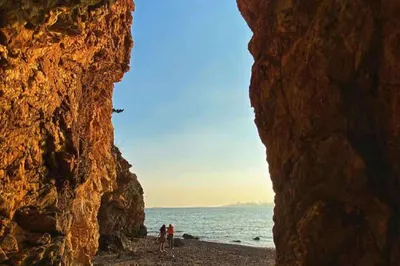
Summer in Qingdao is blue—the azure sea and blue sky at Shilaoren Beach, a paradise for children.
Summer in Qingdao is red, May Fourth Square, where the May Wind brings news of the sea breeze.
Summer in Qingdao is green, climbing Xiaoyu Hill to gaze afar, green trees and red-tiled roofs, fresh and natural.
Summer in Qingdao is colorful: at Qingdao Underwater World, multicolored fish swim freely; children happily play with marine life; in Guangxingli and Yinyu Lane, Qingdao girls who love coffee wear vibrant clothes and relax at ease; even the dumplings in Qingdao are colorful, with different colors representing different fillings.
When summer arrives, hearts flutter. Travel with a childlike heart and discover the colors of summer in Qingdao.
About the itinerary:
Day 1: In the morning, visit Shilaoren Beach, China's Altitude Zero Point, and Qingdao Iceberg Point. After lunch, go to May Fourth Square and the Olympic Sailing Center. Enjoy a night cruise on Fushan Bay. Dine at Facing the Sea Dumpling Research Institute in the evening, and stay at Kunlun Heyue Hotel.
Day 2: In the morning, visit the Qingdao Beer Museum. In the afternoon, Xiaoyu Hill Park, the internet-famous wall on University Road, and Taipingjiao Park. Dinner: Chuozi Meat.
Day 3: In the morning, Hisense Exploration Center. Lunch at Qianhaiyan. In the afternoon, Qingdao Underwater World and the Huashi Building in Badaguan.
Day 4: Qingdao Zhanqiao Pier, Yinyu Lane. Lunch at Chunhelou. In the afternoon, 1907 Light and Shadow Club, then return journey.
Travel preparations:
1. Summer in Qingdao isn't too hot, especially when you're near the sea. During my days here, it rained occasionally and was still quite cool.
2. Qingdao has many offbeat photo spots. My itinerary was packed—I visited 16 attractions, all concentrated in the city center. With good planning, you can easily cover them and snap great photos.
4. There are many artsy, hipster spots in Qingdao. Remember to dress appropriately so you can strike a pose more easily. Comfortable shoes are essential on any trip. By the sea, bring a dress. For exotic-style photo spots, prepare nice outfits in advance.
5. Must-bring photography gear: a camera, phone, and tripod will all add charm to your travel journal. I brought a DJI drone, a Sony A7R2, and an iPhone 13. Also, power banks are essential.
Summer—set off with a childlike heart, for Qingdao always has so many surprises waiting for us.
Summer is the perfect time for a relaxing vacation in Qingdao, with its red-tiled roofs, green trees, azure sea, and blue sky—it's the youthful island in my heart. Beaches, lighthouses, sailboats, skyscrapers, and old buildings blend classical and modern, fashion and trends. Qingdao has its own urban aesthetic code.
How to spend 24 hours in Qingdao? Follow my lens to discover the city's profound culture, its artsy romance, seaside charm, and hidden delights.
Travel enthusiasts are often sensitive to altitude, especially when going to high places like Tibet or Qinghai. But have you ever wondered: what is the reference point for altitude across all of China?
China's Altitude Zero Point is a very special scenic spot. Altitudes throughout China are measured from this reference point, and there are iconic structures for photo-ops.
On my third trip to Qingdao, I finally visited this place. China's Altitude Zero Point is located at No. 30 Donghai Middle Road, Shinan District, Qingdao. It is the only altitude zero point in China. The entrance fee is 60 yuan, and a full visit takes over an hour with many landmarks for photos.
The next stop was May Fourth Square, home to a classic landmark with a romantic name: the May Wind. It is China's largest steel urban sculpture, and its red structure stands out strikingly by the sea.
The May Wind sculpture stands amid lush greenery. It is 30 meters tall and 27 meters in diameter, symbolizing the surging strength of the nation. You will often see this sculpture on Qingdao's creative souvenirs.
May Fourth Square is a favorite spot for locals, especially young couples. Facing the sea, feeling the sea breeze, and watching boats come and go—it's so pleasant and leisurely.
Shilaoren Beach is one of the locals' favorite spots. Qingdao residents have a strong sense of ritual; on New Year's Day, they come here to watch the sunrise and greet the first rays of the year. I arrived in the early morning and already saw many people collecting seafood by the shore. Children happily ran on the sand and dug, having a wonderful time.
Smart homes have become a staple of modern life. Step into Qingdao Iceberg Point for a cool journey. Iceberg Point is at No. 52 Donghai East Road, Laoshan District. The Haier World Home Appliance Museum here uses the latest sound, light, and electric technologies to immerse you in a high-tech world. Through scenes from the 1960s to 1990s, you can truly feel the evolution of technology.
The Olympic Sailing Center is a 15-minute walk from May Fourth Square. Its vast scenery is perfect for aerial photography, and it's the best spot to enjoy Qingdao's night views.
As night falls, the lights of Fushan Bay gradually twinkle on, igniting Qingdao's nightscape. Taking a yacht cruise on Fushan Bay, enveloped in shimmering waves, is the most romantic thing to do this summer.
Boarding a yacht from the Olympic Sailing Center, the Fushan Bay light show stretches from Taiping Cape in the west to Zhuhai Branch Road in the east. Along the coast, the facades of more than 100 high-rises glow in ever-changing patterns and texts. I was very lucky to also catch a drone performance.
Food is indispensable on a Qingdao trip. After getting off the yacht, it was just the right time for dinner. If you come to Qingdao, I highly recommend dining at Facing the Sea Dumpling Research Institute on Lovers' Dam. When night falls, Lovers' Dam at the Olympic Sailing Center bustles with energy—it's the best place to enjoy the night view of Fushan Bay. Sitting outdoors, sipping Qingdao craft beer and savoring seafood dumplings while the sea breeze blows—just imagining it feels so relaxing.
The dumplings at Facing the Sea Dumpling Research Institute come in many varieties and colors: Spanish mackerel dumplings, cuttlefish dumplings, fresh shrimp dumplings, and yellow croaker dumplings. The Spanish mackerel dumplings use wild mackerel from Qingdao waters, usually over 1 kg, delivering an explosion of freshness on the palate and a lingering aftertaste. I thoroughly enjoyed them.
Staying at the Kunlun Heyue Hotel in Qingdao means immersing yourself in a warm and serene atmosphere. The hotel is located in the Olympic Sailing Center, close to May Fourth Square with easy access. The design is simple yet grand. In my room, opening the curtains revealed Qingdao's cityscape.
Travel is a life attitude born from our love and hope for life. During my journeys, I also enjoy the slow moments spent lounging in the hotel.
Qingdao is a city that asks us to slow down. Between the mountains and the sea, the colors are bold and vivid. This summer, let's step into Qingdao and slowly appreciate the beauty of this youthful city.
Qingdao is always at its most beautiful in summer.
Coming back to Qingdao, I am still moved by this artsy city. Its vitality hides in every street and alley, in every coffee shop and guesthouse, and in the poetic scenery of Xiaoyu Hill Park.
When talking about Qingdao's beauty, we often hear: red-tiled roofs, green trees, azure sea, and blue sky. Visiting Xiaoyu Hill gave me a real sense of that. Xiaoyu Hill is at No. 24 Fushan Branch Road, Shinan District. Facing the sea, you can gaze far into the distance and take in Qingdao's boundless seascape.
This is my third time in Qingdao, and each visit brings different feelings. Qingdao's beauty is multifaceted—it has the modern, fashionable side of a metropolis, and the refreshing, natural style beloved by artsy youths. With a rich historical and cultural heritage, it's a perfect seaside city for a relaxing vacation. Xiaoyu Hill embodies Qingdao's classical and refreshing charm.
Though called a hill, Xiaoyu Hill is very easy to walk. About three minutes into the park, you reach its classic viewing platform. Here stands a landmark building, Lanchao Pavilion. Climb up to overlook Qingdao's cityscape. The three-story octagonal pavilion is 18 meters tall, brightly colored, with a classical look—a scenic sight in itself.
From Lanchao Pavilion, you can oversee Qingdao's city views. Row upon row of buildings under the bright blue sky resemble scenes from a Hayao Miyazaki animation—beautiful and poetic.
Xiaoyu Hill offers a tranquil environment and is a free park. Many locals like to stroll here in their free time. It's Qingdao's first classical-style hilltop garden park. Climbing Lanchao Pavilion lets you enjoy the city's sea views. Gather a few friends, climb up for a gaze, and your spirits will soar.
If you travel to Qingdao, you'll find there are far too many attractions worth visiting. Besides beautiful seaside scenery, there are many historical and cultural sites. From the heights of Xiaoyu Hill, looking west to east, you can see a string of coastal sights: Zhanqiao Pier, Little Qingdao Island, Lu Xun Park, the Aquarium, Huiquan Bay, No.1 Bathing Beach, Badaguan Scenic Area, and more. These attractions are relatively concentrated, making a two-day stroll in summer a wonderful experience.
Xiaoyu Hill's location is excellent. Because it's close to Huiquan Bay, many celebrities once lived at its foot, adding to its stories. The former residences of Kang Youwei at No. 5 Fushan Branch Road, Shen Congwen at No. 3 Fushan Road, Hong Shen at No. 1 Fushan Road, Lü Meisheng's 'Hanbi Villa' at No. 7 Yushan Road, Liang Shiqiu at No. 33 Yushan Road, and Wen Yiduo on the Ocean University campus—Qingdao is a treasure city, and each visit reveals surprises.
What attracts us to a city is not only its natural scenery but also its deep historical and cultural heritage. For me, every visit to Qingdao makes me like this seaside city even more.
Every city has its label. In my eyes, artistry, youth, vitality, and romance all belong to Qingdao. A 400-meter walk from Xiaoyu Hill Park leads to the famous internet-famous wall on University Road, perfect for fresh, clean photos. In Qingdao, your steps never cease.
Summer travel—come to Qingdao. The fresh sea breeze brings tidings from the ocean. Our family trip has reached Qingdao, and this stop takes us to the Hisense Exploration Center. Through fun and interactive games, we embark on this summer's adventure.
Summer should be out of the ordinary. The Hisense Exploration Center is a comprehensive science and nature exploration center themed around science and nature, full of secrets of the natural world, especially suitable for bringing kids to experience together.
The Hisense Exploration Center is now a popular photo spot in Qingdao. Our first stop is the Hisense History and Culture Museum to learn about the past and present of world home appliances and Hisense's development.
At the Hisense History and Culture Museum, we can see many vintage appliances, from the first refrigerator and first television in history to the birth of mobile phones. Through physical objects and displays, you get a intuitive understanding. Here, listen carefully to the guide's explanation with your kids, and you'll gain a lot.
Success stems from curiosity. The Hisense Exploration Center opens up a new world of technology. Visiting with curiosity, you'll gain a fuller understanding of global and Chinese scientific advancements. Here, an entire wall displays mobile phones from different eras. For many post-00s and 10s kids, these old phones are something they've never seen, offering a direct glimpse into modern technology's evolution.
The whole center is divided into five halls and one lounge: Science Enlightenment Hall, Science Discovery Hall, Nature Exploration Hall, World Consumer Electronics Museum, Hisense History and Culture Museum, and 25Plus City Lounge. Each floor you ascend, the technological content increases, so different floors suit children of different ages. I find this layout very reasonable.
The first and second floors are more suitable for younger children, with many tech-interactive exhibits: smart transportation zone, water science station, mysteries of the human body, laws of motion, magical light and shadow, intimate magnetic fields, and amazing science. Little ones have a blast here, mostly aged 5-6, chatting among themselves—quite amusing.
Nature holds many secrets waiting for us to explore. On the fourth floor, there are simulated landscapes of deserts, plains, grasslands, rainforests, polar regions, and oceans, plus an indoor zoo. Both adults and children are fascinated. Exploring nature's wonders is the childlike heart we all keep. For us, a destination like the Hisense Exploration Center is perfect for family trips—learning through fun, so enjoyable.
Learning knowledge beyond textbooks through immersive games—that's the right way to do a family trip.
Qingdao is a treasure of a tourist city with many small but exquisite attractions that draw artsy youths for photos. An European-style castle adorned with colored glass, caressed by a gentle sea breeze—leaning on the railing and gazing out, a lush green view unfolds. This is Qingdao's Huashi Building, a castle with a story.
Badaguan in Qingdao is a famous scenic area that embodies old Qingdao's charm. Located in the eastern part of Huiquan, south of Taiping Mountain in Shinan District, it was built in the 1930s. The Huashi Building we're talking about is in Badaguan.
Huashi Building is a small structure built of granite, blending multiple Western architectural styles. Outside its white European-style windows, lush greenery brims with vitality. The building combines Romanesque and Gothic styles, and its construction is tied to Qingdao's historical context in the 1920s and 30s.
Many Qingdao locals are not very familiar with Huashi Building; when chatting, many didn't know about it. The setting is serene, perfect for couples to take photos. Dressing in Republican-era costumes here feels like traveling back to that distant time.
The Huashi Building was built in 1932 by a White Russian named Gerasimov on a coastal cape. At that time, many Russians came to Qingdao and built villas here. The building is now 90 years old.
Even today, the interior decoration of Huashi Building remains stylish, with fresh color schemes exuding a romantic ambiance. Historical records show that many celebrities have stayed here. Living in such a quiet environment is a great pleasure, and those stories lend the building a low-key luxury.
The staircase of Huashi Building is perfect for photos. From the outside, it has five floors in total. The top floor serves as an observation deck, with an iron spire on the side. Because the interior walls are lined with marble and the exterior is built with pebbles, people have long called it 'Huashi Building' (meaning 'Flower Stone Building'). Adult admission is 8.5 yuan, but when I visited, I encountered very few tourists.
Badaguan is a place I love to stroll through every time I'm in Qingdao. Old buildings and ancient trees complement each other in a tranquil, elegant setting. The stories of old Qingdao are endless.
Summer travel—slow down in Qingdao. The light and shadow in ordinary days, and the people living earnestly, are worth pausing for. Qingdao's artistic flair is hidden in the unassuming shops of the old town—the city's most down-to-earth, lively places.
In Qingdao, there is a type of old architecture that exudes history and still feels very familiar. Qingdao's liyuan courtyard buildings are like Beijing's hutongs or Shanghai's longtangs—full of local character and nostalgia. On this trip, a local friend recommended I visit Guangxingli at No. 63 Haipo Road, Shibei District.
Step into Guangxingli and into a century of Qingdao's history. Tall plane trees, European-style street buildings, rows of coffee shops, vintage stores, and galleries create an artistic, vintage, fresh, and elegant scene. There are also many internet-famous photo spots perfect for retro, artistic shots.
Guangxingli is easily accessible; take Metro Line 1 to Zhongshan Road Station, Exit D. If you like the flavor of old Qingdao, this is the place. It's the largest single liyuan building in Qingdao, covering about 3,500 square meters. Over a hundred years ago, Guangxingli bustled with shops and mixed residential-commercial life—a lively scene.
The Guangxingli we see today is artistic and fresh. With 120-year-old liyuan buildings that retain Qingdao's most original courtyard style, they've been renovated. The shops along the street are hip and artistic, drawing many artsy youths to visit.
Casually walking into a small shop in Guangxingli, it feels like time rewinds to the 1980s. The trinkets on sale instantly evoke childhood nostalgia, and the snacks are full of retro charm.
For many Qingdao locals, liyuan buildings are memories of their youth. They represent a fusion of Eastern and Western cultures, and a reflection of urban culture and history. As time passes, these buildings are fading from the scene, but Guangxingli has revived memories, bringing liyuan architecture back to life.
Guangxingli has many small shops with stylish owners who present their ideas in artistic ways. The oversized dolls on windowsills and the teddy bears hanging on plane trees all feel very artistic.
Today, Guangxingli has become a favorite internet-famous spot for artsy youths during leisure time. Gather a few friends, enjoy the fresh summer breeze, sip coffee, and nibble on desserts—that's a lovely summer moment.
Most liyuan buildings were constructed in the 1920s-30s, built along the terrain with varying heights and sizes. Many courtyard scenes are photogenic: a green mailbox, an old-fashioned bicycle—stand anywhere and you look artistic and vintage. Some visitors even dress up in qipao to take pictures here.
Sitting in a vintage, artistic café with a cup of coffee and a dessert is a beautiful slow moment in Qingdao. Nowadays, Guangxingli has become the artsy crowd's favorite internet-famous neighborhood.
For a summer family trip, you always want somewhere out of the ordinary where kids can enjoy a unique vacation. At Qingdao Underwater World, in a dreamlike ocean from a distant kingdom, beautiful and free marine life thrives: clever and playful jellyfish, empathetic little dolphins, miniature clownfish, giant sea turtles, and cownose rays (also called bat rays) with the intelligence of a half-year-old child. There's also a mysterious underwater garden waiting for us to discover.
For family travel, coming face-to-face with marine life in summer is a magical experience. Step into Qingdao Underwater World, into a fascinating ocean kingdom. Conveniently located on the shores of Huiquan Bay, this venue had a total investment of 220 million yuan. It comprises three main sections: the intertidal zone, the underwater tunnel, and a four-level underground viewing complex, each offering a wondrous experience.
Our first stop is the Jellyfish Pavilion. Walking through, you feel like you've entered a fairy tale world, experiencing the magic of the jellyfish kingdom under shifting lights. Both adults and children adore this place. All kinds of jellyfish drift gracefully in the light—so dreamy. Jellyfish are primitive marine invertebrates that appeared earlier than dinosaurs, dating back 650 million years. Here we can admire various species ranging from 10 cm to 1 meter in diameter. It's truly a dreamlike world.
The Qingdao Aquarium is China's first aquarium, founded by Mr. Cai Yuanpei, whose statue still stands at the entrance. It officially opened in 1932 and now includes the Dreamy Jellyfish Palace, Marine Biology Museum, Marine Mammal Hall, Freshwater Biology Museum, and Qingdao Underwater World—offering a rich array of attractions.
Our second stop is the Marine Biology Museum. Exploring with kids is a fun and educational experience. Here, various aquatic animal specimens come with explanatory texts, unveiling the secrets of the underwater world.
The museum's collection, accumulated over 60 years, includes over 1,950 species and more than 20,000 specimens, many of which are endangered. You can observe them closely and let children see marine life rarely encountered in daily life.
The mysterious underwater world fills us with curiosity. In the underwater tunnel—86.2 meters long and 2.5 meters wide—you can get up close to various deep-sea creatures. A moving walkway carries you through. One moment, schools of tropical fish swim freely; the next, a giant whale glides by. Walking here feels like strolling along the seabed, face to face with all kinds of fish. The mysterious underwater world slowly unfolds before you. This part of the journey was my favorite.
The variety of deep-sea fish here is immense—many we'd never normally see. Watching them swim freely is a visual delight. At moments like this, you truly wish to transform into a carefree fish yourself.
This summer, family travel should be out of the ordinary. Come to Qingdao Underwater World to unlock the secrets of the ocean. And from now until the end of the year, admission is free!
Qingdao, the youthful island.
Qingdao is a city with deep historical and cultural roots, which have shaped its current artistic vibe. On this five-day, four-night trip, guided by a Qingdao local, I sought out hidden gems of this youthful, artsy city—and Yinyu Lane is one of them.
Qingdao's artistic flair often hides in unassuming alleys. When you delve into their history, you'll find that these low-key lanes often have a century-old past. Yinyu Lane is located in Shinan District, right next to Qingdao Railway Station, and has a history of over a hundred years.
Coffee culture runs deep in the bones of Qingdao people. In the century-old lanes of Yinyu Lane, artsy, vintage cafés are especially popular. Simple chairs and a cup of coffee turn a Qingdao morning into a tender, warm experience.
In my travels over the years, I've always been keen to find a city's most authentic, down-to-earth spots. They might not be crowded but are quaint and elegant, beloved by locals. Yinyu Lane has a long history. The neighborhood mostly consists of traditional liyuan buildings, with shops in the front courtyard and residences in the back. In the past, it was filled with warehouses and inns—bustling and prosperous.
Stepping into Yinyu Lane, I was immediately drawn to its small shops. I love quiet, artistic boutiques where tiny trinkets are arranged just so, filling you with delight. In one shop, I found earrings and a ring I liked, all at reasonable prices.
When I first arrived at Yinyu Lane, I was very curious: did this century-old building always have such an artistic name? Reading up, I learned that 'Yinyu' (silver fish) originated from the initial German name of Ningyang Road, Silberfisch Straße, which was phonetically transcribed as Sipulinqiye Street. The word 'Silberfisch' translates to 'silver fish.' Qingdao's place names have deep historical roots.
Yinyu Lane isn't long, with two cafés. Time inside is simple and quiet—you can think about nothing and peacefully enjoy life's essence. What we call slow living is a mindset, not a status. The owner of one café is from Beijing; drawn to Yinyu Lane's old architecture, she chose to open her shop here. The warm-toned design perfectly blends modernity and tradition, and the café is great for photos.
Qingdao's liyuan buildings, like Shanghai's longtangs and Beijing's siheyuans, are shared memories of old Qingdao residents. Restoring these old buildings to their former glory and giving them new life is truly wonderful. This artsy Qingdao draws even more creative youths, and Yinyu Lane has been revitalized as a new internet-famous spot.
I love Qingdao's old architecture, the tranquil moments in its cafés, and its artistic, youthful atmosphere. Trip after trip to Qingdao, each time brings little surprises.
As a seaside tourist city that has developed over a long time, Qingdao's culinary delights are one reason we visit. Besides fresh seafood, there's a particularly down-to-earth dish worth trying: Chuozi Meat, a local favorite.
The first time I heard about Chuozi Meat, I was very curious. What is this traditional flavor like in a seaside city? So I went to Old Qingdao Chuozi Meat Restaurant with curiosity.
Chuozi Meat is a very down-to-earth dish. I heard from a Qingdao friend that it originated from under the bridge at the century-old Licun Market. After the market was relocated and renovated, Chuozi Meat gradually spread to various restaurants. The Old Qingdao Chuozi Meat restaurant I visited has several branches in the city.
My first taste of Chuozi Meat was indeed intriguing. The 'chuozi' is actually the container used to hold the food. In Qingdao, everything can be 'chuo'd'—seafood, meat, vegetables, you name it. We ordered quite a feast.
The preparation is unique—a mix of barbecue, teppanyaki, and frying. It uses high-temperature charcoal in a pan shaped like a 'chuozi.' The food is heavily seasoned, resulting in rich, intense flavors.
We ordered the classic Chuozi Meat, plus shiitake mushrooms, chicken wings, cauliflower, fries, and peppers, with sesame flatbread as the staple. I highly recommend the flatbread—it's super delicious. According to local friends, pork belly and potato strips are must-order classics. I think it's especially enjoyable when eaten at a seaside outdoor spot: a few friends gather around, order several dishes, sip Qingdao beer, and feel the sea breeze—what fun! For many old Qingdao residents, Chuozi Meat is the most down-to-earth taste of everyday life.
A region's environment shapes its people. Because of geographical and climatic differences, each place develops a unique culinary culture over time. As a local dish, Chuozi Meat has endured for years and remains a beloved delicacy for many Qingdao locals.
Qingdao is a coastal city with a long history. When traveling here, locals will definitely recommend trying Lu cuisine at Chunhelou, a century-old restaurant that carries fond memories for the older generation.
Chunhelou looks ancient and elegant. With a history dating back to the late Qing Dynasty, it's a short walk from Guangxingli after strolling around. The culinary charm of this century-old establishment is incredibly appealing. Among old Qingdao residents, there used to be a saying: 'Wear Qianxiangyi, hat from Shengxifu, dine at Chunhelou, watch plays at Zhonghe, see a doctor at Hongrentang'—showing its high standing. In the past, dining at Chunhelou was a matter of great prestige.
As they say, living by the sea means eating from the sea. In Qingdao, shrimp with cabbage is a homestyle dish—fresh and delicious, and I personally love it.
Throughout its history, many celebrities have made special visits just to taste Chunhelou's authentic Lu cuisine. Crispy fragrant chicken is a signature dish everyone orders. Golden in color, a bite reveals tender, fall-off-the-bone meat. It's said to be steamed in a rich broth then fried, a craft that has endured a hundred years and still suits modern palates.
As a northerner, my favorite staple in Qingdao is seafood dumplings: Spanish mackerel, cuttlefish, shrimp, yellow croaker—each variety earns my full praise. I never tire of Qingdao dumplings and order them at every meal.
At Chunhelou, two more dishes I strongly recommend: sautéed pork kidney and braised intestine in brown sauce. Both are representative Lu dishes, and Chunhelou's versions are superb. I especially loved the kidney. Chunhelou carries memories of an era. Its signboard still prominently features 'Chunhelou' and '1891' inscribed by Kang Youwei, a leader of China's reform movement. Time passes, and Qingdao becomes ever more artsy and romantic. If you visit, would you enjoy dining at an old name like Chunhelou?
Qingdao on the palate is colorful—with its artsy side and its traditional, elegant side. After a hundred years, Chunhelou remains the Lu cuisine representative Qingdao people speak of with greatest relish. The taste of Qingdao's story awaits every curious soul to explore.
Qingdao's beauty is multifaceted. Step into Qingdao with a joyful heart, and make this summer truly special. When summer comes, hearts will flutter.