East of the Taihang Mountains, Listening to the Blue Sea Tides: A 5-Day Trip Along the Jiaodong Coast
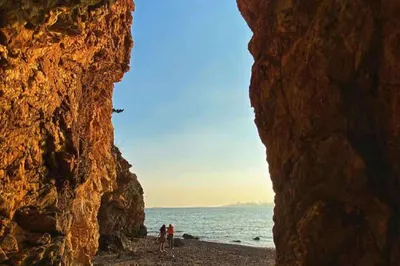
It’s not my first time on the Shandong Peninsula. The same sea, yet over 4,000 days have slipped by. Revisiting these cities after ten years feels more like searching for lost memories. It’s bright, transparent, and healing. Cruising carefree along Binhai Middle Road in a rented car, happily taking a wrong turn and almost driving to the city’s edge... On the beach, waves roll in, one after another, each overtaken by the next. A toddler plays with the sand, living the childhood every kid once dreamed of. I’ve always felt a bit of a stranger to the northern sea, so I never expected it to be this beautiful—especially on an autumn day with fewer visitors, against a blue sky, it exudes a unique sophistication. The waves are so gentle, the sand sculptures always avant-garde, the sea breeze carries a salty tang, and colorful houses pop up everywhere in the city... All those fantasies about the sea seem to come true right here!
📒PS: When it comes to the hottest coastal cities this year, Qingdao, Yantai, and Weihai are undoubtedly the top three and social media sensations. All three lie in the Jiaozhou Bay economic circle on the Shandong Peninsula, just a one-hour high-speed train ride apart, making it possible to hit all three in five days. Now, let’s dive into the practical tips so you can grab this guide and go.
When writing the Qingdao guide, I hesitated—this city is meant for leisurely strolls. Yellow and white houses with red-tiled roofs have a charm all their own. The Qingdao cypresses sway with vitality up close, while the distant sea sparkles; every detail is a scene. When tired, just settle into a seaside café, slip into lazy mode, and gaze out at the blue waves and sky. Body recharges, mind empties, thoughts wander... But I decided to write this guide anyway, because not everyone has that kind of leisure.
Qingdao is a city doted on by nature, where mountains meet the sea and every step reveals a view. Diverse and rich, it rarely disappoints visitors. To make your visit easier, I’ve rounded up five unmissable photo spots and angles.
1⃣️ First Stop: Zhanqiao Pier – A Qingdao landmark with a sweeping bay. Feed seagulls on the embankment, take photos, stroll, watch the sunrise—the morning sea is most enchanting. 📷 Recommended shot: Aerial or overhead drone shot.
As a century-old icon, Zhanqiao Pier has always been a photogenic hotspot. Located on the coast of Shinan District, you can hardly miss this classical sea pavilion when passing along Taiping Road, so it became our first stop.
⭐️2⃣️ Second Stop: St. Michael’s Cathedral – A 200-meter walk north from Zhanqiao Pier brings you to the old town of Shinan District, with the beautiful St. Michael’s Cathedral right at its heart. 📷 Top photo spots: one is the long slope in front of the church, the other is the three-story building behind the 1907 Light & Shadow Club.
Old town autumns are always anticipated. The azure sky dotted with wisps of cloud, towering trees still green, complement these century-old buildings perfectly.
On a crisp autumn day, strolling Qingdao’s streets gives you a Prague-like déjà vu. There are plenty of online “pretend you’re abroad” photo spots, but Qingdao’s beauty doesn’t need to be sought out. Climb Xiaoyushan Hill, lift your camera, and every frame is lovely.
Walking along Longshan Road past the Christ Church, near the Light & Shadow 1902 Museum, a slightly run-down old house with a few barbecue tables in the courtyard offers what seems like a unique perspective from its vantage point.
St. Michael’s Cathedral, what old Qingdao folks call the Catholic Church, sits on a hillside leading down Zhejiang Road straight to the sea. This soaring Gothic structure watches over the sea with quiet composure.
About the cathedral, I recall Shen Congwen writing: “A man walks to the church door on that Qingdao height, sits on the stone steps, watches clouds, watches the sea, watches the vines on the stone wall. From somewhere nearby, he hears the sound of a piano…” It is indeed extraordinarily poetic.
These buildings, over a century old, still stand in Qingdao’s old quarter, radiating a timeless glow.
I just love wandering aimlessly through the old town, those old buildings, the European-style streets paved with large stones—every alley hides an unexpected surprise.
·····································································································································
⭐️3⃣️ Third Stop: Xiaomai Island – A 22-yuan taxi ride from the cathedral. Spend the afternoon here, lazily strolling on the lawns, seeing Qingdao from another angle, or sitting on seaside rocks listening to the tide. 📷 Recommended shots: the boardwalk to your left after landing; the pine trees at the end of that left boardwalk; along the circular path.
Fifteen years ago, on my first visit to Qingdao, Xiaomai Island was like an unkempt old woman—just some shabby reefs from a distance, barely noticeable.
Amazingly, today’s Xiaomai Island is transformed, suddenly shifting from a weathered crone into a graceful, poised lady standing proud against the tide.
Every frame on Xiaomai Island feels like a movie scene. Grass, pines, and the sea—the simplest combination—tug at your heart. Thankfully it’s autumn, with few tourists; quiet and cozy. We sat on the grassy slope, let the sea breeze blow, watched ripples spread across the water, gazed into endless blue. Admiring its beauty, marveling at its embrace of everything, gentle yet powerful, nature never ceases to surprise.
4⃣️ Fourth Stop: Qinyu Road – Qinyu Road is most beautiful at sunset; the rocks beside the path are the best place to watch it. 📷 Recommended shot: on the rocks along this popular strip.
Evening is the perfect time to catch a sunset on Qinyu Road. Tides ebb and flow, the sky shifts from warm hues to cool. Unable to resist, my friend and I took off our shoes and socks and slowly waded in. Fine sea sand slithered between our toes, the sunset gave its last warmth to the water, waves gently lapped our ankles—cool, yet sharply refreshing.
·····································································································································
⭐️5⃣️ Fifth Stop: Third Beach – Forget hiking Fushan for Qingdao’s night view. A 15-yuan taxi from Qinyu Road brings you to Third Beach, facing the city’s most bustling seaside scenery. Enjoy dinner right on the beach while taking in the night view—sheer bliss. 📷 Recommended shots: the beach sand and boardwalk.
We came to Third Beach at night for Qingdao’s irresistible nightscape, a dreamlike city on the sea, twinkling with a Manhattan-like skyline. Little beachside bars let you toast to this million-dollar view; you’re bound to get a little more tipsy.
When the coastal lights turn on, Qingdao’s CBD becomes a ribbon of flowing colors. Stroll the embankment, feel the salty breeze, watch the reflections dance on the water… Grand and dazzling!
Qingdao Food Recommendations
I recommend a seafood bistro I visit every time I’m in Qingdao: [Lü’s Claypot Delicacies]. Unlike overpriced online-famous spots, their dishes are honest, the ambiance understated, service decent. Must-tries: braised eel and pork tendon with chestnuts, crispy pork intestine char siu buns, and egg-yolk baked clams—a fusion of multiple cuisines. Average spend around 100 RMB per person.
PS: Parking outside can be tricky; search nearby lots via navigation. PSS: Nearby attractions include Badaguan and Xiaomai Island—perfect for a post-meal outing.
The eel and tendon are braised to buttery tenderness, stunning at first bite but slightly cloying if you have too much; I recommend the small portion.
For palate cleansing, the numbing and crispy lotus root duck webs.
Egg-yolk baked clams have a rich, yolky flavor—a pairing hard to find elsewhere in Qingdao.
Beyond this spot, the seafood dumplings at [Chuange Fish Dumplings] and the Cantonese-style seafood at Shang Palace in the Shangri-La Hotel are also highly recommended.
November brings Qingdao’s travel off-season, so you can treat yourself to a better hotel. The Shangri-La in the city center, Shinan District, is an excellent choice. Rooms that go for 2,000+ in peak season are now just 600+, highly recommended.
🚗 Location: Next to May Fourth Square, 50 meters from the metro station, right beside MixC Mall—Qingdao’s most bustling area.
🚗 Surrounding sights: Fushan Bay, Third Beach, Olympic Sailing Center, Zhanqiao Pier, St. Michael’s Cathedral.
🚗 Rooms & Service: Shangri-La’s service never disappoints, always so attentive. Stayed in the Phase II, Valley Wing; room was spacious and thoughtfully designed. Best perk: the hotel offers daily morning nucleic acid testing, saving you a trip.
🚗 Hotel Dining: Breakfast highlights local Qingdao flavors—beyond the usual buffet, there’s seafood congee, wild wontons, glutinous rice cakes, and more. When in Qingdao, you must eat seafood. If you’re concerned about quality and price outside, I recommend the hotel’s Shang Palace, where Cantonese seafood cooking brings ingredients to their peak.
The Shangri-La is right in the CBD.
Qingdao is a coastal city with a long shoreline, so if you only focus on the city center, you’ll likely leave with regrets. Here’s a self-drive route that rivals Turkey’s Turquoise Coast around Qingdao.
🚗 Self-drive photo spots: Jushi Beach, Huangshan Fishing Village, Qingshan Fishing Village, Laoshan Scenic Road, Huichang Village
1⃣️ Depart from downtown Qingdao, navigate to [Laoshan Scenic Area Yangkou Ticket Office] (45-minute drive). Enter the Laoshan scenic area via the north route (free; if asked at the gate, say you’re staying at a guesthouse). First stop: [Jushi Beach] parking lot. A secluded, clean beach with fine sand ideal for barefoot walks; huge rocks on one side make for great photos.
2⃣️ Drive 5 km further to [Huangshan Fishing Village]. Swaths of red houses blaze along the coast—no need to stop; better views lie ahead.
3⃣️ Right next to Huangshan Fishing Village is [Qingshan Fishing Village], larger in scale. Tea gardens at the entrance, the sea behind the village—it feels exactly like Turkey’s Antalya coast, almost too beautiful to be real.
Qingshan Fishing Village is just such a tranquil, poetic place. Red roofs, green trees, blue water, sky—in my eyes, this laid-back, pure seaside village is a distinctive calling card for Qingdao.
This village, which looks so cosmopolitan, actually has a 600-year history.
The village entrance sits in the core production area of Laoshan green tea, adding a subtle fragrance to this fishing hamlet.
4⃣️ By 4 p.m., the [Taiqing Ticket Office] near Qingshan Fishing Village allows self-drive entry. Head south from there onto Qingdao’s most stunning seaside driving road—majestic Laoshan on one side, the blue sea on the other, with the setting sun; it’s absolutely worth it.
The road winds through mountains and sea. One side, dramatic cliffs—the fabled No. 1 Sea Mountain, Laoshan; on the other, an endless expanse of blue-green sea. Utterly exhilarating.
5⃣️ After taking in the scenery, backtrack to [Laoshan Scenic Area Yangkou Ticket Office] and navigate to [Huichang Village Pier]. There’s a wooden pier stretching into the sea, perfect for moody shots in the twilight glow of sunset.
Many know Huichang Village for its incredibly rare and delicious [Huichang Crabs], but the village’s charm goes beyond culinary delights. The iconic wooden pier is the symbol of this stunning tidal flat; without experiencing it firsthand, you can hardly grasp Huichang’s serenity and beauty.
Yantai: A Taste of the Finest Solitude
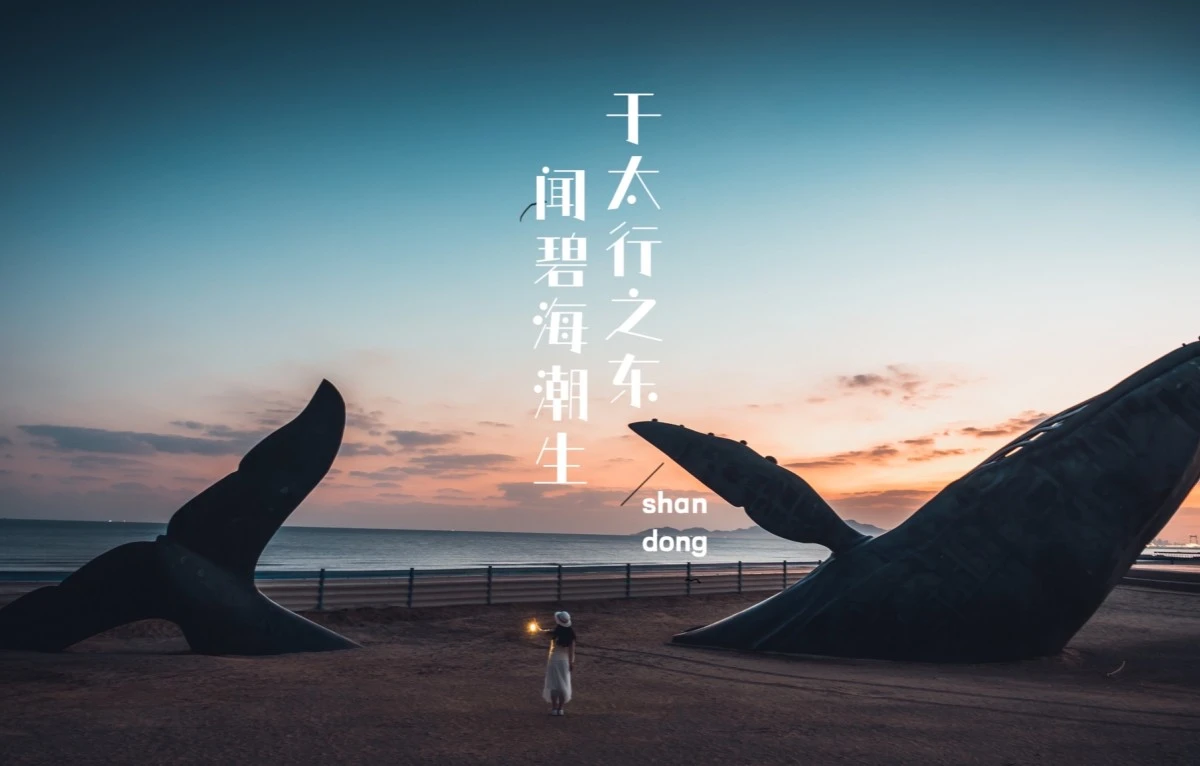
“I am a blue whale incarnate as an island alone, with the most colossal form, fish and shrimp darting by my side, and even birds resting on my back.” — “The Lonely Whale” In Yantai, a giant whale has fallen onto the sand, becoming an eternal scene on this beach.
🚗 Attractions intro: Yantai is flanked by the sea on three sides with a long coastline and many sights. We can tick them off west to east, shooting with elegance. First stop, don’t miss [Golden Beach]—a 5-km stretch dotted with multiple photo spots, all wonderfully photogenic and totally free. You can easily spend a whole morning here. Second stop, slow the pace a little; east from Golden Beach, find a café along Binhai Middle Road to chill with coffee or white tea and watch waves gently lap the shore. Third stop is Yantai’s popular Fisherman’s Wharf, with Prague-like red roofs that will make you reluctant to leave. Fourth stop is the easternmost Yangma Island, where seaside boardwalks and reefs are perfect for a spectacular sunset.
1⃣️ First, the [Ionic Whale]: Navigate to ⭐️ City Exhibition Center. Step onto the beach and you’ll see this gorgeous whale. The best angle is from the steps—have your model go down to the beach and use a wide-angle for the full scene; next best is near the whale’s head.
💰 Tips: 🚗 Self-drive: If starting from Yantai city, I suggest 4⃣️, then 3⃣️2⃣️1⃣️ moving from east to west. Free parking is available next to or across from each spot. 🚌 Public transit: Buses 210, Tour 6, and the old Yantai Trolley (pricier tickets at 15 RMB per person) all serve this route, but bus stops are a bit far from these spots; hail a taxi for some if you’d rather not walk.
This loneliest whale in the world is named Alice. Find it on Golden Beach. It lies stranded on the shore—huge yet lonely, and when no one’s around, it feels even more melancholic.
It looks as if it’s about to leap from the sand, yet more than half its body seems buried. Behind it is the boundless ocean, the blue not too deep but full of charm, mirroring the sand in a serene, healing way.
Come to Yantai, Shandong, and feel this solitude stranded on the shore.
2⃣️ [Lifeguard Platforms and the Seaward Jetty] Continue east about 2.4 km from the whale, navigate to ⭐️ Golden Beach Coastal Park. You’ll see several tall lifeguard platforms on the sand and a jetty stretching into the sea.
3⃣️ [Glass Church] Further east, 1.7 km from the jetty, navigate to ⭐️ Jinsha Hui Commercial District, Yantai Auditorium. On the beach, a stunning glass church that glows at night, even more enchanting.
4⃣️ [Airborne Promenade] Continue east, 1 km from the glass church, navigate to ⭐️ Housha Square. Here there are sand slides for kids and a promenade that seems to float in the air.
Housha Square has three zones: a cantilevered walkway, the Mongkok Promenade, and a children’s playground, making it a social-media hit since opening. The super-popular Mongkok Promenade extends a full 20 meters straight into the sea, simply gorgeous.
5⃣️ [Relaxing Afternoon Break] After a morning of shooting, we can slow down. After lunch, pop into a café along Binhai Middle Road.
Between Yantai’s blue sea and sky stands a bright, white structure called Island Diary. This stunning little building sits closest to the sea on Binhai Middle Road, housing a café, a tea room, and a lovely guesthouse. Perfect for a lazy afternoon by the sea, listening to waves lap the sand.
Grab a coffee and gaze at the sea from behind the reeds, the cool sea breeze filling your lungs—like the song, “gentle, lazy sea breeze blowing to the lofty peaks,” you’ll never tire of it.
Island Diary also popularizes a tea-drinking style called “fire-side tea brewing,” hailed as an autumn ritual. Young people who normally sip milk tea and coffee now gather at neo-Chinese teahouses, lighting fires, brewing tea, roasting persimmons—all in cheerful bustle to create an autumn “vibe.”
Actually, this isn’t new; tea brewing is a traditional Chinese art. During the Tang and Song dynasties, when Chinese civilization flourished, people boiled their tea. Bai Juyi wrote in “Waking Late”: “Warm stove lit early, cold mirror wrapped late. Melt snow to brew fragrant tea, blend butter to boil gruel.”
In this summer’s hit TV drama “A Dream of Splendor,” Zhao Pan’er’s exquisite tea-whisking skills wowed audiences and reignited interest in Song Dynasty tea ceremony aesthetics. Now many vendors tout “A Dream of Splendor same-style fire-side tea brewing.”
Besides the café and tea room, they also run a guesthouse called [Dawn], housed in a two-story heritage building behind the café. This was once part of Yantai’s old town and is now known as the Hongkou 1920 Historical and Cultural District. Rooms are decorated with vintage flair, elegant and unique, just 100 meters from the sea. Off-season rates around 400+ RMB are hard to resist.
The rooms are retro, but the amenities are mostly smart and very convenient.
..............................................................................................................................................................
5⃣️ [Fisherman’s Wharf on Binhai Middle Road] After checking off Golden Beach’s sights, head west along Yantai’s coastline to Fisherman’s Wharf on Binhai Middle Road. It’ll brighten your eyes, like an instant teleport to the Mediterranean—those red roofs along the shore are so striking, they look chic in every shot.
Set on a natural tombolo, surrounded by sea on three sides, the wharf teems with colorful European-style buildings of various shapes. Walking among them feels like stepping into a European fairy-tale town, letting you capture exotic photos right in Yantai.
Passing these exquisite structures, strolling the seaside boardwalk, listening to seagull cries, feeling the gentle sea breeze, watching fishing boats float on the horizon and blend with the architecture behind—it’s an unparalleled landscape painting. Everything feels free and easy.
Beyond good looks, Fisherman’s Wharf also houses an aquarium, amusement park, hotels, restaurants—a large-scale entertainment complex.
Thanks to its natural U-shaped bay, it’s also a great spot for beachcombing.
7⃣️ [Watch Sunset on Yangma Island] Continue west from Fisherman’s Wharf to find a great sunset spot, and Yangma Island is top choice. A bridge connects it to the mainland; no admission fee. Driving around the island is a great option. If you have time, explore as you go; if short, don’t miss [Zhangdao Scenic Area], [Riyue Terrace], [Qinma Square], and [Lotus Sunset].
Yangma Island got its name because Emperor Qin Shi Huang kept horses here. The area isn’t fully developed and facilities are basic, but the seawater is crystal clear, uncrowded, and quiet. Some might find it boring, but it suits me just fine.
Driving along the island’s ring road, the sea constantly peeks through the treetops, with fresh views tempting us to stop. We frolicked on the main beach, carefully posed on Zhangdao Island’s rocks, caught tiny crabs at Qinfeng Cliff… and gradually, sunset time arrived.
On Yangma Island, the sunset spot was marked on the map early: “Lotus Sunset.” Because there’s a lotus-shaped cave, you can shoot beautiful sunset silhouettes through its opening. Such descriptions make it hard to resist checking it out in person, so we went.
The sea breeze was so comfortable you could blow all day without tiring. As the sun dipped, we sat on seaside rocks; without flip-flops, we still had fun even with wet shoes. Of course, too much fun brings a chill—autumn nights in Yantai do have a bit of a nip.
Yantai Food Recommendations
[Wangjiao Fishing Village] This is Yantai’s hottest restaurant, famous for its sea intestine rice. I’ve eaten there four or five times and never had a bad meal. The downside: you may queue at peak times, and parking can be hard. There are three branches in Yantai; pick the one closest to you.
Average spend: 100–150 RMB
Must-order: sea intestine rice, charcoal-grilled octopus, clam pimple soup, scallion-oil bird’s beak clams
The delicacy I recommend—hard to find elsewhere—is sea intestine, classically prepared as sea intestine rice. Sea intestines are plump, with delicious, nutrition-packed meat that rivals sea cucumber. Though ugly and a bit “scary,” it’s a wonderfully flavorful specialty. The rice is topped with fresh sea intestines; only the crunchiest middle section of Chinese chives is used, seasoned, thickened into a glossy sauce that clings to every grain. The best moment: scooping a big spoonful and having that umami burst in your mouth—sheer bliss.
To accompany the rice, try a soup. I recommend “clam pimple soup,” which blends Huaiyang, Lu, and Northeastern Chinese cooking styles into a richly layered flavor you’ll love.
Another rare ingredient is bird’s beak clams, incredibly fresh, no less than their Nordic cousin the Arctic surf clam. They have a faint, sweet taste with no fishiness, named for their bird-beak shape. Simple scallion-oil sizzle and they’re ready to eat.
Weihai, Where the Sea is My Backdrop
Autumn keeps loading its progress bar: clear skies, cool air, bustling scenes everywhere. The vibrant Hangu Lefang Night Market, Beishan Road with the sea as its backdrop, the roaring waves along the “Thousand-Mile Mountain-Sea Self-Drive Route,” the tranquil ancient fields and mountains—so many cinematic images hide in corners of this city, waiting to be discovered, waiting for you to pause...
Throughout the trip, surprises always appear. Here’s my list of Weihai’s new must-visit spots. Pick a day with great sunshine, put on an elegant long dress, and let’s go~
When a city’s everyday streets become scenery, it touches every visitor’s heart. Weihai is just that kind of city. Backed by mountains and facing the sea, it has several stunning streets that slope down to the ocean, with colorful houses as the perfect accent. Here are Weihai’s two most photogenic streets.
1⃣️ [Sidewalk with Mountain and Sea Views]: 🚗 Navigate to: Weihai Wanghaishan Mansion Sales Center. You’ll see an arc-shaped road stretching to the sea. 🅿️ Parking: outside the sales center. 📷 Photo spots: [Bus stop in front of the sales center], [Sidewalk 100 meters down the road] 📷 Tip: Use a focal length of 120–200mm; telephoto compresses the background sea and people.
Actually, in Weihai—surrounded by sea on three sides—sea elements are everywhere, nothing unusual. But distinctly charming seaside streets are rare. Beishan Street’s south-high, north-low topography creates a stunning visual effect; you must come snap this seaside sidewalk.
It’s wonderful: Weihai was born for romance, with space for sentiment and ideals. A simple street can unfold countless reflections on the good life. That’s Beishan Street.
2⃣️ [Colorful Houses by the Sea]: 🚗 Navigate to: Huoju 8th Street. You’ll see a café on one side and colorful houses on the other. 🅿️ Parking: temporary spots on the coastal road perpendicular to Huoju 8th Street. 📷 Photo spots: [Railing on the colorful-house side], [Street sign on the café side]
They say this 20-odd-meter slope is Weihai’s busiest spot in summer, because it resembles a place in Japan from the movies. Crowds of young people fill the street, all for a photo with the sea.
The distant clean sea surface is like a blue backdrop higher than the rooftops, flanked by rows of colorful houses. As you descend the slope, the backdrop slowly drops, and a boundless seascape unfolds before you, like a surprise Easter egg at the road’s end.
3⃣️ [Weihai’s Beautiful Seaside Parks] If you have more time, I also recommend visiting a few parks in Weihai city: [Yuehai Park’s Lighthouse], [Weihai Park’s Picture-in-Picture Sculpture], [Xingfu Park’s Happiness Gate]
As a livable coastal city, Weihai boasts a variety of parks—big and small, new and old—forming a gorgeous coastline, each with its own unique landmark.
Yuehai Park is home to the lighthouse standing by the sea. Beneath it are traditional seaweed-thatched houses, a distinctive architecture in Weihai. If you can’t go specifically to photograph them, you can catch them here.
Weihai Park’s landmark is a frame that captures the sea.
Weihai Food Recommendations
Haiyuan Park features sailboats returning at sunset and a monument, but the scenery is secondary—what matters more is the freshest seafood.
Unlike other parks, Haiyuan Park has a small seafood market. Fishermen returning from the sea bring their catch ashore in the evening. Without middlemen, you can basically buy the cheapest seafood in Weihai here. Mantis shrimp: 18 RMB per jin; crab: 30 RMB per jin—prices that make us inlanders super envious.
The stalls also have many sea creatures I’ve never seen before.
Across from Haiyuan Park, small shops offer seafood processing for 10 RMB per dish. Because it’s so fresh, simple steaming yields incredibly delicious seafood.
If you’re still hungry after seafood, consider a night snack at the city center’s Hangu Lefang. A dozen Rushan oysters or Korean barbecue there will definitely satisfy your cravings.
Inside Hangu Lefang, there are also affordable Korean supermarkets. Spend 200 RMB on goodies and you’ve got gifts for family and friends.
This is a route beautiful in all seasons, flanked by sea on three sides—along it you’ll find the “Cape of Good Hope of China,” “Little New Zealand,” and “China’s Most Beautiful Coasts.” On this stunning mountain-sea road, there are azure waters, rugged reefs, fluffy white clouds, soft sandy beaches, ancient fishing villages, isolated islands, clusters of fig trees, and steadfast windmills. The entire thousand-mile Weihai self-drive route is 1,001 km long, circling Weihai where mountains and sea meet. We can pick its essence for a one-day trip.
Personally, I find the most spectacular stretch is from downtown Weihai to Jinshi Bay, encompassing Narxianghai Beach, Jiming Island, the Lonely Ship, and Jinshi Bay—with sea and windmills all along. If the weather is fine, sunset is especially magnificent!
Narxianghai Beach lies on the West Huandao Road in Rongcheng, boasting 16 km of pristine natural beach. Narxianghai is azure, clean, deep, and expansive. The air is filled with autumn’s coolness and the fresh scent of the sea. Overlapping sounds reach your ears: seabird calls, wind, the sea.
Wandering on the beach, all you see are blue sea, white waves, fine sand, windmills, travelers; every step is a moving landscape. Run on the boardwalk, let the wind lift your hair; that moment of free ease makes you unconsciously relax, stopping like a child to leave your footprints in the smooth sand.
I really like the name Narxianghai—perhaps it comes from the Sanskrit “Arunāśa,” describing the rosy dawn sky before sunrise, full of boundless hope. It suits Weihai perfectly. This thousand-mile mountain-sea self-drive route aims to create such a beautiful, fresh, vibrant, and hopeful cultural and tourism route.
About 10 km from Narxianghai Beach, there’s a large Panamanian ship. Maybe a typhoon blew it here; it remains stranded on Narxianghai’s coast, becoming a new sight along this broad shoreline.
Reefs stretch out from the shore, and taking a photo with the ship feels wonderfully lonely. Word is this ocean-crossing vessel will be towed away next year—I’m a bit reluctant. On a clear day, this is absolutely the top spot to watch the sunset.
Today’s self-drive endpoint is Jinshi Bay. The seaweed-thatched houses along the shore have a strong Studio Ghibli vibe—a place that makes girlish hearts flutter.
Seaweed houses are a Weihai specialty: stone walls, seaweed roofs, sleeping with the sea, breezes in your arms. It’s a peaceful, cozy haven. Push open the door and the sea is right there. Imagine us sitting on the nearby swing, watching seagulls casually perch on rocks, the sunset spreading behind us, the ancient seaweed houses standing quietly in the afterglow...
In five days, we went many places but also left many regrets. I know, as a tourist, you can never fully grasp a city’s entirety; you can only glimpse a fraction in a short time, then carry that memory away. I’m not even sure if I’ll return. So, I tried my best to hold onto the waves and gentle breezes, the twilight and sunset. On the plane, my mind just idled, reminiscing. Finally, it’s time to go home. The plane shortens distances so much that it blurs a southerner’s anticipation of a northern coastal city. It can take me anywhere, and bring me home fast. In the end, I just can’t bear to leave the sea!