Autumn Breeze Blows, Another Year of Fat Crab Roe – Driving a Campervan to Xinghua for a Golden Autumn Encounter
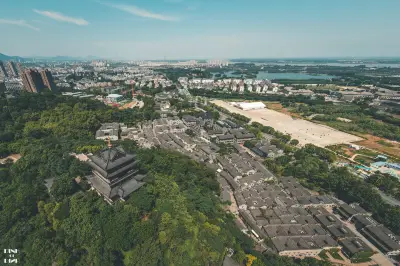
Autumn is a season of harvest, and it is also a great season for eating crabs. Autumn is the best period for crabs to grow. Their meat is thick, tender, delicious, and colorful, making them the most delicious of the year. Crabs with roe, meat crabs, and hairy crabs all grow best in autumn. Especially hairy crabs, with delicate flesh and roe like solidified fat, are the top grade among crabs. The hairy crabs from Xinghua, Jiangsu, are at their best during this season. As the autumn breeze blows and the crab roe fattens, driving a campervan to Xinghua, Jiangsu, I arrive: Xinghua hairy crabs, here I come.
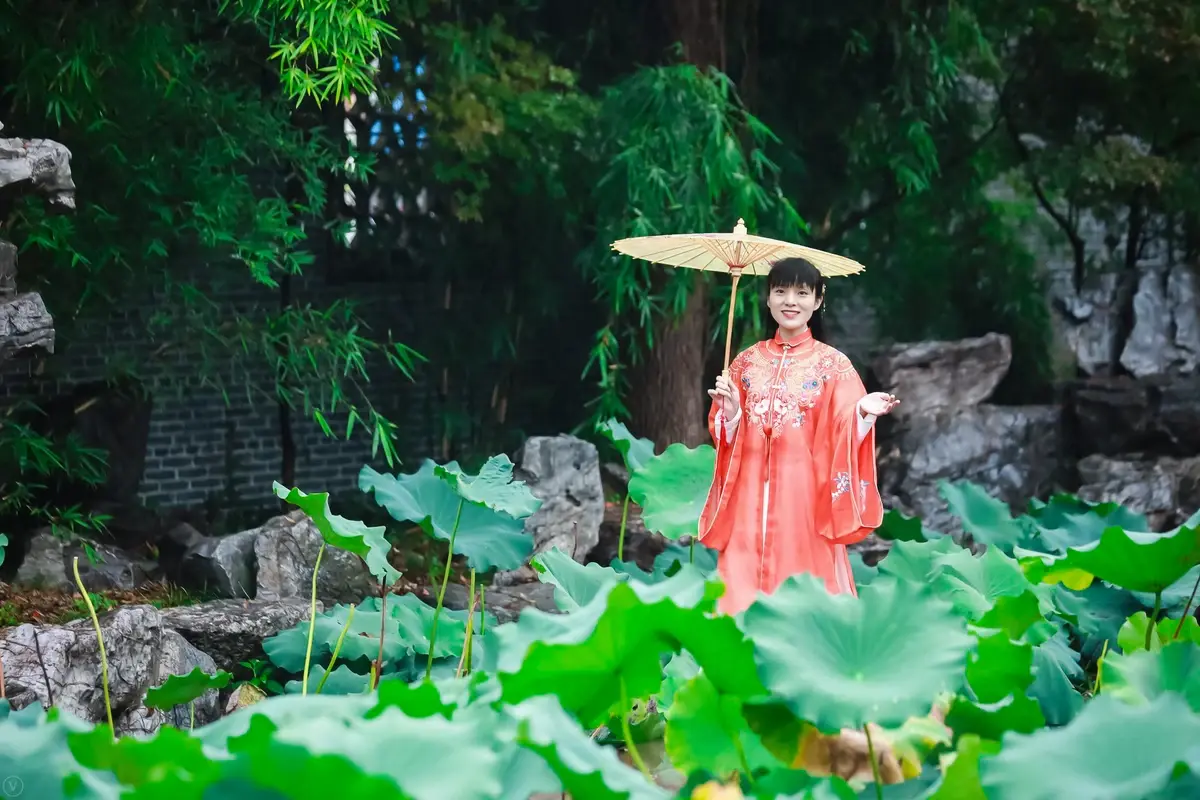
A young lady in Hanfu walks in the rain through the back garden of the Zheng Banqiao Memorial Hall, as if traveling back in time to a garden landscape that unfolds before her eyes.
In the golden October, when hairy crabs are at their plumpest, the Xinghua hairy crabs tasted live at the Crab Tasting Food Festival are so delicious that they linger in memory.
Entering the Lizhong Water Forest feels like stepping into a green world. The misty forest fog makes it feel like a fairyland on earth, inspiring endless thoughts.
Watch a dreamlike aurora show at Wujindang Wetland Park, indulging in the charm of the aurora light show.
Xinghua Crab Tasting Food Festival: rich crab roe, lively and bustling.
During this National Day holiday, I drove a campervan to Xinghua and happened upon the annual Xinghua Food Festival. We parked at the entrance parking lot of Wujindang Wetland Park and went into the park to watch the opening ceremony of this year's Crab Tasting Food Festival. The food festival was packed and coincided with National Day, so there were many tourists. The site was decorated like a temple fair during the Spring Festival, very festive. People came early to watch the opening ceremony. It was said that those who came could get free hairy crabs on the spot – not sure if it was true. Along the wetland park square, a long temporary food street with stalls offered all kinds of food, with hairy crabs being the most abundant. One large red plastic crab was particularly eye-catching.
The splendid opening ceremony attracted many tourists and local residents. There were performances, and every show won rounds of applause from the audience. After the opening ceremony, we went to the adjacent food street to find food. The one thing we couldn't miss was the hairy crabs. This season is when hairy crabs are on the market. At the stalls, the hairy crabs were large and very fresh. They were tied with straw ropes. I asked and found out that they can survive like that for several days without being kept in water. Later, there were indeed vouchers for free hairy crabs, redeemable for freshly cooked ones. The young lady got a very large hairy crab and smiled happily.
Beside us, another young lady was teaching people how to eat hairy crabs. The first step was to remove the shell, and she clearly explained which parts were edible and which were not. This was the first time I learned that there are actually two parts that cannot be eaten – you have to remove them before eating. What? So all the hairy crabs I've eaten before were eaten wrong? Apart from hairy crabs, there were many snacks at the stalls, many tourists, and some artworks worth browsing.
Enter the hometown of Shi Nai'an, feel the former prosperity of Jindongmen Old Street.
Most people are familiar with "Water Margin," but may not know its author, Shi Nai'an. Indeed, Xinghua is the hometown of Shi Nai'an. The 108 heroes in "Water Margin" are vividly portrayed. Today, I visited the hometown of this famous novel's author to feel the literary atmosphere. Our first stop was the memorial archway for father-and-son imperial scholars, with an old archway standing and a square next to it.
In the square, I saw many ancient artifacts, including wine cups shaped like four sheep and many other unfamiliar relics. Further inside, I saw a stone tortoise. Its face and upper shell were modern restorations, while the body was a relic from the Tang Dynasty. According to the guide, this tortoise is over a thousand years old. Having weathered ages of vicissitudes, its body is now scarred.
Next to it is the Xinghua Literature Museum, also the Shi Nai'an Literary Research Institute. Inside, a giant book stands before you. The exhibition hall displays works by famous Xinghua writers from various periods, with introductions on the walls. The first thing that caught my eye was Shi Nai'an's introduction, and below, in cabinets, were copies of "Water Margin" published in different eras. Reading the introductions gave me a deeper understanding of the novel – it must have been extremely difficult in those times. The TV series "Water Margin" brings the 108 heroes to life vividly.
The young lady took her children to take photos in the courtyard, but the back garden of the residence is the best place for photos. There is a patch of green bamboo, and standing among it creates a unique scenery.
When cheongsam meets ancient architecture, it exudes a special charm. Standing casually in a corner yields beautiful photos. The young ladies were posing hard to get satisfactory shots. Well, I also wanted a good photo, so after they finished, I took one decisively. Haha.
Xinghua Museum: Begin here to understand this city, ancient and modern.
We often say that if you want to know how a city evolved from ancient to modern, you can visit the Xinghua Museum. At the entrance, you see a statue of Zheng Banqiao. The first floor displays the history of Xinghua's development, the formation of duotian (raised fields), and the rise of salt boiling. You can find answers about Xinghua's history and geography here. The second floor's Zheng Banqiao exhibition hall tells the origin of Zheng Banqiao's people-centered thinking and its influence on later generations, with many beautiful calligraphy and paintings worth seeing. Another exhibition hall tells the story of Shi Nai'an's life.
The second floor exhibition area displays many artifacts and also shows the appearance of the ancient city, allowing you to understand the life of Xinghua people in the past.
Zheng Banqiao, a famous eccentric talent, wasn't tall according to his statue, but he was the leading figure among the "Eight Eccentrics of Yangzhou." A versatile talent – painter, calligrapher, and writer – he was a very important figure in his time and very famous locally. The entire exhibition area is about him, including praises and evaluations by later generations, worth exploring carefully to understand him and the Xinghua of that era.
Next, we went to Li Garden (Xinghua County Government Office). The most famous sight is the Boat Hall at the entrance, which is built like a ship. Hidden behind the Xinghua Museum, Li Garden is a well-preserved private garden in Xinghua, built by salt merchants from Yangzhou in the Qing Dynasty. The highlight of Li Garden is the core building "Boat Hall." This small garden is very tranquil, with ancient trees and fragrant flowers, allowing you to deeply appreciate Jiangnan's ancient charm.
Li Garden leads directly to the Xinghua County Government Office, where the county magistrate used to hear cases in the Qing Dynasty. Fan Zhongyan also once worked here. The two stone lions at the entrance are original, weathered but still standing. Notice their heads – they look different from ordinary stone lions. The heads resemble monkeys, very interesting.
After exiting, we came to a building called the Four-Archway, a landmark of Xinghua. Built in the Ming Dynasty, from a distance it looks like a pavilion with eight upward-curving eaves, hiding a "secret mechanism." When you walk inside and look up, you can't help but exclaim. The archway's ceiling is layered with 47 plaques hanging, very spectacular. Each plaque honors a prominent figure from Xinghua's history, each telling a story of Xinghua.
Enter Zheng Banqiao's Former Residence Yonglu Garden: it feels like a paradise.
This is the "elegant room" described by Zheng Banqiao in his poem: "A room need not be large to be elegant; flowers need not be many to be fragrant." It's more like a small garden than a former residence. The side rooms serve as a study; through the window, you can see bamboo shadows dancing in the garden. There are pavilions, winding corridors, lotus ponds, and fragrant flowers – serene and elegant. This is also a must-visit place in Xinghua's old city. If you don't have time to see other places, at least come here. It can be called Zheng Banqiao's back garden. You enter through a small door, and once inside, you'll gasp – this is the real treasure of the residence. Instantly, you feel enlightened.
Zheng Banqiao was a native of Xinghua, Jiangsu, and the leading figure of the "Eight Eccentrics of Yangzhou." The residence faces south and is a Qing Dynasty civilian house with eight rooms, white walls, black tiles, sparse bamboo, and a quiet courtyard. Inside, there are bronze-colored statues of Zheng Banqiao, reproductions of his calligraphy and paintings, and his daily utensils. Small-scale calligraphy and painting exhibitions are held irregularly to promote Zheng Banqiao's artistic achievements. The lotus in the pond remains lush green.
It was raining outside, but we couldn't miss any scene. Sitting in the pavilion or walking along the path by the pond, we could still feel the unique beauty of the garden. The rain grew heavier; we stayed here the longest. It was quiet, away from the city's noise, achieving tranquility and far-reaching aspirations.
When the rain let up, we walked to Jindongmenwai Street. The archway spanning this street was erected for Li Chunfang, the top scholar and prime minister of the Ming Dynasty, owner of the "Yuanyao Mansion." Beside the archway, there is a small temple. On both sides of the archway are ordinary households; through half-open doors, we could glimpse their lives. Walking into this deep, quiet old alley, we saw the local lifestyle. Limited commercialization preserves the original market life. A shop making handmade leather shoes, nostalgic red thermos bottles, bubbling tea eggs – all exude a nostalgic retro atmosphere.
Watch the Aurora Show: a feast of sci-fi visuals.
In the evening, it kept raining. We drove to Wujindang Wetland Park to watch the aurora show. The venue was already packed; everyone was waiting eagerly for the performance to start. It began on the left side of the park entrance. As music played, beams of light shot out – the aurora show began. Because it was raining, the aurora projected onto raindrops in the air made them look like beautiful twinkling stars. It was truly stunning.
The aurora emitted colorful lights. Blue lights looked like planets, giving a strong visual impact. It was so beautiful it was beyond words. Someone later walked inside the lights; the blue light created different lines, making it feel like walking in sci-fi magic.
Lizhong Water Forest Park: a walk into a green world.
Entering the Lizhong Water Forest in Xinghua feels like stepping into a green world. In front are rows of tall metasequoia trees. Over 100,000 metasequoia and pond cypress trees form a lush, vibrant water forest, creating a unique water town landscape of "forest with water, water with fish, and forest with birds." Walking inside, the temperature is much cooler than outside, and the air is humid. Riding a bamboo raft drifting on the river, passing through small streams, is very unique. Green duckweed is everywhere. Walking into the misty forest fog makes it feel again like a fairyland, inspiring thoughts.
At the entrance, there is a small bridge. The young lady dressed in Hanfu took photos on the bridge. Inside is a green world – tall metasequoia trees and green everywhere. It really opened my eyes. I didn't expect that this forest was originally planted by hand. So many years have passed, and the trees have grown so tall.
There is a place with forest fog that we wanted to photograph. It is not always misty; it opens only at certain times. When the fog turns into smoke, walking in it feels different and dreamlike.
We also had to experience the bamboo raft, though it was actually a wooden raft. Sitting on the raft, we slowly drifted along a green river. As it passed by, we could see tall trees. Drifting on the river felt very dreamlike, passing through small streams one after another – it felt like crossing through a big forest.
Bishui Dongluo: visit the characteristic rural village of Dongluo Village.
In golden autumn, Dongluo Village exudes a pastoral atmosphere. Neat houses, fertile fields, honest folk. On country paths, people with smiles on their faces were bustling. Visitors wandered around, taking photos. Here you can also go fishing, experience characteristic lake-view homestays, and taste seasonal lake delicacies. Dongluo Lake surrounds the village, embraced by water. The people here live happily, with clean streets and a strong pastoral vibe.
Entering the Dongluo Village Grand Hall, local specialties are displayed, such as Xinghua rice and Xinghua hairy crabs – these are the representative business cards here.
Entering the Dongluo Autumn Harvest Museum, you can feel that life here has now become moderately prosperous. Backed by the unique natural endowment of the duotian water town, Dongluo Village has transformed into a great tourist destination. Now, villagers are richer and have higher demands for spiritual culture.
Walking in the village, flowers bloom everywhere, green plants are lush along the small rivers, autumn reeds are blooming with long reed flowers, clean streets, and each house is like a villa, a rural architectural style. The air is fresh, and you can see fish swimming in the river. Murals of lotus flowers are painted on walls. A modern rural style unfolds before you, making visitors want to come again.
Stay at Yunduo Homestay: experience the tranquil rural scenery of Dongluo Village.
When you step onto the balcony, a lake view appears before you. Staying at Xinghua Yunduo Homestay, located on a small island close to Qianduo Scenic Area, surrounded by lake water, beautiful environment, living by the water gives a pastoral water-town feeling. The entrance is lush with flowers and plants, verdant. The rooms are decorated in a modern style, quiet. In the morning, birds sing and flowers smell fragrant. Simple and fashionable style, the bed is comfortable. There is no city noise here, only tranquility. The refined pastoral life is all here, with surprises arriving anytime.
The interior is designed in a simple modern style. Special at night – in summer you can hear frogs croaking. Opening the balcony door leads directly to the lake. The decoration is relatively new, with wooden wardrobes, tables, and a desk – very useful for me who works daily. It is also equipped with voice intelligence control. The bed is comfortable; the bathroom has good hot water. However, the temperature here is lower at night, so you need to keep warm.
The whole homestay doesn't have many rooms. The pavilion has flowers and plants, green trees provide shade. Even in autumn, there are still many green plants. Nearby, there are grapes, but unfortunately, we did not see the fruit when we visited. One building is relatively far from the main building, requiring a detour. Staying here is really nice; you can feel the pastoral village life.
Breakfast is served in the village canteen, which requires a detour to reach. The surrounding environment is beautiful, close to the scenic area, but transportation is not very convenient; it's best to drive yourself.
The young ladies were already posing on the homestay balcony. The pastoral style is photogenic anytime. The advantage of staying here is that opening the window gives you the entire lake view. Feel the pastoral style, have tea with a close friend on the balcony – what a comfortable day.
In front of the homestay, a patch of reeds was in full bloom. The young ladies posed among the reeds, taking beautiful portrait photos. Originally, I wanted to take tourist photos, but inadvertently it turned into a photo shoot. Haha. Reeds make the best prop.
Xinghua food not to be missed: satisfy your taste buds.
When traveling to Xinghua, the last thing you should let down is the food. The most famous here is the Xinghua hairy crab. Since we're here, we can't miss the local food. Every year at this time is the season for hairy crabs. Xinghua hairy crabs have rich, fatty roe, are very fresh, and taste great.
Also, Xinghua xunshao (smoked stew) is actually a kind of braised meat. Smoked and stewed, it's delicious, clean, and not greasy; instead, it's tender, fragrant, and has a unique flavor. Xinghua mixed fish: cook together crabs, shrimp, eel, turtle, snakehead, and other fish. Lotus root sandwiches are deep-fried and quite tasty. Not bad.
Fish balls are made from fresh whitefish, black carp, and grass carp from Shagou Lake – eel is best. These fish have tender meat and a high meat yield. Elsewhere, they are called fish balls, small like pellets. Shagou big fish balls are as big as ping-pong balls when fried; golden in the bowl, round, with white flesh inside. When picked up with chopsticks, they elongate; when dropped, they flatten; eaten hot, tender and refreshing, not greasy, warm in the heart.
Lotus root sandwiches are called "ou jia zi" in the local dialect; in Weiyang cuisine, they are called "ou he" (lotus root combo). When out of the pan, they are golden, moderately salty, not greasy, crispy, and fragrant. Autumn is the season for fresh lotus root, also the best time to taste lotus root sandwiches.
Travel time always passes quickly. Our several-day trip to Xinghua, Jiangsu with a campervan came to an end. With more travel options nowadays, self-driving tours have become increasingly popular. Driving a campervan is like a mobile hotel – with beds, a toilet, a stove, etc. Although we didn't sleep in the campervan this time, we could stop anytime to enjoy beautiful scenery along the way, offering another choice for travel.
This trip to Xinghua gave me a deeper understanding of hairy crabs. Autumn is a harvest season and a beautiful season. Not only are there plump hairy crabs, but also beautiful scenery along the way – it's worth a visit. Moist Xinghua, meet golden autumn with crabs. Stay true to the original aspiration and continue moving forward.