Hand-drawn Jingjiang | Wandering in a Small Northern Jiangsu City, Seeking Taste Memories (Precious Small City Travel vol.1)
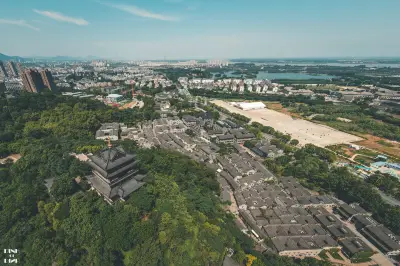
Jingjiang was originally a sandbank in the Yangtze River, where sediment from the river water accumulated, forming fertile soil and vast waters. The 'living water surrounding the city' gives this land both the poetic scenery of a Jiangnan water town and the majestic momentum of a surging river. Jingjiang is not only a delicate city of small bridges and flowing water, but also an inclusive land where the great river flows eastward.
The taste of freshness is a memory for many Jingjiang natives. In times of material scarcity, nature's gifts provided sufficient food. Over time, the locals gradually developed a unique cooking style, which has become the distinctive and popular Jingjiang cuisine in the Suzhou and Shanghai regions.
This small city on the northern bank of the Yangtze boasts many famous delicacies. Soup dumplings and dried pork slices are must-eats when visiting Jingjiang. My strong attachment to these flavors made me not want to return to work; I finally rediscovered the taste buds I had lost due to dieting. Various dishes, from grand feasts to street snacks, offered an intense freshness that felt refreshingly new—the result of the river's bounty combined with the hard work of the people.
'The steaming heat melts the essence of ingredients into the soup, wrapping the scalding broth in a paper-thin yet amazingly elastic dough skin...' The crab roe soup dumplings featured on 'A Bite of China' have become increasingly well-known and are Jingjiang's signature dish.
I've heard a local saying in Jingjiang: 'Once you leave Jingjiang, all soup dumplings are a desecration to the art of soup dumplings.' Longing for these buns, I made sure to enjoy them several times on this trip.
'The steaming heat melts the essence of ingredients into the soup, wrapping the scalding broth in a paper-thin yet amazingly elastic dough skin...' The crab roe soup dumplings featured on 'A Bite of China' have become increasingly well-known and are Jingjiang's signature dish.
I've heard a local saying in Jingjiang: 'Once you leave Jingjiang, all soup dumplings are a desecration to the art of soup dumplings.' Longing for these buns, I made sure to enjoy them several times on this trip.
We went to the most famous Nanyuan Hotel in Jingjiang. The garden features whitewashed walls and black tiles, small bridges over flowing water, and pavilions—very characteristic of a Jiangnan water town. Inside, there are round tables typical of old-fashioned hotels. The place was very busy, with a lively buzz. If you want to eat soup dumplings, you have to go early, or they will be sold out in no time.
The shop's making method is said to have a history of over a hundred years. After years of refinement, the skill is unmatched. Though a soup dumpling might look ordinary, it goes through more than 30 steps.
The filling is made from hairy crabs, fresh pork skin jelly, old hen chicken, and other specially selected ingredients. The wrapper also demands fine technique, reflecting the craft of the maker. Each well-made soup dumpling has a wrapper of even thickness, so thin it's almost transparent. The soup inside comes from the skin jelly, which turns into a rich, savory broth when steamed.
Each steamer holds six soup dumplings, each about 10 centimeters in diameter, roughly the size of a palm.
'Strange! This bun actually wobbles! When eating soup dumplings, remember the twelve-character motto: 'Lift gently, move quickly, open a window first, then drink the soup.' Don't make the opening too big, or the soup will all rush out. Haste won't work with hot soup dumplings. Place the dumpling still on its plate on top of a tall wine glass, then use a bowl to catch the drips. When you eat, take a small bite, sip the broth—it's so fresh it can knock you out, delicious enough to make every pore tingle. The soup is as abundant as a spring, rich but not greasy. After sipping the soup, add some vinegar, pair with shredded ginger, and take big bites—it's truly intoxicating.
Recommendations: Crab roe soup dumplings, braised pufferfish, braised mixed fish, xianzi porridge, steamed wontons.
Our first meal in Jingjiang featured Yaotou Soup Dumplings. 'Yaotou' means the dumplings wobble when served, describing their very 'bouncy' state. If you order the premium version, there is more crab roe in the filling. The middle-aged waitress would personally help customers take the dumplings out of the steamer. She would hold a small dish in one hand, gently lift a dumpling with the other, and quickly flip it onto the plate. The wrapper was as thin as paper, nearly transparent. It is said that Yaotou Soup Dumplings are famous for their thin skin. The broth was a bit hot, so I had to eat carefully, and the flavor was exceptionally fresh.
Although it wasn't the best season for crabs, the taste was still superb. I couldn't help thinking I would come again in autumn.
We also ordered taro with chicken, another signature dish. Jingjiang taro is also top-notch—fragrant, soft, and smooth. The taro and chicken coated in sauce were rich and delicious, with the classic sweet flavor of Huaiyang cuisine.
Recommendations: Crab roe soup dumplings, taro with chicken, taro with pork.
Address: No. 16 Kangning Road, opposite the hospital.
There was a little episode: while eating soup dumplings, we encountered a beautiful young woman who had ordered three dumplings for herself. My scallop friend and I felt that dining alone makes it hard to order big dishes, but it's a pity to miss out. So we shared some of our food with her, and we started chatting. After the meal, we even arranged a girls' drinking session and had some wine. Recalling it, it felt like a wonderful serendipity.
Pufferfish is an ultimate delicacy that captivates countless diners. Su Dongpo, when describing spring scenery, expressed a persistent longing for pufferfish: 'Wormwood is everywhere with short shoots; it's exactly the season when pufferfish swims upstream.' The epicurean Cai Lan listed pufferfish among the dishes he must eat before death: 'Even if it means death, I will eat pufferfish.'
Most pufferfish in Jingjiang are farmed, so they are available all year round. Chefs remove all toxic parts when cutting the fish, wash it repeatedly, and then cook it.
The preparation of Jingjiang pufferfish is meticulous: fresh pufferfish is simmered in a rich old hen broth, resulting in a deep color, tender flesh, and exquisite flavor. The technique preserves the fish's delicate and fine texture to the greatest extent. After eating, the aftertaste lingers in the mouth—sweet and smooth. Underneath the pufferfish, there are small greens that absorb the fish's umami. A local saying goes, 'After tasting pufferfish, no other fish tastes good.' It seems true. The skin of the pufferfish should be wrapped inward over the prickly part, then swallowed quickly after a few chews; otherwise, the spines will affect the texture.
At first, I was skeptical: 'How good can wontons be?' After eating them, I exclaimed 'Truly delicious!' It was a classic case of being proven wrong.
In Jingjiang, wonton shops are everywhere on the streets. Famous ones include Sun Ji Maqiao Wonton, Baimu Old Soup Wonton, and Long Foot Wonton. Local preparations include steamed wontons and xianzi soup wontons. The wontons are notably large, with fillings not only the usual pork but also three-delicacy and fish fillings.
Maqiao wontons are different from typical small wontons. Ordinary wontons mainly use meat filling, with vegetables as side ingredients, but Maqiao wontons emphasize vegetables over meat.
We chose to try Sun Ji Maqiao Wonton for a fresh experience. As the name suggests, Maqiao wontons originated from the town of Maqiao and later became popular throughout Jingjiang. Seeing fish wontons on the menu, we ordered those without hesitation, and also tried the signature xianzi soup. The flavor was surprisingly delicious: the fish was tender, the skin was very thin, and each bite was bursting with savory aroma—no exaggeration to say it was incredibly umami. The other type of clear soup looked simple, but the broth was made with fresh clams, light yet flavorful.
At Nanyuan Hotel, we also ordered steamed wontons. The portion was astonishing: a full steamer of translucent wontons, with the mix of vegetables and fresh meat showing faintly through the thin skin. The skin had just the right chewiness. Steaming preserved the smoothness of the skin, and the filling tasted fresh and clean. One bite was exceptionally fresh. I easily ate a dozen or twenty myself.
I've visited many old streets. I love walking on the cobblestone roads. Jishi Ancient Town lies at the junction of Jingjiang, Taixing, and Rugao. It was once a bustling commercial hub, but now it feels like frozen old times. Steaming white vapor rises from stoves, steamer baskets are piled high; the grocery store is filled with various vintage goods; the walls are marked by years of smoke stains—it's like watching an old movie, full of nostalgic scenes.
If you ask about Jishi's local snacks, the ready answer would be old-broth chicken, liver tripe, skin rolls, and so on. But when actually visiting Jishi Old Street, you find there are no big restaurants or hotels; there are many small eateries. Wandering through the alleys, the most common sight is flatbreads.
Flatbread is my favorite food. I often order roasted flatbread as a meal. Oven-roasted flatbread at Lao Yang's was so good I got hooked. The shop often has long queues. We went around noon, when there were few people, a lucky coincidence. They looked ordinary, one yuan each, small and very humble. I bought two of each flavor to try. When I ate them, I found the filling was abundant in every bite—rich and utterly delicious.
Flavors include scallion, pickled vegetable, pork floss, shredded turnip, sesame, and bean paste. I bought the pickled vegetable ones. The shopkeeper said they were a bit cold and tasted better hot, but after eating one, I couldn't help shouting in my heart: 'This is just too good!' So I bought several more. The flavor was so unexpectedly delicious that later on the way back to Hangzhou, I regretted not buying more.
I ordered an affogato and a cinnamon roll. I chose a seat by the window. It had been so long since I last enjoyed an afternoon like this, and I felt a long-lost sense of happiness.
The vanilla ice cream in the affogato blended with the bitterness of the coffee, balancing the sweetness and offering a rich taste—exactly my favorite. Scallop couldn't drink coffee, so he ordered a mixed fruit juice, which was also refreshing. In the shop, our main activity was taking endless photos, haha.
The bench in front of the shop was quite photogenic, with a fresh early-summer vibe all around.
Nearby is the famous Nanyuan Hotel, accessible through the parking lot entrance.
Price: 30-40 yuan per person
Address: No. 28 Henggang North Road, Jingjiang City
the shop had a clean, ins-style interior with mainly blue and white—very photogenic. The bear at the entrance and the blue chairs were great for photos. I really liked the blue sign that said 'Meiji Fresh Milk Specialty Store' at the entrance.
I enjoyed the flavor of the milk tea, with a perfect sweetness level. The Osmanthus Oolong Miji Fresh Milk was also a Jingjiang signature. The two young ladies working there were very gentle in their service.
I love these local specialty milk tea shops. Inspired by the cup sleeve, I decided that from now on I would collect and check in at milk tea shops with city names written on them. Stay tuned!
Price: 10-20 yuan per person
Address: Dense City Plaza
Li Garden is not far from Yue Temple, both in Shengci Town. The ticket office of Li Garden is inside the hall opposite the main gate. Entering the garden, it's full of greenery. The architectural style combines the Hui School with Suzhou and Yangzhou styles, very typical of Jiangnan. There are thousands of rare trees arranged in a scattered yet orderly manner. Walking by the lake, a gentle breeze blows, and ripples spread across the water.
The pavilions and terraces in the garden are ingeniously arranged. The lake reflects the flowers and trees, with every step offering a different view.
The bonsai garden in Li Garden is also thoughtfully designed and artistic. Various shaped windows and walls allow the beauty of bonsai to harmoniously blend with the scenery, enhancing each other.
Walking through the garden, you feel a strong sense of poetry and charm. The lush plants, the green lake, the verdant trees—wandering here, the view changes with every step. The arched bridges and building layout divide the lake into the shape of the character '生', so it's also called 'Sheng Lake' (Life Lake). 'Water Elegance of Jiangsu' is the theme of Li Garden. The use of water is fully demonstrated here. The garden owner poured his poetic sentiment into every design, showing exceptional craftsmanship.
Stopping by the lake, a gentle breeze comes, the water shimmers. Listen to the breeze and chant softly.
Address: Goubei Dai, Maqiao Town, Jingjiang City
I had long heard that Jingjiang's bonsai are world-class. Seeing the whitewashed walls and black tiles, I knew I had arrived at the Bonsai Garden. The Hui-style architecture stands out among the green plants. Inside, there are exquisitely crafted landscape bonsai. Every step reveals nature's miraculous work. Pine forests with rolling waves, Guilin's landscapes, Li River's green reflections—the transcendent realm of bonsai art makes you sigh in admiration. Out of the six 'Special Stamps of Chinese Landscape Bonsai' issued in 1996, the prototypes came from these very bonsai.
Entering the library, rows of shelves filled with books, tall bookcases—the seats downstairs were full. I couldn't help but marvel: despite the hot weather, so many people were here reading, studying, working, without making a single sound. No exaggeration, you could hear a pin drop. I walked cautiously, afraid to make any noise. Sunlight filtered through the gaps, creating a symphony of light and shadow on the floor. Time passed quietly; I rediscovered the long-lost joy of reading.
The current Yue Temple is the result of the fourth restoration on record, all four times related to Mr. Liu Guojun and his descendants. Liu Guojun spent his childhood near the temple where Yue Fei was born, and Yue Fei remained his unwavering spiritual belief throughout his life. Yue Fei's spirit of 'utmost loyalty to serve the country' always inspired him to strive tirelessly.
In the early 1930s, with frequent civil wars, Liu Guojun started from scratch, earning his first pot of gold by selling biscuits and cloth. Driven by an entrepreneurial spirit, he struggled and fought, then switched from commerce to industry, becoming a textile magnate, embodying his belief in saving the nation through industry.
Years later, when Liu Guojun returned to his hometown to pay homage at Yue Temple, he found it in ruins and generously funded its restoration. Thirty years later, he returned again to mourn, saw the temple in decline, and once again provided funds for its relocation and repair.
Today's Yue Temple shows no sign of its past decay. It is solemn and peaceful. The main hall is named Siyue Hall, housing a colored statue of Yue Fei. On the two flanking walls outside are inscribed 'Utmost Loyalty' and 'Serve the Country'.
Liu Guojun's Former Residence is where he lived before his death. Its architectural style has distinct Jiangnan characteristics. Traditional Chinese courtyard layout, gate patterns, and roof tiles are all exquisitely designed. They silently tell the story of Liu Guojun's glorious and arduous past. The memorial hall consists of exhibits on 'Life Story—Bitter Experiences', 'Hard Entrepreneurship—Extraordinary Life', 'Dreaming of Hometown—Determined Return', and 'Textile King—Revitalizing the Country through Industry'. What struck me most was that Liu Guojun pioneered the use of warp-spinning yarn for producing velvet and corduroy. It turned out that the fabrics we once wore were deeply connected to this gentleman.
In a low, humble room, there is an old wooden bed and a loom, seemingly telling the world about the frugal and hardworking years of the former owner. At that moment, a feeling of nostalgia and reverence arose in my heart.
Entering the East Line First Sail Memorial Hall, the patriotic sentiment of that era rushed towards me. From the displayed old photos, I could feel the great contributions of the Jingjiang people, as well as the touching power between soldiers and civilians. They worked together to drag hidden boats out for use in crossing the river, and many Jingjiang people even helped them make simple equipment using local methods.
On the day the order to cross the river was given, April 21, 1949, under the cover of night, the crossing army set sail from fourteen ports, traversing the Yangtze. They shuttled through a hail of bullets, advancing wave after wave, risking their lives to push forward.
It's hard to imagine how perilous crossing the Yangtze was at that time, before the era of ferries, and how much courage and firm belief it required. It was their fearless figures that created infinite possibilities for future generations.
'The mighty Yangtze River flows eastward, its waves sweeping away heroes.' Walking in the memorial hall, I paid respects to the martyrs, learned history, and cherished life.
On the riverside plaza, there is a large statue commemorating the first sail. The sailboat is a simple straight line extending high into the sky. Beneath the boat are heroic figures striving forward. Their direction is toward the opposite bank—toward faith, happiness, and an immortal spirit.
On the evening we left Jingjiang, we went to the riverside again. Driving onto Binjiang Road, the weather was perfect, visibility excellent. Sitting on the embankment, the river breeze was pleasant. From time to time, birds soared up from the riverbank. I could see the Jiangyin Bridge, which we had to cross on our way back to the city. In the past, without bridges, people could only rely on boats to travel far and wide. Fishing boat lights, the changing seas. The former sandbank in the river has become a land that, while industrialized, still retains its original ecology—a magical place.
Beyond the embankment, the scenery was beautiful. Boats shuttled back and forth on the Yangtze. The setting sun spread across the wide river, bringing light and hope to both sides. The surging river has witnessed countless transformations under the wheel of time.
The national spirit of saving the country through industry flourished here; the victory trumpets sounded here. Jingjiang continues to develop in the flow of north-south exchanges.
Travel Diary Table of Contents
1 [Preface] White Horse Carrying Sand, Yangtze Jasper Floating
2 [Things] Taste of Freshness
3 Soup Dumplings You Can Drink
4 Nanyuan Hotel Hongyun Building
5 Yaotou Soup Dumplings
6 Braised Pufferfish
7 Maqiao Wontons
8 Ancient Town Jishi: The Everyday Life of Old Street
9 Wang Ji Yin Cake
10 Yulan Yeast Cake Shop
11 Lao Yang's Large Oven Flatbread
12 Afternoon Food Time
13 Good Goods Coffee
14 Bataling
15 Night Out
16 [Places] Nostalgia in Heart
17 Li Garden: Listen and Chant
18 G12 Agricultural Happy Valley: Countryside Disney
19 Western Suburb Park: Three-dimensional Painting
20 Mazhou Park: Green Life
21 Ronghu Library
22 [Scenery] Small City, Great River Feelings
23 Yue Temple: Where Yue Wang Was Expected
24 Liu Guojun's Former Residence: Spirit of Industry
25 Mucheng Park: Natural Oxygen Bar
26 East Line First Sail Memorial Hall
27 [End] The River's Surging Sound Never Ceases
28 [Practical Guide]
29 Accommodation
30 Transportation
31 Itinerary Sharing
Travel Information
Hotel Index
Guide Index
Airline Index
Website Navigation
Travel Index
Cruise Index
Corporate Travel Index
Franchise Cooperation
Alliance Links
Friendship Links
Corporate Gift Card Purchase
Insurance Agent
Agent Cooperation
Hotel Franchise
Destination and Scenic Spot Cooperation
More Franchise Cooperation
About Ctrip
About Ctrip
Ctrip Hot Topics
Contact Us
Careers
User Agreement
Privacy Policy
Business License
Security Center
Ctrip Content Center
Intellectual Property
Trip.com Group Algorithm Publicity