Xinghua, the Autumn Beauty of the Jiangnan Water Town
Xinghua is a place both familiar and unfamiliar. In my impression, it seems to be associated with some autumn delicacy, and in spring, there are vast rapeseed flowers here, as well as a forest park that feels like the Wizard of Oz. This place, neither too far nor too near for me, finally made it onto my itinerary. I set off in an RV to begin a new journey in Jiangsu.
Do you know the most elegant way to eat crabs?
Every autumn, Xinghua becomes a lively season. Encountering the golden autumn—this is the most comfortable and cool season, and also a season to feast. The delicious hairy crabs are from Xinghua in Taizhou.
I caught the annual Crab Tasting Festival this year and saw countless plump, lively hairy crabs playfully blowing bubbles.
At the festival, there was also a crab etiquette performance, using professional crab tools to eat crabs elegantly. Eating crabs gracefully is a life attitude.
Because Xinghua's scenic spots are scattered in various locations, we explored the autumn scenery here in a SAIC Maxus RV.
The first stop was Wujindang Wetland Park, an AAA-level scenic area. Located in the northern part of Xinghua city, it has convenient transportation and a superior natural environment. It is a wetland ecological protection area integrating leisure and entertainment, water tourism, agricultural sightseeing, ecological regulation, and cultural tourism. Wujindang Wetland Park has a water surface of about 3.2 square kilometers and surrounding wetland landforms, with an enclosed space area of about 8.36 square kilometers. Within the area, there is one provincial-level second-class garden unit, Wujindang Park, and one provincial-level cultural relic protection unit, Shangfang Temple.
Just this season, Xinghua is hosting the Crab Tasting Festival, a harvest season. At this time, the crabs are at their plumpest. Many locals and media came to have a look. A recent meme is 'the first cup of milk tea in autumn,' but here it's about tasting the first hairy crab of autumn.
As the performance began and the food festival was introduced, the entire wetland park was worth a visit. Autumn came suddenly, and I felt a chill in an instant.
Wujindang is a lake right next to the northern edge of Xinghua city. Legend has it that when Yue Fei fought against the Jin dynasty, he shot down Jin Wushu's black headscarf here, hence the name. This is the prototype of Liangshan Marsh in Shi Nai'an's "Water Margin." At the end of the Yuan dynasty, Shi Nai'an returned to his hometown and, facing the magnificent Wujindang, recited a poem: 'In the past, people went to the Peach Blossom Spring; now we come to the reed marshes. Blue sky and white clouds reflect on the green waves; among the green trees is my hometown.'
There were many stalls at the scene, and many craftsmen and artists created exquisite items incorporating local features.
But the most anticipated, of course, are the hairy crabs at this time of year. It is said that the best hairy crabs come from Xinghua. Xinghua is crisscrossed with lakes and rivers, and the abundant aquatic plants in the lakes provide excellent conditions for the growth of high-quality freshwater crabs. Four townships have been awarded the title 'Hometown of Chinese River Crabs,' and Xinghua City has been awarded 'First County for Chinese River Crab Farming.' The hairy crabs produced here have the characteristics of 'green shell, white belly, golden claws, yellow hair, strong pincers, and swift legs.' They are rich in pure fat, with jade-white and tender meat, crystalline red and oily roe, and a fresh, sweet taste that is favored by consumers at home and abroad. Multiple brands of hairy crabs have been selected as 'China's Top Ten Famous Crabs' and have won the 'Gold Award for Chinese Famous Crabs.'
At the scene, there was also a special corner where a young woman performed crab etiquette, using the eight-piece crab set to peel crabs. This eating method is particularly elegant and literary, what we call elegant eating. Our previous way of eating was called rough eating, haha.
Remember, after eating, the crabs can be fully restored to their original shape, which is very interesting.
At night, Wujindang Park is still very beautiful, with a modern laser show. Colorful auroras appear on the grass by the wetland, and many friends dance along with the music and lights.
Regarding Wujindang, there is also the Wujindang Bridge. The origin of its name is that Yue Fei chased Jin Wushu here but had no boat to cross, so he drew his bow and shot down Wushu's black headscarf into the lake. Another saying is that Yue Fei was stationed at Qigandang in Xinghua, fought in Sanduo, and defended Chaixu. He never fought in the Xinghua city area. Instead, Zhang Rong and the four heroes, after the great victory at Desheng Lake, pursued the enemy here and shot down Talagn's black headscarf into the lake. Because the lake was dangerous and there was no boat to cross, they could only watch the remnants escape. Hence, the local chronicle records 'Wujindang, also known as Hujindang.'
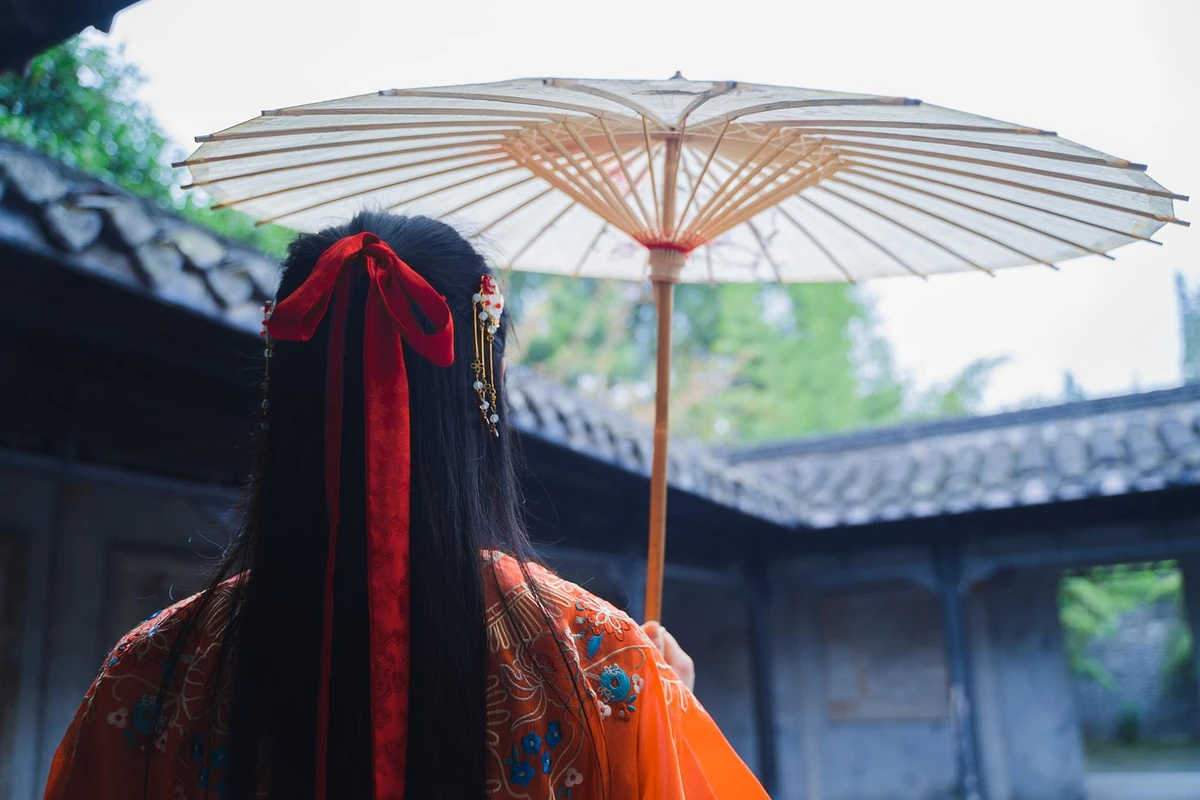
As night fell, friends in Hanfu danced by the bridge, with the surrounding lights as decorations.
Jiangsu is still the garden as I imagined.
Xinghua Confucianism Street is a place with rich cultural heritage. Bringing family and children here for a visit gives a sense of erudition.
Because this place has been prosperous in culture since ancient times. Over 700 years from the Song to the Qing dynasties, 34 jinshi (successful candidates in the imperial examination) were born on Confucianism Street, a number unmatched elsewhere.
It is said that the stone turtle here has a history of over 800 years. It has seen generations pass by, yet it remains like a guardian, steadfastly protecting this homeland, which is touching.
On Confucianism Street, there are many Jiangsu-style garden buildings that I like, as well as some charming stone walls. A friend brought a very nice Leica camera, so I borrowed it to take some photos and strike a pose.
This street in the old city center, originally called Confucianism Street, is actually only about ten steps wide. It is narrow and long, extending from Zheng Banqiao's former residence on the south alley of East Gate Avenue all the way west to the West Gate. I think calling it 'alley' would be more appropriate.
It feels more like a private garden. Walking inside, it happened to rain that day, adding to the atmosphere.
Inside, there is a museum showcasing some introductions about the place. I saw a companion sister bringing her daughter and explaining some stories to her.
Xinghua City Museum, also known as Xinghua City Zheng Banqiao & Fan Zhongyan Memorial Hall, displays many local literati artifacts and historical antiques. But what surprised me most is that the museum building itself is distinctive. Its architectural style rivals that of Suzhou Museum, showing that the designer was quite talented.
From every angle, the outdoor design style leans more towards Jiangsu garden style, a fusion of modern and classical. Koi fish swim in the pond, and the stories here continue.
Regarding Xinghua, Zheng Banqiao is the most prominent celebrity here. His original name was Zheng Xie, courtesy name Kerou, also known as Li'an and Banqiao, often called Mr. Banqiao. He was a native of Xinghua, Jiangsu, with ancestral roots in Suzhou. He was a calligrapher, painter, and writer of the Qing dynasty. He was a Xiucai during the Kangxi era, a Juren in the tenth year of Yongzheng, and a Jinshi in the first year of Qianlong (1736). He served as a county magistrate in Fan County and Weixian County in Shandong, achieving notable political accomplishments. Later, he lived as a guest in Yangzhou, making a living by selling paintings, and was an important representative of the 'Eight Eccentrics of Yangzhou.'
In the museum, there is a dedicated section about Zheng Banqiao and his various seals. The most interesting one is that he was born on the same day as the Snow Goddess (Snow Granny), so he carved a seal saying 'Born on the Same Day as the Snow Goddess.'
What I love most is the sight of Suzhou-style architecture in the rain—this is Jiangnan after all.
At the end of summer, autumn suddenly arrives. The lotus flowers in the courtyard are gone, but the lotus leaves are still green. In this rain, summer quietly slips away.
I first saw Jindongmen in pictures—it looked very ancient. Xinghua Jindongmen Old Street has a history of a thousand years. Since the Ming and Qing dynasties, due to commercial prosperity and daily fortune, the area was named 'Jindongmen' (Golden East Gate). The protected area covers 5.33 hectares, with clear development patterns and distinct street textures. The main axis is the East Gate Outer Street, running east-west, 1200 meters long. It has a complete ancient architectural complex from the Ming and Qing dynasties and a fishbone-like street system, maintaining and following the traditional style of the Ming and Qing periods.
Unlike other old streets, it doesn't feel overly commercialized. It retains a strong sense of life, like an aunt selling stinky tofu at a stall here for countless years. The taste, like its age, is worth trying.
On the old street, there is also a pharmacy that has been open for hundreds of years. The old street continues, and so does the tradition.
This is a touch of the Wizard of Oz.
In a secret place, surrounded by lakes, stand towering trees on both sides. Sailing a small boat slowly through the narrow waterways, if I had to use one word to describe this place, it would be 'forest.' This is Xinghua Lizhong Water Forest Park.
Many people who have seen such a scene fall in love with this place, just like me. This place is called a true forest.
Those who know Xinghua's flowers must know its rapeseed flowers. It is not far from the Xinghua Rapeseed Flower Scenic Area, within a 10-minute drive. Lizhong Water Forest Park is Xinghua's first AAAA-level tourist attraction.
The park is quite large, covering over 2,000 mu. It is the largest artificial wetland forest park in the Lixiahe area. The park is planted with over 100,000 trees such as metasequoia and pond cypress. The trees here are tall and very straight, and with fewer leaves this season, they will definitely be more beautiful in summer or autumn.
I chose to hike first and then take a bamboo raft back to the starting point.
In one part of the forest, the park has artificial fog daily, which requires water storage. It's released once every hour. When the artificial fog starts, it fills the woods, creating a dreamy scene.
When I got tired, I got on a bamboo raft. The best way to tour the water forest is definitely by boat. Our group sat on the raft, which slowly moved across the water, surrounded by forest close at hand. It felt like we had suddenly arrived in a forest kingdom. Flowers were in full bloom, and birds occasionally circled overhead. The birdsong and flower fragrance were intoxicating, making it hard to leave.
If that's not enough, the forest also has wooden boardwalks. After the raft ride, you can stroll on the boardwalks in the woods. Besides the beautiful scenery, the air is also fresh. Taking advantage of this lovely autumn, I hope to stay longer next time.
A land of fish and rice, that is the Jiangnan water town.
Calling Jiangsu a land of fish and rice is most fitting, and Bishui Dongluo is the best witness.
The water nurtures the people. They live by the water, unchanged for so many years. Although the houses have changed, the heart that grows and lives here has never changed, just like the beautiful scenery here.
In Bishui Dongluo, this beautiful land of fish and rice, you can see many traces of the past. The villagers have slightly processed them. For example, the Dongluo Grand Theater's exterior is basically unchanged, but the interior has been enriched and renovated.
Originally built in 1953, the top of the grand theater's front features a carved five-star red flag, sun rays, and three red flags, full of historical ambience. Such old structures used to be in every village, but it's rare for them to be preserved as completely as in Dongluo Village. Following the principle of combining old and new, we did not alter the exterior during restoration. Adhering to the requirement of repairing old as old, we only cleaned the exterior walls and applied waterproof paint. The interior combines an auditorium, a multimedia function hall, and a people's stage, equipped with lighting, sound, and central air conditioning. It will serve as an important venue for village lectures, local cultural performances, and village gatherings.
In the grand theater, local agricultural products are displayed, such as rice, grains, rapeseed honey, and of course, the most famous hairy crabs.
Dongluo Village Canteen covers over 500 square meters. It can be a venue for villagers to host weddings and funerals, and during the tourist season, it can provide meals for visitors. Since there are many left-behind elderly in the village, it can also offer dining services for them.
Having a meal in the village canteen was my happiest and most anticipated moment. This is also a place where local villagers often come to eat.
This season is also the best time to eat hairy crabs. For crab lovers, this is paradise.
Another place in Xinghua: Liuze, where I stayed in a homestay called Zemuyunju.
You need to take a small boat to reach the island homestay—full of ceremonial feel.
The advantage of living on an island is the peace and quiet, free from disturbance. Many benches are placed in the yard, as if inviting residents to sit down and quietly enjoy the scenery. Facing such a serene scene, who wouldn't feel at ease?
The room gave me a particularly rustic but high-end feel, combining wooden pastoral elements with interior design.
My favorite is the wooden design. It seems like every room has certain hats. Though not convenient to take away, they are a great choice for taking pictures in the countryside.
Xinghua—a name that seemed somewhat unfamiliar to me—unexpectedly brought me so many surprising sights and experiences. This time it was autumn; I imagine in spring, it will take on another form, showing a different kind of beauty.