Slow Taizhou | Encountering the Colorful Hailing in Early October Autumn
Before the frost's descent, I visited Taizhou once more.
A three-hour drive from Nanjing brings you here; like Jinling City, the autumn atmosphere is not strong in Hailing, but the temperature difference between morning and night begins to widen, and the feeling of crisp autumn air grows stronger.
Taizhou is home to the delicate Qiaoyuan Garden, a Jiangnan scene known by few; it's the century-old opera melodies from Mei Garden; it's the exquisite wood and brick carvings of Carved Flower Building; it's the early autumn hues of Xinghua's metasequoia trees; and it's the wetland scenery of Qinhu Lake, where sculls cut through the waterways.
In Taizhou, a morning tea at Guyue Tower embodies slowness; the worldly hustle and bustle of Qintong Ancient Town also embodies slowness.
On the journey, when you slow down your pace, the beauty of Taizhou gradually unfolds before your eyes.
The tall and straight metasequoia trees, the autumn colors not yet deep.
Seventy kilometers north of Taizhou city, you'll encounter the Xinghua Lizhong Water Forest Park.
The sunset glimpsed from Bishui Dongluo homestay.
A night cruise on Fengcheng River, with dazzling lights and opera echoing in the air.
What wakes up the morning is the specialty morning tea at Guyue Tower.
Wanghai Tower, though the sea is no longer seen today, climbing it reveals where Taizhou is.
The urban scenery of Taizhou unfolds in full view.
[About Taizhou]
Taizhou became a prefecture in the Southern Tang Dynasty, with the name meaning 'the country is prosperous and the people are at peace.' It is a famous historical and cultural city in China, located on the north bank of the lower reaches of the Yangtze River.
Taizhou has a history of over 2,100 years since its establishment as a city. It was called Haiyang in the Qin Dynasty and Hailing in the Han Dynasty, blending the charm of Wu, Chu, and Yue, and gathering the spirit of the Jianghuai region and the sea.
There are many stories here, and this city has witnessed and borne witness to much.
[About Transportation]
Yangzhou Taizhou Airport is 20 kilometers from the city center, with flights to Guangzhou, Kunming, Harbin, Shenzhen, Chengdu, and other cities, with more routes to be added.
Additionally, Nanjing Lukou International Airport, Shanghai Hongqiao Airport, or Pudong International Airport are all within a three-hour drive.
There are bullet trains from Nanjing to Taizhou, taking about 1.5 hours at a fare of around 60 yuan, which is very convenient, though the frequency is not very high, so tickets should be booked in advance during holidays.
Currently, there are also direct bullet trains from Shanghai to Taizhou, making Taizhou's transportation very convenient.
Long-distance buses from surrounding cities to Taizhou run frequently, with travel times varying from 3 to 4 hours depending on the route and stops. It is recommended to buy tickets from the South Bus Station, which is closest to the city center.
[About Itinerary]
The following is just my itinerary for reference:
D1: Nanjing - Xinghua - Taizhou: Visit Lizhong Water Forest Park, Bishui Dongluo Homestay, night cruise on Fengcheng River after dinner
D2: Taizhou: Taste Taizhou morning tea, Caolu sesame cake at Old Street, visit Mei Garden, Wanghai Tower, Qiaoyuan Garden, Salt Tax Museum, Naval Birthplace Memorial Hall, and Port Carved Flower Building
D3: Taizhou - Nanjing: Visit Qintong Ancient Town and Qinhu Lake
[D1: Lizhong Water Forest Park - Bishui Dongluo Homestay - Night Cruise on Fengcheng River]
Encountering the Early Autumn Lizhong Water Forest Park
Lizhong Water Forest Park is located near Shunsheng Bridge on Xingsha Road, Qanduo Town, Xinghua City, Jiangsu Province, about 70 kilometers from Taizhou city center. It borders Gaoyou in Yangzhou, and overall transportation is quite convenient.
It originated in the early 1980s when local officials and residents, to rationally develop wasteland resources, transformed the barren land into rows of mounds and planted water-adapted cypress and metasequoia trees, intercropping with taro, rapeseed, and other cash crops. Now, over 100,000 trees of metasequoia and cypress have grown into a lush, vibrant water garden.
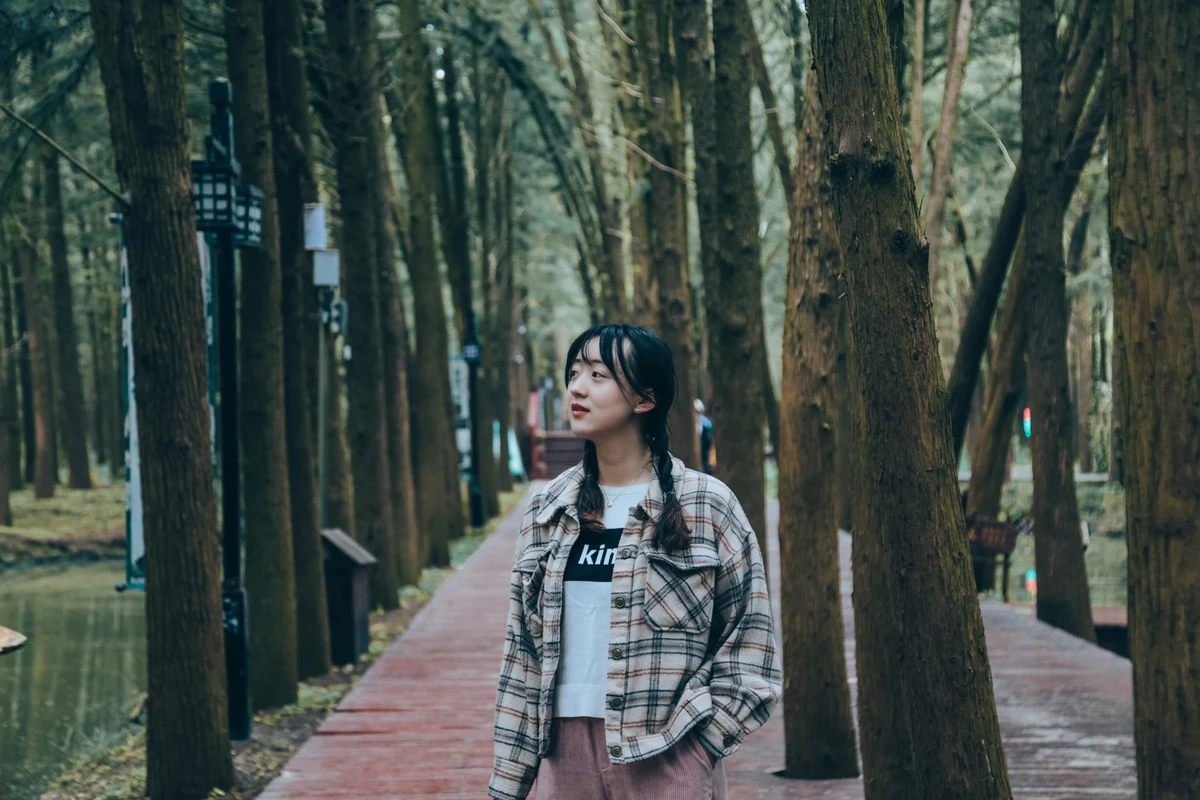
Strolling through, the metasequoias stand tall, with straight trunks and lush greenery.
Entering the cypress forest, the park covers an area of 2,000 mu, with 1,050 mu of forest and 950 mu of water.
It is a natural forest oxygen bar, with lakes, trees, small bridges, and birds, creating a unique water town landscape of 'forest in water, fish in water, and birds in the forest.'
The best perspective for the cypress forest scenery is from a drone.
The cypresses stand tall, the waterways clearly visible; if a small boat were added, it would be perfect.
The bird population in the forest can reach over 60,000 at its peak, normally around 30,000. It is the largest man-made wetland forest ecological reserve in the Lixiahe region.
It is said that if you come early in the morning, you can capture the spectacular scene of birds taking flight in flocks.
Walking into the forest, the tall metasequoias block the sky and sunlight.
Strolling, listen to the birds chirping and 'singing' in the forest. Their calls are sometimes long, sometimes short, rising and falling in continuous echoes.
In many places, there are air monitoring signs clearly showing temperature, oxygen content, and air quality.
Having spent too long in big cities, coming here is truly a refreshing 'lung-cleaning' trip.
The sun gradually appears, adding color to the treetops and water.
Sunlight filters through the gaps in the leaves, casting dappled shadows on the ground and water surface, where countless shadows interweave. The water is covered with a layer of green, stretching endlessly into the distance.
Walking along, you reach the Misty Forest Wonderland.
As water mist rises, we joke that it's the largest moisturizing spray.
The mist gradually spreads, slowly covering the path and tree roots, making you feel as if you're in a fairyland.
With the mist as a backdrop, I think you'll like it here.
With water in the scenery, it becomes lively.
Water is the soul of the water forest; here, water and forest coexist.
Taking a wooden raft, the boatman uses a long bamboo pole to take us deep into the forest. The area is rich in waterways and crisscrossing rivers, presenting the full beauty of the water town with 'winding rivers and towering metasequoias.'
We glide among the tall trees, pass under small bridges, cut through reflections, until we reach the open 'distance.'
The boat emerges from the cypress forest and docks.
At this time, the sunlight becomes gentle, the cypress trees appear warm yellow, and the sky gains color. The scene of forest in water and trees in the water is known as 'Little Jiuzhaigou.'
The winding wooden boardwalks extend into the water, dreamlike and enchanting.
Leaving the park, we encounter a withered lotus pond, the leaves turning brown, with spots on the green.
Summer has slipped away, and the prelude to winter begins.
The Sunset and a Blush of Red at Bishui Dongluo Homestay
Bishui Dongluo is one of the characteristic rural village pilots initiated by the provincial party committee and government. There are 45 such sites in Jiangsu Province, 5 in Taizhou, and 3 in Xinghua, and this is one of them.
The entire village was developed based on field surveys and planning, with the support of the Vanke Group, so it's very well constructed.
With natural geographical advantages, surrounded by two rivers and two lakes, its location is highly favorable.
It is only 2.2 kilometers from the famous Xinghua Qanduo Rapeseed Flower fields in spring and only 6 kilometers from Lizhong Water Forest Park. Therefore, its development is quite convenient.
Tall, wind-swept reeds make this the best spot for photography right now.
Entering Bishui Dongluo, there are many experiences to be had, such as the farming experience area, allowing urban dwellers unfamiliar with farming to learn about our ancient agricultural traditions.
The village hall of Dongluo Village was converted from an old temple originally built in 1953. Above the front of the hall are carvings of the five-star red flag, sun rays, and three red flags, exuding a strong sense of the era.
This old building well preserves the marks of that time. Now restored to its old appearance, the interior houses a lecture hall, multimedia function hall, and a village stage, equipped with lighting, sound, and central air conditioning.
The view from the hall is very open, with homes and farmlands on both sides of the river.
The water reflects the blue sky, white clouds, and evening glow, as calm as a mirror.
Now, the area has developed homestays, specially designed and built, very distinctive, with reeds swaying around, looking beautiful under the sunset.
White walls and banana trees are exactly what I like.
A quick tour of the homestay rooms shows they are unique, clean, and tidy. Some rooms have bathtubs in front of large floor-to-ceiling windows facing the lake and fields outside the courtyard.
Lying in bed, you can enjoy the surrounding scenery, leisurely and comfortably.
As the sun sets, stepping out of the homestay room presents this picture.
The sky darkens, but the place becomes even more beautiful.
In the sunset, this blush of red is most intoxicating.
The sun appears and disappears among the clouds, the lake reflects the setting sun, and everything else blurs into shadows.
After the Dazzling Lights, a Night Cruise on Fengcheng River
Driving back to Taizhou Old Street, near Fengcheng River, after dinner we go to see the night view of Hailing.
The lights of the old street are lit, occasionally encountering a few scattered tourists.
Fragrant aromas of food waft around, mingling with the laughter and clinking glasses.
After eating, we cross the old street to the dock for a cruise along the Fengcheng River.
The night cruise on Fengcheng River is often hailed as the essence of Taizhou tourism, once known as 'Water Paradise, Night Cruise City.' In the night, its beauty is somewhat hazy, enhanced by the lights. Taking a painted boat night cruise, sipping tea, listening to opera segments, and enjoying the view as the boat glides.
This is the Wanghai Tower we visited the next day, but day and night give me two completely different feelings.
Fengcheng River was originally the moat of ancient Hailing, Taizhou, with a history of nearly a thousand years. This river has borne a millennium of history and witnessed the changes of the world.
The night cruise passes many pavilions and stone arches, where different performers play various operas for us. With dreamy lights and mist, the performers in costume, we drift on the boat.
All of this makes us feel as if we've traveled back to ancient times, immersed in the world of opera.
At each opera stage, the boat stops briefly, allowing us to calm down and listen, enjoy the riverside scenery in the cool breeze, and taste the world of opera.
Passing the bridge ahead is the bustling area of Taizhou, with shopping malls and crowds.
Today, Taizhou has developed quite well, and it is very convenient for food, accommodation, and transportation.
[D2: Morning Tea at Guyue Tower & Caolu Sesame Cake - Mei Garden - Wanghai Tower - Qiaoyuan Garden - Salt Tax Museum - Naval Birthplace Memorial Hall - Port Carved Flower Building]
Waking the Morning: Morning Tea at Guyue Tower
Guyue Tower is located on Taizhou Old Street. It's a must-visit for tourists coming to Taizhou, and also a favorite spot for locals to gather with friends and family for a meal.
The mornings at Guyue Tower are always busy.
The diners are buzzing, and the staff need to run; if you come late, you might face a long queue.
In Taizhou, the morning tea ritual is very elaborate: a cup of fine Longjing tea, accompanied by a bowl of blanched dried tofu shreds, a bowl of fish soup noodles, and a basket of crab roe buns—this is the classic trio that Taizhou people must order.
But when we come, we always want more variety.
There are two types of dried tofu shreds: mixed and braised. I prefer the mixed ones, with a bit of vinegar for flavor.
Steamed shrimp dumplings must be eaten with vinegar; the freshness of the shrimp is instantly enhanced.
The wild vegetable shaomai uses malantou, a wild vegetable with a unique aroma. Those who like it find it refreshing; those who don't might not appreciate it.
I didn't like it as a child, but now I find it quite delicious.
The highlight of morning tea is definitely the crab roe bun.
This season is when crabs are at their plumpest. A crab roe bun filled with generous stuffing is savory and delicious. Made with flour, crab roe, crab meat, pork belly, fish, and shrimp, it's a classic Jiangsu snack. Having one in the morning is incredibly satisfying.
Wild vegetable soup buns have thin skins, full of broth, bright green. Take a small bite to suck out all the broth—it's tasty and fun.
Finally, a bowl of fish soup noodles ends this ultra-satisfying morning.
The noodles are coated with the umami of fish soup; eat the noodles and drink the soup, the fish's freshness, the noodles' chewiness, plus a hint of pepper added when served—perfect.
Not far from Guyue Tower is Caolu Sesame Cake.
Caolu sesame cake is made from wheat flour, baked in a stove using red firewood or wheat straw as fuel. This shop was established here to preserve this craft.
There are several flavors, both sweet and savory.
Best eaten hot; if I weren't so full, I'd definitely give it a try.
Mei Garden: Eternity, Returning to the Opera Era
Taizhou Mei Lanfang Memorial Hall was built in the 1980s, located on Fenghuangdun in Taizhou city, surrounded by water on three sides, with lush trees and elegant scenery.
In 1997, the original Mei Lanfang Historical Exhibition Hall and Mei Lanfang Park merged into the Mei Lanfang Memorial Hall.
Upon entering the garden, we encounter koi fish splashing in the pond.
Mei Lanfang (October 22, 1894 – August 8, 1961), born in Beijing in the 20th year of Guangxu in the Qing Dynasty, originally from Taizhou, Jiangsu. He was a master of Chinese Peking Opera performance.
In the garden sits a white marble statue of Mei Lanfang.
Mei Lanfang is called 'a generation of elegance,' and rightly so.
Further into the garden, standing in the pond is a white marble statue of Mei Lanfang as Yang Taizhen.
Throughout the garden, every corner tells the story of the romantic life of this generation's Peking Opera star.
In Mei Garden, typical Jiangnan garden scenery is everywhere: dense trees, rockeries of varying heights, pavilions, and white-walled garden gates.
Of course, the opera pavilion in the garden is not to be missed.
But nowadays, few performers come here to perform classical romance.
The Mei Lanfang Memorial Pavilion is a highlight of the garden, which boasts four must-see attractions.
If you have leisure time, sit in this memorial pavilion for a while, listening to the wind carrying the sound of Mr. Mei's opera.
Continuing down, you reach the Fengcheng River. Much of Taizhou's city scenery bears the imprint of Fengcheng River.
Climbing High to See Far: Taizhou City Scenery from Wanghai Tower
Wanghai Tower is a famous scenic spot in Taizhou, Jiangsu, and a landmark of the city. Located in the Fengcheng River Scenic Area, it was first built in the second year of Shaoding in the Southern Song Dynasty, known as the 'First Tower of Jianghuai.' The tower has been repeatedly destroyed and rebuilt, mostly lost to war and rebuilt in prosperous times.
Entering the scenic area, you first walk into a bamboo grove, then pass through to appreciate poems inscribed on stones.
In ancient times, Taizhou was not large; the area within Fengcheng River was the city, where food, shopping, and life were concentrated.
On the way to Wanghai Tower, both sides are lined with Taizhou dialect phrases. Although I am not far from Taizhou in Nanjing, I haven't heard most of these dialects.
Wanghai Tower is at the southeast corner of the park, over 30 meters high, built in the Song Dynasty architectural style with a three-story circular corridor. The main colors are chestnut brown and grayish blue, giving it an antique elegance.
In fact, climbing the tower reveals that it has four floors, with a small mezzanine hidden inside.
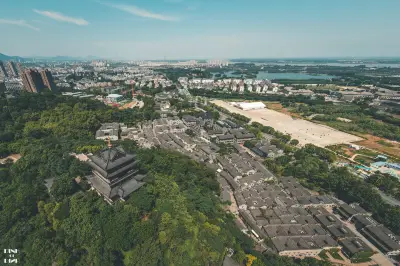
From an aerial perspective, the square in front of Wanghai Tower is filled with sightseeing boats, and the entire Wanghai Tower area is flat and lush.
Taizhou's development is very good today, and the city is well built.
Taizhou has many waterways, with winding and intersecting rivers, so bridges are very common here. These long bridges connect and facilitate people's lives.
Climbing Wanghai Tower, you can also faintly see the distant scenery.
Qiaoyuan Garden, Overlooked by the World, Holds the Most Beautiful Jiangnan Garden Scenery
Taizhou Qiaoyuan Garden is a provincial cultural relic protection unit and a key provincial scenic spot, known as the first garden east of the Huai River. It was originally the former residence of Chen Yuan in the Ming Dynasty. During the Wanli period, his grandson, Taipu Shaoqing Chen Yingfang, built a garden attached to the house, taking the meaning of 'the garden gained interest through daily visits' from Tao Yuanming's 'Returning Home,' naming it Riyue Garden (Daily Visit Garden). In the early Kangxi period of the Qing Dynasty, it was transferred to the Tian family. During the Yongzheng period, it fell to Gao Fengzhu, who renamed it Sanfeng Garden. In the ninth year of Xianfeng, Wu Wenxi purchased it, renamed it Zhe Garden, and then it came into the possession of Qiao Songnian, the salt transport commissioner of the Lianghuai region, hence the name Qiaoyuan, which has been used to this day.
Over the centuries, Qiaoyuan has changed hands many times and experienced several rises and falls. That we can see its form today is a fortunate thing.
Rockeries and flowing water are the favorites of Jiangnan gardens, found in almost every garden you see.
Entering Qiaoyuan, crossing the threshold also crosses into the world of the past, a world of old Jiangnan beauty.
The beauty of a garden lies in its elegance and liveliness. Though the scenery is small, every detail has its unique artistic charm. For this reason, gardens are easier to capture in paintings and more easily enter dreams.
The rockeries and trees here have been left since ancient times, retaining the original appearance of the garden.
Old houses, pavilions, and towers are everywhere. The owners who once lingered here have long since passed, but the garden has achieved eternity through the passing generations.
Pavilions, towers, ponds, and waterside pavilions are set among green pines and cypresses; rockeries, strange stones, flower beds, bonsai, wisteria, and green bamboo are dotted in between.
The rockeries are shaded by the shadows of trees, glimmering with points of light.
The common old well, with its rim bearing traces of time.
Today, the well is covered with wire mesh for safety, and weeds have grown on the mesh. These old things have become rare memories.
The covered walkways of pavilions form the beauty of classical architecture.
Here, bamboo groves, rockeries, houses, winding paths alternate. No one knows what scenery they will encounter next in this garden, or what people they might meet.
Although the temperature hasn't reached late autumn, the autumn colors of the leaves cannot be deceived.
The maple leaves gradually lose their green, turning yellow and then red. Under the sunlight, they exude warmth.
Walking slowly out of Qiaoyuan feels like a big dream. Hundreds of years of history are condensed into this not-so-large garden, beautiful beyond words.
Understanding Taizhou's History at the Salt Tax Museum
This museum is the only one in China themed on salt tax culture.
China has a long history and has been a self-sufficient agricultural society since ancient times. National taxation was very important in ancient times. Before the Tang Dynasty, national tax mainly came from farmland tax. After the 'An Lushan Rebellion,' the national economic center and tax structure changed significantly, with salt tax revenue rising to equal status with farmland tax. History records say, 'Half of the world's tax comes from salt.'
Jiangsu Salt Tax Museum is located on the north bank of Taizhou city, southwest of the old Taizhou Ya shu, the ancient dock for salt transport boats on the Shanghe River in Taizhou.
Taizhou has been an important sea salt production area since ancient times, with a long history of salt tax spanning over 2,000 years.
The exhibition hall is divided into the origin of salt tax, changes in salt tax, contributions of salt tax, and salt tax in Jiangsu, systematically showing us ancient salt tax policies.
The combination of text, pictures, and statues in the exhibition hall makes the visit vivid and engaging.
A bronze tax seal with the inscription 'Wang Ji, Salt and Wine Tax Seal of Xixi Town, Taizhou' in seal script is the museum's treasure. According to experts, the seal was cast in the seventh year of the Qingli reign of the Northern Song Dynasty (1047). Generally, official seals were destroyed after their use period expired; it is rare that this bronze seal survived.
Its preservation provides important physical evidence for the history of ancient Chinese taxation, especially the salt tax history of the Taizhou region.
These are large vats used in the past. The salt that was controlled and heavily taxed went through many processes to be completed.
The courtyard also displays ancient salt-making tools. In the past, these were stored separately and assembled only for salt production, effectively preventing illegal private salt production.
Naval Birthplace Memorial Hall
The People's Liberation Army Navy Birthplace Memorial Hall is located in Baima Town, Gaogang District, Taizhou City, Jiangsu Province.
It is a 'National Cultural Relic Protection Unit,' 'National Patriotic Education Demonstration Base,' 'National Red Tourism Classic Scenic Area,' 'National National Defense Education Base,' 'National Science Education Base,' 'National Navigation Science Education Base,' 'Jiangsu Provincial National Defense Education Base,' and the 'Fighting Spirit Education Base' of the People's Liberation Army Navy East Sea Fleet.
The square displays a number of retired naval bombers, fighters, Super Frelon helicopters, naval guns, torpedoes, missiles, and other equipment, which gets us excited since we usually only see these in online pictures.
After all, these are real equipment, not models.
The new building is novel and unique, with a strong modern feel while also reflecting the theme of the memorial hall. The main building shape resembles a warship, fitting the theme perfectly.
The indoor exhibits include detailed text and pictures, many models, as well as holographic imaging, audio-visual materials, etc., restoring history and providing a strong sensory impact.
Today, it is also an important base for patriotic and national defense education.
In the exhibition hall, we also see many mannequins dressed in naval uniforms.
Naval uniforms have always been popular, and many people dreamed of joining the navy and wearing this uniform when they were young.
Jiangzuo Famous Tower: The Port Carved Flower Building You Can't Miss
When it comes to the history of the ancient Carved Flower Building, we must mention Yao from Jiangnan in the mid-18th century.
Due to his business in timber sales in Gaogang, he built the Yao Family Courtyard. The Yao family flourished for 160 years but, due to poor management in the early Republic of China, sold it to Li Songru, who was engaged in Yangtze River shipping. After purchasing the Yao Family Courtyard, Li Songru spent a fortune on a large-scale expansion.
After decades of hardships, including war, bombings, and the Cultural Revolution, it is remarkable that it has been preserved intact and presented to us today.
A restoration drawing of the old Carved Flower Building shows that the garden was once larger; what we see now is only a small part.
The reason the Carved Flower Building is called the First Tower of Jiangzuo is because of the wooden carvings on the buildings.
It is precisely these unparalleled wood and brick carvings that made this garden famous, and visitors to Taizhou all want to see its splendor.
These carvings are full of meaning, mostly bearing auspicious symbols from ancient China.
If you examine them closely, you'll find that these buildings contain the owner's heartfelt blessings for themselves, their family, and future generations.
The painted boats still stand here quietly, and the sunlight is gentle.
The beauty of these former private gardens lies in every detail and in the clever layout of the garden.
With every step, the scenery changes, and the views are constantly shifting.
Here, sometimes there are rockeries and flowing streams, sometimes stacked high; in the garden pond, sometimes the water is clear and shallow, sometimes koi leap causing ripples; pavilions and towers are sometimes elegantly antique, sometimes they can take you into dreams.
The classical beauty of the garden lies in these subtle details.
The fruits in the garden are ripe, hanging golden on the branches, shining under the sun, adorable.
As the sun sets, we leave the Carved Flower Building, but its scenery is etched in our minds and cameras.
Strolling through the Daohe Ancient Street District: The Night is Gentle Too
Taizhou's Daohe Ancient Street District formed at the end of the Yuan Dynasty and the beginning of the Ming Dynasty, with a history of over 600 years. It is the largest Taizhou-style residential architectural complex.
Here, the Daohe and Caohe Rivers run from north to south, with houses built along the rivers, and people living by the water.
Today, visitors to Taizhou usually go to Taizhou Old Street at night, often overlooking this area.
In fact, although it's not as lively as the old street, it has more of a living atmosphere. To be honest, I prefer walking around here.
When the lights come on at night, red and yellow become the dominant colors.
In the cold darkness, the warm light comforts the pedestrians.
[D3: Qintong Ancient Town - Qinhu National Wetland Park]
The Worldly Hustle and Bustle of Qintong Ancient Town
Taizhou's Qintong Ancient Town is located in Qintong Town, Jiangyan District, Taizhou City, Jiangsu Province. The town is surrounded by water, with a beautiful environment, making it a land of fish and rice.
Unlike traditional water towns, this place has more locals and a stronger atmosphere of daily life.
The goods sold in the ancient town are mostly local specialties. As it's surrounded by water, a typical land of fish and rice, fish and shrimp are abundant. Locals like to process them into fish balls and shrimp cakes, and tourists can buy some to take home.
In the morning, many families are making these fresh, which looks very appetizing.
As autumn winds rise, crabs' claws itch; this is the season for eating hairy crabs.
After the Double Ninth Festival, crabs reach their plumpest time of the year. Female crabs have plenty of roe, and males have developed cream, making for a very satisfying meal.
The crabs here are called Qinhu Duan crabs; although not as famous as Yangcheng Lake crabs, they are equally delicious.
Since it's not far from Gaoyou, the salted duck eggs here are also a specialty.
Although the salted duck eggs don't have much oil, each has a sandy yolk with moderate saltiness, very tasty. As a heavy salted egg yolk enthusiast, I must buy some.
Crossing the main street, we enter narrow alleys. The alleys have no shops and few tourists. Only the leisurely moments of locals chatting about daily life.
In front of one house, we discovered an old honeycomb coal stove with an iron kettle on top. When used, the water would bubble and boil, and the stove would emit blue smoke.
I only remember seeing this as a child; later, it only appeared on TV.
In Qintong Ancient Town, there is a former residence of academicians, the ancestral home of the Li brothers. Now it is managed by the local government and open to the public.
This family produced several academicians, so the courtyard is highly respected locally.
The courtyard also features relatively traditional Jiangnan garden scenery, indicating that the Li family was once a wealthy household.
During these few days, I visited many gardens of various sizes, but this one felt the closest to us.
In the Qing Dynasty, Qintong had eight scenic spots: Dongguan Guiyu, Nanlou Dushu, Xihu Fanzhao, Beicun Lianshe, Huaying Qinggao, Chanfang Xiuzhu, Shiqiao Mingyue, Ly Yuan Chuai Huai.
Around the time of the Xinhai Revolution, another version of Qintong's eight scenic spots emerged: Dongguan Guanyu, Xiyuan Tinghuai, Beicun Chanyuan, Banqiao Qiuyue, Di Liu Chunying, Huaying Qingtan, Huangyao Lingshu.
So visitors can look for the locations of the new eight scenic spots of Qintong.
Crisscrossing Waterways: Boating on Qinhu Lake
Qinhu National Wetland Park is located in central Jiangsu, between the Yangtze and Huaihe Rivers. The scenic area covers a planned area of 26 square kilometers, with rich natural resources and diverse biological types, including first-class protected animals such as red-crowned cranes and elk, and second-class protected animals such as whooper swans, white-naped cranes, and silver pheasants.
Currently, there is also a Qinhu Ocean World planned here, where you can see many cute marine creatures, and there are shows if the timing is right.
To visit Qinhu Lake, the first step is to take a boat.
The boat sails across the lake, and the scenery along the shore recedes into the distance. Once we dock, we truly begin our Qinhu Lake tour. The entire scenic area is a one-way route, covering several kilometers on foot, which is quite large.
Of course, you can also choose to take a rowing boat or an electric car.
After disembarking, we first enter the China Qinhu Wetland Science Museum to learn about wetlands, which helps us enjoy the tour better.
Qinhu Lake is also known as Magpie Lake. Looking down from a height, you can see that nine main rivers flow into the lake from all directions, naturally forming the 'Nine Dragons Paying Homage' spectacular landscape.
With a drone perspective, you can clearly capture the intertwined waterways and lakes.
Taizhou is indeed rich in water.
The lotus flowers have long withered, and the lotus leaves show signs of decay.
The reeds in the lake sway in the wind, very romantic.
We once again see the elk-shaped sculpture specially made in the lake. It is said that you can see elk in the Qinhu Lake scenic area, and with luck, red-crowned cranes.
Walking is one way to enjoy the scenery, but taking a rowing boat adds more charm. Rocking gently in the boat, we cut across the lake towards the distance.
We navigate through the waterways, encountering swans and peacocks with their tails fanned out.
As autumn winds rise, the rice turns golden. In a few more days, it will be time to harvest.
We actually saw elk, so cute.
From an aerial view, the trees stretch their shadows across the water surface, painted boats dock at the pier, the water is calm without any ripples, the distance is clear, and the sunlight is gentle.
Seen this way, the plain is indeed vast and flat.
[About Accommodation]
This time, I stayed at the Scholar Home near the Daohe Ancient Street District.
The hotel is converted from local characteristic residences, with deep courtyards, reminiscent of Jiangnan gardens.
The lobby has a classical feel, with a guzheng as decoration.
Our room is a suite-like setup, similar to a three-bedroom apartment: three independent rooms with bathrooms and a large living room where you can move freely.
The living room has sofas and a desk, perfect for chatting and drinking tea with friends. The rooms are separate, ensuring no disturbance at night.
Since the hotel consists of single-story buildings, the guest rooms are somewhat scattered, but there are clear signboards, so even first-time visitors won't get lost.
I really like the public areas. If you're not in a hurry to go out, you can sit in the pavilion after breakfast, bask in the sun, and watch the fish in the pond—very relaxing.
Looking through the arched gate, I suddenly feel that this place resembles a Beijing courtyard house.
The same gray-blue bricks, courtyards, and houses—if one could live in such an environment generation after generation, that would be happiness.
The rustic windows, the yellowing ivy, the red lanterns that light up at night—every detail here is what I like.
Oh, and staying here, it's not far from Taizhou's attractions. Within a few minutes' walk, you can reach major shopping malls, and there are many hotpot and barbecue restaurants around. It's very convenient, and the price is not high, offering great value for money!
Using three days and two nights to experience an ancient city with a thousand years of history
Here, we experienced the slow water town life
We felt the fusion and rebirth of this thousand-year culture
We experienced the locals' favorite 'skin wrapped water and water wrapped skin'
Taizhou, this slow city, is leisurely and beautiful, so intoxicatingly slow that one doesn't want to leave.