Taizhou: Reflections on 'Xiba Cheyan'
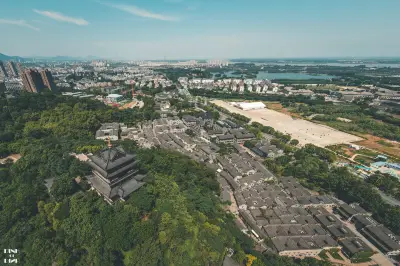
On the morning of October 7th, while strolling through the Daohe Ancient Town in Taizhou, I suddenly noticed a huge screen wall inscribed with four large characters: Xiba Cheyan.
I took out my phone and searched on Baidu, learning that this was a term used in salt administration. During the Qing Dynasty, salt produced by various salt yards was to be distributed to merchants based on a quota of yin (salt certificates), and according to regulations, this allocation was decided by drawing lots, a process called cheyan. In the Qing Dynasty, one supervisor of cheyan was appointed in each of the Hedong, Huainan, and Huaibei regions to manage the inspection and supervision of salt shipments.
Three meals a day are never without salt. In ancient times, the simplest method of producing salt was to use seawater for solar evaporation. As long as there was a coast, one could set aside a plot of land to dry salt, requiring only seawater and sunlight. It was essentially a cost-free venture yielding immense profits.
Since ancient times, salt has been a state monopoly, and trading smuggled salt was a capital offense. The tax rate on the salt industry was astonishingly high, starting at ten times the original price and eventually rising to thirty-seven times. From then on, salt tax became the most important source of national fiscal revenue. Even as late as 1950, salt tax still accounted for about 5.5% of national tax revenue.
In the eleventh year of the Yongzheng reign of the Qing Dynasty, 1733, the Taibai Monitoring Office was established at Xiba in Taizhou, with special officials appointed to manage salt affairs, responsible for inspecting, weighing, stamping, issuing documents, and collecting taxes on salt transport. From then on, Taizhou became prominent on the Huainan salt transport and sales waterway.
In front of the screen wall, I pondered:
Many of Taizhou's famed cultures are also closely linked to water. Without the sea, without the salt transport canals, and without the Taibai Dam that separated the upper and lower reaches, there would be no unique salt tax culture centered on Taizhou for collecting salt taxes. A sign beside the screen wall quoted a poem from the Qing Dynasty:
Boats come and go, singing rowing songs,
Huainan salt vessels, many enter the North Gate.
I wonder at the waters under Qinghua Bridge,
How many extra feet of waves have risen recently?
Gao Feng'han, one of the Eight Eccentrics of Yangzhou, served as the second official in charge of the Taibai Monitoring Office. In Taizhou's history, the water culture and salt tax culture are intimately blended and inseparable.
Taizhou, with its geographical advantage of linking the Huai and Si rivers and controlling the Yangtze River, became a salt transport hub and agricultural product distribution center along the Yellow Sea coast. Its waterways connecting to the Yangtze River and the sea made salt transport and grain transport extremely prosperous, which brought thousand years of flourishing to the city of Taizhou.
In the early years of the Southern Tang Dynasty, it was promoted to the status of a prefecture named Taizhou. During the Southern Song Dynasty, the Huainan East Road Office for Salt Affairs was established here. In the early Ming Dynasty, the Lianghuai Salt Transport and Sales Commission was also set up in Taizhou. After the completion of the East and West Dams in the twenty-fifth year of the Hongwu reign, salt boats from eleven salt yards under Taizhou jurisdiction traveled along the North Canal to stop at Daohe, mooring between Tongcang Bridge and Banqiao, creating a scene of 'a thousand sails pressing down upon the clouds'.