Taizhou: Ancient Streets and Alleys, the Essence of Jiangnan
The finale of a three-day trip to Taizhou: visiting Daohe Ancient Town.
There are six major ancient towns in Jiangnan: Wuzhen, Xitang, Zhouzhuang, Nanxun, Tongli, and Luzhi. I have visited all of them in the ten years since retirement. Jiangnan ancient towns are much alike: market towns in the land of fish and rice, with small bridges over flowing water, weeping willows, bustling shops...
Shanghainese tend to value Jiangnan over the north of the Yangtze River, and in the old days even looked down upon the northern banks. In fact, Yangzhou and Nantong are both located north of the Yangtze, yet their prosperity, cultural heritage, and long history are no less than those of Jiangnan!
The three days I spent in Taizhou during the National Day holiday changed my prejudice against the northern bank. How beautiful is Taizhou, north of the river! How prosperous is Taizhou, north of the river!
Taizhou, the water city, and Daohe Ancient Town—you can completely look down upon the six major ancient towns of Jiangnan!
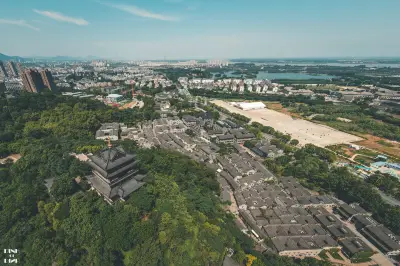
Green bricks, black tiles, the charm of Five Alleys; elegant culture and beautiful waters make Daohe lovely. Built in the late Yuan and early Ming dynasties, Daohe Ancient Street is Taizhou's largest cluster of ancient buildings.
The alleys are not long, but their age is much greater than that of the elderly. The area where the alleys are located has a name: Five Alleys.
Five Alleys, with the Dao River to the east and Worker Road to the west, consists of five alleys, all with simple names: First Alley, Second Alley, Third Alley, Fourth Alley, Fifth Alley. The five alleys all run north-south, arranged east to west, like a delicate five-character quatrain, or like a difficult permutation puzzle.
Walking in the ancient alleys, the ground is either brick or stone, clean and tidy, not even a fallen leaf in sight. The houses with green bricks and small tiles are not tall, most with doors closed and locked. Outside the doors are couplets, door lintels, old vines, lanterns... winding and quiet, with no hawking sounds, no commercial atmosphere.
Turn a corner, and there are pavilions and towers. Inside the pavilion, elderly men gather, playing music and singing. In the square, aunties dressed in bright red are dancing Xinjiang dance, with the speakers turned low so as not to disturb residents.
Turn a corner, and see the China Ancient Well Museum. Indoors, it displays the history of Taizhou's wells; outdoors, it is dotted with statues of various wells and figures. Everything is poetic and picturesque; the street resembles a classical garden, with winding paths and corridors, endlessly charming.
Turn a corner, and see a large vertical display board made of the national flag and a map of China, commemorating the 71st anniversary of the founding of the People's Republic, with the words: "Frame with the Motherland." Our thoughts step out from the thousand-year-old streets and alleys of history and return to the present. Wang and I stood and asked someone to take a photo of us with the motherland.