Two-Day Trip in Jiangsu: Xinghua Has Not Only Thousands of Rape Flowers but Also the Misty Lizhong Water Forest
Going for an outing and enjoying flowers is a respect for this spring. On this warm spring day with blooming flowers, I chose to go to Taizhou to see flowers.
Over 700 years ago, when Marco Polo traveled to Taizhou, he praised, 'This city is not very big, but there is an abundance of earthly happiness.'
Tiger Girl came to Taizhou for three days. This small city truly has its own unique charm. Let's follow Tiger Girl to relive the Taizhou trip.
Day 1: Xinghua Qianduo Scenic Area - Zheng Banqiao's Former Residence - Xinghua Museum - Jindongmen Street - Xinghua Zemuyunju Guesthouse
Day 2: Taizhou Morning Tea - Lizhong Water Forest Park - Return
1. Yangzhou Taizhou Airport is an airport jointly built and used by Yangzhou and Taizhou. The airport is located in Jiangdu District, Yangzhou, about 30 km from downtown Yangzhou and about 20 km from downtown Taizhou. Airport bus line: fare 19 yuan. 2. Taizhou Railway Station is located in the northeastern part of downtown Taizhou, with many bullet train trips to/from Nanjing/Shanghai. 3. Taizhou has three long-distance bus stations: Taizhou East Bus Station, Taizhou West Bus Station, and Taizhou South Bus Station, which operate routes to different areas within the province. Among them, Taizhou South Bus Station has more trips, so it is also called the main passenger terminal by locals. 4. Taizhou is suitable for self-driving. Scenic spots like Xinghua's rape flowers are not in downtown Taizhou, and public transportation is inconvenient. If possible, self-driving is best.
One of the Four Great Seas of Flowers in the World: Xinghua Qianduo Scenic Area
Xinghua Qianduo Scenic Area is located in Qianduo Town, Xinghua City, Taizhou City, Jiangsu Province. It is a Globally Important Agricultural Heritage System and a four-star rural tourism spot in Jiangsu Province. The Qianduo Scenic Area is world-famous for its unique 'duotian' (raised field) landform. 'Duo' is an agricultural landscape unique to the Lixiahe region. Every year around the Qingming Festival, the 'duotian' surrounded by water in the Qianduo Scenic Area is covered with golden rape flowers. The magnificent view of 'golden rapeseed flowers covering the ground' attracts many tourists. 'The river has many bends and clear water; every field is a patch of yellow flowers' is a true portrayal of Xinghua's thousand-duo rape flowers.
In the center of the scenic area, a three-story observation tower has been built, with each floor about ten meters in diameter, making it a good place for photography. Climbing the stairs, each floor offers a different view, and from different angles on each floor, different pictures are displayed. It can be said that 'every step is a picture, every floor is a landscape.' Standing on the top floor of the observation platform, the view ahead is even more unique.
Be sure to climb to the top floor to enjoy the rape flowers from a god's perspective. Among the crisscrossing waterways, clusters of golden rape flowers make people feel very relaxed and can feel the warmth of spring.
Coming down from the tower, you can get close to the rape flowers along the boardwalk. On the way, you might encounter cute dolls, which are cartoon characters modeled after farmers. Next, you will meet many aunties wearing red scarves in the fields.
You can take photos with the cute cartoon characters.
Here is an auntie working on a boat, captured with the camera for a very atmospheric shot.
Very simple working people, labor is the most glorious.
Here is the dock for boarding boats. It takes about 20 minutes to walk from the entrance of the scenic area. There are some local snacks for sale at very reasonable prices.
Seeing the rape flowers from a boat is another feeling. The gradually receding rape flowers contrast with the boats, creating a very harmonious picture.
From the Xinghua Qianduo rape flower scenic area, drive to Zheng Banqiao's former residence in the city center.
Zheng Banqiao's former residence is located at Zhengjia Lane, Gubanqiao, east of Xinghua city. This place was once the corner of the city moat and city wall, known as 'Niujiaojian' (ox horn tip). Zheng Banqiao's surname was Zheng, given name Xie, courtesy name Kerou, and Banqiao was his pseudonym. Why did Zheng Banqiao take 'Banqiao' as his pseudonym? It turned out that there was a plank bridge (banqiao) on the ancient moat. He crossed this bridge every day when going out and into the city, and he had deep feelings for it, so he took 'Banqiao' as his pseudonym.
Su Dongpo said, 'I would rather have no meat to eat than live without bamboo.' Zheng Banqiao loved bamboo all his life, taking bamboo as his fate and accompanying it. A few green bamboo stalks stand upright on the flower terrace, jagged and proud, like unyielding iron bones, reflecting the host's life. Among the bamboo, there is a tiger-shaped stone, said to be used by Banqiao for painting. Around the yard are also planted orchids, lotus, pines, cypresses, and wintersweet, expressing the host's noble and upright character.
Mr. Banqiao's former residence is simple and elegant, just as he said: 'A room does not need to be large to be refined, and flowers do not need to be numerous to be fragrant.' Strolling through the former residence and wandering on the stone slab road, I was moved: Mr. Banqiao's extraordinary talent in 'three perfections of poetry, calligraphy, and painting' is amazing; his concern for the people and sharing their worries is admirable; and his attitude of being content in poverty, honest, and simple is even more revered.
Xinghua Museum is a national third-level museum, a patriotic education base at the provincial, Taizhou city, and Xinghua city levels, and a national 4A-level tourist attraction. It was established in October 1958, dissolved and merged into the Cultural Center in 1961. In 1981, the collection of cultural relics was transferred to the library. In 1986, the Zheng Banqiao Memorial Hall in Xinghua County was established, and the collection of cultural relics was returned. In 1991, it was clarified that the Xinghua Museum and the Zheng Banqiao Memorial Hall work together.
The museum building was built in 1993, imitating Ming and Qing architecture, covering an area of 5,000 square meters, with a building area of 3,289.01 square meters and an exhibition area of 2,180 square meters. It is connected to Li Garden in the east and to the Xinghua County Government Office in the south.
The exhibition area consists of 6 permanent exhibitions and 2 temporary exhibition halls. The permanent exhibitions are: 'The Triple Perfect Genius - Zheng Banqiao', 'Chushui Flowing Long - Xinghua History Material Exhibition', 'Shi Nai'an Cultural Relics and Historical Materials Exhibition', 'Xinghua Literature Museum', 'Elegance of Great Men and the Motherland's Mountains and Rivers - Lv Houmin Photography Art Museum', and 'Exhibition of Achievements of Contemporary Xinghua Celebrities'.
'The Triple Perfect Genius - Zheng Banqiao' uses three chapters: 'Life and Achievements, Artistic Achievements, Far-reaching Influence' to show the origins of Zheng Banqiao's people-oriented thought and artistic thought and their impact on later generations.
'The Xinghua Literature Museum' focuses on displaying the lives, achievements, and works of many literary giants and celebrities such as Shi Nai'an, Li Chunfang, Lu Xixing, Liu Xizai, Ren Dachun, Li Qing, Li Xiang, Bi Feiyu, Fei Zhenzhong, Wang Gan, etc.
This is the Boat Hall of Li Garden. From the outside, the building structure looks like a boat. The four characters 'Zizai Liuxing' (Freedom and Popularity) on the plaque reflect the owner's cynicism and indifference to fame and fortune. Notice that the second character has an extra dot; the guide said it might imply that the owner wants more freedom.
The garden is very quiet and simple, allowing you to fully experience the ancient charm of Jiangnan.
From Li Garden, you can go directly to the county government office, where the county magistrate held trials.
The pair of stone lions at the entrance are also very special, shaped like human bodies, interesting and lovely.
Dongchengwai Street is not 'big'; it looks like a small alley. This is the core area of Jindongmen. In the old days, it gathered many handicraft workshops, including silk cloth shops, groceries, medicinal herbs, tea, ceramics, gold and silver jewelry, pawnshops, and herbs. Most were front shops and back workshops. Today, the street still retains many old trades, making it a good place for travel photography to get an 'old taste' atmosphere.
This archway spanning Dongchengwai Street was erected for the owner of the 'Yuanlao Mansion' - the Ming Dynasty top scholar and chancellor Li Chunfang. Next to the archway is a small temple. On both sides of the archway are ordinary homes, and through half-open doors, you can glimpse their lives.
Entering Dongchengwai Street, the Shangchizhai Pharmacy at the street entrance is a two-story small Western-style building. It was founded in the Qing Dynasty by the famous Yangzhou doctor Fang Shichuan. The entire shop still maintains its historical appearance, with old medicine cabinets, medicine bottles, pestles, money tables, and plaques.
The Four-Archway is a landmark of Xinghua, built in the Ming Dynasty. From a distance, it looks like an eight-cornered pavilion, with hidden 'mysteries'. Walking in and looking up, you can't help but exclaim. The top of the archway is filled with 47 plaques stacked layer upon layer, very spectacular. These plaques were erected to honor outstanding figures in Xinghua's history.
Old City Route Description: Starting from (1) Bazi Bridge, walk through Bazi Bridge Square to (2) Four-Archway, then turn north into Pailou Road. Shortly after is (3) Xinghua Museum. From the museum, enter (4) Li Garden and County Government Office. Exit from the front door of the county government office to Wu'an Street, an antique pedestrian street. Pay attention to the small alleys on the north side to find (5) Yuanlao Mansion, which has been turned into Xinghua Chess Academy. Then walk to Chang'an Middle Road, turn south to Pailou East Road and continue. Passing (6) Dongyue Temple and (7) Cheng's Grand Sima Mansion, you arrive at Pailou Road. Here, go south along Banqiao Road to (8) Zheng Banqiao's Former Residence, or north to Fuqian Street to (9) Ming Great Wall Ruins. Return to the intersection of Banqiao Road and Pailou East Road, enter the old east outer street. This street is more like an alley than a street. At the street entrance is (10) Shangchizhai Pharmacy. Turn east into Shujia Lane to visit (11) Zhao Haixian Western-style Building. Returning to Dongchengwai Street, (12) Zhuangyuan Archway spans the street, with a small temple next to it. Then find (13) Xie Family Ancestral Hall in a small alley to the north, and finally reach Yudai Road. Going north on Yudai Road is (14) Ge Jiazhu Memorial Hall, and going south along the river leads to (15) Yang Family Mansion. (From online guide)
Xinghua Zemuyunju Guesthouse
When traveling for enjoyment and spring outings, the most important thing is a high-quality sleep and energy. I chose this guesthouse near the scenic area. Located in Liuze Village, it perfectly combines rural and modern elements. After flower viewing, you can sit in the courtyard, watch the lake, and drink tea, very comfortable.
Each room is also thoughtfully equipped with a sun hat. Breakfast is also very healthy, with balanced nutrition. Especially recommended is the lake view king room, which is really beautiful. At night, you can soak in the bathtub and look at the sparkling lake outside, and all worries will disappear.
The room has the comfort of 'Going to the end of the water, sitting and watching the clouds rise,' and the freedom of 'Where does poetry reach, meditation surpasses poetry.'
The Zen-style Chinese guesthouse always brings a courtyard full of freedom and fragrance in a clear environment. This is probably one of the reasons it is highly recommended.
The rural-style guesthouse is simple, natural, fresh, and warm. The elegant colors give a sense of intimacy. The log-colored furniture, combined with various soft furnishing elements, highlights the natural feel of 'rural'.
If you are tired, come here to experience a natural life, and you might have a different experience.
A friend said that when you come to Xinghua, you must have morning tea. I always thought locals here didn't have morning tea. But when I arrived at the hotel, I was shocked. There were so many people, mostly local elderly people. It seems that Xinghua's morning tea has a long history.
Xinghua is full of tea houses, and the bun prices are cheap. Common fillings include meat, vegetables, red bean paste, shaomai, and meat dumplings. Higher-end options include three-ingredient buns and crab roe buns. Buns often come in mixed steamers, containing shaomai, steamed dumplings, honey-sugar cake, and buns. You can also freely choose meat buns, vegetable buns, red bean paste buns, shaomai, three-ingredient buns, crab roe buns, etc., according to your taste. There are also small delicate soup dumplings and piping hot soup buns.
For morning tea, dried tofu shreds (gan si) are the highlight. In Xinghua, there are three types: traditional Taizhou dried tofu shreds, scalded hundred-layer tofu shreds, and braised dried tofu shreds.
Scalded dried tofu shreds (tang gan si) are, as the name suggests, scalded with boiling water. They use high-quality 'bai ye' (thin tofu sheets), cut into silk-like threads, repeatedly scalded with boiling water, drained, piled into a pagoda shape on a plate, then mixed with fresh ginger shreds, coriander, sugar, vinegar, soy sauce, sesame oil, and peanuts.
Taozhuang beef, thin slices, dipped in a little chili sauce, spicy and delicious.
Xinghua's morning tea is almost like lunch, with diverse styles. Foodies must not miss it.
Lizhong Water Forest Park
The Water Forest Park was an unexpected gain for me on this trip. I had seen some online and thought it was just average, but the actual experience was fantastic.
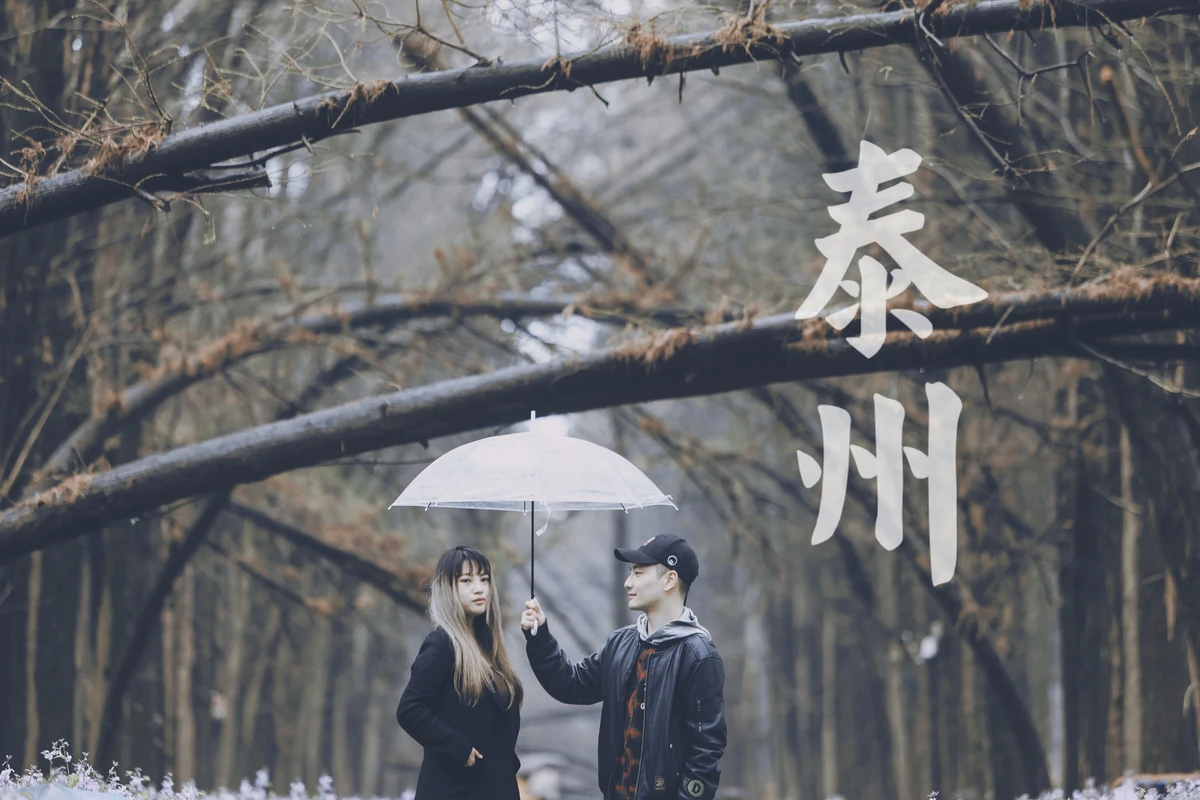
I came to Xinghua for the Qianduo rape flowers, but I was captivated by the Lizhong Water Forest. After seeing the Xinghua Qianduo rape flowers, I came to the Lizhong Water Forest Park. The Water Forest Park on a rainy day has a unique charm. Holding a small white umbrella and walking in the forest, with flowers as a backdrop and the mist released swirling around, I felt like I was in a fairyland.
Not far inside, on the right, there is a maze full of green plants. A companion told me that as long as you follow the 'right-hand rule,' you can easily get out. Not everyone knows this secret.
The Misty Forest (Wusen Huanjing) is the highlight for photography in the entire scenic area. Be sure to capture the moment, as the mist is released at scheduled times each day, with limited duration. Once the mist is released, the entire forest becomes ethereal and dreamy. Standing in the metasequoia forest, you are a little princess.
Take a wooden raft to cruise deep inside, listen to the birds singing, watch the egrets circling overhead. Isn't this a harmonious scene between man and nature? The dense forests, crisscrossing water alleys, and tens of thousands of wild birds bring vitality to the quiet water forest.
Taking a bamboo raft to explore the Lizhong Water Forest Park is an unmissable experience. The water alleys are full of metasequoias and swamp cypresses, and various birds freely shuttle through the forest. The bamboo raft moves slowly, the birds chirp leisurely, it's simply too comfortable!
Peach Blossom Island is the last photo spot in the scenic area. Entering Peach Blossom Island reminds me of 'Eternal Love' (Three Lives Three Worlds Ten Miles Peach Blossoms). Although it's not that large, it's very beautiful to wear Hanfu and take photos.
Xinghua in central Jiangsu has become a popular early-spring outing destination due to its Qianduo rape flower fields. Coupled with the ecologically natural Lizhong Water Forest and the delicious and affordable red-shelled hairy crabs in autumn and winter, Xinghua stands out in the niche tourism circle. Xinghua's old city itself also has many interesting points to explore. The historically prosperous Jindongmen old street still retains many residential houses and historical sites from the Ming and Qing dynasties.