Encountering the Water City Taizhou: Visiting Three Gardens and Old Streets, Discovering a Different Jiangnan Town
A Different Jiangnan Town
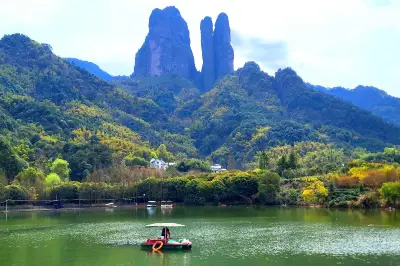
Taizhou, named for the meaning of 'national peace and prosperity,' is a renowned historical and cultural city in China that has weathered thousands of years. It is said that Marco Polo, during his visit to Taizhou, praised it, saying, 'This city is not large, but it abounds with every worldly happiness.' I had been to Taizhou once before, for a college roommate's wedding, but it was only a brief visit, and I didn't truly get to explore this Jiangnan town. This time, I returned to delve into every corner of Taizhou and get to know a truly different Taizhou. Today, tourism in Taizhou is increasingly developed, and there is even a holiday tourist bus line for visitors, passing through Liuyuan (Willow Garden) – Wanghai Tower – Meiyuan (Plum Garden) – Qiuoxue Lake – Tianyuan Muge – Qinhu Scenic Area – Qintong Ancient Town. So, let me take a proper look at what charms Taizhou has to offer.
With peach blossoms blooming radiantly, in the spring season, immerse yourself in the tranquil and natural Taoyuan (Peach Garden) of Taizhou, a paradise away from the world. Taoyuan boasts hundreds of varieties of peach blossoms, with over three thousand trees. Almost every corner where a tree can be planted is filled with peach blossoms. The varieties here gather peach blossom species from all over the country. Every spring, different types of peach blossoms bloom in sequence, creating a unique landscape. This has become a must-visit attraction in Taizhou.
Most people come to see the gorgeous peach blossoms in Taoyuan, but they are also attracted by the ancient buildings and historical stories within the garden. If you come specifically for the peach blossoms, it's important to know the blooming period. The best time to enjoy the flowers is from mid-March to late April. Each variety blooms at a different time, and the flowering period is quite long.
Taizhou Taoyuan is located in the Fengcheng River Scenic Area of Taizhou. It lies to the east of Wanghai Tower, separated by a river, allowing them to gaze at each other from opposite banks. It is also very close to the Memorial Hall of Mei Lanfang, just one street away. The core attraction of the garden is Chen'an, the place where Kong Shangren created the Kunqu opera 'The Peach Blossom Fan' during his stay in Taizhou. The architecture of Chen'an is in the Ming and Qing dynasty style, and it contains detailed records of the creation and story of 'The Peach Blossom Fan.' Visitors here will not miss this core attraction to learn about the story and creation of 'The Peach Blossom Fan.'
In spring, Taoyuan is full of vitality, with bright sunshine and gentle spring breezes, making it an excellent place for an outing and a leisurely walk. There are many people playing by the river, and crowds can be seen everywhere, coming to visit Taoyuan, one of the three villages known for opera culture. While enjoying the beautiful scenery, visitors also take out recording devices to capture the moment.
Every building in Taoyuan has a lovely name, such as Ouhua Islet, Qitang Bridge, and Waterside Pavilion Wharf. Each building here has a story. The weather was quite good when I arrived at the garden. I saw someone standing on a bridge admiring the surrounding scenery, with trees on both sides reflected in the river water. Such a picturesque scene is full of beauty, though fallen leaves floating on the lake water make it less clear and clean.
Qingfeng Pavilion is located to the north of the core attraction Chen'an. The architectural style of this pavilion is a three-story, double-eaved octagonal structure from the Song dynasty. The pavilion is about 20 meters high and complements the Wanghai Tower opposite. The pavilion also has a historical story: it was built by Zeng Zhiyao in the early Northern Song dynasty, and Wang Anshi also visited Taizhou and climbed Qingfeng Pavilion many times. Standing on the pavilion, feeling the gentle breeze, one can appreciate the legacy of a prime minister of the era.
Immersed in this paradise, looking at various ancient buildings in Taoyuan and feeling the legacy of a historical prime minister, it's no wonder this is one of the leading places of opera culture, where every scene forms a spring landscape, full of vitality. Taking a stroll in Taoyuan to relax is also a great idea. Sitting on the rockery made of Taihu stones, watching the surrounding scenery and listening to the murmuring lake water, surrounded by such natural and tranquil surroundings, while enjoying a relaxed mood, I also marveled at how quickly time passes and how short the journey through Taoyuan was.
After visiting Taoyuan with its hundreds of peach blossom varieties, I came to another garden called Taizhou Liuyuan (Willow Garden). Liuyuan is located at Dayu Bay, south gate of Taizhou, built against the mountain and by the water. In spring, the tender green willow catkins flutter in the wind, creating a very artistic atmosphere. When mentioning the character 'Liu' (willow), familiar lines of poetry come to mind, such as 'The slender tree is dressed in emerald all about; a thousand branches droop like fringes made of jade.' This land has a history of hundreds of years and was built in memory of Liu Jingting. Strolling in Liuyuan, one never feels bored or listless; instead, one particularly enjoys this peaceful and beautiful time.
I think the name Liuyuan is quite poetic. Even before entering, I was attracted by the architecture at the entrance. A large green plaque reads 'Liuyuan.' Upon stepping inside, the first thing that catches the eye is a large boulder with the inscription 'Record of Liugong Temple,' detailing the brilliant life of the storytelling master Liu Jingting from start to fame. The inscription was written by Jiang Kun of the Chinese Quyi Artists Association.
As you go deeper into Liuyuan, the shade of the trees becomes denser, and you can hear the chirping of birds from time to time. This garden, built against the mountain and by the water, is full of artistic conception. Walking in the garden feels like stepping into a historical journey. Every place you pass offers different scenery—uneven steps, rest in ancient pavilions, and small lotus ponds where fish can be seen swimming freely.
Some iconic buildings in Liuyuan are worth visiting, such as a brick courtyard that houses the Chinese Pingshu Museum, where you can see many things related to pingshu (storytelling). There is also a café by the lotus pond, where you can enjoy a slow-paced life and savor the various aspects of life.
The spring sunshine is bright, and under such good weather, walking on the quiet paths of Liuyuan, the noisy atmosphere of the main road immediately disappears. The air here is very fresh, and breathing in the negative ions from nature is very refreshing, allowing one to relax tired body and mind.
Various lush green trees are in full bloom, with rows of slender, straight metasequoia trees adorning the path, allowing walkers to enjoy this moment of tranquility, unhurried, slowly taking in the surrounding beauty.
Inside Liuyuan is Liugong Temple, built to commemorate the great life of Liu Jingting, allowing people to better remember this common-born storytelling master. In the temple, you can see his living environment and imagine the high realm that Liu Jingting pursued in his storytelling. The concepts of benevolence and righteousness are also well interpreted: the front hall is for promoting benevolence, and the main hall for righteousness, helping people better understand these values.
The river in Liuyuan is emerald green, separated from the South City River by only a causeway. The willows on the causeway sway in the wind, showing their graceful figures, reflected in the water. With such beautiful scenery, sitting or leaning on the bank, with the river and willow trees as a backdrop, you can take very nice photos.
At this moment, I only want to savor the elegance of life slowly, to be a recluse here for a while, leaving behind the mundane world. Whether listening to a story segment or a ditty, watching the tender willows flutter in the wind, or listening to the continuous bird calls, or sipping a cup of fragrant tea, everything is full of leisure and pleasure.
Taizhou has long been known as 'the most cultured place south of the Huai River,' with a gathering of talented people and sages. From Taizhou came outstanding representatives in culture and art such as Shi Nai'an, Zheng Banqiao, and Mei Lanfang. During my visit to Taizhou, I explored the memorial hall of the great Chinese Peking Opera performer, Mei Lanfang.
Although Mei Lanfang was born in Beijing, his ancestral home is Taizhou. The entire memorial hall is a small garden dominated by Ming and Qing architecture, named Meiyuan (Plum Garden) after Mr. Mei's surname. It has now become one of the eight scenic spots of Taizhou City.
At the entrance is Mei Lanfang's statue square, exuding a sense of pride amidst a profusion of flowers. Entering the historical materials exhibition area, through the five exhibition zones: 'Mei Blossoms in China,' 'Mei Fragrance Across the Seas,' 'Mei's Unyielding Character,' 'Mei's Virtue Like Jade,' and 'Mei's Roots in Taizhou,' it condenses and refines Mei Lanfang's brilliant life that belongs to China, the world, and Taizhou.
'A fine blade is honed from grinding; a plum blossom's fragrance comes from bitter cold.' Mei Lanfang's path to reaching the pinnacle of Chinese opera performance art was not smooth. It was precisely because of his hard work and diligent practice that he achieved fame at a young age.
The memorial hall also uses modern multimedia means such as sound, light, electricity, and video to display Mr. Mei's artifacts, pictures, objects, and materials. A black-and-white video clip allows us modern people to once again appreciate Mei Lanfang's beautiful singing.
Mei Lanfang excelled at playing female roles (dan). This white marble statue is his portrayal in 'Farewell My Concubine.' The entire Meiyuan is like a Jiangnan garden built for him. The garden is full of birdsong and flower fragrance, and the breath of spring greets you.
In every country in the world, culture governs and determines art. In Mei Lanfang's case, art reacted back on culture, not only supplementing cultural deficiencies but also radiating a unique brilliance, allowing people around the world to understand our country's culture through Mei Lanfang's Peking Opera.
Besides his high achievement in Peking Opera, Mei Lanfang was also a very patriotic person. Due to the ideological work done by Zhou Enlai, Mei Lanfang decided to perform in Japan three times to fulfill a mission. He said that the performances in Japan were to communicate feelings and promote the restoration of diplomatic relations between the two countries. This reflects his patriotism and his deep connection with Taizhou.
Behind the scenic area, there is an antique stage. When a former leader visited the renovated Mei Lanfang Memorial Hall, he once stepped onto this stage and sang famous Peking Opera pieces with local Peking Opera enthusiasts.
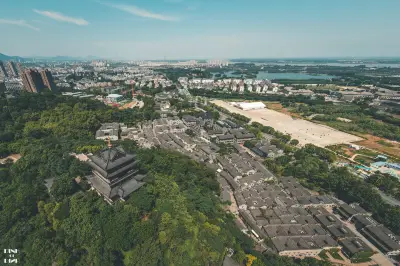
Taizhou Old Street is not a true old street in the real sense; it is a man-made replica of an old street, a young old street. It recreates the street scenes of old Taizhou from hundreds of years ago. Passing through the ancient memorial archway, you enter the old cobblestone alleys. On both sides are ancient-style shops, with rows of large red lanterns hanging along the arcades. Shop signs, plaques, and banners take you back in time instantly.
Strolling along Taizhou Old Street, I unconsciously slowed down. I realized it had been a long time since I had slowly appreciated the beauty of ordinary things around me. We walk too fast; it's time to stop, let our steps wait for our souls, and let life return to its original rhythm.
Fengcheng River is the mother river of Taizhou. It is said that looking at it from the shore doesn't give much of a feeling; only by taking a decorated boat cruise can you discover its hidden wonders. The ticket for the night cruise on Fengcheng River is not expensive—less than 50 yuan online.
Taizhou was once called 'Water Paradise, Night Tour City.' Most of Taizhou's attractions are connected by the Fengcheng River, like a necklace encircling the city, linking more than 30 riverside scenic spots. These include the four major characteristic cultures of Taizhou: history, opera, folk customs, and commerce. The water circles the city, scenery is connected by water, and views change with the flow. The tourist boats, ornately decorated, are also called 'painted boats.' Taking a painted boat cruise, you can enjoy the water, roads, bridges, and other water town scenery of Taizhou.
But because winter had already set in, the temperature at night was a bit low, so I had to close the window and enjoy the night scenery from inside the cabin. As the boat passed under bridges, each bridge, decorated with lights, looked like a girl fresh out of a bath, lying leisurely across the Fengcheng River.
Famous towers and gardens along the river kept receding in the ripples. Along the千年 (thousand-year-old) ancient city river, you can see the majestic night view of Wanghai Tower, visit the charming scenery of Sanshui Bay, observe the magnificent reliefs on Yingchun Bridge, and experience the warmth of the night-time Peach Garden.
'During the day, skin wraps water; at night, water wraps skin.' This is a saying often heard in Taizhou. 'Skin wraps water' refers to morning tea. Because it is very close to Yangzhou, Taizhou's morning tea shares similarities with Yangzhou's morning tea. With the prevalence of morning tea culture, Taizhou has integrated its morning tea into the city's culinary名片 (business card). The first thing Taizhou people do when they get up in the morning is to go to a time-honored tea house, order baskets of dim sum, and start a vibrant day.
Taizhou people do not take morning tea lightly. They go to well-known local tea houses, the kind of restaurants where people would normally go for lunch or dinner, and sit leisurely with family and friends to enjoy morning tea together. For them, morning tea is not just about filling the stomach; it is an indispensable pastime in life. In Taizhou, people say that to eat Taizhou morning tea, you must go to Guyuelou on Old Street. Guyuelou is the most famous place for morning tea in Taizhou. Because the founder's surname was Hu, it is called Guyuelou (meaning 'ancient moon tower'). The facade is imposing, with ancient and elegant decoration. Inside the hall, it is bustling with people, every seat taken. Taizhou's morning tea culture truly lives up to its reputation.
A cup of tea, a portion of scalded dry tofu shreds, a basket of crab roe buns, plus a bowl of fish soup noodles—this is the classic morning tea combination for Taizhou people: one tea, three snacks, and one noodle, rich and nutritious. In Taizhou, eating morning tea is an art and a way of life. Taizhou's morning tea culture has a long history, with fresh ingredients and rich variety. Many foodies come to Taizhou specifically for the morning tea. Looking at these stacked high steamers, it's easy to see how abundant it is.
The most classic item in Taizhou morning tea is scalded dry tofu shreds (烫干丝), which is the first dish served. This small dish of scalded dry tofu shreds is a traditional famous food of the Yangzhou-Taizhou area. It seems simple but requires extremely high knife skills from the chef. Taizhou's scalded dry tofu shreds are made from dried tofu, cut into shreds, mixed with vinegar, and have a smooth and tender texture. It is one of the most indispensable foods in Taizhou morning tea.
Besides scalded dry tofu shreds, there are also boiled dry tofu shreds (煮干丝). The difference is that boiled dry tofu shreds are in soup, while scalded ones are mixed. The ingredients in boiled dry tofu shreds are also very substantial: cured meat, mushrooms, shrimp, black fungus, and greens, making it almost a bowl of soup. Boiled dry tofu shreds are softer to eat, and the soup is made from stock, extremely delicious.
Next come the 'three snacks,' namely buns, steamed dumplings (zhenjiao), and siu mai (shaomai). Among the three, the crab roe bun (蟹黄包) is the most popular and delicious snack in Taizhou morning tea. The golden crab roe seeps through the dough to the outside of the bun, making it mouthwatering. When you break open the crab roe bun, you see full crab roe and crab meat. With one bite, the fragrance of crab roe fills your mouth, and the meat is very solid. Among the many snacks on the table, the crab roe bun is the first to be 'eliminated.'
Taizhou people make morning tea as if they are creating a work of art. These emerald green shaomai (翡翠烧卖) are made very delicately. Made with vegetables, the pointed tips reveal the bright green filling, hence the name 'emerald.' The skin is thin, the filling is generous, and when eaten, it has a slight bitterness, which can just offset the greasiness of the crab roe bun.
Yangcao buns (秧草包). People in the Jiangsu-Zhejiang area love eating 'caotou' (a type of clover). In Taizhou, caotou is called 'yangcao.' Shanghainese often eat caotou with wine, while Taizhou people steam a basket of yangcao buns. The folds of the bun reveal a hint of green. One vegetable bun can fill you up three to four tenths.
Another specialty among the 'three snacks' is the shrimp steamed dumpling (虾仁蒸饺), also a classic local snack in Taizhou. It arrives at the table steaming hot, with several crescent-shaped dumplings lying in the steamer, their folds very even. Each dumpling has thin skin and a large filling, full of juicy soup, with shrimp that is springy and bouncy. One bite, and the savory juice lingers between your teeth and lips.
Among the buns in Taizhou morning tea, soup buns (汤包) are also a must-try. We ordered vegetable soup buns, which completely wrap the soup inside the dough. From the outside, you can vaguely see the dark green soup. Eating soup buns is a test of skill. Carefully bite a small hole, suck out the soup through the opening, and you get a strong flavor of vegetables and mushrooms, as well as crab roe—fresh but not greasy. But what I wonder is how they manage to put vegetable soup inside the bun.
Another thing not to forget is the fish soup noodles (鱼汤面). An authentic Taizhou morning tea always ends with a bowl of fish soup noodles. The soup is made from eel bones, pork bones, and wild crucian carp, simmered over low heat, and then used to cook the noodles. The soup is relatively light, and you can sprinkle pepper to bring out the freshness. Finishing this bowl of fish soup noodles brings true satisfaction.
Taizhou has no sea, but it has a Wanghai Tower (Sea-Viewing Tower), located by the Fengcheng River. It is a landmark building of Taizhou, known as the 'First Tower of Jianghuai.' Standing by the Fengcheng River, it can be seen at a glance.
Wanghai Tower was first built in the second year of the Shaoding reign of the Southern Song dynasty. Its fate, like that of Qiaoyuan, was very turbulent, repeatedly destroyed and rebuilt, mostly destroyed by war and rebuilt during prosperous times. It is said that when it was rebuilt during the Kangxi reign, it started with heavy rain and thunder, then clear skies and cranes soaring. The people all considered it a great auspicious omen, so they respected Wanghai Tower even more.
Entering the interior of Wanghai Tower, you can see a golden plaque recording the history of its transformations and vicissitudes.
Today's Wanghai Tower, over 30 meters high, still retains the architectural style of the Song dynasty. It has a three-story circular corridor on the outside, with the main colors being chestnut and gray, simple and elegant.
The design of the new Wanghai Tower continues the historical architectural style but is taller and more magnificent in form compared to historical records, with smooth and graceful lines, elegant and refined expressions, maintaining a harmonious and consistent style with Taizhou's existing ancient buildings. The Wanghai Tower we see today is mostly a reconstruction.
To get a panoramic view of the entire Fengcheng River, climbing Wanghai Tower is the best option. The beautiful scenery of Fengcheng River unfolds in full view. In the past, along with the advance of history and the change of dynasties, many historical celebrities have climbed this tower, such as locals Shi Nai'an, Zheng Banqiao, Mei Lanfang, and literati from various periods who loved to climb high to look at Fengcheng River and compose poems.
On the other side of Fengcheng River, there is a Western-style pointed church. It is truly a city combining Chinese and Western elements. At first glance, this church looks a bit like the famous internet-famous church in Qingdao.
The history of Taizhou is indeed long-standing. Only by stepping into it can you discover that it is like an old man, telling the past details bit by bit. The thousand-year history of Taizhou is also represented by the ancient town of Qintong. Perhaps many people never imagined that as early as 5,000 years ago, humans already lived here, as Neolithic artifacts and fossils of elk antlers have been unearthed.
The name 'Qintong' both contain the water radical, indicating its inseparable bond with water. Surrounded by water on all sides, the ancient town is also known as the 'Zhouzhuang of Central Jiangsu.' Today, this water-town pearl is rising in status among China's ancient towns.
Qintong Ancient Town is not large, nor is it crowded. Commerce and attractions are completely separated, preserving the living atmosphere of the original residents while featuring various quaint small attractions. It clearly has a cultured feel.
The ancient town is basically strung together by an old street, with former residences of grain merchants, a water dragon bureau (old fire station), a museum of Qin bricks and Han tiles, and the Qintong Intangible Cultural Heritage Hall. Visiting these attractions requires purchasing an additional ticket—a combined ticket that gets punched at each attraction.
The scale of the ancient town is limited, and the stone-paved roads are quite narrow. Walking deeper, it feels like entering a maze.
Exiting the scenic area, there is a main commercial street, mainly selling local specialties, such as baked cakes, fish balls, fish cakes, shrimp balls, etc. It is said that Qintong baked cakes are quite famous.
The best-selling items here are Huangqiao baked cakes, Jingjiang dried pork slices, and Qinhu river crabs.
All kinds of snacks fill the streets, with tempting aromas, making it hard to resist trying them.
On the ancient street, there are many people selling meat floss cakes and fish balls, all freshly made and steaming hot. Unexpectedly, besides Taizhou morning tea, the street food in Taizhou is also so refined and abundant.
Qinhu river crab has tender and delicious crab roe and meat, making it the most famous local freshwater delicacy.
Among all provinces in China, Jiangsu has the most 5A-level scenic spots, with 24. Many are well-known, and Taizhou also has one and only one 5A-level scenic spot, but it is very low-key. Many people only learn about it after arriving in Taizhou. Yet it possesses some of the most beautiful natural scenery in Jiangsu and is a favorite habitat for animals. Qinhu National Wetland Park is a pearl embedded in Taizhou.
Located in the Jiangyan District of Taizhou, Qinhu National Wetland Park officially became a national wetland park in 2011. It is the second national-level wetland park in China and the first in Jiangsu Province, located in the Lixiahe area, one of the three major depressions in China. Upon entering the Qinhu Wetland, the first thing to do is to take a boat, because lakes and rivers account for about 37% of the total scenic area.
Qinhu National Wetland Park is themed around 'water, wetland, and ecology.' After disembarking, you can see a wetland science museum shaped like a ship. It introduces the components of various wetlands in Qinhu, mainly divided into three types: lake wetlands, river wetlands, and marsh wetlands, with three functional zones: wetland conservation area, wetland restoration area, and rational utilization area.
The journey through Qinhu Wetland feels like a boat trip. After getting off the big boat, you board a small boat. Unlike the motor-driven big boat, the small boat is more like a hand-rowed boat. The boatwomen row the oars back and forth, slowly drifting on Qinhu Lake. Looking out, the reed marshes and aquatic plants seem endless. Crossing Qinhu Lake to the wetlands inside the lake, the clear water reflects the figures of people. Fine ripples overlap the shore and slowly recede.
Qinhu Wetland not only has beautiful natural scenery but is also an animal paradise, with numerous aquatic organisms and national protected animals, such as elk, red-crowned cranes, and Chinese alligators, all first-class national protected animals. On the shore, you can also see sculptures of elk. However, from the boat, it is not easy to see the animals hiding in the grass.
There are also small bridges on the lake. Walking through the wetland is also a good option, but because of the large area of Qinhu, walking takes most of the day. The lake surface flows with emerald waves, the small boat sways left and right, creating beautiful ripples. From time to time, pleasant bird songs can be heard. With the bird calls, egrets fly out from the lush forests into the clouds. Sitting at the bow, it feels like being in a bird's paradise.
Disembarking again, I saw another scene of the wetland. The golden gourds in the Farming Paradise immediately caught my attention. It turns out that Qinhu Wetland is not only natural but also rich in cultural atmosphere, with typical semi-natural farming wetland characteristics. There are many ancient farming tools and facilities, allowing visitors to experience the fun of ancient farmers cultivating and irrigating.
In fact, the cultural history of Qinhu Wetland is extremely rich, with many talents emerging. Its history can be traced back to the Neolithic age 4,000 to 5,000 years ago. In the Song dynasty, Yue Fei and Wen Tianxiang once fought battles here. The painter Zheng Banqiao and the senior statesman of the Republic of China, Yu Youren, also wrote poems here in praise of Qinhu Lake. Every year, the Qintong Boat Festival, one of the national intangible cultural heritages and one of China's top ten folk festival activities, takes place here, allowing people to get closer to the unique water-town folk culture of Jiangnan.
The recreational activities in Qinhu Wetland are also very diverse, including an adventure park, an elk garden, a water park, and even a horse farm. Riding a horse amidst the duotian (raised field) scenery of the wetland probably gives another feeling. It's no wonder there are many families with children visiting; the rich entertainment facilities make the wetland tour more interesting.
The high integrity of the ecosystem within the wetland provides a good habitat for various animals, especially an ideal place for birds to roost, forage, and breed. Strolling in the wetland, you can often hear the sounds of birds and ducks. This kind of leisurely ecological environment makes everyone who enters feel physically and mentally comfortable.
Dao River, Dao River—just the name evokes a lot of imagination. In the fields filled with the fragrance of rice, night, old trees, frog croaks, and childhood dreams with fireflies flying, running along the rice-scented river. The ancient Daohe Street area in Taizhou, with deep alleys, green bricks and black tiles, and flying eaves, is a quiet and secluded place to escape from the world.
Built in the late Yuan and early Ming dynasties, the ancient Daohe Street area is a cluster of ancient buildings in Taizhou. The main five alleys of the ancient street are five lanes that run east along the Dao River: First Alley, Second Alley, Third Alley, Fourth Alley, and Fifth Alley. People often get lost and can't find their way out, hence the saying in Taizhou: 'Entering the five lanes is like taking confusion soup.'
This is also a place with deep historical and cultural accumulation in Taizhou. Traditional Taizhou-style residences have a unique charm: deep alleys and old houses, green bricks and black tiles, delicate flying eaves, and small buildings by the water.
Stepping onto the stone-paved road full of a sense of age, slowly passing from one house to another, you can clearly feel the vicissitudes of the times and touch the accumulation of culture and history. Starting from one end of the path, winding and wandering to the other end.
As a historically famous place in Taizhou, the ancient Daohe Street carries a very heavy history. Despite the few people in the alleys today, it once prospered due to the salt tax, with shops lining the streets, wine flags fluttering, and bustling activity. Now, surrounded by the modern city, it still retains its original simplicity and tranquility.
Taizhou has come a long way. While developing its economy, it has not forgotten the original intention of restoring old buildings. Adhering to the principle of prioritizing restoration regardless of scale, it has successively restored the Old Street and the ancient Daohe Street, only to create a nostalgic atmosphere. This is the hermit sentiment of 'hiding greatness in the city,' finding tranquility in the hustle and bustle—a great wisdom of the Taizhou people.
Looking down, there are bluestone slabs of various shapes; looking up, there are green bricks and black tiles, and red lanterns. This is the unique ancient Daohe Street of Taizhou. Stepping down the stairs and moving forward leisurely, the weeping willows on the bank and the reflections in the river also stirred ripples in my heart.
Day 1: Taoyuan – Taizhou Old Street – Night Cruise on Fengcheng River
Day 2: Taizhou Morning Tea – Qintong Ancient Town – Qinhu National Wetland Park – Ancient Daohe Street – Wanghai Tower
Day 3: Meiyuan – Liuyuan
A three-day, two-night in-depth tour of Taizhou, and I didn't expect it to be so fulfilling. This small town in northern Jiangsu contains a history beyond my imagination. A song of Fengcheng River sings the prosperity of water-town Taizhou. For thousands of years, Taizhou has retained its original appearance. On this land, it has nourished the water-town people endlessly. Night after night, songs and music continue, and prosperity remains.