Slow Life in the Water City, Abundant Worldly Happiness: A Two-Day Autumn Trip to Taizhou
At the turn of autumn and winter, when the north has already begun to wither, the south is still in the colorful season of late autumn. Take a break from the rhythm of harvest and storage, and seek a slow life to relax your mind.
Over 700 years ago, Marco Polo visited Taizhou and praised, "This city is not large, but it abounds in worldly happiness." Today, Shaobai takes you to visit Taizhou, one of the Thirteen Guardians of Watery Jiangsu, to experience the slow life of this water city.
Taizhou is a national historical and cultural city. It was called Haiyang in the Qin Dynasty and Hailing in the Han Dynasty. It was named Taizhou, meaning "peace and prosperity for the nation." Because it resembles a soaring phoenix when viewed from above, it is also known as Phoenix City.
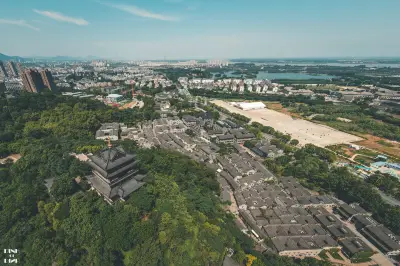
Originally built for gazing at the sea, this tower became a landmark for all to see. Standing alone at dawn or dusk, you realize where Taizhou truly lies. It is the iconic building of Taizhou. Climbing Wanghai Tower offers a panoramic view of the city and is a must-visit spot for elementary school students on parent-child autumn outings.
Entering the Wanghai Tower scenic area, you will find a grove of lush green bamboo in the Stele Garden. Uniquely shaped rocks are inscribed with selected poems about Taizhou, from the Five Dynasties to the present.
Wanghai Tower was first built in the second year of the Shaoding reign of the Southern Song Dynasty and is known as the "First Tower of Jianghuai." Its visitors over the centuries include locals such as Shi Nai'an, Wang Gen, Zheng Banqiao, Liu Jingting, and Mei Lanfang, as well as outsiders like Lu You, Fan Zhongyan, Ouyang Xiu, Yue Fei, and Kong Shangren.
In front of Wanghai Tower, there are two ginkgo trees and an ancient red-leaved tree, making it an ideal spot for capturing the colorful autumn scenery.
Climbing to the top of Wanghai Tower, you can gaze into the distance, feeling your mind expand. The cityscape of Taizhou unfolds before your eyes, with the old and new cities complementing each other.
Along the Fengcheng River in Taizhou, three gardens are scattered: Mei Garden, Tao Garden, and Liu Garden. Mei, Tao, and Liu represent drama, legend, and storytelling, respectively, forming the trio of Taizhou's opera culture.
Among them, Mei Garden is fully called Mei Lanfang Park, as Taizhou is the hometown of Mei Lanfang. It contains the Mei Lanfang Memorial Hall and is located within the Fengcheng River scenic area. Mei Garden sits on Phoenix Mound in the eastern outskirts of Taizhou, a place with a beautiful legend.
After meals, listen to storytelling; at night, enjoy leisurely opera. Taizhou has a strong opera atmosphere, which is an important part of its slow life. Mei Garden is a garden with connected pavilions and corridors.
The Mei Lanfang Historical Materials Exhibition Hall displays photos and artifacts from the master's life. The Mei Garden exhibition area is divided into five sections: "Plum Blossoms Bloom in China," "Plum Fragrance Spreads Across the World," "Plum Bone Steadfast," "Plum Virtue Like Jade," and "Plum Roots in Taizhou." These sections encapsulate Mei Lanfang's brilliant life—belonging to China, the world, and Taizhou—and reflect his noble character, patriotism, and deep ties to Taizhou.
Mei Lanfang Park features "Four Wonders" worth seeing. The Mei Pavilion is the first wonder.
The second wonder is the large half-length white marble statue of Mei Lanfang.
The third wonder is the large white marble artistic image of Yang Taizhen, which he portrayed in the drama "The Tale of Taizhen."
The fourth wonder is a giant stone tablet inscribed with the poem "Treading on Grass" written by Mr. Zhao Puchu during his visit to Taizhou.
Night tour of Phoenix City: Dream back to Hailing County, open the slow life of watery Taizhou in the night! After tasting Taizhou cuisine on Taizhou Old Street, be sure to take a night cruise on the Fengcheng River. The 45-minute boat trip connects more than 30 scenic spots along the river.
Along the way, enjoy the night views on both banks of the Fengcheng River: Wanghai Tower, Wenchang Pavilion, Tao Garden, Yingchun Bridge, Mei Garden, Liufang Teahouse, Beacon Tower, Gulou Bridge, Pozi Street, and more. Kunqu opera and Peking opera are performed alternately at Mei Garden and Tao Garden. With delicious Taizhou tea snacks, listening to storytelling after meals and enjoying opera at night is a unique life pleasure for Taizhou people.
The Fengcheng River is an ancient city river with a history of nearly a thousand years, stretching 6.7 kilometers. Like a necklace surrounding Taizhou, it embodies four major characteristic cultures: history, opera, folk customs, and commerce, recording Taizhou's glory of "the prefecture established in the Southern Tang, culture flourished in the Northern Song."
Colorful lights outline the graceful contours of famous towers and gardens on both banks. The melodious Kunqu, familiar Yue opera, and gentle strings drift into your ears one after another.
Gulou Bridge is 160.5 meters long and 43.6 meters wide. Under the illumination of lights, the magnificent bridge lies gracefully and naturally across the Fengcheng River, like a beautifully dressed maiden. The pedestrian walkway features a 220-meter-long corridor and ten pavilions. This type of landscape bridge with pavilions and corridors on it is still the first of its kind in China's bridge history.
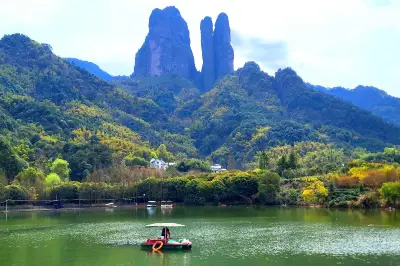
Qinhu National Wetland Park: The ten-mile Qinhu Lake, with autumn scenery like a painting, is known as Taizhou's paradise of happiness. The slow life of Taizhou begins at the ten-mile Qinhu Lake. Qinhu Lake, also known as Magpie Lake, gets its name from its magpie-like shape.
Qinhu Lake has a crisscrossing network of rivers and ponds. Nine main rivers flow into the lake from all directions, forming a peculiar landscape called "Nine Dragons Paying Homage to the Emperor."
Take a painted boat from the visitor center to the wetland park. Along the way, you will pass a three-sided Buddha pagoda. Under the pagoda is the ancient Shousheng Temple, built in the Song Dynasty, with a history of over 700 years. It was one of the fourteen great monasteries in Taizhou's Buddhist circles.
Take a hand-rowed boat through the river network of Qinhu Lake for an intimate encounter with the blue water and sky. The banks are lush with reeds, the air is fresh, and the area boasts the unique natural and folk customs of the Lixiahe region.
Several white-walled, black-tiled houses and patches of vegetable gardens and rice fields recreate the simple charm of a water village. The most beautiful season is just before rice harvest, perfect for taking photos.
The world-famous homeland of the milu deer (Père David's deer). On the milu deer viewing platform, you can observe the deer living in their natural habitat.
The Qinhu Wetland Science Museum has three floors. The first floor is themed "Tracing Qinhu's Footprints," featuring eight exhibition areas such as Water Borne Qinhu, Bird Watching Paradise, Hometown of Milu Deer, Green Shadow Creatures, Night of Qinhu, Starry Footprints, Rhythms of Qinhu, and Immersive Qinhu.
The second floor is themed "Exploring Origins and Roots," with exhibition areas such as Exploring Landscapes, Wetland Milky Way, Qinhu Boat Gathering, Qinhu Bricks and Tiles, Crisis and Recovery, Kidney of the Earth, and Ecological Garden. It introduces Qinhu's geographical location, local cultural characteristics, and customs, as well as explaining the functions of wetlands.
If time permits, you can also visit the Wetland Adventure Park and the Military Sports Park, soak in the Sanyuan Hot Springs, and experience the slow life of Taizhou's "water wraps skin" (morning tea and evening bath tradition).
Qintong Ancient Town: Do not say that Jiangnan is as beautiful as flowers; the watery country of Qintong surpasses Jiangnan. Qintong Ancient Town is located in the Lixiahe region of Jiangsu Province. Established as a town in the 14th year of the Zhiyuan era of the Yuan Dynasty (1277), it has a history of nearly 800 years. It is a famous national historical and cultural town, surrounded by water on all sides, and is known as the "Pearl of the Water Village."
Qintong Ancient Town was born and thrived because of mud. It became a distribution center for bricks, tiles, grain, oil, and cloth, leading to rapid commercial development. The ancient town flourished, earning the saying "getting hundreds of times profit without farming."
During the Qianlong reign of the Qing Dynasty, Sun Qiaonian, a Jinshi from the Sun Family Village in Qintong and a professor of Suzhou Prefecture, composed eight seven-character quatrains based on eight natural scenic spots. The scenes became famous through the poems. The eight scenes are: Return of Fishermen at Dongguan, Reading at Nanlou, Sunset Reflection at West Lake, Lotus Society at Beicun, Flower Shadows over Clear Pool, Bamboo in Meditation Room, Bright Moon over Stone Bridge, and Hanging Locust in Green Courtyard.
Qintong Ancient Town's visiting route is one-way, so you won't miss any beauty and don't need to backtrack. Attractions such as the Former Residence of Academicians, Camellia Courtyard, Distillery, Folk Customs Hall, Water Dragon Bureau, Former Residence of Gao Ershi, Green Tree Zen Temple, and Wedding Customs Hall are scattered throughout the town. It takes about two hours to tour. The ancient town itself is free, but the eight small attraction tickets together cost 40 yuan.
There are many Ming and Qing architectural complexes in the town, including Xiaolu Lake Lane and Baxian Bridge Lane. Moss-covered wall foundations and mottled blue bricks pave the streets. The bricks are laid with gaps, producing a tinkling sound when stepped on—a design to prevent bandits from carrying away wealth gods.
Rui Garden is named after Wang Anshi's "Hongfan Zhuan," which states, "Wisdom then thoughts penetrate everything." It is a typical garden in the central Jiangsu style, different from Suzhou gardens, with black bricks and gray tiles, incorporating Huizhou architectural features.
Inside the garden, autumn scenery is splendid, with small bridges and flowing water. An antique small pavilion named "Lotus Pavilion" stands over a fish pond where fish play and water vapor rises.
Flower Shadows over Clear Pool is located in Camellia Courtyard. The ancient camellia tree, planted in the Song Dynasty, has over ten thousand flowers. Its age, trunk diameter, and long blooming period are rare in China and the world, earning it the title "No. 1 Camellia King of the Divine Land."
Hanging Locust in Green Courtyard refers to a Tang Dynasty locust tree planted in the Green Tree Courtyard. It is over 1,100 years old and is revered as the "Millennium Divine Locust."
The commercial street of Qintong Ancient Town is filled with local flavors. There are snacks unique to Qintong and Jiangyan, such as Qintong Duan Crab, Jiangyan Sesame Cake, Qintong Fish Cake, and Shrimp Balls. Many locals come to buy them; they are healthy and reasonably priced.
Xinghua City: Lizhong Water Forest Park – Wild ducks sleep by the shore with leisure, old trees bear flowers without ugly branches. Xinghua's rapeseed is the best in the country. Known as the "Cradle of Water Margin, Hometown of Banqiao," Xinghua offers spring views of Thousands Islands Rapeseed Flowers and autumn tours of ten thousand pond cypresses.
The water forest park has abundant water systems, dyed pond cypresses, scattered bridges and pavilions, and fresh air. This is another way to experience the slow life of the water city!
Fog Forest Maze spraying times: on holidays at the hour; on weekdays at 11:00, 12:00, 13:00, 15:00.
Take a bamboo raft and drift along the water. Sometimes the lake is wide and mirror-like with dancing reflections; sometimes the cypress forest is tranquil with strange trees and shifting light and shadows. Bamboo raft boat: 40 yuan per person, about 10–15 minutes.
Haohan Forest (Heroes Forest) has 108 tall metasequoias, named after the 108 heroes of Water Margin. Long wooden paths lay straight into the deep forest over clear green water. The breeze through the forest brings contentment!
Xinghua City: Xinghua Museum – Xinghua was called Zhaoyang in ancient times, also known as Chushui. At Xinghua Museum, you can take in its long and profound history. It is the only national-level museum in Taizhou, consisting of Xinghua Museum, Zheng Banqiao Memorial Hall, and Shi Nai'an Memorial Hall.
Xinghua Museum is a three-story antique building with white walls, black tiles, and horse-head walls, exuding classic charm connected by corridors. Inside, there is a statue of Zheng Banqiao, with green bamboos thriving by small bridges and flowing water.
The first-floor museum houses 2,456 cultural relics, including pottery, porcelain, bronze, gold, jade, calligraphy, and paintings. Among them, 41 are national second-class relics and 39 are third-class relics. A Tang Dynasty silver ingot is the museum's treasure.
Xinghua has produced many talents, including Shi Nai'an, author of one of China's Four Great Classical Novels, "Water Margin," and Zheng Banqiao, the foremost of the Eight Eccentrics of Yangzhou. The second-floor Zheng Banqiao Memorial Hall records his life story, with authentic calligraphy and paintings by Zheng Banqiao as its treasures.
The museum has added a new performance of Banqiao Daoqing. Sip a cup of green tea and enjoy a Huaiyang ditty. "Daoqing" (Daoist songs) is a set of ten songs composed by Zheng Banqiao, once popular in the Huaiyang region of Jiangsu.
Gaogang District: Naval Vessels Culture Park – Taizhou is the "Birthplace of the Navy, Mother City of Sailors." Since 2011, the People's Navy has donated three retired warships and one submarine to Gaogang District.
Taizhou Naval Vessels Culture Park is located south of Jiangsu Taizhou Yangtze River Bridge. Opened on October 1, 2021, to celebrate the 100th anniversary of the founding of the Communist Party of China, the park features "three ships and one submarine." It is a place to experience China's naval vessel culture up close, enhance national pride, and is also a great spot for parent-child study tours.
Recommended route: Buy tickets at visitor center → Follow signs from visitor center square to boarding pier → Enter with ticket → Walk on park boardwalk → Visit Ship 881 → Visit Submarine 274 with ticket (visitors without submarine ticket go directly to Ship 515) → Visit Ship 515 → Visit Ship 108 → Exit via park boardwalk.
Taizhou Cuisine: The Yangzhou–Taizhou area combines the leisurely laziness of northern Jiangsu with the refined elegance of southern Jiangsu, known for its slow life. In the morning, "skin wraps water" (morning tea with dumplings and soup); in the evening, "water wraps skin" (bathing). Taizhou's morning tea is a must-try experience for any traveler.
Taizhou morning tea tradition is summarized as "one tea, three points, one noodle." One tea refers to a cup of tea and a serving of shredded dry tofu; three points are three famous Taizhou breakfast items: steamed buns, steamed dumplings, and shaomai; one noodle is fish soup noodles.
On both sides of Taizhou Old Street, there are orderly Ming and Qing style buildings, with black bricks and tiles, arcade corridors, streets paved with cobblestones, and antique shops. The Old Taizhou·Taizhou Cuisine restaurant on Taizhou Old Street, adjacent to the Fengcheng River, is a great place to taste Taizhou food.
Central Jiangsu Taizhou cuisine, due to its unique location, combines the fresh and elegant flavors of Huaiyang cuisine with the colorful and delicate craftsmanship of Suzhou–Wuxi cuisine. It is rich but not greasy, light but not bland, tender yet retains its shape, and smooth yet retains its texture.
The ten-mile Qintong area is not only picturesque but also has clear and sweet water, abundant plants, and rich products. The "Eight Fresh of Qinhu" feast, made from local aquatic products, is world-famous. It consists of eight dishes: Qinhu Duan Crab, Qinhu Freshwater Shrimp, Qinhu Soft-Shelled Turtle, Qinhu Silver Fish, Qinhu Four Treasures, Qinhu Snails and Shellfish, Qinhu Waterfowl, and Qinhu Water Vegetables. Each dish's ingredients come from Qinhu Lake, green and healthy, with authentic taste.
In the south, there is Chenghu Crab; in the north, there is Qinhu Duan Crab. The Qinhu Duan Crab must climb over bamboo fences (duan) to be called Duan Crab. Hence, Duan Crab has green eyes and red hairs, with delicate and sweet meat, rich roe, and thick flesh—a top-quality product.
Itinerary: Day 1: Morning: Drive to Xinghua Lizhong Water Forest Park. Afternoon: Xinghua Museum, Mei Garden, Wanghai Tower. Evening: Night cruise on Fengcheng River. Day 2: Morning: Experience Taizhou morning tea, Qinhu Lake Wetland Park. Afternoon: Qintong Ancient Town, Naval Vessels Culture Park.
As one of the Thirteen Guardians of Watery Jiangsu, Taizhou has its unique slow way of life. What kind of Taizhou do you have in mind? Leave in the comments what you think is a fun place.