3 Days, 2 Nights: A Riverside Town Full of Life and Culture: Jingjiang
Jingjiang is not a river; it's a young piece of land on the Northern Jiangsu Plain.
Gushan is not a mountain; it's a reef that grew out of the Yangtze River.
Jingjiang, I believe, is a city unfamiliar to many. Travel is about leaving a familiar city for an unfamiliar one, starting a brand-new experience. If you want to find it on the map, search along the Yangtze River, because it's a small riverside town, surrounded by the river on three sides, with flat terrain.
The first thing to do upon arriving is not to visit the sights, but to eat. Only with a full stomach can you enjoy discovering the local life and culture here. And this season is when crabs are at their plumpest.
Crab roe soup dumplings are a must for every visitor's appetizer. Thin skin, rich filling, thick broth, and succulent crab meat are all hidden beneath the simple wrapper. The best thing about eating soup dumplings is that you drink the soup first, then eat the meat, so you won't get choked by the bun.
The biggest taboo when eating soup dumplings is impatience. At best, you'll spill broth on yourself; at worst, you'll burn your mouth and tongue. Just like treating this city, calm down, slow down, and feel its unique charm.
Jingjiang's crab roe soup dumplings are not only nutritious and delicious but also have a romantic story—a love tale from the Three Kingdoms period between Liu Bei and Sun Shangxiang. On the retro yet bustling Hexing Road, there is the Shangxiang Crab Roe Soup Dumpling Cultural Museum, where you can enjoy the food and learn about the traditional craftsmanship and legends related to Jingjiang soup dumplings.
Among the many intangible cultural heritages, the one least worrying about inheritance is perhaps food. Wherever there are Chinese people, there is food. Food might also be the easiest topic for us to communicate. No matter which city, when talking about food, everyone can go on and on, introducing local delicacies as if counting family treasures. Food is also the simplest and most direct way to understand local culture during travel.
Jingjiang has many coffee shops, from luxurious and spacious chain stores to roadside cafes in alleys, cheap and tasty.
Sitting at the alley entrance, ordering a cup of coffee, looking through the window at the passing cars and people, listening to the charming Wu dialect, only then can you catch a glimpse of local life, see the vitality of the city, and smell the烟火 (everyday hustle and bustle) of Jiangnan.
A cup of coffee can make busy workers stop and rest, can break the distance between strangers, can allow friends to have a long chat, and can let visitors taste the flavor of the city.
Every city is unique. If you treat every city as your hometown, you will discover its beauty and tolerate its shortcomings. The first meal of delicious crab roe soup dumplings already made me fall in love with this place, and naturally, the rest of the trip was relaxed and pleasant.
Jingjiang has a mountain called Gushan. On Gushan there is a temple called Gushan Temple. Growing up at the foot of the Qinling Mountains, though I have seen the elegance of southern hills, this Gushan still refreshed my understanding of mountains. After mentally preparing myself to lie in bed for a whole day the next day, I gritted my teeth and decided to climb the mountain and catch the sunset. When I excitedly looked for the hiking trail, a passerby told me I was already at the summit. Looking up at the high sun, the sunset was probably out of reach, so I went to Gushan Temple to enjoy the cool mountain breeze.
Gushan, a rather poetic name, though only a few dozen meters above sea level, is the only mountain on the vast plain north of the Yangtze River. In the days without high-rise buildings, it was the place with the widest view, perhaps also the first spot to see returning loved ones. So it became a place for people to pray for blessings and protect their family's safety. It makes sense that a temple sits on its summit.
The tiny Gushan was originally a reef in the Yangtze River. The silt brought by the river accumulated around it, and over the years, the area expanded until it connected with the land. It took over two million years to go from a reef to a piece of land. Standing on the summit of Gushan, you can no longer see the Yangtze River. Gushan might be the shortest mountain I've ever seen, but this little hill actually supports a city. First came Gushan, then Jingjiang. Gushan is a small mountain that cannot be judged by its appearance.
Another thing that surprised me about Jingjiang is its relationship with horses. Its ancient names, such as Matuosha, Mucheng, and Mazhou, are all related to horses. A small riverside town in the south, neither a horse-breeding grassland nor a famous horse origin, why is it connected to horses?
Mazhou Park, located in Jingjiang's new riverside district, is the city's largest comprehensive park. Here you might find clues related to horses.
Rong Lake occupies two-fifths of Mazhou Park. The continuous Yangtze River water makes the lake shimmer with waves, and the vegetation on the banks is lush. It is said that when Jingjiang was not yet connected to the land, Sun Quan saw this island in the river with abundant water and grass and used it as a natural horse ranch. It was also the most convenient place to cross the Yangtze River, perhaps the best way to showcase military strength to Cao Wei. Meanwhile, Cao Wei was also training soldiers and horses, digging Xuanwu Lake in the Central Plains, training a navy, and preparing to cross the river. Today, the two sides of the Yangtze River have long been integrated, with similar dialects, customs, complementary economies, and convenient travel.
On the shore of Rong Lake, there is a modern library. Here you can gain an in-depth understanding of Jingjiang's history and culture. It also provides a good learning environment for scholars and students. The large glass exterior of the building gives the library a high-tech appearance, good lighting, and harmoniously blends into the park landscape. Mazhou Park has become a stage for Jingjiang to showcase its inclusiveness and openness.
While providing leisure and entertainment for citizens, Mazhou Park also helps people understand Jingjiang's geographical origins, history, and culture, adding a touch of scholarly atmosphere and cultural connotation to Jingjiang.
A few kilometers away from Mazhou Park is Mucheng Park. The vast water bodies and green areas of the two parks bring vitality and energy to the city. They also enrich the lives of Jingjiang residents: morning exercise, afternoon chats, and evening square dancing. As a tourist, I mainly learn about a city's character through its morning farmers' market and evening city parks.
Mazhou Park and Mucheng Park, both free to enter, have wide lakes, pleasant scenery, dense vegetation, complete facilities, and free parking. They are easily accessible, quiet, with fresh air and diverse views. Whether for taking photos or relaxing, they are no less impressive than some paid attractions. Whether you are a wealthy successful person or a budget-conscious worker, you can find your own space here.
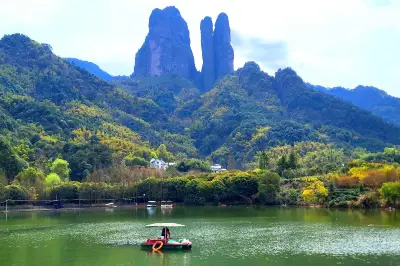
If Mazhou Park and Mucheng Park are grand and majestic, then Li Garden is exquisite and delicate. The calm lake is dotted with a few black-awning boats. Amid the bamboo groves, traditional-style buildings appear and disappear. By the green lotus pond, white walls and grey tiles undulate, showcasing the exquisite layout of Jiangnan gardens.
The forest cabin, facing water on one side and hidden in the woods on the other, offers both open views and secluded tranquility—an ideal spot for a weekend retreat.
Bright red pomegranates weigh down the branches. Every tree is carefully pruned with graceful lines. Combined with clever arrangements and pavilions, they form continuous forests and gardens. The Chinese-style garden is elegant and grand, like an ink-wash landscape painting. The green lawn, dotted with a few ancient trees with spreading canopies and white tents, surpasses many cookie-cutter trendy camping sites.
Mazhou Park's cultural atmosphere and Mucheng Park's natural primitiveness provide standardized service—relaxing and comfortable. Li Garden meets your personalized needs: exquisite gardens, carefully manicured lawns, clever and thoughtful layouts, every detail reflects artistic intention. The character "丽" (Li, meaning beautiful) fits perfectly.
In Jishi Ancient Town, everything on the old street looks rustic. On this Jingjiang trip, as a foodie, I specifically went to Jishi to seek out the aroma of local life.
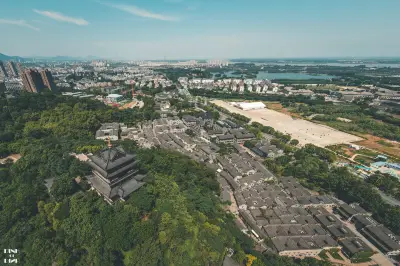
Now, walking on the ancient stone pavement, we can no longer hear the street vendors' cries of the past. The quaint streets, old storefronts, and occasionally elderly residents chatting in small groups give a sense of peaceful time. Jishi Ancient Town, like an old person, is serene and rustic.
Although it was getting dark, I threaded through the alleys to find this baked cake shop. I don't know if it still tastes traditional, but I feel a unique charm, like a kind of beauty in imperfection—mottled walls, worn doors, moss-covered alleys, like a glimmer of light before darkness. I know it's fading but cannot hold it back. I only hope the remaining ancientness passes slowly and gently.
Jishi has many more snacks: old-braised chicken, crispy large griddle cakes, fermented baked cakes, Old Hu's lotus leaf osmanthus cakes, etc. Just try them one by one; you are sure to be pleasantly surprised, and none will disappoint.
For me, what determines whether I can fully recharge the next day is the hotel that night: clean environment, comfortable bed, good soundproofing. In Jingjiang, I easily found a hotel that met these criteria, and it was reasonably priced.
The Jingjiang Mercure Hotel is an affordable hotel with hardware standards of a luxury hotel. It has a gym, laundry room, and all facilities. Don't miss the cost-effective breakfast.
Jingjiang: affordable in all aspects of food, accommodation, transportation, and sightseeing.
Jingjiang: a riverside town full of everyday life and culture.
Travel Diary Contents:
1. A Journey Starting with a Crab Roe Soup Dumpling
2. Coffee Culture on Street Corners
3. Gushan: It's Not a Mountain
4. Jingjiang's Park Culture: Mazhou Park + Mucheng Park
5. Exquisite Private Garden: Li Garden
6. Lively Jishi Ancient Town
7. Staying in Jingjiang
Travel Information
Hotel Index
Guide Index
Flight Index
Website Navigation
Travel Index
Cruise Index
Corporate Travel Index
Franchise Cooperation
Distribution Alliance
Friendship Links
Corporate Gift Card Procurement
Insurance Agent
Agency Cooperation
Hotel Franchise
Destination & Scenic Spot Cooperation
More Franchise Cooperation
About Trip.com
About Trip.com
Trip.com Hot Topics
Contact Us
Careers
User Agreement
Privacy Policy
Business License
Security Center
Trip.com Content Center
Intellectual Property
Trip.com Group Algorithm Transparency