Taizhou Old Street, a Young 'Old' Street
★Travel location: Taizhou Old Street
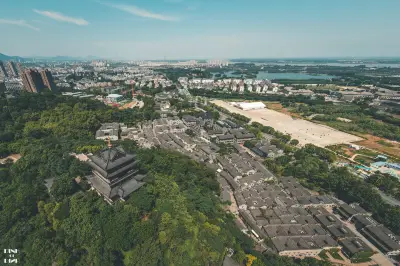
It wasn't far from the pier to Taizhou Old Street. The street was quite wide and didn't look like a relic from the past; it seemed to have been rebuilt in recent years. I initially thought it was at least a historic site, but after listening to the guide, I learned it wasn't a true old street. The area was originally farmland and villagers' homes in Bao Ba Village on the eastern outskirts of Taizhou. With the planning and development of the East City River Scenic Area, Taizhou Old Street had only been built for a little over a decade. Calling it an old street was a stretch—it wasn't really 'old,' just built in an antique style. That's why it's called a young old street—indeed, it's very 'young.'
Because it's adjacent to Peach Garden, there were quite a few tourists, likely many in tour groups. Backpackers generally aren't too interested in such newly built attractions. At the entrance, the guide gave a brief introduction and then let us explore on our own. We strolled leisurely, checking out the snacks on both sides of the street.
The street was paved with granite slabs. Since it was new, the stones were neat and showed no signs of wear. The street wasn't long either—from one end to the other, it was only about 600 meters. Even as we slowed our pace, we quickly reached the end.
I wanted to visit Mei Lanfang's former residence nearby, but my companions weren't interested. Besides, since we were with a tour group with strict meeting times, I figured we wouldn't have enough time to enjoy it fully, so I let it go.
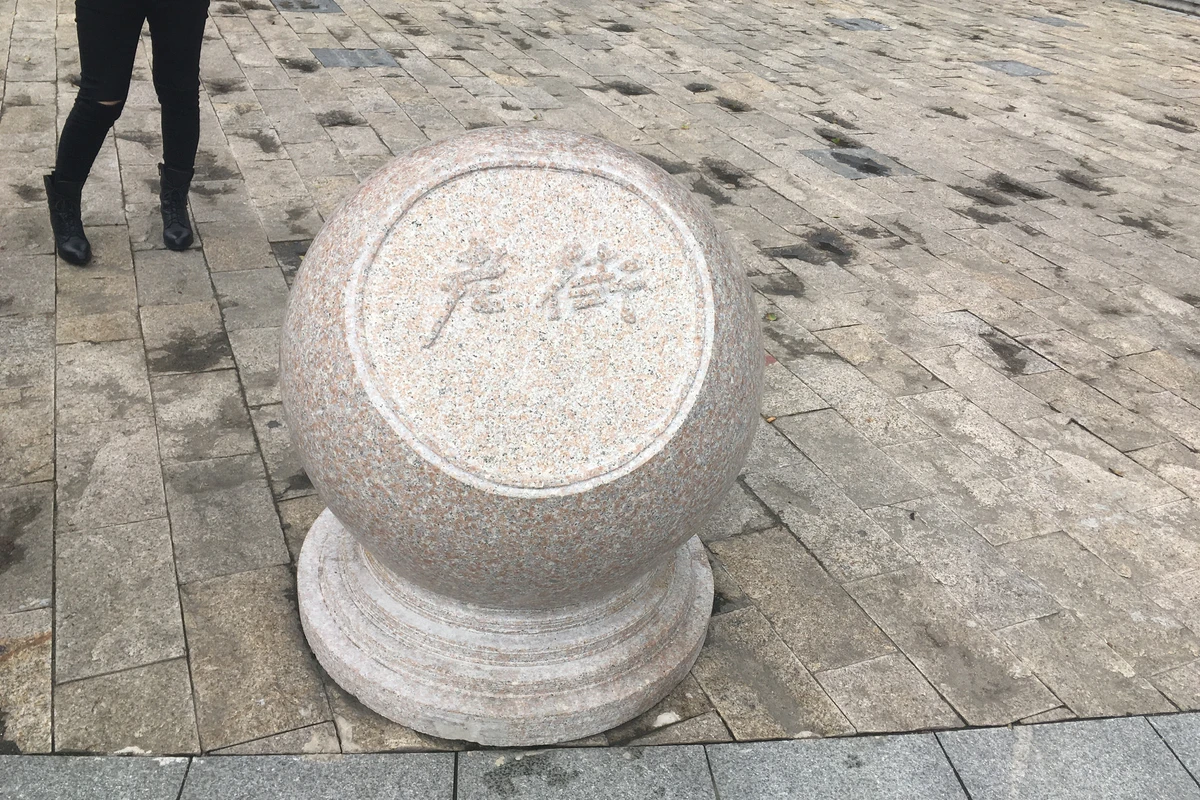
There were some bronze sculptures along the street depicting old trades of Taizhou. One large millstone looked like it might have been collected from a rural area—maybe originally from Bao Ba Village—and it attracted many tourists taking photos. It seemed like one of the oldest objects on the street.
A waterfall-style waterwheel stood at the street entrance, towering and imposing—probably about three stories high. Although it was considered a scenic feature of the old street, I felt it didn't quite match the surroundings. Such a waterwheel would be more fitting for a farming park or similar attraction.
There was also the 'First Resonant Gong in China,' a name that sounded grand. But the gong wasn't that large, and I wasn't sure if it truly deserved the title. Taking photos with the bridal sedan chair cost money, even if you used your own camera—you had to pay for using the props.
Later, I saw a 'First Pot.' The pot was indeed quite large, but I hadn't heard of Taizhou having any famous tea. Perhaps I was just ignorant.
At the corner was a small street square. On the south end stood an ancient opera stage—though it was called 'ancient,' it looked like it had been built later. There was a stage for 'throwing the silk ball to choose a spouse,' but it wasn't large and there was no performance. However, there were rental costumes for tourists who wanted to experience the 'betrothal' ritual.
The old street wasn't long, but it was divided into three sections. This division seemed unnecessary because all three sections had restaurants, specialty snacks, local product shops, and the like. At one spot, a batch of Huangqiao baked cakes had just come out of the oven. Tempted by their freshness, we bought some even though Taizhou is quite far from Huangqiao. The taste was just average. However, the fish soup noodles won our praise—they were savory without any side dishes. It was said that the noodles were made with live crucian carp as the main ingredient, giving it a thick, white broth.
We found the fish balls the guide had recommended. I wasn't sure which shop was better; none were century-old establishments, and since they were made fresh, the quality was probably similar. So we picked a shop with a larger storefront and bought some to take home for fish ball soup.
When we returned to the street entrance, the guide was eating a big oven baked cake. He said he bought two every time he led a group to the old street. So we all chipped in to buy some. It was said that big oven baked cakes are the essence of Taizhou snacks, made with wheat straw fire, giving them a special aroma. Perhaps because we were already full, although they were indeed fragrant, they didn't impress us as amazing. However, the 'Dream Pool Essays' specifically mentioned them, saying, 'The oven is eight feet long, people go into the oven to stick the cakes on the sides, the flavor is fragrant and perfect, truly a superior delicacy.'