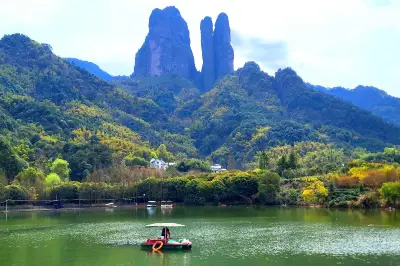
Autumn Journey in Taizhou: Lake Reflections That Captivate the Soul
“Taizhou, the city is not large, but the happiness of the mortal world is extremely abundant…”
This is how the Italian traveler Marco Polo described Taizhou.
It’s a bit hard to believe that Marco Polo ventured through this city 700 years ago, a place that is “slow but not lax, leisurely but not idle.”
Curious, I set off on a self-driving trip to Taizhou in autumn.
As usual, let’s look at some preview photos first—see if Taizhou’s autumn makes your heart skip a beat.
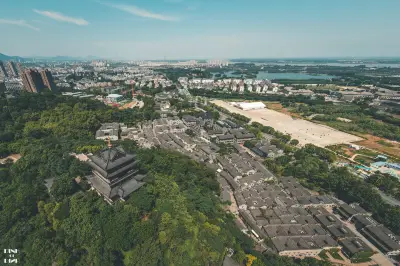
From Wanghai Tower by the Fengcheng River, take in Taizhou’s past and present—a land of peace and prosperity, a truly auspicious city.
Against the sunset, the ancient Wenfeng Pagoda and the modern TV Tower frame Taizhou’s timeless transformation, a testament to its rapid growth.
Autumn colors Gushan, the only mountain in Taizhou. The 680,000 people of Jingjiang often liken the Yangtze River to the mother of Jingjiang and Gushan to its father.
Strolling through the dense metasequoia forest, admiring the frosty canopy of countless trees. In late autumn, the Lizhong Water Forest is a blaze of color, like a naturally formed fairy-tale world, dazzling and full of charm.
Watching golden leaves fall, each carrying the passage of time, one can’t help but yearn for those ancient, distant years.
The autumn waters are like a mirror; Qinhu Lake Wetland Park in autumn is like a richly painted oil canvas, colorful and vibrant. Its unique wetland scenery and water village folk customs make one linger and forget to return.
At Qiuxue Lake in autumn, the grass yellowing signals the season, the water clear as a mirror, rippling with blue waves.
Autumn reflections on the lake are so beautiful they intoxicate the heart. At Tiande Lake in deep autumn, the lakeside islets are like pearls inlaid on the water, with dappled tree shadows and tranquil groves—nature’s spilled palette. The autumn breeze, a master painter, still can’t exhaust its hues; the golden rain trees are irresistibly enchanting.
Hi, I’m Daxia, a photographer who loves food and fitness. You could call me a food-obsessed muscle man, or a fitness-obsessed foodie.
Note: Photography and writing take great effort; unauthorized use of content or images is strictly prohibited.
After the pandemic, I especially feel the need to take road trips now and then—whether one, two, three, or five days, to city or countryside—because you truly never know when you’ll next be able to get away. To feel nature and a touch of wildness, to let your taste buds dance.
Taizhou is not far from where I live in Suzhou—just a two-hour drive. “A happy water paradise, a slow life by the water city.”
Immersed in this cultural city with over 2,000 years of history, wherever you look are serene blue waters. Ancient towns, old streets, and gardens are scattered throughout, bearing the typical scenery of Jiangnan water towns, yet with an added touch of small-town tranquility.
As the Italian traveler Marco Polo praised after visiting Taizhou, “This city is not very large, but it holds an abundance of worldly happiness.”
Recommended 3-day self-drive autumn itinerary in Taizhou:
D1: Depart from Suzhou, arrive at Gushan in Jingjiang in the morning. For lunch, try Jingjiang crab roe soup dumplings. In the afternoon, visit Xinghua Lizhong Water Forest, and stay overnight at Yun Duo Homestay in Xinghua.
D2: Morning visit to Qiuxue Lake. Afternoon explore Qinhu Lake Wetland Park. At dusk, wander along the Fengcheng River. Overnight at Fairfield by Marriott Taizhou.
D3: Enjoy Taizhou morning tea. Morning visit to Tiande Lake. Afternoon explore the Ancient Ginkgo Forest Park, then return journey.
When in Taizhou, don’t miss the morning tea. Many don’t know that Taizhou in Jiangsu is also a city of morning tea. The tea here, like in Yangzhou, blends the color of Kuizhen, the fragrance of Zhulan, and the flavor of Longjing. In Taizhou, it’s called “Fuxiang Tea” (which actually means “compound fragrance”). Accompanied by delicacies: fish soup noodles, fresh meat wontons, dry-mixed noodles, simmered noodles, fried noodles, crab roe soup dumplings, pork buns with bamboo shoots, shredded radish buns, three-dice buns, mushroom and green vegetable buns, dried vegetable buns, shrimp dumplings, glutinous rice shumai, thousand-layer oil cake, and more.
There are many places for morning tea in Taizhou—Guyue Lou, Haitang Chun Teahouse, Jin Yue Lou, etc., all highly popular with locals and tourists alike, with great reputations.
Jingjiang’s crab roe soup dumplings are a specialty in Taizhou and even nationwide. With over 200 years of history, they are famous for their skin as thin as paper, so delicate you could blow a hole, with delicious flavor and health benefits. The ingredients are carefully chosen: filling of crab roe and crab meat, broth of original chicken soup, and the skin is paper-thin. Once steamed, the dumplings are snow-white and crystalline, with fine, even pleats, resembling plump jade chrysanthemums about to bloom. The skin is so thin it’s almost transparent; a slight jiggle shows the soup trembling inside, evoking a tenderness that seems ready to burst. Even just looking at them is a delight, let alone eating.
On the first day, I stayed at Yun Duo Homestay in Xinghua, close to the Lizhong Water Forest and the Qianduo Flower Sea. The homestay is on a small island surrounded by water, with idyllic rural scenery. In spring, it’s surrounded by seas of rapeseed blossoms—so beautiful that CCTV’s “Aerial China” has come to film here many times.
When visiting downtown Taizhou, staying near the Fengcheng River is most convenient. Taizhou is a national historical and cultural city, and places like Taizhou Old Street, Wanghai Tower, Plum Garden, Peach Garden, Willow Garden, the Imperial Examination Hall, Chongru Temple, the Salt Tax Museum, Daohe Ancient Block, and Wenfeng Pagoda are all near the Fengcheng River, mostly within walking distance of each other. We stayed at the Fairfield by Marriott, about 100 meters from the river, with European-style architecture. It’s only a few hundred meters on foot to Taizhou Old Street, and an evening stroll along the river is easy and enjoyable.
The first stop of my autumn Taizhou trip was Jingjiang Gushan. From Suzhou, it’s about an hour’s drive across the Jiangyin Yangtze River Bridge to Jingjiang. It is said that Gushan was once a solitary island in the river, where sediment accumulated at its foot, gradually forming land and creating the Mazhou plain. That’s why Jingjiang’s 680,000 people often call the Yangtze the mother of Jingjiang and Gushan its father.
Gushan is remarkable not only for its solitary presence but also for its small size. Its east, north, and west sides are steep, with only the south slope gentle. It’s narrow east-west and long north-south, resembling a large stone lion sitting facing north from afar. The magical solitude of Gushan enchants the people of the plains. Starting in the first year of the Zhengde reign of the Ming Dynasty (1506), the Jingjiang people began to embellish it, building around Gushan Temple as a center, turning it into a famous tourist attraction.
Climbing to the top, you hear faint Buddhist chants, a scene of serene quietude. The Gushan Temple on the peak was originally built in the early Tang Dynasty over 1,500 years ago as Zhengjian Temple, once one of the most popular temples in central and northern Jiangsu. It was destroyed in wars; the current temple was rebuilt on the original site in the 1990s.
Behind the temple is Buguping Pavilion, with upturned eaves, quietly containing the mountain’s spiritual energy and Buddhist essence. At the back peak is Wangjiang Tower, where you can observe the mountain, listen to Zen, gaze at the river, and embrace the city—the scenery rivals the beauty of West Lake.
Gushan holds a sacred place in the hearts of Jingjiang locals. A folk saying goes, “On the third day of the third lunar month, climb Gushan.” Every year on that day, a temple fair is held, drawing pilgrims from Jingjiang and neighboring Taixing, Rugao, etc. The crowds surge and jostle. The foothills become a grand market with all kinds of goods, including the local specialty “clay dogs.” Artisans drill holes before baking them, then paint them with colored lacquer—they can be blown as whistles and played with, making them irresistible to children.
Tip: Due to the pandemic, you can still climb to the top of Gushan, but Gushan Temple is currently closed to visitors. Many pilgrims burn incense and pray at the foot or halfway up the mountain.
Lizhong Water Forest is located in Qianduo Town, Xinghua, Jiangsu Province. Known as the “Jiuzhaigou of Central Jiangsu” and “Bird Paradise of East China,” it is the largest artificial wetland forest ecosystem in Jiangsu. As the saying goes, one generation plants trees, the next enjoys the shade. In the 1980s, locals developed the barren tidal flats using a special three-dimensional model of forest, ditch, and fish, planting large areas of Chinese fir trees in the water. Today, the saplings have grown into towering trees, forming over a thousand mu of water forest, presenting a wonderful ecological scene where water winds through woods, fish swim in the water, trees stand in water, and birds perch among them.
This was actually my second visit to Lizhong Water Forest. The first was in late spring to early summer, when the forest was lush green, filled with bird songs and floral scents, misty like the Emerald City in a fairy tale. I never expected that coming in late autumn would offer a completely different scenery—it felt like a dazzling, richly colored oil painting.
The entire water forest uses the forest-ditch-fish model, primarily composed of metasequoia trees. Elegant egrets flit through the woods, blending stillness and motion, creating a breathtaking and healing atmosphere.
Walking deep into the forest along wooden boardwalks, water lanes crisscross. Metasequoias and pond cypresses rise into the clouds, their gnarled roots emerging from the water, trunks standing tall in the water. The dense foliage blocks the sun, and a misty haze pervades the labyrinthine woods, like a dreamy fog forest.
A must-try at Lizhong Water Forest is the raft ride. Drift slowly along the waterways, watching rows of pond cypresses and metasequoias rooted in water, towering into the sky. The world you’re in feels like an enchanted realm far from the city—full of green, fresh air, and bird calls, making you utterly refreshed.
The mist forest is a distinctive feature of the water forest. Step into the cool, misty wonder, and white fog rises from the ground, quickly enveloping you, growing thicker, drifting over your head and into the treetops. However, the mist isn’t constant; check with the staff for times.
In autumn, Lizhong Water Forest is pure and beautiful. The endless forest “sea” reaches new heights of beauty. The forest quietly transforms—yellowing metasequoias and a cool breeze bring a full sense of autumn. Pause among the trees, listen closely, and you’ll feel the wild charm of “wild ducks sleeping on the bank with leisure, old trees blooming with no ugly branches.”
Clear water reveals fish among stones; deep forests, birds calling with no one around. The water forest is also a bird paradise, where birds and trees are one, nesting and living. At dawn, egrets gracefully spread their wings, wild ducks frolic in the water, and peacocks strut in feathered skirts like models on a catwalk. At dusk, hundreds of birds return to their nests, their songs now high, now melodious, like heavenly music in the woods.
Besides sightseeing, the water forest offers many fun activities and Instagram-worthy spots, especially family-friendly parks where children can play amidst bird songs and flowers, full of laughter and joy.
1. Opening hours: 08:00–17:00 (last entry 16:00).
2. Ticket: 50 yuan/person; boat ride: 40 yuan/person; group charters available.
Qiuxue Lake was the third stop. Here, green fields are embraced by water, deep reed marshes, low-flying egrets, pastoral songs, and fishing boats at dusk. It also features an amusement world, fairy-tale forest, fishery eco-park, and more—a perfect eco-destination for leisure.
Qiuxue Lake’s wetland scenery is unique. In spring, the water is clear, trees green, and flowers bloom in a riot of colors. In crisp autumn, vast rice fields turn golden, and rows of tall metasequoias by the lake display dreamy red foliage, evoking the harvest joy of autumn.
Looking out over Qiuxue Lake, it’s a world of water, a sea of reeds, a realm of trees, and a paradise of birds. Wandering here, embracing the ecological lake and enjoying nature’s delights, is pure contentment.
In Qiuxue Lake’s fairy-tale forest, even the animals’ homes are so vivid and dreamlike.
Qiuxue Lake: in spring, flowers bloom in profusion; summer, the Happy World water park offers cool relief; autumn, admire land art and colorful rice paddy paintings; winter, the Happy World hosts Taizhou intangible cultural heritage exhibitions and other events.
1. Qiuxue Lake Fishery Eco-Park: See rare fish like Chinese sturgeon, sunfish, golden perch, paddlefish, and Chinese sucker fish. Enjoy a full fish banquet, experience themed starry sky homestays, and join parent-child study activities.
2. Qiuxue Lake Fairy-Tale Forest: A spot combining tourism, science education, study tours, leisure, and outdoor activities—a popular check-in destination.
3. Qiuxue Lake Water Park: Roller coasters, space walks, magic realms, carousels, pirate ships, high-flying rides, giant pendulums, rafting, haunted houses, bumper cars, children’s water play, large slides, tsunami pools, extreme slides, and more—a rich array of entertainment.
4. Huaqi Yunli: Targeting families, with bright, playful spaces closely tied to floral elements. It features hands-on projects, knowledge-based activities, and interactive games. For other visitors, there are video viewing areas and photo zones—a very popular study tour destination.
Qinhu Lake is beautiful, beautiful indeed, its beauty lies in its waters. Boats drift on the surface, red water caltrops beneath, reeds green along the banks, fish and shrimp fat at the bottom…
The fourth stop was Qinhu Lake National Wetland Park, Taizhou’s only national 5A-level scenic spot. Named after Qintong, an ancient town nearly a thousand years old surrounded by water and crisscrossed by rivers and lakes. The lake and the old town depend on each other. The town is like a lotus flower blooming on the blue waves of Qinhu Lake; the lake cradles and nourishes this lotus, making it more vivid and beautiful.
Qinhu Lake is a poetic, picturesque paradise; the wetland park is like a gem inlaid on it, hailed as the “Pearl of Water Towns.”
Qinhu Lake’s beauty also shines in its boat gatherings. The Qintong boat gathering is unparalleled! During the Qingming Festival, hundreds of boats and tens of thousands of boat people from surrounding villages gather on Qinhu Lake. The shores are packed with over 100,000 spectators, shouts surging like tides. On the water, banners fill the view like a sea, punting poles are like a forest, a thousand boats race, drums and music fill the air.
Sailing on Qinhu Lake, you’ll see a huge three-sided Buddhist pagoda, known as Ancient Shousheng Temple, built in the Song Dynasty with a history of over 700 years.
Qinhu Lake’s beauty is also in its wetlands. As China’s second and Jiangsu’s first national wetland park, the total wetland area is nearly 30 square kilometers, with lakes and rivers accounting for about 40%. Azure lakes, interlaced river networks, scattered islands and sandbanks, and unique ecology and folk customs form its distinctive scenery.
In autumn, the Qinhu wetland is ablaze with color, like an oil painting. Metasequoia forests dot the waterway banks irregularly; a drone’s-eye view looks as if nature overturned its palette.
The water in the park shimmers like mirrors, crystal clear. Fish swim freely—some sleeping soundly underwater, some whispering in shoals, others showing off their beautiful singing. On the lake, flocks of wild ducks stroll, quacking now and then as if sharing secrets with companions, or marveling at the unforgettable scenery.
Whether on foot or by boat, you’ll see vast water grasses, lush woods, dense wormwood, scattered wildflowers, green reeds, and lotus leaves everywhere, along with deer calls, bird songs, frog croaks, and insect chirps. Magpies soar, wild ducks circle boats. Immersed, it feels like hearing celestial music, like entering a fairy tale.
Deep in the wetland is the Elk Garden, a magical place. In a vast forest and water meadow, over a hundred “Père David’s deer” live—some galloping and bellowing in groups, some strolling leisurely in twos and threes, some grazing contentedly, some rolling in mud, some resting on grassy slopes. The scene evokes a nostalgic longing for ancient times.
With these spirit animals, the Qinhu wetland comes alive, with stories and legends, and because of them, the lake becomes even more beautiful.
Don’t miss the “Qinhu Eight Delicacies”: Qinhu weir crabs, green shrimps, soft-shelled turtles, whitebait, fish quartet, snails and shellfish, waterfowl, and aquatic vegetables. The wide water area, pure water, and lush water plants produce tender, flavorful, and nutritious aquatic life.
When visiting Taizhou, Fengcheng River is a must-see. In the heart of the city, water surrounds water, creating fun and showcasing the Jiangnan water town essence.
Taizhou is a true city of water charm; water is its character and soul. The Fengcheng River, nurturing generations, is one of the few relatively intact thousand-year-old city moats still existing in Jiangsu.
By the river, Wanghai Tower stands grandly. Originally built in the Song Dynasty, countless literati left precious inscriptions. Amidst changing times, it has witnessed Taizhou’s history and its modern transformation.
Wanghai Tower is a landmark of Taizhou, first built in the second year of Shaoding in the Southern Song Dynasty, acclaimed as the “First Tower of Jianghuai.” It has been destroyed and rebuilt many times, usually falling to war and rising in prosperous times. Legend says that when it was rebuilt during the Kangxi reign, at first there was thunder and heavy rain, then cranes soared in a clear sky—the people saw it as an auspicious sign, leading to greater reverence.
Take a boat ride, listen to a melodious opera, and feel the relaxation and cleansing of the soul this ancient city brings, experiencing the charm of the water town.
Visiting Wanghai Tower in November, I caught the ginkgo trees turning yellow, shining brilliantly between classical and modern. Looking down from the tower heights, Taizhou’s past and present, its city and nature, resemble a painting. At dusk, the sunset is so beautiful you won’t want to leave.
🎫 Ticket: 40 yuan/person, boat rides require a separate ticket.
🈺 Hours: 8:30-18:00, last entry 17:30.
⏰ Best to visit after 4 p.m.; climb to the top floor for a stunning city sunset.
Across the river from Wanghai Tower is Taizhou Old Street, outside the Peach Garden area. A flagstone-paved alley from the Ming and Qing dynasties, winding through deep courtyard houses, with the sounds of pingtan storytelling and singing, street snacks wafting fragrance, and long-drawn-out hawker cries—stretching for 600 meters.
The sixth stop was Tiande Lake. Located in Zhoushanhe New Town south of Taizhou, it was originally the theme park for the 6th Jiangsu Provincial Horticultural Exposition, “Water Rhythm, Green City, Impression of Central Jiangsu,” now renamed Tiande Lake Park. It neighbors the national high-tech park, China Medical City, and serves as a green core on Taizhou’s main urban axis. Covering about 112.5 hectares (1500 mu), with about 37.5 hectares (500 mu) of artificial water surface connected to the Zhoushan River and the Yangtze.
Tiande Lake lies at the south end of Taizhou’s historical and cultural green landscape axis, along which are Fengcheng River Scenic Area, People’s Park, People’s Square, the Cultural Center, and other important nodes. The park is divided into “quiet” and “active” zones. The quiet zone features 13 city exhibition gardens on the northwest side, emphasizing cultural exchange, popular science education, static leisure, and eco-conservation, highlighting the mystery and beauty of life, enhancing local appeal. The active zone, on the east side, focuses on leisure and public participation.
In autumn, Tiande Lake is a kaleidoscope of colors—red maples, ginkgos, metasequoias, golden rain trees—a picturesque scene that makes it a top autumn destination in Taizhou.
Strolling in Tiande Lake Park, every leaf and tuft of grass glistens in the sunlight, full of vitality, lifting your spirits.
From a drone’s view, Tiande Lake shows different layers of color between heaven and earth: a layer of stunning deep red, a layer of yellow-green enclosed by gold, reflected distinctly on the water, with a layer of emerald water—like a splash-ink painting in multicolor.
Tiande Lake Park is free and open to the public. The park’s electric sightseeing cars, sightseeing bicycles, and electronic boat rides are free for medical workers nationwide.
The last stop: Taizhou Ancient Ginkgo Forest Park. Had I not seen it with my own eyes, I wouldn’t believe that Taizhou in Jiangsu has the country’s largest concentration of ancient ginkgo trees. There are over 13,800 ginkgos, including three millennial trees, over 1,600 trees more than 200 years old, and over 3,800 trees over 100 years old. In late autumn, you can imagine how beautiful the golden ginkgo forest would be.
The Ancient Ginkgo Forest Park is in Xuanbao Town, known as the “No. 1 Ginkgo Town under Heaven.” This national CCC-level natural scenic area covers 9,800 mu, interspersed with villages, ginkgo groves, and fruit orchards. The ancient ginkgos’ huge canopies and short trunks form a unique posture; the large trees encircle villages or line ditches and roadsides. Experts call it “unrivaled in the world, unique in China” and a “natural wonder, a leisure paradise.”
From late October to November, the ancient ginkgo forest turns into a golden fairy-tale world. This year (2022), since autumn arrived late, the park started turning yellow only in mid-to-late November.
Vast ginkgo trees shroud the entire village in a golden world. The leaves dance in the autumn wind like a maiden in yellow, extremely beautiful.
Ginkgo trees a thousand years old await autumn’s longing. Do you know the meaning of ginkgo? “Yin” for you, a lifetime of good fortune.
Golden leaves set against the village’s mist and cooking smoke create another world. Especially at dawn and dusk, sunlight filters through the golden leaves, rendering the whole forest bright and warm, like a golden, mysterious dream.
There’s a beautiful legend about the ancient ginkgo grove. A thousand years ago, in a small Taixing village, a bat spirit suddenly appeared, stealing poultry and harming children. Guanyin Bodhisattva passed by Taizhou, saw the people’s suffering, and sent the Ginkgo Fairy to help. The fairy transformed into a ginkgo tree in front of a young man named Jintai’s house, and he took good care of it. When the bat spirit struck again, the Ginkgo Fairy used her fruits to revive the people and, together with Jintai, defeated the spirit. Through their shared trials, they fell in love. To ensure that ginkgo fruits would forever benefit humanity, they willingly transformed into a male and a female ginkgo tree, roots and branches intertwined, protecting their descendants to this day.
1. The Ancient Ginkgo Park is free, no ticket needed.
2. The park is about 34 km from Taizhou Railway Station and 23 km from Taixing city center, about 30-40 minutes by taxi. You can also take bus 502 to Ginkgo Garden bus stop and walk 725 meters.
Three days is both short and long. Short because I feel I haven’t played enough—many autumn spots still unvisited, many historical sites unexplored, many morning tea dishes untried. Long because I’ve collected so many beautiful photos and happy memories. Farewell, Taizhou. Maybe soon, next spring, next autumn, we’ll meet again.
Travelogue Contents
1. The city is not big, but worldly happiness abounds.
2. A spontaneous autumn trip to Taizhou.
3. Ancient temple, lone mountain not lonely.
4. Secret realm of Li Zhong Water Forest, misty forest in oil painting.
5. Qiuxue Lake, a joyful fairy-tale forest.
6. Water carnival to Qinhu Lake, a hundred boats racing.
7. Wanghai Tower overlooks Taizhou’s past and present.
8. Autumn colors Tiande Lake, the autumn breeze still can’t finish painting.
9. The world’s rare ancient ginkgo grove.
Travel Information Hotel Index Strategy Index Flight Ticket Index Website Navigation Travel Index Cruise Index Corporate Travel Index Join Cooperation Distribution Alliance Friendly Links Corporate Gift Card Purchase Insurance Agent Partner Cooperation Hotel Joining Destination and Scenic Spot Cooperation More Cooperation About Ctrip About Ctrip Ctrip Hot Topics Contact Us Talent Recruitment User Agreement Privacy Policy Business License Security Center Ctrip Content Center Intellectual Property Trip.com Group Algorithm Announcement