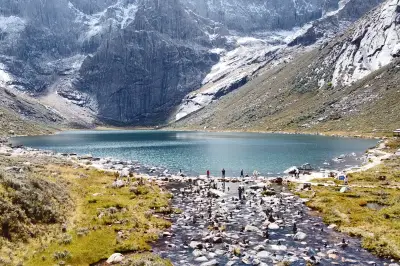
A Travelogue of Six Cities in Sichuan, Chongqing, and Shaanxi
This year’s vacation trip was originally planned for Wenzhou and Xiamen, but by July, typhoons were raging along the eastern coast. Although southern Zhejiang and eastern Fujian were not severely affected, the weather forecast showed continuous drizzle, so for safety, we had to give up. Zeze kept insisting on going to Yunnan, so we shifted our focus from the southeastern coast to the southwestern interior. Since the vacation time was limited, going to Kunming would require flying, which was too expensive. Travel agencies offered 6- or 8-day round-trip tours to Yunnan ranging from 2,500 to 4,000 yuan, but joining a tour would be restrictive and involve shopping, which was not our wish. Upon further inquiry, Zeze’s insistence on Yunnan was because her grandmother and aunts had flown there last year and described a wonderful scene. Zeze didn’t really understand what Yunnan was like, but she knew it was far and required flying—and she had never been on a plane or a spaceship. Since no one around had mentioned riding a spaceship, we could set that aside for now, but the plane was something many family members had experienced and often boasted about, which annoyed her. So this time, she had to go to Yunnan, mainly to fly! After learning the reason, we adjusted our itinerary and aimed for Jiuzhaigou. Of course, we arranged a flight in the plan. I bounced around various discount flight websites, comparing prices and considering other travel factors, and finally settled on a general itinerary: train to Chengdu, bus to Jiuzhaigou, bullet train to Chongqing, train to Xi’an, flight to Jinan, and finally bus back home. To maximize the plane ride, we didn’t choose a cheaper red-eye flight but settled on a 7:30–8:55 AM flight, with a 4.6 discount for adults, total 1,670 yuan for the three of us. Adding the long-distance bus from Jinan to home, the flight alone cost over 1,400 yuan more than the train.
Five days before departure, we got the hard sleeper tickets from Yanzhou to Chengdu. I also registered for a 12306 account, and online ticket purchasing felt really great—just a few clicks and I easily bought two hard sleeper tickets for L218 from Chongqing to Xi’an, an overnight train that saved accommodation costs and gained sightseeing time. At the same time, I bought the flight tickets from Xi’an to Jinan on the Sichuan Airlines official website. Even before leaving, money started flowing out. But once these tickets were in hand, the overall framework of the trip was secured, and I felt relieved.
**Leshan Giant Buddha
At 11:30 PM on Friday night, we boarded the train. I climbed to the upper bunk and lay down to sleep, while Zeze and her mother slept in the lower bunk. Zeze, now five and a half, had slightly exceeded the 1.2-meter height limit for free tickets, enjoying the last bit of her travel height advantage. But this made it hard for her mother: the narrow hard sleeper bunk was almost entirely occupied by Zeze, who kept stretching her arms and legs, and her mother had to lie on the edge to prevent her from rolling off.
To pass the entire Saturday train journey, we brought a lot of snacks. Zeze specially brought her little backpack, stuffed full of her favorite treats. We also brought three Berenstain Bears picture books, a stack of drawing paper, some watercolor pens, a set of cardboard assembly toys, and a newly bought small portable speaker, into which we had loaded many audio children’s stories before departing. As it turned out, these items were very useful, especially the small speaker. Zeze listened intently to the stories, playing Cinderella over and over until she could tell it herself.
By the time we reached Hubei, the train was already an hour late, but it made up time and arrived in Chengdu at 8:40 PM—five minutes early. The land of abundance in Sichuan! It seemed even the train felt my eagerness to come.
Seeing that it was still early and the weather was overcast and cool, we adjusted our plan to spend a leisurely day in Chengdu and instead headed to Leshan. We split into two groups: one went to drop off luggage at the accommodation, and the other went to the Xinnanmen Bus Station to buy tickets to Leshan and for the next day’s trip to Jiuzhaigou. Buses from Chengdu to Leshan run continuously; before 4 PM, they leave as soon as they’re full. Around 12:30 PM, we arrived at Xiaoba Bus Station in Leshan. From there, we could take Bus 13 to the Leshan Giant Buddha scenic area, but we were very hungry, so we took Bus 1 to the city center for lunch.
Near the bus stop, there was a memorial group sculpture. Closer up, it was the Monument to the Victims of the August 19 Air Raid. Leshan is close to Chongqing, which was the wartime capital during the Anti-Japanese War. Although located deep in the southwest, it did not escape the Japanese invasion. On August 19, 1939, Japanese invaders dispatched 36 bombers to indiscriminately bomb Leshan city, destroying one-third of the city and killing over 4,000 people, leaving tens of thousands homeless. After 63 long years, Leshan finally held a grand ceremony to erect this monument.
The streets of Leshan city were not very wide, but they didn’t feel congested or oppressive—rather, they were humid but not dry, cool and pleasant. Leshan is famous worldwide for its riverside giant Buddha, and has been praised since ancient times as “the finest scenery under heaven is in Shu, and the best of Shu is Jiazhou.” It is a national historical and cultural city and one of the most culturally developed areas in Sichuan, regarded as an important sample of Bashu culture.
After a simple lunch, we took Bus 13 to the Leshan Giant Buddha scenic area. As soon as we entered the gate and climbed the steps, we were enveloped in lush greenery. The dense trees wrapped the mountain and the people inside; only through gaps in the trees could we see the vast river surging forward. The reddish-brown cliff carvings were half-hidden by clusters of verdant grass, and only careful scrutiny revealed their inscriptions, which perfectly interpreted the sensory experience of visitors. Every time we deciphered one, we felt a sudden understanding and inner peace.
The mountain was not high, and we soon reached the flat summit. There stood Lingyun Temple, with vigorous incense offerings. At the edge of the temple’s front square, we suddenly came face to face with the giant Buddha’s head. The Buddha’s eyes were half-closed, with a kind expression and dignified, majestic features. Indeed, the Buddha had to be viewed “from the head,” and to see the full figure, we queued for over an hour before descending the Nine-Bend Plank Road. This plank road was carved into the mountain at the same time as the Buddha, with a minimum width of only 0.6 meters and 217 stone steps, winding down the cliff to the Buddha’s feet at the river’s edge. Since it only allows single-file passage, although queuing above was slow, once on the plank road we moved quickly. Along the cliff, there were ancient stone niches with Buddha statues, but most were badly weathered.
From the plank road, the grandeur of the Buddha was awe-inspiring. The Buddha had broad shoulders and a wide chest, seated against the mountain, arms naturally resting on his knees, with huge hands covering his knees. His massive body faced the confluence of three rivers, exuding compassion and tranquility. In ancient times, the river was turbulent, often capsizing boats and drowning people. Out of a benevolent wish to protect sentient beings, the monk Haitong vowed to carve a giant Maitreya Buddha on the cliff, hoping to rely on the Buddha’s boundless power to calm the violent waves and benefit the people. After 90 years of effort by several generations, the Buddha was finally completed in the 19th year of the Zhenyuan era of Emperor Dezong of Tang (803 AD).
According to historical records, the Buddha was originally painted and gilded, splendidly resplendent. The red sandstone of Lingyun Mountain is soft and easy to carve but susceptible to weathering. To protect the statue, the ancients built a nine-story wooden pavilion over it, designed a scientific and concealed drainage system, and carried out repairs over the centuries, allowing the Buddha to stand here for 1,200 years. With a seated height of 71 meters, it is the world’s largest stone Buddha. In December 1996, the Leshan Giant Buddha, together with Mount Emei, was inscribed on the World Natural and Cultural Heritage List. The world’s tallest standing Buddha, the Bamiyan Buddhas in Afghanistan, carved over 1,000 years ago, were not so fortunate. Due to the arrogance and ignorance of the Taliban extremist organization, this world cultural heritage treasure was destroyed in 2001.
Near the end of the Nine-Bend Plank Road, the massive Buddha feet appeared, their size exceeding my imagination. I remembered seeing a photo as a child with many people standing on one toenail of the Buddha, which amazed me and sparked my original yearning for the Leshan Giant Buddha. Seeing it today truly satisfied my heart.
Standing on the platform by the river, looking up at the Maitreya’s countenance, his half-closed eyes seemed to gaze at us, ordinary people from all over the world. The sound of the river rolled and surged, and I felt truly small. But the Buddha said, “In a grain of sand is a world, in a leaf is a bodhi; all beings are equal, and everyone can become a Buddha.” The wisdom and enlightenment of the Buddha are originally for perfecting oneself and saving others. Under the Buddha’s light, no one is left out. The worries of life are not about external possessions but within the heart.
Passing the Buddha’s feet, on the left side is the “Lingyun Plank Road” carved by modern people. It cuts through the cliff and hides amidst the precipices, forming a circular route with the Nine-Bend Plank Road. We walked along this path to Jizhi Gate, where there were two branches: one going up the mountain to the East Gate, and the other to the South Gate and Wuyou Temple. We chose the South Gate direction. This path was densely forested, with few visitors, and had a wild charm, though it was longer. Passing the Mahao Cliff Tomb from the Eastern Han Dynasty (included in the ticket price), we went in to see it; we were basically the only visitors. The cliff tomb was a square cave carved by hand, over one person tall. The deeper part was off-limits, but with lights inside, we could see some stone carvings and several beautiful stone reliefs on the walls.
Further on, passing a Qing-dynasty-style replica town (Fishing Village) built by locals, a unique arched bridge appeared in the river on the right. In the middle of the river was a hill with extremely dense vegetation, and faint eaves and corners visible—this was Wuyou Temple. Since time was limited and we had to return to Chengdu in the evening, we didn’t go over but went directly to the road, where there was a Bus 13 stop.
Travel includes not only sightseeing but also food and shopping. We asked a private taxi driver by the roadside and agreed on 20 yuan to take us to a famous restaurant for Niuhua Tofu Pudding. There, we ordered Leshan specialties: beef sandwich, tofu pudding, cold cake, and something called “fen.” As for the taste, some were spicy, some sweet, and we couldn’t quite get used to it.
At 6:30 PM, we boarded the bus back to Chengdu. Two hours later, we arrived at Xinnanmen Station. By then, the lights were on along the Jin River, a cool breeze blew, and it was very pleasant. Thinking about the next day’s trip to Jiuzhaigou, we didn’t feel tired at all.
*Tips and Supplements:
- There is more than one bus station connecting Chengdu and Leshan. The stations in each city correspond: buses from Xinnanmen go to Xiaoba, which is most convenient. Chengdu runs continuous service; Leshan has a bus every 20 minutes. I bought the return ticket immediately after getting off; the ticket seller said if we came back early, we could exchange it for an earlier one.
- After viewing the Buddha, if you don’t need to see the Mahao Cliff Tomb or Wuyou Temple, it’s better to go directly to the East Gate. There are some sights on the way that you haven’t seen when coming up. We didn’t do this because we mistakenly thought the East Gate was the main entrance, but actually the main gate is the North Gate. From the East Gate, there is Bus 13, which saves a lot of time and distance compared to going to the South Gate and Wuyou Temple.
- “Oriental Buddha Capital” is a man-made attraction. It might have some interest, but I generally don’t go, also considering time and cost.
- If you have a tight schedule (Xinnanmen-Xiaoba-Scenic area main gate-Giant Buddha-East Gate-Xiaoba-Chengdu), half a day is enough for the highlights of Leshan. You can come early, visit, have lunch, return to Chengdu, take a nap on the bus, arrive at Xinnanmen Bus Station around 3-4 PM, then stroll leisurely around Kuanzhai Alley or Jinli, have dinner, and the day will be well-balanced and comfortable.
**The Sublime Beauty of Jiuzhaigou (Before Entering the Valley)
I had longed for Jiuzhaigou for a long time.
There are two routes from Chengdu to Jiuzhaigou: the western route via Dujiangyan and Wenchuan, 440 km; the eastern route via Mianyang and Jiangyou, 530 km. The journey takes 9-12 hours. After the big earthquake, the western route was repaired and is now easier and faster, so most people take it. But some travelers suggest taking a loop route for different scenery, which makes sense, but it’s not up to us since we were taking a long-distance bus.
We didn’t choose a tour group this time. Last year, we joined a group to Changbaishan and found it uncomfortable; we realized it wasn’t as difficult as imagined, but time was wasted in shopping stores. For a mature tourist area like Jiuzhaigou, public transportation is well-developed. Xinnanmen Bus Station is Chengdu’s tourism distribution center. Every morning around 7:20-7:50, buses depart every five minutes to Jiuzhaigou. We bought tickets for 7:35 AM the day before.
Coincidentally, the day before we left, a landslide occurred near Yingxiu in Wenchuan on the western route, so the bus to Jiuzhaigou had to take the eastern route. By the time we returned, the road was open, and we took the western route back, indeed seeing different scenery on both sides. Because of the landslide, there were fewer tourists in Jiuzhaigou than usual, which was a bonus.
However, the eastern route took a full 12 hours. At first, it was a highway, then ordinary roads. The further north, the more winding the roads became. Zeze felt carsick and her mother coaxed her to sleep several times. At noon, the bus stopped at Pingwu for lunch. Simple set meals cost 15 yuan each, and people lined up to buy them, much better than eating bread and drinking cold water. The bus stopped a few times mainly for water and rest; even the most experienced driver needed to be extra careful on this road.
The entrance of Jiuzhaigou is at an altitude of 2,040 meters, 1,500 meters higher than Chengdu, similar to climbing Mount Tai by bus. So after entering Aba Prefecture, the coolness gradually set in. From Jiuzhaigou County to the entrance, it took another two hours. In the evening, we finally arrived at Jiutong Bus Station at the entrance. The extreme inconvenience of transportation in the past contributed to preserving Jiuzhaigou’s pristine beauty, but with its growing reputation and increasing visitors, that beauty is rapidly fading.
When we got off the bus, locals came to solicit accommodation, offering standard rooms for only 150 yuan. I had booked the “Grassroots Youth Hostel” online for 280 yuan a night, so I regretted it a bit. But Zeze’s mother comforted me, saying we didn’t know the condition of those 150-yuan rooms, and it was already late; having a fixed place was good. That made sense.
We hailed a taxi, agreeing on 15 yuan to stop at the entrance to buy tickets and then to the hotel. The hostel was in Pengfeng Village, the nearest administrative village to Jiuzhaigou, located on both sides of a rushing river, with inns and shops everywhere, very lively—far from our usual impression of a village. The Grassroots Hostel was in a small alley. The room was decent, with carpet, but no toothbrush or soap.
By the time we put down our luggage and came out, it was almost 9 PM. We ordered a few dishes at a small restaurant opposite our lodging, drank some homemade highland barley wine (about two liang), and the five of us spent nearly 200 yuan. The taste was mediocre. But this was our first proper meal and first drink since leaving home.
After dinner, we took a short walk. There were still many people around. In the dim night, the distant mountains showed varying shades of dark cloud-like black. It wasn’t as cold as rumored; a thin jacket over a T-shirt was enough.
We went to bed, agreeing to get up at 5:30 the next morning.
*Tips and Supplements:
- For buses from Xinnanmen to Jiuzhaigou, check the specific time on your ticket to find the right bus. The time is used to differentiate buses, but they don’t depart strictly on schedule; generally, before 8 AM, they leave when full. We bought our tickets but didn’t check the time carefully, thinking it was 7:30. That morning it was raining, and we hastily boarded a bus marked 7:30, even negotiating to switch seats to sit together. Later, we found our tickets clearly said 7:35. We quickly changed buses, nearly leaving a bag of fruit on the first one.
- Jiuzhaigou Tourist Transport Center is Jiutong Bus Station. It’s a 10-15 minute walk along National Highway 301 to the entrance. Further ahead is Pengfeng Village, where most of the so-called entrance hotels and shops are, claiming to be about 800 meters from the entrance, but walking takes 10-20 minutes. A taxi from there to the entrance (scenic area gate) costs no more than 10 yuan.
- Jiuzhaigou entrance ticket is 220 yuan, internal transportation 90 yuan, apparently bundled, and can be paid by card. The ticket is in postcard form but without prepaid postage; you need to add stamps to mail it. Half-price tickets use the old face value of 170 yuan, stamped with “110 yuan paid,” postage prepaid, and can be mailed directly.
- The ticket has no date, so if you find accommodation inside on the first day, the second day no one can tell it’s a second entry. We encountered no ticket checks inside all day.
- Hotel prices in Jiuzhaigou vary greatly with seasons and visitor numbers; sometimes they change within a day. Booking online is like buying futures and requires prepayment guarantees.
- Our group of five, including two people in their sixties and a five-and-a-half-year-old, had no altitude sickness. The day before we left, we each drank two tubes of Rhodiola rosea in Chengdu, but I don’t think that was the reason. There were no oxygen stations in Jiuzhaigou.
**The Sublime Beauty of Jiuzhaigou
At 5:30, Zeze also woke up. After a quick wash, we went to the same restaurant for breakfast. They had started cooking very early, and the female owner was very hospitable. At the intersection, many taxis were available. We took one directly to the entrance for 10 yuan. The sky was just getting light, and the scenic area gate wasn’t open yet.
At 6:30, the westernmost ticket checkpoint began working. We entered and boarded the first sightseeing bus. Within two minutes, it was full, and we set off, officially beginning our Jiuzhaigou tour.
The beginning section had no special scenery. On the left side of the road, a rushing turquoise river flowed between the valleys. The bus traveled upstream and soon reached the first scenic spot—Heye Village, named because it looks like a large lotus leaf from above. This section is Shuzheng Valley. The sightseeing bus does not stop along the way from the entrance up to Primeval Forest, but introduces each spot. I pressed my face against the window, greedily looking out. In the dawn light, all of Jiuzhaigou seemed still asleep; was our engine sound disturbing her? Even this glimpse from the bus stirred my excitement—she was so beautiful.
The bus turned right at Nuorilang Center, and the mountain road became more winding. Zeze, having just eaten breakfast, felt carsick and wanted to vomit. The driver let us off at Arrow Bamboo Lake station. Zeze vomited by the roadside. We were indeed the first group of visitors; only later, from here to Five Flower Lake, did we see crowds.
In the early morning, Arrow Bamboo Lake was shrouded in a thin mist. The wide, blue-green water reflected the clouds and mountains, with a few wild ducks swimming by, creating ripples. Across the lake, we faintly saw a plank road, but didn’t know how to get there. As we walked, we were pleasantly surprised to find a wooden plank road leading into the lake. This plank road was built over a swiftly flowing stream. Strolling along it, we felt integrated into this natural splendor of emerald seas and cascading waterfalls, accompanied by interlaced trees, fragrant flowers, winding water, and sheltering mountains. We didn’t want to leave.
Arrow Bamboo Lake Waterfall is 150 meters wide and only 7 meters high, with a gentle, soothing sound—one of the more elegant and quiet waterfalls in Jiuzhaigou. Here, there are no obvious channels; instead, trees stand in the stream, and water flows among the trees, creating a complex scene. Infected by the joy of thousands of streams flowing freely, even our steps became light.
Suddenly, we saw a large expanse of clear blue water—Panda Lake. The peaks were reflected in it, with a few white-headed kingfishers flying and perching on floating logs. Passing the lake, there was a flat rest area. Following the roaring sound, we walked down the plank road. A fine mist of water hit our faces, and the Panda Lake Waterfall, with the greatest drop in Jiuzhaigou, appeared before us. The Panda Lake we had just passed was so calm, but the water gushed out and plummeted, suddenly forming an extremely powerful torrent, roaring and surging down to the valley bottom, like ten thousand horses neighing, white waves rolling, majestic, like a high-spirited concerto played in a quiet mountain forest.
From Panda Lake Waterfall to Five Flower Lake, we followed another plank road along the foot of the mountain beside the stream. The forest became denser. Sometimes we saw large trees lying on the slope, with fresh broken ends; there were also many submerged logs in the water. Roadside signs warned: “Beware of falling rocks, do not linger.”
Five Flower Lake is the core attraction of Rize Valley. The water, against the sky, reflected the shapes of the mountain forest, displaying various brilliant colors—blue, green, white—like a fairy-tale crystal. Facing it, everything was so pure, so tranquil, so natural, as if the whole world had been washed clean. This was the most gorgeous and enchanting water I had ever seen. Although the lack of sunlight made it slightly less vivid, this beauty was enough to make other waters bow in homage.
We took the bus from here aiming to go directly to Mirror Lake, but the guide said, “Why not go to Pearl Shoal? Pearl Shoal Waterfall is the most beautiful in Jiuzhaigou.” In the materials I had collected before the trip, Mirror Lake was heavily described, while Pearl Shoal was rarely mentioned, so I thought it was just an ordinary spot to skip. Hearing her words, I was somewhat skeptical, but we still got off at Pearl Shoal station.
The stream here flows over a large, gently sloping shoal covered with pits and holes, splashing countless droplets like pearls bouncing and scattering. Bai Juyi’s famous line “Big pearls and small pearls fall onto a jade plate” is the best description. Standing on the plank road in the middle of the shoal and looking ahead, the torrent suddenly disappeared. Turning right down the plank road, a line of white waterfalls appeared on the right, with misty water and a deafening roar. It turned out that the end of the sloping shoal was a cliff; the vast shoal water plunged straight down, splitting the rock into several torrents, like thousands of troops shouting and advancing, showing an irresistible explosive force. Standing on the viewing platform directly in front of the waterfall, letting the spray and mist drench us, the scene blurred before our eyes, but my heart swelled with pride and sharpness. The water cascaded down into Danzu Valley, continuing to rush and roar, rolling with white and green waves.
Following the plank road, we soon reached a fork. Turning right across a bridge led to Mirror Lake parking lot, while going straight led to Mirror Lake. We continued in the direction of Mirror Lake as marked on the guide signs. We asked a cleaner if we had reached Mirror Lake; she said this was it, but the area was full of reeds, not at all the mirror-like feeling I had imagined.
After walking for a while, we finally encountered another guide sign indicating that we were at Mirror Lake. Really? The water surface was quite wide, and the reflections were good, but it didn’t spark much surprise in me. Perhaps the scenery along the way was so overwhelmingly beautiful, piling up in my mind without time to digest, that I had aesthetic fatigue? Later, I recalled that Mirror Lake was still very beautiful—beautiful in its grandeur and calmness, beautiful in being able to embrace the continuous mountains in its bosom while remaining so quiet and serene. The turbulent upstream stream calmed down here, as if resting in its mother’s arms before moving on.
From the sign, we could see that the next stop, Nuorilang, was still far away, so we turned back to the Mirror Lake parking lot and took a sightseeing bus back to Nuorilang Center. At some point, light rain began to fall, and the sun seldom appeared, which was a great pity for viewing.
We took shelter from the rain at the Nuorilang Center waiting pavilion. It was past noon, and we had heard that the restaurant here was expensive. Many online tips advised bringing your own food, so we ate some of our provisions for lunch.
The rain continued, and Zeze was getting sleepy, so we took a sightseeing bus to Long Lake, allowing Zeze to nap and regain energy.
The left branch of the Y-shaped route in Jiuzhaigou is Zechawa Valley, ending at Long Lake, the highest and largest lake in the scenic area. Along the way, we passed the Upper, Middle, and Lower Seasonal Lakes and Zechawa Village. Since the attractions are concentrated, there were many tourists at Long Lake, quite different from our experience earlier in the day.
The best viewing spot at Long Lake is a half-yin-half-yang pine tree, with one side bare and withered, the other lush and swaying, its trunk straight and reaching into the sky. The vast, ink-blue lake was surrounded by overlapping green mountains, sparkling and appearing calm and solemn. White clouds lingered among the mountains, dreamlike. Thinking of the legendary lake monster and the unique Tibetan and Qiang cultures, a sense of remoteness and mystery arose.
Following the crowd from Long Lake, we walked down a plank road from the side of the highway. Below, a hint of gem-like blue crystal appeared. The closer we got, the larger the crystal became, until we clearly saw it—in this deep valley, there was such a heavenly pool of turquoise water. I couldn’t believe my eyes. If I hadn’t seen it myself, I would never have imagined such blue, such clear water existed in the world—blue enough to intoxicate, clear enough to mesmerize. The small and exquisite Five-Color Pond was truly like a piece of heavenly jade fallen to earth. We took many photos. Here, no technique or DSLR was needed; just point the lens at the water, and you would capture the most beautiful picture in the world.
I believe that although Zechawa Valley has few attractions, the Five-Color Pond can fully represent Jiuzhaigou.
From the Five-Color Pond, we took a bus back to Nuorilang Center, then walked through the shopping hall, bustling with people. It seemed unreasonable not to buy something. Since Zeze had been carsick in the morning and we missed the Primeval Forest, it was now past 1:30, and we decided to head straight to the top of Rize Valley—the Primeval Forest.
Zeze didn’t show obvious carsickness on this ride. The bus passed Swan Lake and Sword Rock Spring; the spring is hard to see, appearing as thin streaks on the huge cliff. When we arrived, we first climbed to the Sword Rock viewing platform. Looking into the distance, Sword Rock truly resembled the tip of a sword piercing the clouds.
Zeze found joy here—there was a place to rent costumes for photos. We had seen one at Long Lake, but there were many people there, and we had heard that prices here were cheaper. Indeed, perhaps due to the rain, we rented a child’s Tibetan robe for just 10 yuan. Zeze was overjoyed, striking various poses, making full use of that 10 yuan.
The Primeval Forest attraction has a circular sightseeing plank road; visitors are not allowed to go inside. It is actually just the edge of Jiuzhaigou’s primeval forest, with towering trees and dense undergrowth. Under the drizzling rain, the forest seemed even more deep and majestic. Happily, there were many little squirrels, and Zeze was busy chasing them.
We took the bus back to Nuorilang Center from the Primeval Forest, then walked to Nuorilang Waterfall, officially starting our tour of Shuzheng Valley.
In Tibetan, “Nuorilang” means male god, extended to mean tall and majestic. Nuorilang Waterfall is nearly 300 meters wide, the widest waterfall in China. The viewing platform was crowded with people queuing for photos, which spoiled the view. This was the herd mentality. Since the waterfall is very wide, we walked a bit further, where fewer people were, and the viewing platform was slightly farther from the waterfall, allowing us to better appreciate its grandeur.
After viewing the waterfall, a fork appeared, with one path pointing to Mirror Lake. This was the junction from the plank road along Mirror Lake.
Instead of going up to the highway to take the bus like most people, we continued walking on the plank road. The scenery along this section was nice. The stream was sandwiched in the valley, with rapid currents and leaping waves. We wanted to stop and look, but the beautiful scenes ahead urged us on. The plank road was narrow, without railings; if too many people walked together, it would be crowded and dangerous.
At a rest point, the plank road toward Rhinoceros Lake was closed, so we went up to the highway and took the bus to Rhinoceros Lake.
I always thought rhinos were native to Africa and tropical Asia, never in Jiuzhaigou. But after searching online, I learned that Asian rhinos once lived in China, including areas in Sichuan. Due to human influence and climate change, their range gradually moved south and shrank until they became extinct in China in the 1950s.
The name “Rhinoceros Lake” is unusual among the lakes in Jiuzhaigou, which are usually named after shapes. It is the second largest lake in Jiuzhaigou and the main attraction of Shuzheng Valley. Such a vast blue-green lake! The distant mountains and near grasses were distinct, with broad views. Green mountains and clouds reflected in the water, making it hard to tell where the real mountains ended and the clouds began—they blended in the blink of an eye.
We crossed the lake via a wooden bridge at the southern end to the opposite bank. There were no other tourists on this side. The plank road was shaded by dense trees on the slope, cool and refreshing. On the left, a wide stream with lush vegetation occasionally revealed a mesmerizing blue mirror surface, then dropped into low, rushing cascades. As we walked, we felt a bit uneasy, seeing the road and cars on the opposite bank but no way to cross.
Finally, a person came toward us, and we felt reassured. Not far ahead, a bridge appeared, and suddenly we saw many people, making us feel even more at ease. Crossing the bridge, we arrived at a mill, said to be the filming location for the movie “The Young Heroes.” I had watched this movie as a child; it was in gray tones, but it was very famous and good. Nowadays, many tourist attractions associate themselves with movie locations to boost their fame, some even renaming themselves after movies. This is unnecessary and actually lowers their stature.
It was past 5 PM, and everyone was very tired. We abandoned the idea of continuing on the plank road and took the bus, stopping at Spark Lake and Bonsai Shoal, viewing from the waterfront platforms. Unexpectedly, Bonsai Shoal was beautiful. On the shallow, flowing stream, clusters of flowers and trees grew, resembling countless bonsai gathered together, each vying to show its charm.
We boarded the bus, and all the beautiful scenery gradually receded. Turning back, I saw the tall, green mountains standing, but the pure and exquisite beauty of Jiuzhaigou had been etched in my heart. Whenever I think of it, my soul will be washed, purified, and elevated.
*Tips and Supplements:
- Jiuzhaigou is large, but one day is enough to visit it. In my opinion, enter early, take the sightseeing bus directly to the Primeval Forest, then go down to Arrow Bamboo Lake. The intermediate stops—Sword Rock Spring, Fangcao Lake, and Swan Lake—do not stop. It’s better to sit on the side facing the valley. Get off at Arrow Bamboo Lake, walk back a bit to the plank road to the opposite shore, or go down the highway to the plank road before Arrow Bamboo Lake Waterfall, passing Panda Lake and Five Flower Lake, then take the bus to Pearl Shoal, walk via Pearl Shoal Waterfall to Mirror Lake parking lot. Note: Mirror Lake is large, and the parking lot is at its easternmost end, not the Mirror Lake stop on the sightseeing bus route, but there are special buses to take visitors to Mirror Lake stop and Nuorilang Center. If you don’t take the bus and continue on the plank road, you’ll have to walk all the way to Nuorilang Waterfall to cross, which is very far. So it’s recommended to take the bus to Mirror Lake stop, which faces the center of Mirror Lake; the viewing platform is small and won’t take long, then take the bus to Nuorilang Center.
- Rest briefly at Nuorilang Center, have lunch, then take the bus to Zechawa Valley. The bus goes directly to Long Lake, passing Upper and Lower Seasonal Lakes, which you can view from the bus without stopping. Walk from Long Lake to Five-Color Pond, then take the bus back to Nuorilang Center. Walk through the shopping hall to Nuorilang Waterfall; now only Shuzheng Valley remains. If time permits, walk along the plank road to the next exit, take the bus to Rhinoceros Lake, then visit the various lakes of Shuzheng Valley in sequence. Each attraction has a sightseeing bus stop, and there are plank roads between them.
- All scenic spots in Jiuzhaigou can be reached by road or plank road, but some plank roads may be flooded or closed for safety. The road and plank road are on opposite sides of the valley, offering different perspectives; the plank road is the main route for viewing.
- The scenic area map of Jiuzhaigou is usually a big Y shape, oriented north-south for convenience, but on larger area maps, the orientation is reversed.
- The lake water is clear blue and can be seen to the bottom, but swimming is strictly prohibited.
- It’s not as cold as expected; a long-sleeved shirt is enough, maybe a vest. Bring a simple rain poncho, but Jiuzhaigou usually has showery rain that stops and starts; a poncho may be cumbersome, so an umbrella is more convenient.
- When returning from Long Lake, you may get off at Zechawa Village to see the Tibetan village; it’s very close to Nuorilang Center.
**The Majestic Dujiangyan
We returned from Jiuzhaigou via the western route, passing Songpan, Mao County, Wenchuan, and Dujiangyan, taking about 9 hours. We planned to visit Dujiangyan directly after returning. To save time, we originally thought of leaving the valley around 4-5 PM, going to Songpan first (about 2 hours by car), staying there overnight to see the ancient town, then taking a bus to Dujiangyan the next day.
But after arriving at Jiuzhaigou on the first night, we found that the hotel could arrange tickets from Jiuzhaigou to Dujiangyan, departing at 6:30 AM. So we decided to play it safe and skip Songpan, which also allowed us to enjoy Jiuzhaigou more relaxed.
At 6:30 AM, after breakfast, the hotel staff led us to the road to board the bus, and we left Jiuzhaigou in the cool air. The bus soon entered winding mountain roads. One place called Nine Bends—we couldn’t count them all—had 180-degree turns. Zeze, who had gotten up early, felt a bit carsick and soon fell asleep in her mother’s arms.
The road ran alongside the Min River. The mountains on both sides were steep, and the river widened. On the opposite bank was the original national highway damaged by the earthquake, now designated as the “5.12 Wenchuan Earthquake Site.” Seeing it, one could still imagine the devastation. Passing Beichuan, Wenchuan, Yingxiu, etc., we saw brand-new buildings and schools, with few traces of the disaster left. But the unprecedented national unity and perseverance triggered by the earthquake will long serve as our spiritual driving force for progress.
In Beichuan, we passed many statues of Yu the Great, as this is his hometown. Our country is so vast; even in that ancient time, Yu’s footsteps reached rivers and lakes, from the mountains of northern Sichuan to the south foot of Kuaiji Mountain in Jiangnan. Even today, the spatial distance he covered is impressive.
Around 3 PM, we were dropped off at an intersection in Dujiangyan city. We took a taxi directly to the scenic area gate—Li Dui Park. Not far from the entrance was a fountain, with several water jets forming a dome-shaped curtain. In the middle were replicas of the “lying iron” artifacts; the originals are still underwater and functional. The greatness of Dujiangyan lies in the fact that this water conservancy and irrigation project built during the Spring and Autumn and Warring States periods has been functioning for over 2,000 years, fully demonstrating Chinese wisdom. It is nothing short of a miracle that Dujiangyan, as a historical relic, has been preserved without human damage due to political or religious changes, mainly because of its practicality. Over millennia, it has withstood various degrees of geological disasters, thanks to the ancients’ full use of natural terrain, guiding the water with minimal artificial construction. This harmonious coexistence between humans and nature, complementing each other, is the highest realm of human understanding and transformation of nature.
Passing the fountain, we walked onto Yanshi Merit Path, flanked by full-body bronze statues of those who contributed to the project over the centuries. Like all projects, Dujiangyan requires regular maintenance and repairs, but here, this work has continued for over 2,000 years without interruption. Along the path, two small channels are lined with 248 dragon heads spouting water, designed according to Taoist philosophy: “Wuji generates Taiji, Taiji generates two forms, two forms generate four phases, four phases generate eight trigrams.” It is quite spectacular.
Li Dui, as the name suggests, is the part of Mount Yulei that was cut away to create the Bottleneck Channel (Baopingkou). On top of Li Dui stands Fuguan Temple, in front of which is a stone statue of Li Bing carved in the Eastern Han Dynasty. Behind the main hall, a winding staircase leads down to the Bottleneck Channel. Leaning on the railing, we saw the turbid yellow water rushing rapidly through the narrow gorge, surging toward the fertile Chengdu Plain. The Bottleneck Channel is the first phase of the Dujiangyan irrigation system, manually carved by heating rocks to crack them. It is shaped like a bottleneck and is the throat of the inner river. The natural formation of Li Dui also helps block and support the river flow, creating favorable conditions for the flying sand weir to discharge sediment and floodwaters.
Leaving Fuguang Temple to the west, crossing a suspension bridge, we arrived at the Flying Sand Weir. This is the third phase of Dujiangyan. The scenery here is sparse, but it is a key hub for further regulating water volume after the fish mouth divides the water. Using the centrifugal force of the flow, it collects the sediment and even large rocks brought down by the river, ensuring the Bottleneck Channel remains unobstructed. This is also the best viewing platform for Li Dui and the Bottleneck Channel. The river is split by Li Dui; one part flows left into the Bottleneck Channel, the other stagnates in front of the weir, and during floods, it spills over the spillway back into the main stream of the Min River. Looking across, the mountain was lush, and on Li Dui, rooftops and eaves were scattered, full of vitality and antique charm. Human creation and function had merged with the mountain and water.
We took the scenic area sightseeing car from the Flying Sand Weir to the Fish Mouth. This is the forefront of Dujiangyan. Li Bing used a natural river island to build a fish-mouth-shaped dividing dike that extends into the river, splitting the river in two, achieving a 40-60 water distribution depending on the season’s flow, providing stable irrigation for the Chengdu Plain. Looking out at the Min River, it was no longer the narrow, cramped view we saw on the road back from Jiuzhaigou, but wide and vast, with a clear dividing line of white waves in front of the Fish Mouth.
From the embankment overlooking the inner river to the east, we saw Mount Yulei covered in dense green forest. Connecting the two was the famous Anlan Suspension Bridge. A suspension bridge existed here in ancient times, but was destroyed at the end of the Ming Dynasty. During the Jiaqing reign of the Qing Dynasty, a couple surnamed He raised funds to rebuild it, and it was called Anlan Bridge. What we see today is not the original; it was rebuilt in the 1970s when the outer river sluice gate was constructed, replacing bamboo cables with more durable steel cables, and wooden piers with concrete piles. Its position was moved 100 meters downstream from the Fish Mouth, and the length was halved from 500 meters. Even so, the Anlan Suspension Bridge still hangs across the river like a ribbon, retaining its ancient charm and imposing presence.
Walking onto the bridge, the feeling was extraordinary—one word: shaky! You had to grip the steel cables firmly. The more you tried to stop it, the more nervous you became. Below was the surging river, and you couldn’t help but look and think about it. So we just gritted our teeth and forged ahead. Zeze had a strong impression of this bridge. After finally getting off, the dizzy feeling lasted for a minute or so.
After crossing the bridge, we arrived at Erwang Temple. The entire building is constructed according to the mountain’s contours, making visitors always look up as they enter. Originally a temple dedicated to Li Bing and his son, it was renamed Erwang Temple after the Song Dynasty when they were enfeoffed as kings. It was severely damaged in the Wenchuan earthquake but has since been fully restored. The incense here is still strong. On the screen wall opposite the temple gate is a large inscription by Comrade Deng Xiaoping: “Benefit for ten thousand generations.”
We didn’t go to Qinyan Tower but only walked a section of the Songmao Ancient Road before turning back. Actually, from here, climbing over Mount Yulei leads to another scenic area exit. But since we had walked nearly ten hours in Jiuzhaigou the day before, just sat on a bus for eight hours, and still had luggage on our backs and had to return to Chengdu that evening, we gave up continuing.
Leaving Dujiangyan, we noticed a bustling covered bridge not far away, with multiple eaves and flying corners, very imposing. We couldn’t resist walking over. Inside, the bridge had painted beams and carved pillars, full of ancient charm. Under the setting sun, the inner river flowed eastward beneath the bridge, the Bottleneck Channel faintly visible, and Mount Yulei standing tall. This was the South Bridge, known as the “First Bridge of the Tianfu Source.”
We took Bus 4 from outside the scenic area and arrived at Dujiangyan Intercity Train Station in over half an hour. We bought tickets for the bullet train at 19:48, costing only 15 yuan. We had a simple meal in the station. At 8:30 PM, we arrived at Chengdu Station on time, and then bought tickets for the next day’s bullet train to Chongqing after 4 PM.
This was our second time in Chengdu in three days. Tomorrow, we would explore it properly.
*Tips and Supplements:
- The Dujiangyan scenic area has luggage storage at the visitor center, but it charges 5 yuan per item, and closes at 5:30 PM. Last year, I stored luggage at Jingpo Lake, Yuantouzhu, and Lingshan Giant Buddha, all free and friendly. I despise Dujiangyan for this.
- The scenic area mailbox is mounted on the wall outside the main gate, the familiar old-fashioned square green metal box.
- The scenic area sightseeing car (Flying Sand Weir to Fish Mouth) costs 10 yuan one way, 15 yuan round trip. If you aren’t sure about returning the same way, buy a one-way ticket; you can return from the Fish Mouth for an additional 5 yuan with your ticket.
- I originally planned to visit Mount Qingcheng, but after Jiuzhaigou, I was too exhausted to climb.
- The intercity bullet trains between Dujiangyan, Mount Qingcheng, and Chengdu are very convenient, comfortable, economical, and fast.
**Chongqing, the Mountain City
Initially, Chongqing wasn’t a must-visit on this trip. After Chengdu, we were heading straight to Xi’an to catch the flight. But upon checking online, I found that the train from Chengdu to Xi’an takes about 15 hours, departing in the evening and arriving the next afternoon. Meanwhile, Chongqing to Xi’an takes only 11 hours, and there is a temporary train departing in the evening and arriving early the next morning, giving us a whole day in Xi’an. The bullet train between Chengdu and Chongqing is very convenient, only two hours. So we decided to see Chongqing, even though we would stay less than 24 hours. It’s a big city, and while it’s hard to live in a big city, it’s also hard to see it all.
Chongqing is one of China’s four municipalities directly under the central government. Actually, as early as the pre-Qin period, it was the capital of the Ba State. During the Yuan, Ming, and Qing dynasties, it was the administrative center of Sichuan Province. In 1939, it became one of the six municipalities of the Nationalist government, and even served as the provisional capital during the Anti-Japanese War. In 1997, Chongqing regained its status as a municipality, sitting in the southwest like a cornerstone with the other municipalities.
Chongqing’s night scenery is famous. We arrived around dusk, dropped off our luggage at the hotel, and took a bus directly to Nanshan Yikeshu, the best spot to view Chongqing’s nightscape. From the observation deck up to the top floor of the pavilion, we looked out: under the dim night, the Yuzhong District floated like a huge, crystal ark on the river, studded with pearls, as if stars had fallen on the riverbank, shining with brilliant light. Unfortunately, perhaps due to power restrictions, few lights were on, and they went out early.
On Nanshan, we also had a proper outdoor dinner. A crescent moon lay hidden in the clouds, appearing and disappearing. Low shrubs flanked our table. Under the dim yellow light, we tasted the homemade osmanthus wine of the restaurant. A cat lazily walked by. In the complete silence, words were superfluous; only thoughts could wander freely. This night in Chongqing was worth savoring.
The next day, we went directly to Ciqikou Ancient Town. We arrived early, and many shops were just opening. Ciqikou originated in the Song Dynasty, and by the Ming Dynasty, it was a bustling commercial dock. In the early Qing, because the area produced blue-and-white porcelain, it was named Ciqikou (Porcelain Mouth). It flourished and was praised as “Little Chongqing.” With its rich cultural heritage, it is said, “a single stone road, a thousand years of Ciqikou.”
The roads of the ancient town are all paved with stone slabs. The houses on both sides, though renovated in modern times, still show the vicissitudes of history through their old wooden doors and dilapidated eaves. Looking at these rows of old houses, one can indulge in nostalgic sentiments, but actually living here would not be comfortable.
Ciqikou is home to many famous Chongqing snacks, such as Chen Mahua. However, when we approached, we found several shops claiming to sell “Chen Mahua,” making it hard to tell the real from the fake. Later, someone told us they were all fake. Actually, local specialties are hard to distinguish as true or false. The brand “Chen Mahua” itself is problematic; it may not be a registered trademark, and any Mr. Chen making fried dough twists could legitimately use the name as a generic description. When I checked online later, there is a somewhat authentic one—Chen Changyin, whose company is Chongqing Ciqikou Chen Mahua Food Co., Ltd. Indeed, on its official website, the registered trademarks are “Chen Changyin” and “Guzhen Chen Ma,” and the storefronts uniformly use “Guzhen Chen Mahua.” But confusingly, in the “store display” photos on their site, some signs don’t match their standard fonts, and even include what appear to be “fake” Chen Mahua shops, some of which I saw in Ciqikou. It seems that market-oriented brand awareness is still lacking here. I bought some randomly; the taste was okay.
After strolling through Ciqikou, we continued to the famous Gele Mountain. I heard that a few days earlier, they had been searching for a murderer on the mountain, and after he was shot, the area became safe again. Gele Mountain is indeed densely forested. This natural leisure and summer resort, however, feels psychologically gloomy because of the notorious White Mansion and Zhazi Cave from over 60 years ago, and the nationwide famous novel “Red Rock.”
White Mansion and Zhazi Cave are both built on the mountainside, not far apart, and both are small in area. Here, there were only political differences between the interrogators and the interrogated; prisons have no class nature. But differing political views cannot serve as a shield for confusing right and wrong. Considering the overall social development trend at that time, the Communist Party members imprisoned here represented the progressive forces of society. Their reasonable demands for freedom and democracy were intolerable to the authorities. Faced with the choice between life and ideals, they resolutely chose to sacrifice for their ideals.
Whether a person’s life ends at 30 or 80 is certainly significant for the individual as a physical entity. But once a person possesses broad ideas, noble pursuits, and tenacious will, life becomes merely a carrier for existence, no longer the primary concern. Thus, even if life perishes, their great personality can shine through the ages, admired and followed by future generations. This spirit transcends party affiliations and time; it is the inherent spiritual endowment of humanity that enables continuous creation of civilization and progress. These were truly outstanding representatives of humanity.
I recalled Petőfi’s famous poem: “Life is dear, love is dearer, but for the sake of freedom, both can be given up.” At this place where martyrs gave up life and love for freedom, one can deeply appreciate the true meaning of the poem.
At noon, we went to Hongyadong for lunch. Hongyadong faces the river and is built against the cliff, imposing and antique. Most restaurants inside serve local specialties with distinct flavors. I’ve forgotten what we ate, but the feeling of hearty satisfaction at that small shop with its wooden square tables and long benches has stayed with me.
We walked from Hongyadong to Chaotianmen. It was about 2-3 PM, the sun blazing like fire. The riverside square was unbearable, and it was under renovation, so we didn’t stay long. We took a taxi to Jiefangbei.
Jiefangbei is Chongqing’s commercial center, with towering skyscrapers, a typical concrete jungle. We bought Zeze an expensive and delicious foreign ice cream by the roadside. I think she will remember this place and have good feelings about it.
We returned to the hotel to pick up our luggage, had an early dinner nearby, and around 6:30 PM, we took a taxi to Chongqing North Station to catch the 19:37 train. Then came the problem.
Our hotel was near the southern exit of the Caiyuanba Bridge. The day before, it had taken 20 minutes from the train station, but today there was a traffic jam. Thanks to the taxi driver, who skillfully wove through streets and alleys, we arrived at the station ten minutes before departure. His final words showed his professionalism: “Since you’re in my car, I absolutely wouldn’t let you miss your train.”
In our last moment before leaving, Chongqing showed and conveyed its rigor and warmth.
*Tips and Supplements:
- Chongqing has few tourist attractions within the city, most of which are free. Ciqikou and Gele Mountain are in the same area and can be visited in one day. There is a sightseeing bus connecting White Mansion, Zhazi Cave, and other Red Rock sites, costing 20 yuan per person.
- Trains to Chongqing generally stop at North Station. It is said that Chongqing Station in the city center will be converted into an intercity station in the future.
- The temporary train L218 from Chongqing North to Xi’an is an old green train, quite dirty, without air conditioning or hot water.
**Famen Temple: Past and Present
I had visited Xi’an many years ago, seeing Huaqing Pool, the Terracotta Warriors, the Big Wild Goose Pagoda, and the Shaanxi History Museum, and had climbed Mount Hua. Xi’an has been prosperous since ancient times, indeed rich in heritage. Every place I visited exuded strong historical depth, showcasing the most glorious and flourishing era of our country and nation. At that time, I regretted not visiting Famen Temple. This time, we had only one day and night in Xi’an after arriving. After getting off the train and having breakfast, we went directly to Famen Temple.
Famen Temple is a main attraction on the western route of Xi’an tourism. Actually, it is located in Fufeng County, Baoji City, over 100 km from downtown Xi’an, about an hour’s drive. Around 10 AM, we arrived at the gate of the Famen Temple Cultural Scenic Area.
Famen Temple became famous worldwide after the discovery in 1987 of the Buddhist relic—the finger bone of Sakyamuni Buddha—in its underground palace. People travel thousands of miles to see the relic. However, it is not easily seen. According to the staff, the relic is displayed only on the first and fifteenth days of the lunar month and on weekends; otherwise, it is not visible.
The Famen Temple Cultural Scenic Area is roughly divided into two parts. From the main gate, passing through the Mountain Gate Square and the Buddha’s Light Avenue to the He Ten Stupa is the first part—the modern Buddhist worship area. Entering from one side of the Buddha’s Light Avenue is the second part—the restored ancient temple area. The entire scenic area is vast and magnificent. In particular, the He Ten Stupa is 148 meters high, with a unique shape. Inside, it is resplendent, comparable to the Brahma Palace at Lingshan in Wuxi. Moreover, the stupa enshrines the only existing finger bone relic of the Buddha in the world, making all other temples bow in reverence.
Between the Mountain Gate and the He Ten Stupa Square is the 1,230-meter-long Buddha’s Light Avenue, a 108-meter-wide concrete road without any shade, making walking in the sun difficult—perhaps a symbol of the hardships needed to reach the other shore. Modern people have arranged several sightseeing cars as vehicles, relieving the suffering of visitors while filling their own pockets. However, these cars are shaped like small trains, running back and forth in front of the solemn and sacred Buddhas, which seems comical.
We were lucky—it was Saturday, so we could see the relic from afar. Even though we couldn’t see clearly despite straining, we still had a close encounter with this sacred object, indicating that our affinity with the Buddha is not exhausted. There is a free sutra-copying place inside, where you can select a passage, write it down with the provided brush and ink, and take it home or leave it there. Quite interesting.
This modern Buddhist worship area obviously cost a lot of money. It is said to be the masterpiece of a famous architect who also designed Taipei 101. However, I found it too rigid and restless. The main reason is the lack of undulating terrain, flowing water, and lush vegetation. From the mountain gate, one can see everything in one glance, lacking a sense of depth and layering. In this respect, it is inferior to the Lingshan Holy Land in Wuxi. If the sky were blue with white clouds and a cool breeze, it would be better, but the day we went, although sunny, the sky was hazy, dampening the mood.
Of the ancient Famen Temple’s above-ground buildings, only a Ming Dynasty brick pagoda remains; everything else has vanished over time. If not for the decision to rebuild the pagoda in 1987, Famen Temple would not enjoy today’s glory and prosperity. The restored ancient temple area is mainly a rebuilt temple on the original site, with the highlight being the Famen Temple Museum.
The underground palace of Famen Temple was never plundered, yielding 2,499 Tang Dynasty treasures that are breathtaking. While admiring these exquisite art pieces, we should especially remember those who protected the national treasures at the risk of their lives, even sacrificing themselves. During the Republic of China period, Zhu Ziqiao organized the restoration of the Famen Temple pagoda. They discovered the stone slabs covering the underground palace. It was a time of war, and after much thought, Zhu Ziqiao decided to seal the entrance, and all workers swore to keep the secret. In 1966, facing the Red Guards’ frenzy to destroy the temple and dig the ground, the abbot of Famen Temple, Master Liangqing, self-immolated to save the underground palace from disaster. These were great people who truly practiced the noble principles of Buddhism.
When we came out, it was already 2 PM. We were very hungry, so we had a buffet at a vegetarian restaurant near the gate. It was filling but the taste was average.
Overall, Famen Temple scenic area disappointed me. There were too many new things, and the motivation to collect money was too obvious. The Buddha is supposed to save sentient beings from suffering; although investment needs returns, and sentient beings appear as tourists, they shouldn’t be fleeced. The construction of the scenic area also lacked the contrast of mountains and forests and the nourishment of water, lacking spiritual vitality. However, those thousand-year-old Tang Dynasty treasures, the legendary experience of the Famen Temple underground palace, and the world’s only finger bone relic are enough to attract, linger, and savor.
After returning from Famen Temple, we went directly to the Big Wild Goose Pagoda Square to watch the 6 PM music fountain. This was specially arranged for Zeze; Buddhas and bodhisattvas didn’t appeal to her much, but the fountain was right up her alley. Zeze’s mother and I were revisiting, seeing the scenes long sealed in memory reappear, evoking special feelings.
**Return Journey and Postscript
From our accommodation in Xi’an to Xianyang Airport, it took about 20 minutes by car. In the early morning mist, we arrived at the vast airport plaza. For this trip, we had started as a group of five, but to take the flight, we split into two groups in Chongqing. Zeze’s grandparents stayed another night in Chongqing and took the K16 train back the next day (departing at 12:50 PM from Chongqing North, arriving at Yanzhou at 1 PM the next day). Meanwhile, the three of us traveled overnight to Xi’an, stayed one night, and took the early morning flight to Jinan, then a long-distance bus home. Both groups arrived home at around the same time.
This was Zeze’s first flight. Even though she had gotten up very early, she was still excited, jumping around in the waiting hall, striking various poses for photos. The plane took off on time, circled on the runway, and then roared as it tilted upward, as if eager to break free from the constraints of the ground and enjoy the freedom of flying in the vast sky.
Through the window, the silver wing trembled slightly in the air, its surface smooth but slightly rough. Zeze sat by the window, twisting her head to look out. The sun came out, and below the plane were layers of foamy white clouds, like thick cotton candy—if you walked on them, they must be soft. Ancient painters and poets could only look up at the high clouds, outlining their beautiful imaginations of this unreachable mysterious space. If they could see this scene as we do today, they might produce even greater poems and more magnificent paintings.
The plane served a simple breakfast: a box of porridge, two pastries, a small pack of pickled mustard greens, and hot tea available on request. These ordinary foods, usually tasteless, in this specific narrow cabin, accompanied by the endless sea of clouds outside, became somewhat flavorful and even interesting. Just like in a deep valley forest, by a small bridge over a flowing stream, with a beautiful woman playing the zither, enveloped in twilight, even the coarsest tea would make you intoxicated and enchanted.
Beautiful things are always short. The plane began to descend. Soon it passed through the clouds, the sky gradually turning from bright to gray. On the ground, crisscrossing streets, rivers, and villages appeared. From this angle looking down at the earth, I realized how narrow our usual field of vision is—seeing only the trees, not the forest.
We arrived at Jinan Yaoqiang Airport. The plane slowed down and stopped steadily. There was a direct bus from the airport to Jining Long-Distance Bus North Station, costing 120 yuan per person, but it didn’t depart until 11 AM. Since it was only 8:30, we took a city bus to the Jinan bus station (20 yuan per person, 40 minutes, Zeze got half price). There, we boarded a long-distance bus to Jining. Unexpectedly, the bus didn’t take the highway but drove on National Highway 104 the whole way, taking over four hours to arrive.
The trip finally ended. In ten days, we had traveled to six cities and ten scenic spots. For the first time in my life, I set foot in the land of Sichuan and Chongqing. The local culture, the natural beauty—everything was captivating and unforgettable. From the hometown of Confucius and Mencius to the capital of Bashu, it’s about three thousand li, and from there, the border is still quite far. Facing these ancient yet new cities, this beautiful and fertile land, I felt full of pride. Our motherland is so vast, its mountains and rivers so magnificent, its culture so prosperous. For us who live and thrive here, what reason is there not to love it, protect it, and contribute our sincerity and strength to its pride and prosperity?