Jiuzhaigou: Once You Come Here, No Other Scenery Matters.
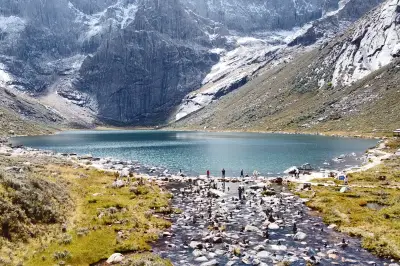
Nowhere else is like this place, forever yearned for and remembered in people's hearts. Towering mountains, azure skies, and pure lakes create a world as beautiful as a fairy tale. It is seen as a spilled palette of colors: colorful forests, layered waterfalls, and emerald seas, showcasing the most beautiful hues on earth. The sky is as blue as the boundless ocean; clouds stroll nonchalantly across the sky. A gentle breeze sweeps by, carrying away the gloom from one's heart, always bringing good cheer. "After returning from Mount Huang, no other mountain is worth seeing; after returning from Jiuzhaigou, no other water is worth admiring." Jiuzhaigou is China's first nature reserve established primarily to protect natural scenery. It is a famous scenic spot and a model national civilized scenic tourist area. It was inscribed on the UNESCO World Heritage List in 1992. This place, called a fairy-tale world, has never disappointed us. Spring's flowers and grasses, summer's flowing waterfalls, autumn's red leaves, winter's white snow—the landscape changes with the seasons, constantly amazing the world. Ancient plank roads, colorful forests, blue lakes, swirling clouds, magnificent snowcapped mountains, and unique waterfalls are all treasures exclusive to Jiuzhaigou. As spring warms and ice melts, gentle streams flow and flowers bloom brilliantly. In summer, it's a cool retreat with lush green trees and cascading waterfalls offering a pool of refreshment. Autumn brings crisp air and high skies, with red leaves covering the mountains and colorful forests everywhere. In winter, snow falls, covering everything in white; the icy lakes are like mirrors, and all is silent. Throughout the four seasons, Jiuzhaigou boasts six wonders. Water is the soul of Jiuzhaigou, and its lakes (haizi) are especially distinctive. The lake water remains azure and clear year-round, changing hues and moods with sunlight and seasons. Waterfalls are the finest form of water flow; Jiuzhaigou is a world of water and a kingdom of waterfalls. Under morning sunlight, beautiful rainbows often appear, delighting the eye and making visitors linger. The autumn forests are ablaze with crimson and purple, making it the most beautiful season. The colorful forests, one of the six wonders, cover over half the scenic area, with more than 2,000 species of plants vying for attention. The mountains of Jiuzhaigou are layered and overlapping. In winter, from afar, you can take in the snow-covered peaks. Historically, Jiuzhaigou was a grand corridor for ethnic integration, and its culture exhibits a strong frontier character and broad inclusiveness. The Tibetan people maintain their unique cultural traditions. The majestic blue ice waterfalls, huge ice pillars and balls hanging on steep cliffs, the dazzling ice crystal world, the warm white snowfields, and the clear blue waters together create a sacred winter charm. The scenery is stunning all year round. The Jade Pool is originally in the mortal world, how laughable for commoners to try to become immortals. There is a heavenly road leading to Jiuzhaigou, where one can wander freely in this paradise. Water is the sprite of Jiuzhaigou. Springs, waterfalls, rivers, and beaches—108 haizi form colorful jade basins. Jiuzhaigou is truly the king of waterscapes! Tiger Lake (Laohu Hai) is at an elevation of 2,298 meters, located above Shuzheng Waterfall. It is deep and tranquil, with violence hidden in its silence and wildness beneath its calm. Rhinoceros Lake (Xiniu Hai) is the largest haizi in Shuzheng Valley and one of the most varied in scenery. Its reflections are almost unmatched among all haizi. Double Dragon Lake (Shuanglong Hai) is above Reed Lake and below the Shuzheng cluster of waterfalls. Through the crystal-clear water, you can see two band-like organisms—calcified travertine dikes—faintly hidden on the lake bed. Shuzheng Waterfall is the first waterfall you encounter when entering the valley and the smallest of Jiuzhaigou's four major waterfalls. It consists of many cascading waterfalls linked end to end, with a powerful force that roars like thousands of troops. At the end of Reed Lake, the river channel widens, reeds disappear, and clusters of trees scatter on the shoal—this is Jiuzhaigou's first scenic spot: Bonsai Shoal. The delicate Sleeping Dragon Lake (Wolong Hai) is a typical example of a blue lake, with calm, peaceful waters like a smooth, translucent sapphire. Spark Lake (Huohuo Hai), also called Spark Pool, lies between Double Dragon Lake and Sleeping Dragon Lake. The azure water surface is mirror-like, surrounded by dense forests, and the lake is set among layers of emerald green, like a piece of translucent jade. Reed Lake is a semi-swamp lake with reeds growing densely, waterbirds flying, and clear streams rippling green—a true wetland scene. Seasonal Lakes (Jijie Hai) are unique within Jiuzhaigou, their water volume changing with the seasons. They rise in autumn and vary at other times, often lying nestled in valleys, quietly sleeping, exuding the beauty of peaceful times and harmony between heaven and earth. Five-Color Pond (Wucai Chi) is exceptionally clear; through the water, you can see the stone patterns on the bottom. It is the essence of Jiuzhaigou's lakes and the most delicate haizi, known as the Eye of Jiuzhaigou. Long Lake (Chang Hai) is Jiuzhaigou's highest and widest haizi, with dark blue water fed by melting snow from high mountains. Locals call it a never-filling, never-leaking gourd. Among all haizi, the most famous and beautiful is Five Flower Lake (Wuhua Hai), which is rich in variety and changes, considered the highlight of Jiuzhaigou. Panda Lake Waterfall (Xiongmao Hai Pubu) is 80 meters high, the tallest waterfall in Jiuzhaigou. Arrow bamboo is a favorite food of giant pandas; Arrow Bamboo Lake (Jianzhu Hai) is named for the abundant arrow bamboo growing along its shores. Pearl Shoal (Zhenzhu Tan) is a fan-shaped travertine flow and one of Jiuzhaigou's unique sights. Pearl Shoal Waterfall is a typical combined landscape within Jiuzhaigou; it is the place depicted in the opening scene of the TV series Journey to the West where Tang Seng and his disciples lead a horse crossing the water. Nuo Ri Lang Waterfall is the widest travertine waterfall discovered in China to date. In winter, it becomes a huge ice curtain with countless icicles hanging on the steep cliffs, creating a rare ice crystal world. Ice sculptures of various shapes emit a faint blue charm in the light. Mirror Lake (Jing Hai) is one of Jiuzhaigou's famous attractions. It is like a mirror that faithfully reflects the scenery on land and in the sky. Jiuzhaigou has been a Tibetan settlement since ancient times, preserving the most original lifestyle and festive customs. Its unique ethnic customs give rise to a brilliant culture. In 1991, China included Jiuzhaigou on the nomination list for the World Heritage List. The strict international review experts were ultimately conquered by its natural beauty. On December 14, 1992, Jiuzhaigou finally became the world's Jiuzhaigou, indisputably inscribed on the UNESCO World Heritage List. Jiuzhaigou County is a multi-ethnic settlement with a special geographical location and rich historical culture. It holds many honorary titles such as "Hometown of Folk Art" in Sichuan Province and is known as "Hometown of Folk Songs, Hometown of Pipa, Hometown of Love Songs." These traditions have been passed down for hundreds of years, bearing distinct geographical marks. Yongfeng Township is one of the birthplaces of Nanping Tunes. "As soon as I tap the saucer, I want to sing; as soon as I play the pipa, I want to sing"—this local proverb aptly summarizes the characteristics of Nanping Tunes. The Baima people's auspicious mask dance, called "Twelve-Aspect Dance" in Chinese, is a mysterious dance originating from the Baima people's primitive belief in animism, a fusion of Di-Qiang and Tibetan cultures. The Baima Tibetans worship pandas as their totem. In Caodi Village within Jiuzhaigou County, there is a custom of performing a panda dance on the fifteenth day of the first lunar month. From the fifteenth to the eighteenth of the first lunar month, young, capable men from the family are selected to dress as women and accompany the panda dance performance. Accompanied by the rhythmic beating of gongs and drums, they imitate pandas eating arrow bamboo, drinking water, climbing trees, rolling, and playing. Northwest Sichuan Tibetan folk songs have lyrics closely related to productive labor and the natural environment. Horses, cattle, sheep, snowy mountains, lakes, pastures—all are subjects of song. Thus, folk songs become the closest companions of Tibetan farmers and herders. In these songs, they pour out their feelings, worries, sorrows, and joys. They are the key to opening the hearts of the Tibetan people. If water is the soul of Jiuzhaigou and colors its clothing, then the Tibetan villages within the valley are its bones. Nine villages are scattered like stars across Jiuzhaigou, beautiful and mysterious, full of charm. These Tibetan villages feature the most traditional wooden buildings; locals paint various protective gods on the walls to bless their families with safety. Traditional Tibetan festivals are still preserved here. Every year in the fourth month of the Tibetan calendar, people gather to worship the mountain gods and sincerely pray. In addition, Jiuzhaigou retains brilliant intangible cultural heritage of Tibetan style: Guozhuang dance, folk songs, Tibetan opera, etc., which are integrated into their lives. Remarkable for its mountains, spiritual for its waters, Jiuzhaigou gathers myriad charms and always captures your heart.