A Soul Journey to Northwestern Sichuan—All Beauty Comes at the Right Time
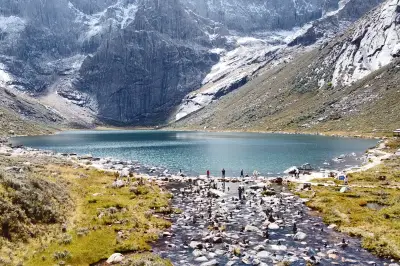
As I stood on the 4,860-meter-high Dagu Glacier and gazed around, I already knew that this travelogue of mine would be very, very long. At that moment, I felt that every cozy cloud, every sacred snowy mountain, every withered wild grass, every mirror-like lake, and every golden temple on this vast and magical land would bring me endless inspiration, rushing toward me like a great river, easily flowing onto the page. But when it came time to actually start writing, I realized that sometimes, when faced with nature’s gifts and life’s reflections, collecting and staying silent is more effective than pouring out words. Yet I couldn’t bear the thought—I didn’t want to wake up one day and find that the memories I thought were still vivid had begun to blur or even fade. Only by connecting each photo with words could I truly preserve this memory, preserve every road we walked, every person we met, every thing we experienced, and every moment—expectation, disappointment, surprise—that welled up from the heart. They are worth a lifetime of memories and treasures.
Last year, during my trip to western Sichuan, I made an appointment with myself for this year’s trip to the same region. Yes, western Sichuan has a “poison,” and once you’re poisoned, there’s no cure. So, I grabbed my camera, speed 120 mph, and the feelings of confusion, loss, unease, anxiety, helplessness, and irritability were instantly torn apart. Waiting for me was the unknown, the distant place I had always longed for. Aba, here I come.
A batch of beautiful photos first
Every photo is more than just pressing the shutter; it is the books I’ve read, the songs I’ve heard, the movies I’ve watched—it is the fusion of all my experiences and thoughts.
The right time, the right place, and the right people
The most mentally draining part of travel is finding companions. Not only do they need to approve of your itinerary, but you also need to share a common language. Fortunately, every time there are always two or three regular travel buddies who have walked through spring, summer, autumn, and winter with me, traveling across the beautiful land together!
“Harmony” No. 1
The day before departure, Brother Chao placed his approved leave slip in front of me—this biggest unpredictable factor was finally eliminated, and I let out a long sigh of relief. Of course, the condition Brother Chao made was that this time I wasn’t allowed to yell at him. I nodded like a pecking chicken, “Okay, okay, okay, as long as you don’t lose anything or procrastinate (in Sichuan dialect, meaning not dragging your feet), I promise not to yell at you.” Maybe because I gave him a preventive shot this time, Brother Chao didn’t repeat his husky-like behavior of losing luggage, and only got yelled at by me very briefly on the morning of leaving Li County because he was slow—this was the most harmonious trip in years. Thumbs up.
As for the introduction of “Harmony No. 2,” my first draft was directly vetoed by Sister Ma, so here I can only omit ten thousand words…
Ever since Sister Cat followed me on a trip to Hulunbuir, she seemed to have been pressed on the excitement button. We can’t even mention the three words “go out to play” without her being excited for several days. This time was no exception. A week before departure, she had already thought of her first WeChat Moments post: Sister Ting sets off with the zoo (here I must explain what the zoo means: besides me, the other three ladies on the trip are called Sister Cat, Sister Ma, and Sister Bear). This kind of thinking is really beyond the reach of ordinary people. I often wonder: Brother Feng, who is so mature and steady, how did you manage to bring this Martian back to Earth? When will you take us back to Mars for a trip?
Single No. 1: For the introduction of “Second Brother Xie,” I pondered for three full days. Using 28 characters to summarize is the most fitting: Greasy without losing grace, reserved without losing elegance, narcissistic without losing humility, uninhibited without losing composure.
Single No. 2: I have always thought it’s amazing that the plastic-flower relationship between Miss Xiong and me—mutually contemptuous yet inseparable—has lasted more than ten years. When we were enjoying the seductive nightlife in the largest adult show venue in Pattaya, you were hiding on the hotel balcony eating durian; when we were swaying to the deafening music at the Guoke Bar in Pingle Ancient Town, you were playing on your phone at the inn… Sometimes, you’re really a bit of an oddball, but I like your uniqueness. As Mr. Lu Xun said, “In life, one confidant is enough; in this world, treat each other as kindred spirits.”
Traveling during off-peak times greatly increases the happiness index of the trip, so we still chose to depart after the National Day holiday. However, the special geographical environment of Aba Prefecture, with frequent geological disasters, subsidence, falling rocks, landslides, road construction, traffic controls, and many other uncertainties, makes it impossible to plan each day’s itinerary in detail. But after all, traveling is a spontaneous thing. Adhering to the principles of “no driving at night” and “not rushing for scenic spots,” we woke up naturally every day, arranged the day’s schedule based on the weather and road conditions, left around 9 or 10 AM, arrived at our accommodation around 5 or 6 PM, and ended the day with a bottle of baijiu, a game of mahjong or Two-Ten-Twenty, leisurely and carefree.
Day 1: Jiajiang—Li County, stay at Jixiang Purple Lotus Hotel in Li County
Total distance 299 km, all highway, good road conditions, toll 135 yuan, travel time 3 hours 40 minutes. Day 2: After visiting Bipenggou, stay at Jixiang Purple Lotus Hotel in Li County. Day 3: Li County—Miyaluo—Zhegu Mountain—Sanjiazhai—Rangkou—Yakxia Snow Mountain—Naizigou, stay at Jishan Villa in Heishui. Due to traffic control on G347 from Maoxian to Heishui for asphalt paving (open only from 1:00 to 3:00 PM daily), we chose to go from Miyaluo via G317—G248—S302 to Heishui, total 196 km. The Miyaluo tunnel is closed for construction, so we took a temporary detour with slow traffic. After crossing the Yakxia Snow Mountain tunnel to Yangronghade Tibetan Village, there were road shoulder repairs and construction, making the road very poor—preferably drive an SUV or off-road vehicle; sedans will scrape the chassis. Navigation showed 3 hours 50 minutes, but actual time was 7 hours (including lunch at Sanjiazhai and stops at scenic viewpoints along the way).
Day 4: After visiting Dagu Glacier, Dagu Glacier—Rangkou—Chazhen Liangzi—Hongyuan, stay at Hongyuan Yunsheng Hotel. Total 141 km, road conditions good from Rangkou on G248. Navigation showed 2 hours 40 minutes, actual time 3.5 hours (including refueling and stops at scenic viewpoints). Day 5: Hongyuan Yunsheng Hotel—Chuanzhusi—Jiuzhaigou, stay at Jiuzhaigou Huajianji Inn. Total 271 km, G248 and S301 in good condition. Navigation showed 4 hours 40 minutes, actual time 7 hours (including lunch at Chuanzhusi and stops at scenic viewpoints). Day 6: After visiting Jiuzhaigou, stay at Jiuzhaigou Huajianji Inn. Day 7: Jiuzhaigou—Songpan—Maoxian—Wenchuan—Jiajiang. Total 519 km, S301 and G213 in good condition, except for a short section of road construction on G213 near Wenchuan with slow traffic. The Wenchuan toll station on the Duwen Expressway is closed; currently, you must enter the expressway from Wenchuan South. Toll 135 yuan. Navigation showed 8 hours 40 minutes, actual time 10 hours (including lunch at Maoxian and waiting time for road construction).
DAY 1: Escape
People are always like this: wanting stability but unwilling to be ordinary; wanting companionship but craving freedom; choosing the city but longing for a pure land. In the city, amidst the neon lights and bustling traffic, we suppress our true nature—disliking something but nodding in agreement; wanting to love but not daring to speak; women strictly controlling their figures for appearance; men endlessly overexerting themselves for career prospects… Losing yourself is easy, but finding yourself again is truly hard.
We agreed to meet at 3:30 PM at the unit gate, but at 10 AM I was still in the office working on materials, and at 3:15 PM I was still speeding on the road to send my daughter back to school. At that moment, I was a diligent police officer and a caring mother. After 3:30, I was only myself, even with all my flaws.
Today’s itinerary had nothing special. Aba is like that: if you want to see beautiful scenery, you have to endure the bumps along the way.
We arrived at Jixiang Purple Lotus Hotel in Li County when it was already dark. The 274-yuan-per-night (including breakfast) luxury king room was clean and cozy, with air conditioning, heating, large hot water in the bathroom, and a fairly rich breakfast. Thanks to Jiajia for the recommendation.
Next to the hotel is a restaurant called “Fushan Old Soup.” The first meal on the plateau was a yak meat hotpot soup. After eating, my whole body felt warm.
DAY 2: Bipenggou—Colorful or Snowy?
Waking up in the morning, it was cloudy. I didn’t see the expected blue sky and white clouds, only thick morning mist surrounding this small plateau town. But I wasn’t too disappointed—good weather or bad weather doesn’t matter much. Take things as they come; every encounter has its beautiful side.
From Li County town to Bipenggou Scenic Area is a half-hour drive. The distant mountains looked like fairyland in the mist.
Dragon King Lake is the first stop of the scenic area’s sightseeing bus—a jade-like alpine lake. The lake surface is like a huge mirror embedded among the surrounding mountains. Thick clouds covered the sky and lingered on the mountainsides. The colorful mountains, due to the dim light, didn’t appear lively but seemed asleep. The reflections of the mountains in the mirror-like lake were very tranquil.
Mist and clouds drifted lightly among the white mountains, constantly changing their shapes, occasionally tangling in our hair. Playfully, it hid the mountain peaks, letting you guess their graceful forms.
When we reached the end of the sightseeing bus route at Shanghaizi, a patch of blue sky gradually appeared through the dispersing mist. The distant snow-capped mountains slowly peeked out, glistening shyly in the sunlight. But soon, thick fog spread again before we could see their true faces, sinking back into a new blur.
We continued upward by electric cart. The maple, maple, birch, goose-foot pine, and larch along the way were covered by the previous day’s snow. This year’s snow seemed to have come early—autumn colors hadn’t faded yet, but winter had already arrived, as if afraid of missing a single plant or tree here.
It’s no exaggeration to say that Panyang Lake is the most beautiful spot in Bipenggou. Snowy mountains and forests were shrouded in milky clouds and mist, half autumn and half snow on the mountainside, magnificently beautiful.
The lake beach was covered with snow, and everyone happily started a snowball fight.
Take a check-in photo on the most Instagram-worthy “little moon” in Bipenggou.
I wanted to hold the white snow tightly in my hand, but found it had melted into water droplets from the warmth of my palm.
Such a lonely tree, just like these two lonely figures.
We walked through the bright yellow coniferous forest, then sat on a lakeside swing, quietly gazing at the mountains, water, and forest, enjoying the enticing autumn scenery.
She is your scenery, you are her scenery, and both of you become my scenery.
The fog grew thicker, and the higher we went, the more white it became. We gave up on going to Swallow Rock. To be honest, Bipenggou didn’t impress me much; after seeing too many beautiful things, one’s eyes become more critical. But I can’t deny Bipenggou’s beauty—it’s just not stunning but subtle. I hope everyone can see the subtle beauty of this world.
1. Bipenggou Scenic Area opening hours: Summer (May 1–October 31) 08:00–18:00 (tickets stop at 15:30); Winter (November 1–April 30) 08:00–17:30 (tickets stop at 15:00). 2. Scenic spot ticket: 70 yuan/person, free with police officer ID. 3. Round-trip sightseeing bus: 60 yuan/person, from the entrance to Shanghai Visitor Center, about 1 hour one way, with a stop at Dragon King Lake. 4. Electric cart tickets: two sections: Shanghai to Panyang Lake (about 4.5 km, with boardwalk and electric cart, one-way 20, round-trip 30); Panyang Lake to Swallow Rock (about 5 km, with boardwalk and electric cart, one-way 20, round-trip 30). The Panyang Lake lakeside boardwalk is about 800 m, best for walking; Swallow Rock has red rock beach, and on clear days you can see the Four Girls Mountain. 5. Shanghai and Panyang Lake have visitor centers, but prices are high; you can bring self-heating food.
DAY 3: First Encounter with Miyaluo
After passing Guer Gully, the ditches along the national highway gradually showed colors. Autumn spread wantonly in the air, colors wantonly dyed the mountains, and the autumn wind wantonly brightened the colorful forests from one mountain to the next.
The highlight of this trip was not Miyaluo. We didn’t linger too long. Through the car window, the greens, reds, yellows, whites… healed all my longing for autumn.
Miyaluo Town seems to be the boundary between autumn and winter. After passing the town, we entered Zhegu Mountain and gradually into a world of snow. We wound through the valley along the Zagunao River, with snow-capped peaks on both sides, sometimes steep, sometimes abrupt.
As the first snow mountain on G317, it is far less famous than Erlang Mountain on G318. Even if you mention it, many people’s first impression is that they mishear it as “Zheduo Mountain”—it is the most low-key snow mountain.
A group of kids who haven’t seen much—are they having a snowball fight or a brawl?
Descending Zhegu Mountain leads to Sanjiazhai. To the left is Barkam, to the right is Hongyuan. The Yilan Restaurant at the village entrance is a halal eatery. Whether noodles or rice with toppings, the portions are generous, taste good, and prices are fair.
The “Qiong” bird is the king of birds in Tibetan culture and the auspicious bird that protects the Jiarong Tibetans.
Meeting the first snow of 2020 on Yakxia Snow Mountain
After leaving the restaurant, we were pleasantly surprised to find it was snowing! Snowflakes danced in the sky, falling on our hair, cheeks… and wantonly into our hearts.
The group got completely excited, praying for the snow to get heavier, even heavier. Heaven granted our wish. After passing Shuangjingsi Town, the snow suddenly became dense and thick, instantly blurring the sky and earth. The scenery outside the window gradually turned into a vast white expanse.
Yakxia Snow Mountain—when this snow mountain, which I had never heard of, appeared before us, we “luckily” encountered a blizzard. The mountain road had no guardrails; beneath the wheels was endless white snow, and beside us were massive black mountain faces. Rocks were covered with snow, black and white blending, quiet and dangerous. Ahead, a snow-capped mountain loomed faintly in the wind and snow, watching you, waiting for you. This impact was both enticing and tense.
The melting snow soaked the road, making the already under-construction S302 muddy. We trudged forward with bumps. A herd of yaks braving the snow blocked the way. We were stuck behind them, unable to honk for fear of startling them, unable to rush past for fear of hitting them. This walking money truly left us at a loss. Fortunately, just before the Yakxia Snow Mountain tunnel, these “roadblocks” took a small path up the mountain; otherwise, we might have waited in the snow for who knows how long.
After crossing the Yakxia Snow Mountain pass, the altitude kept dropping, and the snow gradually diminished. Around a bend, we suddenly saw construction vehicles and workers repairing the road, and our hearts felt much more at ease.
As the altitude decreased, the grand scenery transformed into delicate beauty. Colorful forests gradually came into view.
The Colorful Forest Valley was a blaze of autumn hues, autumn overflowing in Naizigou.
Following the Naizi River onward, although the mountains were not completely red, the forests were fully dyed. I clicked the shutter frequently to record this indescribable beauty.
From plains to ravines, from mountains to valleys, every place was adorned with autumn’s colors, releasing autumn’s sentiments.
Yamai Lake, a free roadside attraction. The snow and ice from Yakxia Snow Mountain melt, carrying large amounts of minerals down the valley, forming a blue-glowing pool. Colorful forests on the cliff are reflected in the water, creating another colorful world.
The colorful forests are natural secondary forests: bright red are maples, bright yellow are birches and oaks, lush green are firs. The base of red and yellow gradually ignites pinkish red, orange-red, vermilion, purple-red, light yellow, beige, golden yellow, orange-yellow… This is probably a deep love song autumn writes for the coming winter!
No doubt, in late autumn, Naizigou—this brilliant pearl adorning the northwestern Sichuan plateau—is stunning at first sight, and unforgettable at second glance. It is a luxurious visual feast.
The sprawling eighty-mile colorful forest is the best interpretation of autumn. We were intoxicated by the scenery, frequently stopping. By evening, we finally arrived at the Jishan Villa in Jiazu Village, Shashiduo Township, Heishui.
The villa is right next to S302, only 800 meters from Dagu Glacier. The Tibetan owner, “Brother Ban,” is warm and hospitable. The Tibetan-style hotpot was delicious. The 220-yuan-a-night luxury standard room was clean and tidy—rare in Tibetan areas. Highly recommended.
1. Currently, some sections of roads in Heishui County are under construction with traffic controls, but they do not affect the normal passage of cars and buses. Starting October 30, due to asphalt paving, traffic control is in place for 3 km from the Yakxia Snow Mountain tunnel entrance downhill to the Yakxia viewpoint; passable before 9 AM, 1–3 PM, and after 7 PM. 2. Naizigou doesn’t have a specific scenic spot; the scenery is on the road, with many viewpoints along the way. The best season for colorful forests is from late October to early November, but it depends on the weather each year—could be a few days earlier or later. 3. Be sure to prepare some one-yuan small bills—nature calls, after all. Internet signals are poor in many places, and some elderly Tibetan women don’t use electronic payments. To avoid polluting the environment, please use toilets civilly. 4. Book accommodation in advance during the colorful forest season.
DAY 4: Dagu Glacier, the Nearest Distance
Have you ever thought that “the nearest distance” could be right beside you? Have you ever been to the world’s most “lonely” café? Please go with your beloved to this place close to heaven, and spend a cup of coffee feeling the warmth here, remembering the romance of the moment.
Entering Dagu Glacier, the first stop of the sightseeing bus is Golden Monkey Lake. The clear lake water contrasts with the blue sky, embracing the mountains—a stunning view.
At Golden Monkey Lake, we encountered many Tibetan stump-tailed macaques. Probably fed by tourists, they weren’t afraid of people. Mother monkeys wandered with their babies, while some fiercer ones bared their teeth at tourists. I really hope they don’t become like the monkey groups on Mount Emei, spoiled by tourists to the point of arrogance.
Zena Couo, also called “Release Life Lake.” On windless days, the blue sky, white clouds, snowy peaks, forests, and Tibetan villages are clearly reflected in the calm water. If this scene brings you joy, then it’s enough.
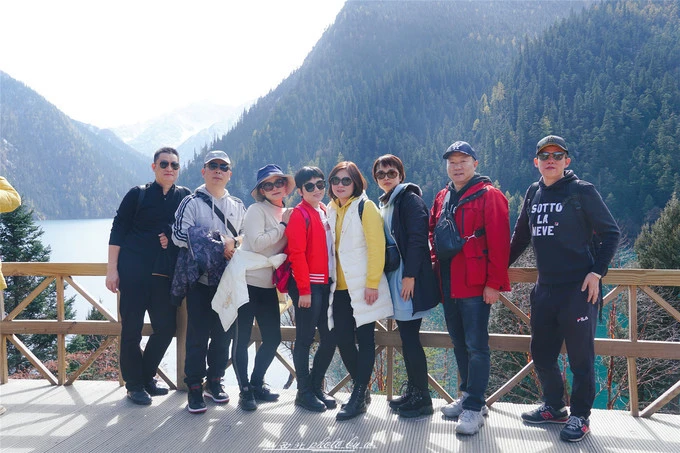
Was it easy for me to take a photo of you all?
In Tibetan, “Da” means horse, “Gu” means deep, and Dagu Lake might be like the time described by writer Alai: “No sadness, no desolation, only endless longing spreading and growing.”
Look, the snow-covered forests and reflections—aren’t they like the blank spaces in Chinese landscape paintings? Time is here, either still or flowing; silence is such a gentle power.
Sitting on the snow-covered boardwalk, when the first warmth of sunlight seeped through the clouds, the collision of cold ice and warmth moved me deeply.
At Lingyun Cableway Station, we took the world’s highest-altitude cable car, traveling through several thousand meters of sky. The red cable cars slowly rose against the snowy mountain backdrop, upward until the view changed from snow-covered dense forests to sparse shrubs, then to complete barrenness—even our heartbeats could be heard clearly.
Suddenly, we saw blue sheep frolicking in the snow. This might be their paradise—no killing, no natural enemies.
The winding forest boardwalk looked beautiful in the snow. To climb to the top, you first need to ask your pounding heart if it agrees.
Crossing a ridge, an unnamed lake lay quietly within the glacier, as clear as emerald.
Fifteen minutes later, the cable car brought us to a height of 4,860 meters. The wind was mercilessly cold, but the view was breathtakingly beautiful. The snow was as soft as cotton candy. Driven by the wind, the icicles on the eaves turned into sparkling diamonds under the sun.
Standing on the mountaintop, everything restored its original colors: pure white snow and ice, clear blue sky, endless snow-capped mountains stretching from ancient times to the future.
This must be the closest I’ve ever been to snow mountains in my life. The crisp cold cleansed all distracting thoughts from my body. Worries and desires vanished, leaving my whole being clear and pure.
Watch the flowing clouds change, see the passage of time; let vultures soar, let the wind roar—all within reach.
On the way down, we passed Logos Divine Mountain. Every sacred mountain has a beautiful legend. For those who worship snow mountains with eternal faith, their spirit cannot be expressed without experiencing it yourself.
Going down was much faster. From the cableway station to the scenic area entrance, it’s 35 km, about a 1-hour drive. Everyone took the chance to rest.
I don’t know what seductive female tourist stimulated Second Brother Xie, but I must say, goofiness is really contagious. Through his relentless efforts, the whole group’s vibe went off track.
Passing through Naizigou again in this colorful season, perhaps because of the sunlight, the forest that was light yellow yesterday had turned golden today. The mountains’ warmth surrounded you, warming your heart.
Yakxia Snow Mountain had lost its ferocity from the other day. At the end of the road, the col opened like a rising curtain, connecting the foreground and background to the sky—grand, magnificent, vast and profound.
I rolled down the window to feel the wind’s roar. As the wind passed, Longda (prayer flags) fluttered everywhere. Listen—it seemed a deep, far-reaching voice was speaking. This voice might come from the flying prayer flags, from someplace in the dense forest, or from the snow-covered peaks. No, it must be a fusion of all three!
Driving off the S302 that had brought us so much beauty, we turned onto G248 and entered the grassland wetlands. Speaking of Hongyuan, you might only think of its summer flower sea. But each season has its own beauty; the full moon and flowers have their lingering charms, and the snowy sky has its non-competitiveness and purity. Are you, like me, traveling off-season, experiencing the vastness of the boundless wilderness?
After passing Emutang, we began to climb Chazhen Liangzi at an altitude of 4,345 meters. Since two rivers originate on both sides of the hill—one feeding the Yellow River and the other the Yangtze River—Chazhen Liangzi is regarded as the watershed between the two great river systems. Here, the Yellow River and the Yangtze River divide, plateaus and valleys separate, forests and meadows part ways, and northern birds and southern beasts go their separate routes.
By evening, the setting sun cast its already cold light. The golden grassland, set against the distant snowy mountains, shone brilliantly in harmony with the prayer flags flapping in the strong wind. We stopped rushing, slowed down, and watched the light at the horizon gradually disappear and the moon slowly rise, enjoying this rare silence.
Every year without fail, on this day, we are together. This year was no exception, but it was also an exception. I tried every possible way to secretly order a cake in Hongyuan town ahead of time, just to give Sister Ma a special travel birthday. In a lively Sichuan restaurant, we lit candles, made wishes, cut the cake, drank until we were dizzy, and sincerely wish that every year of your life you will run in your own passion.
1. Dagu Glacier Scenic Area opening hours: 08:30–17:00, entry: 08:30–15:00. 2. Dagu Glacier tickets must be booked online one day in advance, limited to 5,000 people per day. The package is ticket (120) + sightseeing bus (70) + cable car (180), total 370 yuan/person. 3. From the entrance to Lingyun Cableway Station is 35 km one way. Unlike other scenic spots, the sightseeing bus goes on different routes for departure and return. On the way up, it stops at Golden Monkey Lake, Lower Dagu Village, and Dagu Lake; on the way back, it passes Logos Divine Mountain and Red Rock Beach. Every stop marked on the ticket will allow passengers to get off and visit, so you can freely manage your time. 4. In winter, you must buy a round-trip cable car ticket; you cannot walk the boardwalk. 5. Be sure to bring waterproof and non-slip shoes. With them, you’ll experience a lot of different joy in the snow. 6. Sunglasses! Sunglasses!! Sunglasses!!! Important things said three times, otherwise, be ready to be blinded by the snow. 7. A hat: not only keeps you warm but also works as a life-saver when you don’t want to wash your hair. 8. The altitude of Hongyuan town is over 3,500 meters; temperature difference between day and night is large. Beware of cold and altitude sickness.
DAY 5: The Best Scenery in Hongyuan—On the Road
Late autumn on the plateau is exceptionally dry. With nasal discomfort and throat irritation, plus the alcohol from last night, I slept fitfully, waking intermittently, but my spirits were still good.
Perhaps because of the snowfall last night, even after 10 AM, the streets of Hongyuan were quiet, with few people. I originally wanted to visit the First Bend of the Yellow River in Zoige, but I was too groggy from last night’s drinking to remember to book tickets, so we headed straight to Jiuzhaigou. Actually, only when self-driving in western Sichuan can you deeply understand the saying “the best scenery is on the road.”
Leaving Hongyuan town, the sky was overcast, with a strong, fierce wind. The clouds draped over the distant mountains moved at a visible pace. The large cloud layers created a play of light and shadow, carving the sky, the earth, and the mountains into clear layers.
But the plateau never disappoints. Its greatest charm is that you can never predict what you’ll see next. In an instant, the clouds were torn open by the blue sky, and sunlight poured down. On both sides of the straight, wide road, the grassland was painted golden. The deep blue sky, floating clouds—flowing like poetry and painting.
Along the way, lofty mountains and vast grasslands appeared. At every viewpoint, if we liked the scenery, we stopped, stood, and looked. The mountain roads of western Sichuan are winding and remote, but the scenery is pleasing, and the mood should be beautiful.
A winding wooden boardwalk stretched deep into the grassland. At its end, rolling, undulating peaks resembled ocean waves. At that moment, you feel your own insignificance and the vastness of heaven and earth, sighing that what our eyes can see is but a drop in the ocean, and our seemingly long life is but a fleeting glimpse.
They say that grasslands are a place every girl dreams of. The prayer flags, stirred by the breeze, tousle their hair. The bold girls laugh in the wind. But the wind at the mountaintop was far from gentle; the noisy wind scraped past the colorful prayer flags, blowing hair and stinging cheeks. This was the grassland I had longed for day and night. In an instant, a voice burst from my chest: “Damn, it’s freaking cold.”
Only when standing on such land can one talk about freedom and solitude.
Deep into the grassland, outside the car window stretched softly contoured mountains, dyed green-yellow. Little black dots dotted the slopes—cattle grazing leisurely with heads lowered. The mountains and clouds were so close; the shadows of the clouds slowly caressed the curves of the mountains so intimately that I couldn’t help but envy them.
The best weather is when the sky is clear with alluring clouds.
The car followed the winding road, charging into the boundless mountains.
Several eagles soared freely under the blue sky, sometimes flying over snowy peaks, sometimes disappearing into the depths of the clouds, sometimes hiding in the grassland, becoming the most vibrant life in this vast expanse.
We passed an unnamed temple: white pagodas, prayer wheels, exquisite wood carvings under the golden roof, and prayer flag arrays covering the high mountain opposite the temple. Perhaps for those devout believers, only faith can calm the mind; both what you meet and what you don’t meet are liberated in this life and this cycle.
Driving onto S301, we were about to leave Hongyuan. Although we didn’t see flowers and green grass, the golden yellow fields were satisfying. The grassland in late autumn and early winter has gained a baptism of time, a precipitation of years. The camera cannot fully capture this beauty; the most beautiful scenes are in my eyes and in my heart.
The world is never short of roads. China has many roads, each with its own scenery. S301 is one of them. This road is not only narrow, winding, steep, and with many sharp turns, but it also offers blue sky, white clouds, snowy mountains, cattle and sheep…
Jiuzhaigou Huajianji Inn is located in the center of Zhangzha Town, hidden among a large group of homestays. It is quiet despite its location. The 200-yuan-per-night big bed room was spacious, bright, and clean. It’s about 5 km from the scenic area entrance, and the inn offers pick-up and drop-off service.
DAY 6: Jiuzhaigou After the Earthquake—Never Left, Waiting for My Return
Counting, this should be my fifth time in Jiuzhaigou. This place is beautiful all year round: spring with mountain flowers, summer with green water, autumn with colorful forests, winter with white snow. After the “8.8” strong earthquake, Jiuzhaigou underwent post-disaster reconstruction and was reborn, its beauty no less than before. And this time, I still left my heart among the colorful lakes.
Late October is the most beautiful time in Jiuzhaigou. Photography enthusiasts and tour groups flock here. We had booked entry for 8:30 AM, but the long queue at the entrance almost scared us to death. With so many people, we lost our bearings. When an empty bus came, the crowd surged aboard, and we were swept along. We got on one bus, but were all kicked off at Shuzheng Village, and had to walk 800 meters on the boardwalk to the next stop. The tourists brought up by those buses jammed the narrow boardwalk, crawling at a snail’s pace. This set the stage for us missing the most beautiful view of Mirror Lake.
Standing on the road boardwalk overlooking the Shuzheng Qunhai (Shuzheng Group Lakes) at the bottom valley is like seeing the epitome of the entire Jiuzhaigou. The string of lakes spreads out in a row like azure pearls scattered among the mountains, crystal clear, round, and graceful.
Shuzheng Waterfall is a representative of the cascading waterfalls in Jiuzhaigou. The upstream lake water flows all around over the shoal, weaving through the trees, forming wide or narrow waterfalls, demonstrating the wonder of “trees growing in water, water flowing in forests.”
White mist and deep brown rocks form a strong contrast, decorating the mountains.
Tiger Lake and Rhinoceros Lake are two adjacent lakes. Every time I go back and organize my photos, I can’t tell which is Tiger Lake and which is Rhinoceros Lake. But actually, there’s no need to cling to names—as long as the scenery is beautiful, it’s fine.
Without visiting Five Flower Lake, you will never know how beautiful Jiuzhaigou is! The calcium carbonate-rich lake water, combined with aquatic communities containing different chlorophyll, transforms under sunlight into brilliant colors—clusters and patches of sapphire, emerald green, and bright yellow. The trees on the shore, in orange, red, yellow, and green, are reflected in the lake, creating a riot of color.
Look—every plant is using life as fuel to burst forth with dazzling radiance.