Continuing the Frontier of the Interior - 2021 Sichuan, Gansu, Qinghai Trip
Day 1: As the saying goes, 'Nine Yellow, Nine Yellow, ten flights nine are delayed!' Due to the volatile plateau climate, after an episode of returning to Chengdu on an early morning flight, we finally managed to land at Jiuzhai Huanglong Airport around noon, starting our trip to Jiuzhaigou and Huanglong after more than a decade.
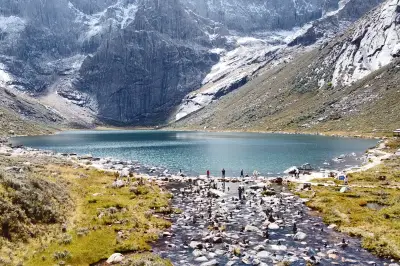
Huanglong remains as beautiful as the Heavenly Pond!
But compared to 15 years ago, it has lost some of its natural wild charm.
Huanglong Tips:
A. External Transportation - From Jiuzhai Huanglong Airport to Huanglong, besides self-driving, there are three options: 1) Chartered car: pick-up at airport, take you to Huanglong, and after the tour, drop you at your accommodation. You can contact the transport team of your hotel. A small car costs about 500 RMB. 2) The airport has shuttle buses connecting flights to Huanglong. You can leave your luggage on the bus, and after 4 hours, it will take you to Jiuzhaigou, stopping at hotels along the way. Cost: 120 RMB/person. 3) Book a taxi to Huanglong. This seems feasible via Didi Chuxing, with reasonable fares, but needs practical confirmation.
B. Internal Transportation in the Scenic Area - Two main options: 1) Take the cable car from the back mountain directly uphill, which most tourists choose. But the cable car top station is about 4 km from the Five Color Pond. Walking at an altitude of around 3,500m can be physically demanding, especially since the 4-km path has few views. 2) Walk uphill from the main entrance to the Five Color Pond at the top. The distance is similar to the cable car route, but along the way, the water scenery is colorful. Based on personal experience from over a decade ago, this route feels easier than the cable car walk. If you have your own car or chartered car and are not pressed for time, I recommend this route. Another advantage: entering in the morning and walking up allows you to avoid the large crowds taking the cable car. After all, even beautiful places lose their charm with noisy crowds.
Additionally, an eco-friendly road is being built from the back mountain cable car top station to the Five Color Pond, which may provide a better option soon, solving the problem of the long walk from the cable car. However, the environmental damage from building large roads will be hard to restore.
C. Food - The scenic area does not provide catering services. It is recommended to bring your own dry food. In front of beautiful scenery, simple food tastes especially good.
D. Accommodation - After the tour, you can go directly to Jiuzhaigou entrance area, where there are many hotels of various standards with guaranteed quality. For a better experience, consider local five-star hotels, whose hardware and environment exceed five-star standards.
Day 2 & 3: Early in the morning, we left the hotel located between Huanglong and Jiuzhaigou. The chartered driver took us to Jiuzhaigou entrance, and on the way, we dropped off extra luggage at the hotel for the third day. Jiuzhaigou, and Uncle Ge whom I haven't seen for years, I'm here to see you again!
Jiuzhaigou Tips:
A. External Transportation - Besides flying to Jiuzhai Huanglong Airport, there are daily tourist buses from Chengdu to Jiuzhaigou. Unfortunately, the route no longer passes by Diexi Haizi, a barrier lake formed by the 1933 Songpan earthquake (magnitude 7.5) (with old photos attached)... Otherwise, it would be a nice stop.
B. Internal Transportation in the Scenic Area - Mainly eco-friendly buses and walking. Eco-buses stop at every scenic spot, but some stops are not served by all buses, especially those deeper in. Be sure to ask when boarding.
If time permits, I suggest on the first day, take the early bus directly to the innermost Fangcao Lake (or Swan Lake) in Rize Valley, then walk downhill along the boardwalk to Nuorilang, avoiding some crowds. Along the way, you can slowly walk and admire Arrow Bamboo Lake, Panda Lake, Five Flower Lake, Peacock River, Pearl Shoal, and Nuorilang Waterfall. If there is still time after exiting, take the eco-bus along the exit route to stop and view the various lakes and Shuzheng Waterfall in Shuzheng Valley. On the second day, take the early bus directly to the innermost Changhai Lake in Zechawa Valley. Changhai Lake now has a new boardwalk along the shore. I suggest leaving the crowded viewing platform, going down to the boardwalk, and walking a bit to the right to experience the openness and tranquility of Changhai Lake. Then take the bus to Five Color Pond, passing by the upper/lower Seasonal Lakes on the way, and return to Nuorilang. Then in Shuzheng Valley, you can choose to walk out along the lakeside boardwalk, which is less crowded and beautiful, especially the Reed Lake, often glimpsed from the bus, which is actually a unique landscape of Jiuzhaigou!
C. Food - Nuorilang has food service but poor reviews. It is recommended to bring simple dry food and hot water. In front of beautiful scenery, simple food tastes especially good.
D. Accommodation - Two options: 1) Hotels at Jiuzhaigou entrance, similar to Huanglong. 2) Accommodation inside the valley (Shuzheng), which is officially banned but still arrangeable. Currently, the cleanliness and food of homestays inside have improved greatly, making them an ideal choice for in-depth tours. Local Tibetans are eager to expand and renovate to receive guests, hoping for a solution that benefits both people and nature.
Day 4: Driver Zhao from Xining arrived at the hotel early in the morning. Next, we would start the chartered trip to southern Gansu and Qinghai.
Geographically, Jiuzhaigou is located at the border of Sichuan and Gansu. Going up from Jiuzhaigou to Diebu and Zhagana in southern Gansu, described by Joseph Rock, is a reasonable itinerary.
'I have never seen such magnificent scenery in my life. If the author of Genesis saw the beauty of Diebu, he would have placed the birthplace of Adam and Eve here.' - Joseph Rock, the 'geographer with many loopholes,' 'wandering botanist,' 'language genius,' famous explorer, father of Naxi studies, and creator of the Rock Route, an Austrian-American, once exclaimed.
Yang Xianhui, the author of the Gannan Trilogy, wrote a stunning chapter about Cuomei Peak in 'Gannan Notes': 'But I saw a huge white stone mountain rising abruptly among the slowly rising green slopes, several times larger than Animaqin Mountain in Zhagana, more abrupt and towering than Ani Duini. And on top of this white rock mountain, eight or nine sharp stone peaks rose straight into the blue sky, like a row of bayonets held up, or like a cluster of arrow shafts standing on an arrow platform. I was stunned...'
Located in the northern part of Kaba Township, Diebu County, 63 km from the county seat, it connects with Zhouqu to the east and borders Zhuoni to the north. The main peak of Cuomei Peak is 4,920 meters above sea level, spanning 180 square kilometers north-south. It is the highest peak in Gannan Prefecture -- excerpted from Baidu Baike.
In fact, Cuomei Peak, adjacent to Zhagana in Diebu, is one of the five major Bon sacred mountains in the Amdo Tibetan area. Academically, it is recognized as the highest peak of the Qinling Mountains, i.e., the geographical main peak. Due to severe karst weathering and steep terrain, it remains an unclimbed peak, definitely worth exploring.
Before the trip, I researched many materials and set Niqian Village in Kaba Township as the destination. Along National Highway 544, Jiuru Road, turn right onto County Road 036 at Kaba Township, then proceed on Township Road 593 and 613, following Anziku upstream to the fork, then take the right Niqian Valley. In reality, after turning from Jiunuo Road onto County Road 036, the navigation became less reliable as we went deeper. After many twists and turns, we finally found temporary signposts, but the uphill dirt road was very narrow and steep, slippery in the rain. Also, due to overcast skies, we couldn't see the surrounding peaks' shapes. Finally, we had to retreat, leaving some regret.
Located at the southern foot of Dieshan, its Tibetan name means 'stone box.' The entire village is nestled in a peculiar stone city. From inside, the entrance road passes through several natural stone gates, very unique. The surrounding extraordinary peaks are often shrouded in clouds. The city has crisscrossing fields, with four natural Tibetan villages built on the hillsides. It has been a paradise since ancient times.
Zhagana Tips:
A. External Transportation - Zhagana is relatively close to Jiuzhaigou, only about 270 km, much closer than from Lanzhou (470 km). The 544 National Highway and Jiuru Road have good road conditions with little traffic. Departing Jiuzhaigou at 6:30 am, enjoying scenery along the way with short stops, plus the round trip to Cuomei Peak, we had lunch in Diebu by 14:00. After arriving at Zhagana, we went directly to the viewing platform and Fairy Meadow, then reached our homestay at 17:30.
B. Internal Transportation in the Scenic Area - Mainly eco-buses and walking. For Fairy Meadow, it's better to take the eco-bus up and walk down, where you can see terraced fields, villages, and temples up close. If time permits, you can stay in Zhagana for a few days and hike through to Zhuoni. This route is not an ordinary outdoor or sightseeing route but a centuries-old nomadic route used by local Tibetan herders for winter and summer grazing. Every place and name has hundreds of years of legends and stories. Guides know these stories and can tell them. Following the guide to experience local life, with forests, grasslands, snow mountains, peaks, sunshine on golden peaks, sunrise over mountains, streams, canyons, etc., every step offers a new view, making it an unforgettable classic in-depth tour for seasoned hikers.
C. Food - In the town, you can order hot pot, mainly because the quality of chilled yak meat is good (same experience later in Langmusi). The taste is comparable to imported grain-fed meat. Add some vegetables and a special Tibetan fragrant pork dish, and you have a clean, tasty, nutritious meal.
D. Accommodation - Important note: Zhagana is already showing signs of commercialization. Besides charging entrance and bus fees, there are many homestays of varying sizes with poor management. We had booked at a relatively large X Family Hotel, but they stood us up for a better price on the day. Therefore, it's recommended to book through platforms like Ctrip for some assurance. Or, if you only want a quick visit, stay in Diebu, only 26 km away, but with much better food and accommodation options.
Day 5: Our destination was Langmusi, located at the border of Gansu and Sichuan. Unexpectedly, the plateau hot spring near Jiangzha Township, not far from the road, became a big surprise of the trip.
When we visited Jiangzha Township (hot spring), although there was a toll gate (10 RMB) at the entrance and exit, overall it was still quite primitive. Two large hot spring pools by the road had simple rooms built over them, where tourists could enter and soak freely like local Tibetans, men and women together. There were also open sacred springs and small pools for drinking and therapeutic soaking. Even more impressive were the highland meadows further in, with rolling hills contrasting with the steep peaks at the entrance and wildflowers everywhere. In the valley, summer tents and sheep herds, and villagers on the distant hills calling out to us jokingly, created a paradise scene more genuine than the crowded Zhagana.
Reluctantly leaving Jiangzha Township, we had lunch at a Sichuan restaurant in Hongxing Town, and soon arrived at Langmusi (and Gerdi Temple), a temple spanning two provinces.
The next morning, we went to Gerdi Temple, across the river from Langmusi.
Jiangzha Hot Spring, Langmusi Tips:
A. External Transportation - Zhagana to Langmusi is less than 100 km. About two-thirds of the way, there is a sign for Jiangzha Hot Spring, turn right and it's not far.
B. Internal Transportation in the Scenic Area - For Jiangzha Hot Spring, just walk around and see. For an in-depth experience, you can bring a swimsuit and soak, but the pool water might be a bit murky due to natural reasons, so be mentally prepared. Besides the hot spring, driving further in, the highland hill meadows are also beautiful. I suggest getting out and walking. At that time, Tibetans playing on the opposite hill called out and joked with us. The relaxed life of local Tibetans in such highland beauty added much fun to the trip.
At Langmusi and Gerdi Temple, parking can be inconvenient, so it's better to walk. They are both in a small town. Visit Langmusi early in the morning or in the evening when there are fewer tourists. Its main hall is built on a hillside, with better layering and rhythm than the later Labrang Monastery and Longwu Monastery. The temple's color scheme is also vivid. With few people, you can take some great commercial-style photos.
On the Sichuan side, Gerdi Temple is relatively simple. Most tourists drive directly to the square at the entrance of Namo Gorge, visit the corresponding main hall, then walk down the gorge. I suggest walking back along the road to see the original temples on the hillside behind the monks' quarters, like the Great Hall of Scripture and the College of Philosophy. You will surely have unexpected gains and experiences.
C. Food - For lunch, after visiting Jiangzha Hot Spring, find a clean Sichuan restaurant in the passing town. There are many Sichuan restaurants in Qinghai/Gansu; their taste is generally acceptable. The tomato and egg dishes are all decent. For dinner, Langmusi town has various Chinese restaurants. Same as Zhagana, I suggest hot pot, as the local chilled yak meat is good.
D. Accommodation - Important note: We stayed at a standard quasi-star hotel in Langmusi (4-diamond on Ctrip), but overall it was not good. The room was average, water cups had obvious stains, breakfast was poor, and the front desk staff left their posts casually... I suggest considering a homestay with a good reputation, a lesson later compared with Labrang.
Day 6: Labrang Monastery, one of the six major Gelug monasteries of Tibetan Buddhism
On the sixth day, we set out early for Labrang Monastery. The rolling highland meadows by the roadside were especially beautiful under the blue sky and white clouds.
A. External Transportation - Langmusi to Labrang is less than 200 km. You can visit Gerdi Temple and Namo Gorge in the morning before heading there. Along the way, it's mostly highland meadows. If not riding horses, you can stop at free viewing platforms or scenic spots along the way where Tibetans are picnicking (linka). Stop, join them, and they will enthusiastically invite you to taste their cooked food, play games, and dance Guozhuang. The scenery and experience are the best. I think going specifically to Sangke Prairie and other so-called grassland attractions is unnecessary.
B. Internal Transportation in the Scenic Area - Labrang Monastery essentially makes up the entire town of Xiahe. As a monastery, it's huge, but as a town, it's small, so walking is fine. If you have stamina, you can do the kora like the local Tibetans: besides the 3.5 km prayer wheel corridor, also walk around the entire monastery outer wall, about 6-7 km. On the way, you can enter the monastery area from the back mountain path for another visit, a different experience.
Also, if interested, get up at 5 am to attend morning prayers at the Great Hall of Scripture. It is said you can also eat at the monastery cafeteria at noon. Temple opening hours: around 6 am, Great Hall starts morning prayers at 6. Ganden Podrang and the College of Philosophy close at 6 pm; other halls close at 4 pm; the monastery area remains open.
There is also the July Dharma Assembly from the 29th of the sixth lunar month to the 15th of the seventh lunar month (17 days, held at major temples). Unfortunately, the timing didn't match this time. Daily there are Buddhist philosophical debates. The day before the debate, participants offer flowers to the Buddha in various halls and scatter flowers to the monks in the Great Hall, creating a wonderful scene of petals falling like rain. On the eighth day of the seventh lunar month (August 15), the 'Milarepa Sermon Assembly' is held. At noon, a religious dance 'Milarepa Exhortation' is performed, with monks wearing masks, telling religious stories, like Milarepa converting a hunter to Buddhism. On this day, the Jamyang Serkung and all great lamas of Labrang come to watch, along with tens of thousands of people and monks. The atmosphere is warm and joyful. It is also the folk material exchange fair of Xiahe County, with the whole town in festive mood.
C. Food - For lunch, eat in a town along the way to Labrang. A green pepper beef fried rice with beef soup or beef dumplings are good simple meals. For dinner, there are many restaurants in Labrang town. Find one with good business; the taste is generally acceptable.
D. Accommodation - Recommend staying at a homestay of a certain standard, with hardware and service close to coastal levels, much better than the standard hotel in Langmusi. Chatting with the front desk (the landlady?) in the evening, we learned the Tibetan woodcarving decorations and paintings in the lobby were done by artists from Tongren Regong. Appreciating them set a good stage for the upcoming trip to Tongren.
Day 7: Bajiao Ancient City and the Regong Art Township of Tongren, Wutun Upper and Lower Village Temples
On the seventh day, we left Xiahe early and drove to Tongren, the focus of this trip, known as the hometown of Regong art. The Ganjia Valley and Bajiao City along the way were also distinctive.
'Regong is the Tibetan name for Tongren County and Zeku County in Huangnan Tibetan Autonomous Prefecture of Qinghai Province; in common perception, Regong only refers to the Rongwo River valley area of Tongren County. Tongren County is located in the southeast of Qinghai Province, at the first bend of the Yellow River, between 101°38'—102°27' E and 35°01'—35°47' N. Its east borders Xiahe County in Gansu, south is Zeku County, west is Guide County, north is Jianzha County and Xunhua Salar Autonomous County... Regong is considered the City of Wisdom. Tibetans call it the Land of Eight Accomplishments, meaning one place one monastery, one village one temple, one chief one shrine, one family one Buddha hall. Regarding the origins of Regong art... This golden valley of hope has long been the birthplace, growth, and maturity of various arts related to Tibetan Buddhism and secular life, influencing both domestic and overseas. With the stable development of Tibetan Buddhism in the Regong area, a large number of folk artists emerged, specializing in painting, sculpture, architecture, etc. For hundreds of years, generations of artists have passed down skills. Regong art is famous for its exquisite techniques, unique methods, and the spread of Tibetan Buddhism.' - Excerpt from 'Regong Art'
Not far from Wutun Lower Village Temple is Wutun Upper Village Temple, which is much smaller.
After leaving Wutun Upper and Lower Temples, since the Regong Art Museum was closed, the driver took us to a living Buddha's studio, where we saw a dazzling array of superb Regong art works.
Bajiao Ancient City, Tongren Tips:
A. External Transportation - Labrang (Xiahe County) to Tongren is about 130 km. On the way, you can stop at Ganjia Valley and Bajiao City. The first half of the journey is mainly highland meadows. At the pass near the Qinghai border, you can overlook vast rolling meadows, with winding roads and dotted cattle like notes on the earth, a spectacular view. After entering Guazhenze in Qinghai, the grassland gradually gives way to different Danxia landforms...
B. Internal Transportation in the Scenic Area - Driving and walking. Bajiao Ancient City is about 35 km north of Xiahe County, on a terrace at the confluence of the Yangqu and Yangla rivers, a strategic point on the Gansu-Qinghai route. It is also called 'Yungzhong City,' meaning '卍-shaped city' in Tibetan historical texts. You can climb to the viewing platform on the hill behind to overlook the city and the White Rock Cliff and grand canyon. The ancient city has a natural village inside, unlike many northwestern ruins.
On the Tongren side, the first thing you see from Gansu is the splendid monastery buildings of Wutun Lower Village Temple and the giant Buddha statue on the square. Take time to be guided by the temple's monk to appreciate the various halls. The murals and sculptures are of high standard, especially the Thousand-Armed Avalokiteshvara in the Guanyin Hall. Its massive size, serene and dignified expression, inspires reverence and peace when looked up at. Currently, there are still few visitors. Sit quietly for a while under the blue sky and white clouds, among the solemn halls, and everything seems frozen in eternity. Also, you can climb to the top of the big Buddha stupa outside the temple. The intricate sculptures and paintings on the stupa are breathtaking.
C. Food - Lunch can be eaten in a small town after entering Qinghai. Noodles and beef soup taste decent. For dinner, Tongren has many choices. The driver treated us to local hand-grabbed lamb and a special noodle dish called 'dog piss' (a type of pancake), delicious and authentic.
D. Accommodation - Highly recommend a new quasi-high-star hotel in Tongren. The room hardware/bedding is quasi-5-star level, and breakfast is decent. Based on prior research, this hotel is much better than others, though slightly more expensive. We were satisfied with our stay!
Day 8: The main destination was Heri Monastery in Zeku County, Huangnan Prefecture, less than 200 km from Tongren. Along the way, we passed through Maixiu Forest Farm and entered highland meadows again. The scenery changed dramatically, with strong visual impact.
Heri Monastery is a Nyingma sect temple. On the hill behind the temple, there are four large stone scripture walls, commonly known as Heri Stone Scriptures, the largest stone scriptures discovered in China. The largest wall stands to the right of the Great Hall, 3 meters high, 2.5 meters thick, and 200 meters long, inscribed with the world-famous Buddhist classic 'Kangyur' Tripitaka. Together with the other three walls, the total length is nearly 300 meters, all built with inscribed stone slabs. The scriptures include the 'Tengyur,' 'Mahaprajnaparamita Sutra,' and over a thousand Buddhist story stone carvings. The total word count exceeds 200 million, a vast and laborious project, showcasing the Tibetan people's hardworking spirit and wisdom. It is a rare cultural sight worldwide, known as the 'wonder of stone books.' At the east end of the largest wall is a 9x9x10 meter scripture mount inscribed with the 'Tengyur' Tripitaka. East of the mount is another wall inscribed with 'Tado' repeated 108 times. West of the largest wall is another wall 15 meters long, 1.3-1.5 meters wide, and 1.2 meters high, inscribed with 17 different scriptures.
After visiting the Heri Stone Scriptures, we had a simple lunch in town and planned to return to Tiecheng Mountain (Eagle's Nest City) near Tongren. Unexpectedly, we stumbled upon the June Festival at Gazedong Village on Bao'an Road, one of the main purposes of this trip.
Tongren, June Festival Blood Sacrifice (Huangnan Regong Cultural Festival): Held annually from the 17th (2021/7/26) to the 25th (2021/8/3) of the sixth lunar month, it is the most grand festival in the Huangnan region. Celebrations include deity worship, back skewering, dancing, dragon pole climbing, dragon drum beating, and finally the ritual of 'Kaishan' (opening the mountain). During the festival, you can watch military dances in Guomari Village and Gashari Village of Nianduhu Township, spirit dances in Siheji Village, Jiacame Village, Herijia Village, Tiewu Village, Suhuri Village of Longwu Town (Longwu Old Town), and Xiazhuang Village, Gadui Village, Shihalong Village, Halabatu Village of Bao'an Town, and Nianduhu Village of Nianduhu Township, and dragon dances in Langjia Village of Bao'an Town. During the June Festival, villagers dress very elaborately. Men wear white or red tall felt hats with Tibetan knives, and women wear colorful Tibetan robes decorated with natural gemstones, dazzling and various. The Regong June Festival contains rich cultural content including religious history and folk customs, full of mystery and joy. Among the many activities, back skewering and Kaishan attract the most attention. Back skewering involves inserting 10 to 20 steel needles into the bare back. Dancers, bare-chested, hold a drum in the right hand and beat it with the left, dancing while beating. The unique rhythm of the dragon drum, bold and graceful dance, colorful and precious costumes, and mysterious devout prayers bring joy and romance to the festive Regong Tibetan area. Kaishan is a ritual where the medium cuts his own head with a knife and splashes blood in all directions, a primitive and unique way of heaven worship, fully demonstrating the diligence, simplicity, wisdom, and bravery of the Tibetan people.
After the June Festival spirit dance in Gazedong, it was still early, so we drove to the nearby Guomari Village, which has a unique ancient castle fortress and Guomari Temple, a representative of Regong art.
'On both sides of the Rongwo River north of Longwu Town in Tongren County, there are five natural villages mainly inhabited by the Tu ethnic group: Nianduhu Village, Guomari Village, Gashari Village, Wutun Village, and Tuojia Village. The surrounding Tibetans call them 'Jia Ce Zi Yu' (meaning 'four Han stockade villages'), and they call themselves 'Dada' (dalda). These stockades have surrounding walls and gates, all made of rammed earth, tall and thick, known as 'earth cities.' They were built in specific historical periods, with obvious defensive functions... Following the Rongwo River west bank downstream, you reach Guomari and Gashari villages, the locations of the old villages. Guomari (meaning 'red gate') ancient stockade was built in present-day Guomari Village. It is well-preserved, also rammed earth, rectangular, about 220 meters east-west, with three gates (east, west, south), the east gate being the main gate. Each gate has a mani prayer wheel on top, a unique feature of the four stockades, similar to Nianduhu ancient stockade. Inside the Guomari ancient stockade, besides deep interconnecting alleys, there is little space. Each courtyard is small, only about 0.2 mu. The space inside is fully utilized.' - Excerpt from 'Regong Art'
Across the river from the village is Guomari Temple. Since it was late and summer retreat had begun, the temple gates were closed. Despite talking with a monk at the gate, who mentioned his pleasant experience in Shanghai, he politely refused our request to enter. However, the giant Buddha stupa at the gate, once the largest in the Amdo area, was still exquisite and magnificent.
Heri Monastery, Tongren Tips:
A. External Transportation - Tongren to Heri Monastery round trip is less than 400 km. Though not very close, along the way from Longwu (Tongren) valley through the lush Maixiu Forest Farm, then onto endless highland meadows, the scenery changes dramatically with many places to stop and enjoy. The road is still good. Leaving early in the morning, you can return to Tongren in the afternoon to explore the surroundings.
B. Internal Transportation in the Scenic Area - Driving and walking. Except for Heri Monastery, which is farther away and requires a short climb to the stone scriptures on the small hill behind the temple, other destinations are near Tongren, about half an hour's drive plus flat walking. Heri Monastery, especially the small hill with stone scriptures, is already being fitted with tourist paths, and the main stone scripture wall has fences around it. Commercial operations are likely not far off, so it's recommended to visit soon if interested.
C. Food - After visiting Heri Stone Scriptures, have lunch a bit late in town. Fried noodle slices are decent. For dinner, we ate at the hotel, a pleasant surprise: Cantonese cuisine, quite good, especially after having so much hotpot, Sichuan food, and noodle dishes.
D. Accommodation - Continue to recommend the new quasi-high-star hotel in Tongren. Room hardware/bedding is quasi-5-star, and management is acceptable.
According to confirmation from villagers who hitched a ride from Gansu, the Langjia June Festival this year was on July 31st around 1 pm. So in the morning, we first drove to the famous Longwu Monastery in Tongren city, renowned in the Amdo area.
At the southwestern corner of Longwu Town (Tongren), under the hill, a group of dozens of halls, temples, and thousands of monks' quarters form the famous Tibetan Buddhist monastery - Longwu Monastery. It is 186 km from Xining, one of the oldest Tibetan Buddhist monasteries in Qinghai, and the largest Gelug monastery in southern Qinghai. 'Longwu' means 'agricultural area' in Tibetan; its full name is 'Longwu Great Bliss Dharma Wheel Monastery,' a national key cultural relics protection unit. In the Amdo area, its scale, status, and influence are second only to Labrang Monastery in Gansu and Kumbum Monastery in Qinghai. Longwu Monastery has a long history, said to have been built around 1301 AD (the fifth year of Dade in the Yuan Dynasty), initially a Sakya sect monastery. On the 15th and 30th of each lunar month, monks hold repentance ceremonies before the Buddha.
Longwu Monastery is nestled by the mountain and river, with beautiful surroundings. Its Chinese-Tibetan architectural style, with flying eaves and brackets, is a significant religious and cultural academy in the Amdo area, with three colleges: Exegesis, Tantra, and Kalachakra. The entire monastery is grand and magnificent. The temple roofs are covered with green tiles, with gilt vases on the ridges. The central Great Hall is especially majestic and ornate, with 18 giant pillars and 146 shorter ones, covering over 1,700 square meters. The hall houses dozens of large Buddha statues, including Shakyamuni, known for their exquisite craftsmanship and solemnity. The statue of Tsongkhapa is 11 meters tall with a lotus throne circumference of 26 meters, adorned with gold, jade, and precious stones, and the entire body coated with gold powder, shining brilliantly.
After Longwu Monastery, we drove to the old street near the Rongwo River. Tongren is one of the 99 historical and cultural cities. The short street appeared recently renovated, with few pedestrians, lacking the depth of Longwu Monastery.
After the old street, our next destination was the focus of the Tongren trip: the June Festival in Langjia Village. Not far from Bao'an, by the roadside, the noise and gongs from a courtyard caught our attention. We went in and found that Herijia Village was holding its June Festival.
After briefly watching part of the Herijia June Festival, we had a quick meal in Bao'an town and soon arrived at Langjia Village, famous for its dragon dance (Leshezhe).
Langjia Village is located east of the Rongwo River valley in Tongren. Its dragon dance (Leshezhe) is large-scale with rich rituals, one of the representatives of the local June Festival. Especially, besides praying for rain and good weather around the dragon god, it also includes a fertility worship dance, rich in content. The 'June Male Sacrifice' is a religious dance ceremony to please the gods, praying for the prosperity of people and livestock. The dance rhythm is fast and intense. After each set, the medium decides through divination. The ultimate goal is to please the gods with joyful dances, protect people and livestock, and pray for good harvests and fertility.
Arriving at the June Festival square in Langjia, it was noticeably larger than the previous two villages, raising our expectations.
The medium in yellow entered the venue, starting sacrificial and dance rituals. Attendants carried buckets of wine and porridge, splashing them around during the dance to symbolize fertility. Traditionally, the bucket would also contain a wooden statue of the Dragon Lady (Amalemo) from the mountain temple and a wooden phallus, but we didn't see that this time.
'Traditionally, the 'Leshezhe' (dragon dance) is performed only by men, dressed similarly to the 'Maheze' dance, but wearing specially made cloth shoes with patterned leggings symbolizing dragons and snakes. Langjia's dancers number up to a hundred, the dance team vast and winding like a dragon, with simple, ancient movements imitating dragons and snakes, meaning it is danced for the dragon god. Each main dancer holds a rectangular wooden mask of a supernatural being with two pointed ears protruding above the head, with a small wooden axe in the other hand, said to subdue earth fiends. Additionally, there are two wooden masks called 'Zanzi,' one resembling a toad head, the other a snake head, both fierce water monsters. 'Leshezhe' has 13 dance styles, including mask dance, eagle spreading wings dance, snake dance, and dragon lady spinning dance. The snake dance is performed like this: all dancers lean slightly to the right, turn outward and dance three steps, then inward three steps, repeating. From afar, the long team sways left and right like a snake, hence the name. The 'dragon lady spinning dance' involves raising both hands to the front of the head, alternately lifting the legs, bowing after three lifts, then placing the masks in front of the chest and swaying, like a dragon lady playing, hence the name.
Primitive people believed the rain god was often the dragon, the totem protector of Fuxi, capable of bringing clouds and rain. So they prayed for rain by worshipping the dragon god. In the afternoon, the dragon dance goes to the village edge to welcome the old medium. The ceremony is grand. Upon hearing drums from outside the village, the dance team rushes to beat drums in welcome. From dozens of meters away, both sides beat their sheepskin drums with all their might, stepping sideways and lowering their bodies, dancing while reducing the distance between them. When they are two or three steps apart, the drumming becomes more intense. Then the old medium is welcomed into the venue, and all dancers, led by the two mediums, dance even more wildly, the whole team like a soaring dragon.' - Excerpt from 'Regong Art'
Finally, the June Festival sacrifice in Langjia ended. Watching the village children walking out of the venue at the end, I suddenly understood the vitality of this unique local culture.
Time to say goodbye to Tongren again. I hope that if I return someday, everything here will still be as I remember.
Longwu Monastery, Tongren June Festival Tips:
A. External Transportation - Longwu Monastery is essentially in the old town of Tongren, and Langjia Village is east of Bao'an Town, not far. Both destinations are easily accessible by car.
B. Internal Transportation in the Scenic Area - For Longwu Monastery, like Labrang, it's huge. Wandering around on foot is the best way. Currently, the monastery has started charging tickets at the gate (60 RMB), but the overall area is still quite original and open. Except for the entrance temple where monks check tickets, other halls, the Great Hall, and the living Buddha's palace are freely accessible, with few tourists. The local cultural experience is much better than the two famous monasteries in Gannan. If interested in local temple culture, do some homework in advance and spend more time exploring.
For the June Festival sacrifice, plan your itinerary according to the sacrifice dates of representative villages. Note that although the schedules of various villages can be found online, most specific start times are not listed. Ask local villagers in advance to arrange your trip well and observe the entire process (an attached list of 2021 June Festival activities).
C. Food - For lunch, find a clean halal noodle shop in Tongren or Bao'an town for a quick, tasty meal. For dinner, we drove to Yongjing on the Yellow River as planned. On the street, we saw a foreign fast-food chain we hadn't seen on the trip. Although we rarely visit it in Shanghai, the same burgers and fries created a unique food memory in a foreign land, especially the vegetable soup.
D. Accommodation - That night we stayed at a 4-star hotel by the Yellow River in Yongjing. Overall hardware and service were acceptable. The river-view room overlooked the rolling Yellow River, good value for money.
Day 10: The last day of the trip, our destination was Bingling Temple, which profoundly influenced the ancient Silk Road and Buddhist cave art. To have ample time to explore, after watching the June Festival sacrifice in Langjia, Tongren, we drove to the small city of Yongjing by the Yellow River.
On the morning of the tenth day, we first went to the viewing pavilion near Liujiaxia Reservoir where the Yellow River and Tao River meet. The clear boundary between the two rivers was truly impressive.
Bingling Temple, built during the Sixteen Kingdoms period over 1,600 years ago by the Western Qin regime (founded by the Xianbei people), is located near Linxia, once the capital of Western Qin. It was once considered the royal temple of Western Qin. Like Yungang Grottoes in Datong and Longmen Grottoes in Luoyang, it reflects that religious belief and culture were accumulated by the entire Chinese nation throughout history.
Bingling Temple was first called 'Tangshu Cave' (by Li Daoyuan in 'Commentary on the Water Classic'), meaning 'ghost cave' in the Qiang language, indicating how desolate the area was! Later it was renamed Longxing Temple, Lingyan Temple, and finally in the Ming Dynasty, it took the Tibetan translation of 'one hundred thousand Buddhas,' called Bingling Temple. The name changes also reflect the changes in local regimes and ethnic integration.
From the first year of Jianhong of Western Qin (420 AD) to the Song Dynasty, the grottoes greatly influenced Han Buddhism, Pure Land, Huayan, and Zen. In the Sui Dynasty, this was the only route south to Tubo on the ancient Silk Road. In the late Yuan and early Ming, the Gelug sect of Tibetan Buddhism was introduced, and the name Bingling Temple has been used ever since.
Bingling Temple consists of three parts: Upper Temple, Lower Temple, and Donggou, mostly distributed on the red sandstone cliffs on the northwest side of Dasi Valley. Red sandstone is soft and easy to carve but weathers easily. Currently, there are over 200 niches, more than 700 statues, and 1,500 square meters of murals. Most statues are stone carvings, some clay. Long-term wind, sun, and wars have left many sculptures incomplete. The largest is in Cave 171, built in the Tang Dynasty, with the upper body carved from stone and the lower body made of clay, 72 meters high (including base?), the ninth largest Buddha in the world.
Above the giant Buddha's head, a large natural cave like a huge question mark is Cave 169, about 40 meters above ground. This is the earliest known grotto of Bingling Temple, a rare Western Qin cave in China. Due to the destruction of wooden Buddhist pavilions and plank roads from the Tang and later dynasties, it had been inaccessible for hundreds of years (the latest inscription found in the cave dates to the Ming Dynasty). The statues and murals were luckily well-preserved. In May 1963, expedition members found an inscription in the cave: 'Built in the first year of Jianhong, on the 24th day of the third month, under the star Xuanxiao.' The first year of Jianhong (420 AD) was the era name of Qifu Chipan, ruler of Western Qin during the Sixteen Kingdoms! This discovery proved that Gansu's earliest grottoes predate Yungang and Longmen by decades or more than half a century. This ink inscription with a clear date makes Bingling Temple the earliest extant grotto with a dated inscription in China, an important chronological benchmark for studying early Chinese Buddhist grottoes.
Caves 169 and 172 of Bingling Temple are natural caves with Buddha statues, located at the highest point of the grotto area. A high wooden plank road has been built to climb up. Below them is the Tang Dynasty Cave 171 with the giant Buddha. Besides the Western Qin inscription, special attention should be paid to the remnants of a wooden eaves structure preserved in Cave 169, possibly from the Tang Dynasty. If the Tang Buddhist pavilion was built around 731 AD (the 19th year of Kaiyuan), then it would predate the oldest surviving wooden structure in China—the main hall of Nanchan Temple on Mount Wutai, built in 782 AD (the third year of Jianzhong)—by more than 50 years. It would be the oldest known wooden structure in China.
In 1967, the Liujiaxia Reservoir on the Yellow River flooded some grottoes. An 8.6-meter-long clay reclining Buddha from Cave 16 was cut into nine pieces for preservation. In 1999, the Wo Fo Temple was built opposite the grottoes, and the nine pieces were united again, revealing the Buddha to the world.
Before leaving, I looked back into the valley. A traveler was walking into the depths, where no visitors go—the location of the new Bingling Temple we couldn't explore further. Like this journey, whether the magnificent landscapes of Jiuzhaigou and Huanglong, the extraordinary peaks of Zhagana and Cuomei, or the unique architecture and art of Langmusi, Labrang, Heri, Longwu monasteries, and the Tongren June Festival—all were to explore the unknown world. Is life's journey not the same? ...
Yongjing, Bingling Temple Tips:
A. External Transportation - Bingling Temple is about 160 km from Lanzhou, and about 200 km from Tongren in a straight line. This time we chose to transit via Yongjing. Judging from the itinerary and map, transiting via Linxia seems more direct, but Gaode map couldn't find a corresponding route, possibly because the Yellow River separates them and road construction is incomplete. The road from Yongjing has been newly paved; now you can drive directly to the parking lot near the temple gate. It's less than 60 km, taking just over an hour, saving time and money compared to taking a boat. However, taking a boat allows you to enjoy the scenery of the Yellow River reservoir along the way, a good choice if time permits.
B. Internal Transportation in the Scenic Area - The entire Bingling Temple area is not large; you can slowly walk around. However, the main highlight, Cave 169, is a special cave not included in the general ticket. Currently, you need to pay an extra 300 RMB per person to see it. Compared to the same-level special caves in Dunhuang, which are extremely difficult to access (basically closed), I strongly recommend visiting. The stories, history, and artistic value of Bingling Temple are mostly in Cave 169, and the dedicated guide is very professional. In short, not visiting Cave 169 means you haven't truly been to Bingling Temple! Such ancient and valuable artifacts may be completely restricted for protection in the future. Note that the wooden plank road to Cave 169 is quite narrow and steep. When buying tickets, the staff will ask if you have a fear of heights. Just climb slowly and watch your step. As the saying goes, 'Infinite scenery at the dangerous peak!'.
C. Food - Lunch can be eaten late in a town along the way from Bingling Temple to Lanzhou. We ate at a noodle shop in Sanyuan Town, where we unexpectedly enjoyed authentic, delicious beef offal. In the afternoon at Lanzhou airport, a bowl of Lanzhou beef noodles is definitely a safe choice.
Table of Contents: 1. Preface 2. Overall Route Map 3. Day 1-3 Revisiting Jiuzhaigou and Huanglong 4. Day 4 The Forgotten Highest Peak of Qinling - Cuomei Peak, and the Increasingly Commercialized Paradise Zhagana 5. Day 5 The True Paradise - Jiangzha Hot Spring and the Glorious Langmusi 6. Day 8 Heri Monastery, Gazedong June Festival, Guomari Temple 7. Day 9 The Climax Near the End - Longwu Grand Monastery and the Representative of Tongren June Festival, Langjia Village 8. Day 10 The Final Pilgrimage - Bingling Temple Special Caves
[Note: The original text ends with a long list of index links which are omitted as they are not part of the travel content.]