Hidden just a mountain away from Jiuzhaigou, a 'secret paradise' with breathtaking scenery yet little known
Mention Jiuzhaigou, and everyone yearns for it. Those who haven't been dream of going; those who have been savor the memories. It is said that Jiuzhaigou is a 'paradise on earth', and in autumn it is even more beautiful, like a 'fairy tale world', with layered forests, reflections of mountains in water, a riot of colors, dreamlike and enchanting. In late autumn, the prime time to visit Jiuzhaigou, I finally made my dream trip.
Having traveled to many places around the world and seen many landscapes, I was still awestruck by the beauty of Jiuzhaigou upon my first visit. People who love to travel are likely those who love life and are emotionally rich. When immersed in the colorful autumn scenery, it's hard not to be overwhelmed and moved by the wonders of nature. Some say: 'Everyone has two distant places in their heart: one is the unknown direction, the other is the hometown we came from.' In Jiuzhaigou, this seems to be confirmed—there are surprises of the unknown and the satisfaction of familiarity. Born from anticipation, daring to explore, immersed in beauty.
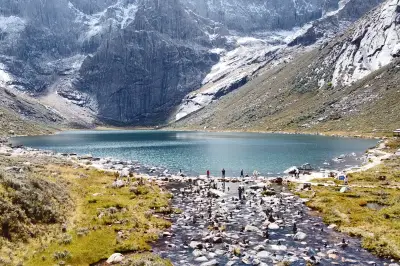
The beauty of Jiuzhaigou is renowned worldwide! In the golden October, I flew directly from Guangzhou to Jiuzhaigou. My first stop was Zhongcha Valley, separated from Jiuzhaigou by just one mountain. Compared to the famous Jiuzhaigou, it is like a 'secret paradise', little known. With misty clouds, green mountains, spreading meadows, connected villages, herds of cattle and sheep, and forests dyed colorful by autumn... This remote valley of pastoral songs, far from the hustle and bustle, is a feast for the eyes. Zhongcha Valley, seemingly from another time, is just a stone's throw from Jiuzhaigou Scenic Area but without the crowds of tourists.
In Chinese history, there is a 'Caravan Culture' that has lasted for thousands of years, especially in the southwestern region. It is not only a special mode of transportation but also a symbol of spirit and culture formed over the course of history. Hidden on the Western Sichuan Plateau, Zhongcha Valley is also an ancient inheritance site of the caravan culture. When you come here, if you have enough time, you can go horseback riding to experience the post-modern life of the caravan. In late autumn, the temperature on the plateau drops sharply. Villagers from the Tibetan village in the valley sit around a bonfire to keep warm and chat. On days without tourists, they pass the time this way.
The history of Zhongcha Valley is long and storied. Initially, no Tibetans lived here. It was first the ancient Tubo Tibetan royal family, the 'Dele' clan, who, to avoid conflicts among Tubo tribes, crossed jungles, swamps, and high mountain lakes. Guided by a divine eagle, they discovered this hidden fertile valley and settled there for hundreds of years. The 'Dele' clan, skilled in horse breeding, are the present-day Amdo Tibetans. Their ancestors brought deep and unique Tibetan culture to Zhongcha Valley. Today, near the Tibetan village in Zhongcha Valley, a cluster of international brand hotels has been established, where ethnic culture and modern life blend and collide.
Among them, the Jiuzhaigou InterContinental Hotel, which opened magnificently in September 2021, is a model of deep integration with local culture. Located in Langzhai Village, Zhangzha Town, Jiuzhaigou County, within the mysterious Zhongcha Valley, the hotel is close to famous attractions such as Jiuzhaigou, Shenxian Pond, and Ganhaizi. It not only provides a high-end residence for travelers but also continues the story of the 'Dele' clan.
Every Indigo Hotel is highly individualistic. When Indigo meets Jiuzhaigou, it opens a door of inspiration for guests to explore regional culture. As a trendy boutique hotel brand under the IHG Group, Indigo Hotels integrate high-end fashion living spaces with local history, culture, and natural elements in their design, providing diverse and quality vacation experiences for seasoned travelers. Indigo Hotels excel in interpreting neighborhood culture. Each new opening attracts countless 'hotel enthusiasts' to visit and experience.
Zhongcha Valley, where the Jiuzhaigou Indigo Hotel is located, means 'the place where the divine eagle lands' in Tibetan. It is where the 'Dele' clan was led by the divine eagle to settle, a sacred land of good fortune. According to legend, the riding mount of the Tibetan hero King Gesar was a gigantic divine eagle that soared through the sky and surveyed the universe. Only the Baijian Mountain deity here could bear the divine eagle's landing and rest. Hence the name. Therefore, the Indigo Hotel takes the 'divine eagle' as its main inspiration. At the entrance, at the reception desk background, on the elevator doors on each floor, and at the entrances to guest rooms, you can see elements of the divine eagle design.
The design is ingenious, crafted by the renowned Hong Kong design company CCD. Delving into the history and culture of Zhongcha Valley, they created a long-lost 'Dele Mansion'. They extensively used local Tibetan artistic forms in design elements, including stone walls, plank houses, fire pits, divine eagles, waters of Shenxian Pond, Amdo Tibetans, prayer wheels, the Eight Auspicious Symbols of Tibetan Buddhism, yak bells, Qiang embroidery, single-plank ladders, prayer flags, stars, pulu cloth bags, and harvest-themed totems or decorations. Masterfully, they interpret the 'Tibetan·Hidden' theme neighborhood stories and Amdo culture.
The hotel lobby is spacious and grand with a high ceiling, as if viewing the valley's undulating landscape from an eagle's perspective. The design deeply explores the stories of Zhongcha neighborhood culture. In the center stands a fire pit, highlighting the strong characteristics of Tibetan dwellings and incorporating daily Tibetan life culture. The rich color schemes and patterns showcase the colorful and romantic Amdo culture on the plateau, creating an artistic space full of regional flavor that feels fresh and new.
Strolling through the lobby feels like walking into a Tibetan art museum. Lifestyle and neighborhood culture are given a new interpretation through design, with decorative details blending Tibetan and Qiang styles everywhere. Seeing hotel staff wearing local ethnic costumes makes you feel as if you've time-traveled into the 'Dele Mansion'.
On the wall in a corner of the Lobby Bar, there is a large divine eagle artwork. From afar, it appears in the deep blue color of Jiuzhaigou's lakes. Up close, it seems to 'solidify' countless memories of the Dele Mansion. The abstract sculpture blends seamlessly with modern sofas and lighting, complemented by bold use of Tibetan and Qiang colors. Every detail is worth savoring.
The design of the hotel's public areas is full of highlights. The library connected to the lobby bar features the intricate patterns of the 'Dele Mansion', with bright colors and unique shapes, reviving the living art of the former mansion. It complements the unique style of the Indigo brand, allowing guests to find a pure land of the soul amidst a sea of books—'one flower, one world; one leaf, one buddha'. Additionally, a spiral staircase with a unique shape is winding and elegant, highly photogenic.
The Jiuzhaigou Indigo Hotel has 200 guest rooms and suites, with a consistent design theme centered on 'Travel·Tibet'. They also highlight the inspiration source of 'the place where the divine eagle rests', interpreting the traditional Tibetan and Qiang aristocratic mansion in a modern living way. Guests can immerse themselves in an artistic and vibrant Jiuzhaigou living space.
The color scheme of the rooms is based on white and gray-brown. On a foundation of simple modernity, local colors and textured decorations are incorporated. 'Hotel enthusiasts' will surely love this fashionable and playful design sense.
What is ethnic is global. The headboard wall design in the rooms mainly uses decorative totems from Tibetan and Qiang costumes, with unique patterns and rich colors. The design full of ethnic culture brings a different visual impact.
The details in the rooms are also exquisite and well-considered. Pendants designed in the shapes of prayer wheels and Amdo men's hats echo the totems created by Tibetan and Qiang women on the wall. The vibrant color collisions and clever design, the seamless integration of modern household items and original ethnic culture, are thought-provoking.
The tea sets in the rooms are very delicate, not only elegant in shape and eye-catching in color but also uniquely styled in Tibetan and Qiang ethnic fashion, winning my heart.
The bathroom space is also a highlight of the room design. Apart from being dry and wet separated and spacious, the toiletries, toiletries boxes, soap pads, and other details are custom-made. Notably, the bathrobes adorned with Tibetan and Qiang ethnic patterns are also very stylish.
The large floor-to-ceiling windows in the rooms bring the beautiful outdoor scenery indoors to the greatest extent. Some rooms offer distant views of snowy mountains and forests, and close views of garden courtyards. Waking up in late autumn, opening the windows reveals the colorful and beautiful autumn colors, starting a wonderful day.
The hotel's dining service is also commendable. The Travel·Tibet Neighborhood All-Day Buffet Restaurant on the first floor of the hotel features a golden 'harvest' color tone in its decoration, cleverly combining Tibetan aristocratic rituals and English manor culture to provide guests with an unparalleled dining experience.
Because the hotel is located on the plateau, logistics are limited. Therefore, the restaurant's chef team selects local ingredients, integrates Tibetan and Qiang food culture, and offers buffet breakfast, lunch and dinner sets, and Tibetan hotpot. Guests can taste Tibetan snacks and drinks like butter tea, enjoy the distinctly local Tibetan hotpot, or choose Western-style light meals like pasta and fried rice, savoring the unique flavors of Jiuzhaigou.
After enjoying the autumn scenery, sitting around the warm restaurant, having a steaming yak bone soup supplemented by Tibetan fragrant pork and free-range chicken made in copper pot or stone pot soup, is a feast for the eyes and taste buds—the best comfort during this cold autumn vacation.
The hotel's gym is equipped with advanced and complete fitness equipment, a great place to sweat and exercise. Experiencing the exhilaration of a good workout during the trip is easily achievable even on the plateau.
The Jiuzhaigou Indigo Hotel is located in the core of Jiuzhaigou Luneng Beautiful Town. Guests can walk to the adjacent Luneng Town, which houses a museum of Tibetan and Qiang intangible cultural heritage. The street gathers various Rangtang intangible heritage products such as Tibetan carpets, Tibetan paper, Tibetan incense, Tibetan pottery, and pile embroidery. Here, you can get a glimpse of unique Tibetan culture and experience the charm of intangible heritage projects.
Alternatively, you can take a taxi up the mountain road to visit attractions like 'Jiuzhaigou Hidden World' and Green No.7 Paradise in Zhongcha Valley. In late autumn, the autumn scenery accompanies you all the way, beautiful as a fairyland.
Jiuzhaigou Hidden World is a new trendy leisure resort in Jiuzhaigou, focusing on original ecological cuisine, luxury English afternoon tea, and Instagram-style grassland picnics. It features light forest hiking, Tibetan village viewing platforms, prayer flag sacred sites, a trendy giant swing, bird's nest, sky ladder, and other photo-worthy spots, very suitable for team building and leisure vacations.
Driving up from 'Jiuzhaigou Hidden World', you reach Jiuzhaigou Green No.7 Paradise. This is a natural exploration park that integrates nature experiences, outdoor exploration, extreme adventures, cultural immersion, and growth education.
Address: Jiuzhaigou Indigo Hotel, Zhongcha Valley, Zhangzha Town, Jiuzhaigou County, Sichuan Province
[Thank you for reading. Please click follow to share more wonderful original travel articles with me.]